

 Предпросмотр
 Поделиться
 Поделиться
 Детали произведения

 Скачать
 Похожие работы
 Рентгенография
 Слайд-шоу
 Статистика
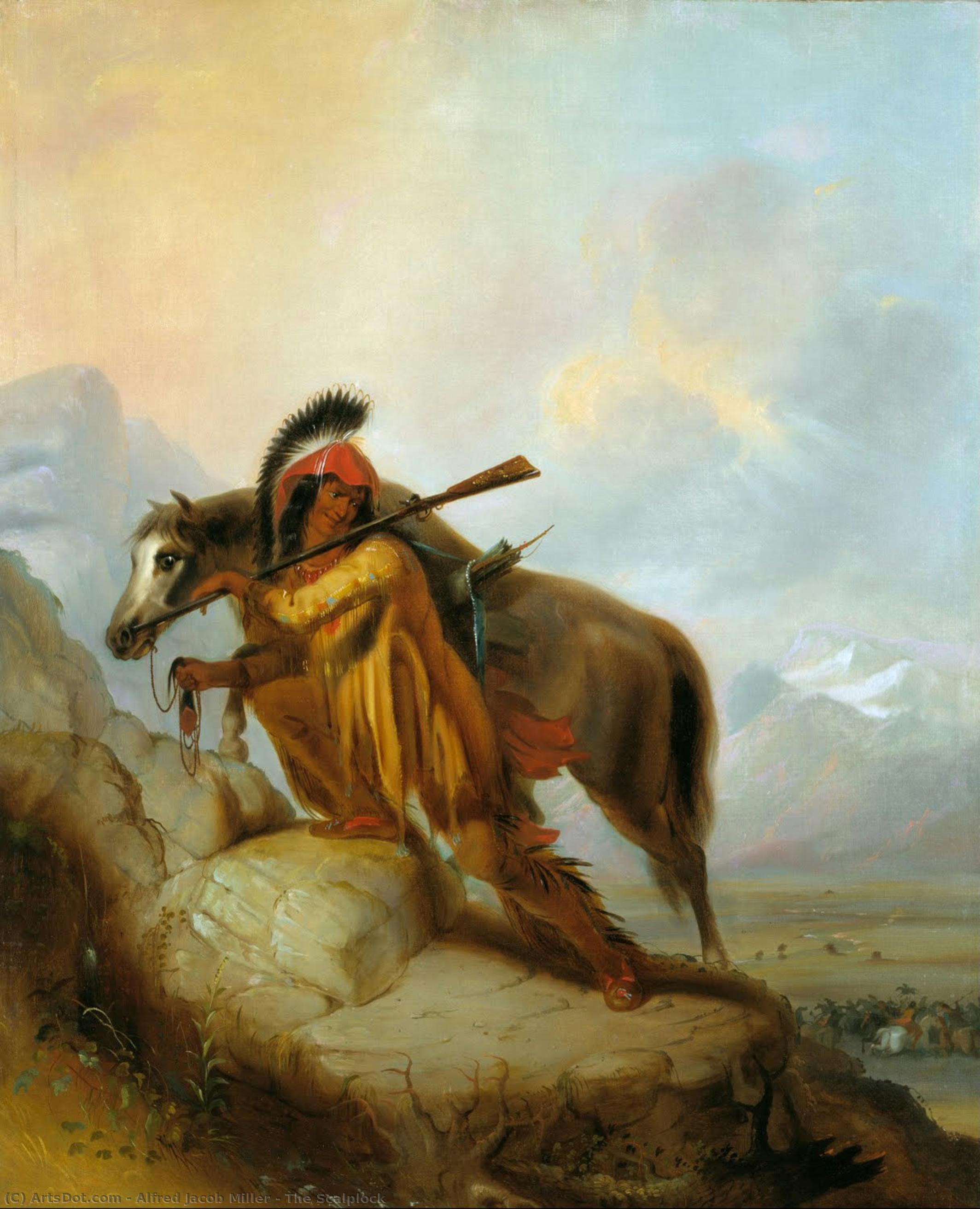
The Scalplock


 Читать далее
Приобретите цифровое изображение высокого разрешения в улучшенном качестве, которое значительно превосходит онлайн-превью.
Каждый файл тщательно подготавливается нашими специалистами с использованием передовых инструментов и экспертной ручной ретуши. Мы гарантируем исключительную четкость, точную цветопередачу и детальную проработку каждого изображения.
Финальный файл доставляется по электронной почте в течение 72 часов и оптимизирован для немедленного использования в профессиональной среде, при верстке и печати. Это тот же уровень качества, которому доверяют ведущие дизайнерские студии, издательства и галереи.
Цифровое изображение
Скачайте файл высокого разрешения для личного использования, печати и творческих проектов. ( Перейти к печати Купить картину ручной работы)
Включено в каждый заказ цифровых изображений
Гарантия экспертной цифровой доставки
Выбирая ArtsDot.com, вы получаете не просто изображение — вы приобретаете профессионально обработанное цифровое произведение искусства, созданное с безупречной точностью и под защитой гарантии качества. Вот всё, что автоматически входит в ваш заказ:

Мгновенная доставка по e-mail
Ваш цифровой файл в высоком разрешении будет отправлен вам по электронной почте в течение 72 часов после оформления заказа — и сразу станет доступен для использования.

Цифровой файл с ИИ-улучшением
Ваше произведение искусства проходит профессиональную оптимизацию с использованием передовых инструментов ИИ и ручной обработки, что гарантирует максимальную детализацию, четкость и точность цветопередачи.

Бессрочная бесплатная повторная доставка
Случайно удалили или потеряли файл? Не беспокойтесь — мы отправим его вам повторно в любое время и совершенно бесплатно.

Без импортных пошлин — навсегда
Наслаждайтесь вашим произведением искусства мгновенно без таможенных пошлин, сборов или затрат на доставку — цифровые загрузки всегда не облагаются налогом.

Гарантия точности цветопередачи
Мы гарантируем, что ваше цифровое изображение максимально точно передает оригинальные цвета благодаря использованию профессиональных инструментов и систем управления цветом.

Гарантия удовлетворенности 100 дней
Если вы не будете удовлетворены своим цифровым изображением, мы внесем правки или вернем 100% стоимости в течение 100 дней — без лишних вопросов.

100% Гарантия возврата средств
Не удовлетворены покупкой? Получите полный возврат средств в течение 100 дней после получения цифрового файла — без лишних вопросов.

Скидки на оптовые заказы
Купите 3 изображения, сэкономьте 10% — Купите 5, сэкономьте 15% — Купите 10+, сэкономьте 20%. Отличное решение для творческих проектов, галерей и агентств.
Alfred Jacob Miller’s “The Scalplock”: A Window Into the American Frontier
Alfred Jacob Miller (1810-1874) stands as an unparalleled visual storyteller of the American West, specifically capturing the essence of the fur trade era and the profound connection between Native American tribes and their environment. Unlike many artists of his time focused solely on landscapes or portraits, Miller dedicated himself to documenting a rapidly disappearing world—a mission he accomplished with remarkable precision and imbued with a distinctive blend of realism and romanticism that continues to resonate today. His artistic journey began outside formal academic institutions, nurtured by an innate talent honed by early exposure to influential artists like Thomas Sully, demonstrating a path less traveled yet undeniably impactful on the trajectory of American art history. Miller’s formative education at John D. Craig’s Academy in Baltimore lacked a dedicated art curriculum—a seeming disadvantage that paradoxically fostered a stylistic independence crucial to his later achievements. This unconventional approach culminated in a transformative voyage to Paris in 1832, where he immersed himself in the rigorous discipline of life drawing at the École des Beaux-Arts and absorbed the artistic traditions of Europe. This foundational experience wasn’t merely about mastering technical skills; it instilled an acute observational capacity—a cornerstone of Miller's ability to portray subjects with breathtaking accuracy and emotional depth. “The Scalplock,” painted circa 1858-1860, exemplifies Miller’s signature style perfectly. Executed in watercolor on paper, the artwork depicts a Native American man seated atop a horse, wielding a rifle—a symbol of both survival and dominion over the wilderness. The composition is meticulously crafted, prioritizing detail and capturing the rugged beauty of the Rocky Mountains landscape. Observe the careful rendering of textures – from the weathered skin of the figure to the rough fur of the horse’s mane – reflecting Miller's commitment to portraying reality with unflinching honesty. Furthermore, the inclusion of two birds—one perched prominently near the upper left corner and another positioned towards the lower right—adds a layer of symbolic richness. Birds often represent freedom, spirituality, and connection to nature, reinforcing the painting’s overarching theme of exploration and reverence for the natural world. The artwork's historical context is inextricably linked to the fur trade boom of the mid-19th century, when American entrepreneurs aggressively pursued lucrative contracts with European nations to acquire furs from Native American tribes. Miller’s depiction captures not only the practical realities of this endeavor—the tools and attire of the traders—but also conveys a palpable sense of cultural encounter and apprehension. The man's gaze directs towards the viewer, conveying both confidence and vulnerability – mirroring the complex dynamics inherent in interactions between European settlers and indigenous populations during this period. “The Scalplock” transcends mere representation; it evokes an emotional response rooted in admiration for Miller’s artistic skill and a deeper appreciation for the spirit of the American West. Its meticulous detail invites contemplation on themes of resilience, tradition, and the enduring relationship between humanity and wilderness—themes that continue to inspire artists and collectors alike. The painting resides within the collection of William T. Walters, Baltimore, MD (Accession Number 37.1940.192), a testament to Miller’s lasting legacy as one of America's foremost chroniclers of its frontier heritage.Похожие произведения
Биография художника
A Pioneer of the American West
Alfred Jacob Miller, born in Baltimore in 1810, occupies a unique and vital position in the narrative of American art. He wasn’t merely a painter of landscapes or portraits; he was a visual chronicler of a vanishing world – the fur trade era of the Rocky Mountains and the lives of the Native American tribes who inhabited them. His journey to artistic recognition was unconventional, beginning not with formal academic training but with an innate talent nurtured by early exposure to artists like Thomas Sully. While attending John D. Craig’s Academy in Baltimore, Miller's education lacked a dedicated art curriculum, yet this absence perhaps fostered a distinctive style that would later set him apart. A pivotal period followed when he journeyed to Paris in 1832, immersing himself in the rigorous study of life drawing at the École des Beaux-Arts and absorbing the artistic traditions of Europe. This foundational experience honed his observational skills and provided a technical base upon which he would build his uniquely American vision.The Transformative Expedition
Miller’s career took an extraordinary turn in 1837, when fate – or perhaps artistic destiny – intervened in the form of Sir William Drummond Stewart, a Scottish aristocrat with a passion for the untamed West. Stewart commissioned Miller to accompany him on a hunting expedition into the heart of the Rocky Mountains, tasking him with documenting the landscapes and cultures encountered along the way. This wasn’t simply an assignment; it was an immersion into a world few Americans, let alone artists, had ever witnessed. For months, Miller meticulously sketched scenes of Native American life – the Sioux, Crow, Shoshone, and others – capturing their customs, clothing, rituals, and interactions with trappers and traders. He recorded the rugged beauty of the terrain, the drama of hunts, and the quiet moments of daily existence on the frontier. These weren’t romanticized depictions intended to glorify the West; they were honest observations imbued with a sensitivity that distinguished Miller's work from much of his contemporaries’. Upon returning to New Orleans, he transformed these sketches into a series of paintings that would establish his reputation as a significant figure in American art, offering an invaluable glimpse into a world on the cusp of irreversible change. The rendezvous was a grand affair devised by St. Louis businessman and politician William H. Ashley in 1822 to keep the fur trappers from leaving the mountains to deliver the season’s catch. He advertised for one hundred “Enterprising Young Men” who would agree to remain in the mountains for two or three years. (*St. Louis Enquirer*, 1822 and 1823) Each summer, Ashley sent a caravan of traders from St. Louis to meet the men at a prearranged place with supplies and trade goods to exchange for their pelts. Other companies followed his lead, and by the 1830s the rendezvous was made up of numerous camps involving hundreds of company trappers, free trappers, and sundry Indian tribes. Following several weeks of “High Jinks,” as Miller put it, and then some serious trading, the trappers and Indians would return to the mountains in time for the fall trapping season and the traders to St. Louis. (Russell, 1941, pp. 1 – 2; Clokey, 1980, p. 67; Ross, 1968, text accompanying plate 110; Wishart, 1979, pp. 121 – 124; Washburn, 1967, pp. 50 – 54) Miller’s adventure began shortly after he found quarters on the second floor of L. Chittenden’s dry-goods store at 26 Chartres Street in New Orleans, exchanging a portrait of the landlord for his first month’s rent. Miller displayed several paintings in the ground-floor window, and they apparently attracted the attention of a stylishly-dressed gentleman, whom he took to be a Kentuckian, who came in, browsed around and watched him paint for a few moments, commented favorably on his technique, then exited. A few days later, the man returned, introduced himself as Captain William Drummond Stewart, retired from the British Army, and explained that he was planning to attend the annual rendezvous of fur trappers and traders in the Rocky Mountains that summer and wanted an artist to accompany him to make a visual record of the trip. (Miller, Journal, p. 35) From British Consul John Crawford, who had previously served in Baltimore and might have known Miller there, Stewart assured the young Miller that the captain, a veteran of the peninsular campaign and Wellington’s victory over Napoleon at Waterloo, would be able to fulfill any financial commitments that he made. (Porter and Davenport, 1963, pp. 4, 16 – 19, 129; Strong, 200"
Альфред Якоб Миллер
1810 - 1874 , США
Основные сведения
- Artistic Movement Or Style: Реализм и романтизм
- Artists Who Influenced This Artist:
- Томас Салли
- Горре Вернет
- Date Of Birth: 1 января 1810 г.
- Date Of Death: 1874 г.
- Full Name: Alfred Jacob Miller
- Nationality: Американский
- Notable Artworks:
- Озеро Его Одинокое Сердце Расширяется...
- Сцена лагеря (Сиу)
- Большая миска (Шошон)
- Аркали - Горный овцы
- Шошон индейцы охотятся на оленей
- Индейцы шайдуют на оленей
- Place Of Birth: Балтимор, США