

 Предпросмотр
 Поделиться
 Поделиться
 Детали произведения

 Скачать
 Похожие работы
 Рентгенография
 Слайд-шоу
 Статистика
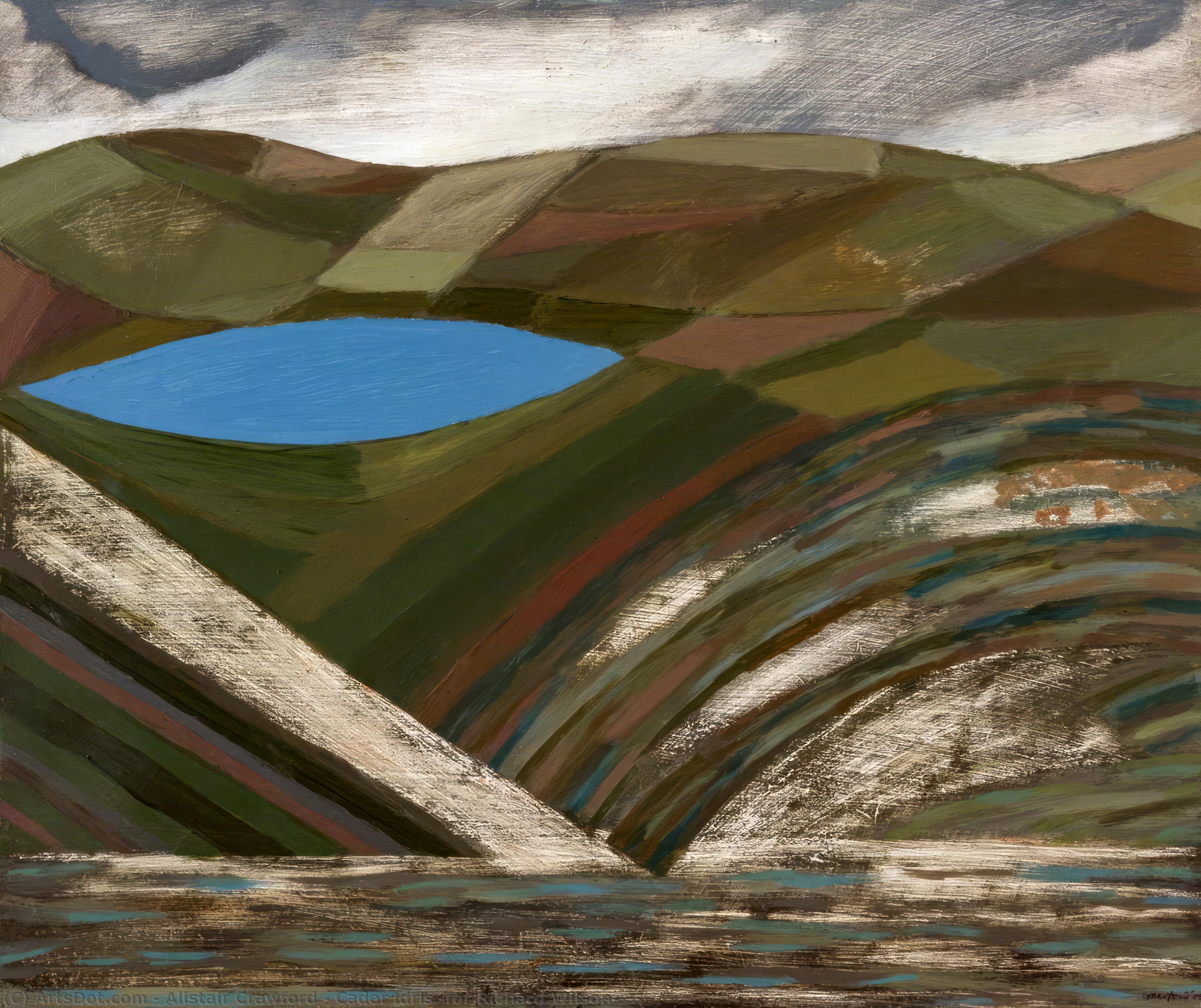
Cader Idris (for Richard Wilson)
 Oil On Canvas
- WallArt
- Romanticism
 2000
2000- Contemporary
 32.0 x 45.0 cm
 Национальная библиотека Уэльса
 Читать далее
Масляная репродукция ручной работы
Картина маслом на холсте в выбранном вами размере и раме, написанная на заказ нашими художниками. ( Перейти к печати Перейти к цифровым изображениям)




P118B $10

P118H $10

P118W $10

P438Z $10

P508JH $12

P508YH $12

P805H $10

P805Z $10

P919BZ $10

P919G $10

P919XJ $10

P959ZH $10

P968JZ $12

W106C $8

W218G $10

W218JH $8

W218Y $10

W307PJ $10

W316G $10

W316PJ $8

W316Y $10

W398PJ $8

W4111J $10

W500HY $15

W500JH $15

W692G $12

W849H $8

W940BG $15

W953PJ $8




Выберите один из наших стандартных размеров, соответствующих оригинальным пропорциям произведения искусства.

Вы можете указать собственные размеры, чтобы картина идеально вписалась в выбранную раму или пространство. Если выбранный вами размер не соответствует пропорциям оригинала, мы либо обрежем полотно, либо расширим его за счет дополнительных элементов, написанных вручную. Цифровой макет будет отправлен вам на утверждение перед началом производства.
Обратите внимание, что предварительный просмотр на экране не отражает фактическую обрезку или расширение. Только макет точно покажет окончательную композицию.
Хотя доступны индивидуальные размеры, мы рекомендуем выбирать вариант из предопределенного списка, чтобы сохранить исходные пропорции.
После оформления заказа команда ArtsDot.com свяжется с клиентом по электронной почте для уточнения деталей и предоставит предварительный макет
Доставка по всему миру () за 3–4 недели вместо стандартных 5 недель. (12 Сентябрь). Без компромиссов в качестве.

Бесплатная экспресс-доставка по всему миру

Высококачественный льняной холст

Полное страхование доставки

Гарантия возмещения таможенных пошлин

Гарантия точного соответствия цветов

100-дневная политика возврата (только при обнаружении дефектов)

Гарантия возврата 100% средств

Предложение оптовых скидок
 Вариант со стеклом доступен только для размеров менее 110 см

Cader Idris (for Richard Wilson)
Техника репродукции
Размер репродукции
-


Итоговая стоимость
$ 263
A Dialogue Across Centuries: The Soul of Cader Idris
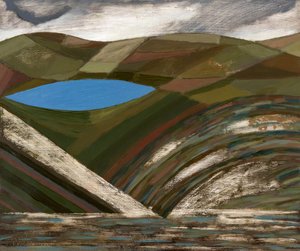
In the quietude of Alistair Crawford’s Cader Idris (for Richard Wilson), one finds more than just a depiction of a Welsh mountain; one encounters a profound conversation between two eras of landscape painting. Created in the year 2000, this evocative oil on canvas serves as a soulful homage to the 18th-century master Richard Wilson. Crawford does not merely replicate a scene; he reimagines the classical serenity of the past through a contemporary, expressive lens. The painting invites the viewer into a world where the rugged majesty of the Cader Idris range meets a soft, contemplative atmosphere, bridging the gap between the structured landscapes of British tradition and the emotive textures of modern expressionism.
The composition is anchored by a central, luminous blue lake that rests within the cradle of layered valleys. This body of water acts as a mirror for the sky, providing a moment of stillness amidst the dynamic movement of the surrounding hills. Crawford utilizes strong diagonal lines to guide the eye through the undulating terrain, creating a sense of depth that feels both expansive and intimate. While the landscape is undeniably grand, the inclusion of two small, subtle figures near the periphery provides a vital sense of scale, reminding us of the human connection to the earth—a theme that resonates deeply with the Romantic tradition.
Texture, Light, and the Language of Paint
To behold this work is to experience the tactile power of the medium. Crawford employs an impasto technique, applying oil paints in thick, gestural strokes that build a physical topography upon the canvas. This heavy layering creates a surface that catches the light, lending the hills and valleys a rugged, organic vitality. The color palette is masterfully restrained, relying on earthy tones of mossy green, deep umber, and slate grey, punctuated by sudden, spirited touches of orange and red. These warm accents breathe life into the otherwise muted landscape, suggesting the fleeting glow of an overcast afternoon or the subtle change of seasons.
The lighting within the piece is beautifully diffuse, eschewing harsh shadows in favor of a soft, atmospheric glow that suggests a misty, Welsh morning. This choice of light contributes to the painting's overall sense of melancholy and tranquility. The technique leans toward an expressive abstraction; while the forms of the mountains and trees are recognizable, they are simplified into powerful shapes and textures. For the collector or interior designer, this balance of representational subject matter and abstract execution makes the piece incredibly versatile, allowing it to serve as a sophisticated focal point in both classical and contemporary settings.
An Eternal Resonance for the Modern Collector
Beyond its visual splendor, Cader Idris carries a weight of historical significance. By dedicating this work to Richard Wilson, Crawford places himself within a lineage of artists who sought to find the divine within the natural world. The painting echoes the rhythmic landscapes of John Constable and the dramatic compositions of the Baroque era, yet it remains firmly rooted in its own time through its bold, almost Fauvist use of color and form. It is a work that celebrates the endurance of nature and the continuity of artistic inspiration.
For those seeking to adorn a space with art that inspires reflection, this reproduction offers an unparalleled opportunity. It is a piece designed for contemplation—a window into a landscape that feels both ancient and immediate. Whether placed in a quiet study, a grand living area, or a curated gallery space, Crawford’s masterpiece brings with it a sense of peace, a touch of mystery, and a timeless connection to the wild beauty of the British Isles.
Похожие произведения


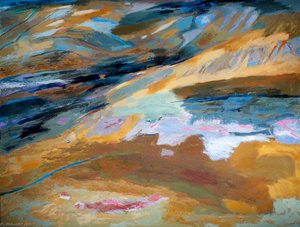
Биография художника
Alistair Crawford: Weaver of Welsh Landscapes and Quiet Melancholy
Born in 1945 in Fraserburgh, a small fishing town on the north-east coast of Aberdeenshire, Scotland, Alistair Crawford’s artistic journey began not with grand ambitions but with a quiet resistance to the strictures of his upbringing. His father, a herring fisherman, and his mother, who worked as a school cleaner, instilled in him a deep connection to the rugged beauty of the Scottish landscape – a landscape that would become the enduring subject of his paintings and prints for over six decades. Early exposure to the stark realities of coastal life, coupled with a childhood marked by Calvinist evangelical Christianity, fostered within Crawford a contemplative spirit, one that sought solace and expression through art rather than dogma.
His formal artistic education commenced at Glasgow School of Art in 1962, where he studied textile design under Robert Stewart. This early training proved profoundly influential, imbuing his later work with a remarkable sensitivity to texture, surface, and the subtle interplay of light and shadow – qualities that would distinguish his distinctive style. Crawford’s background in textiles wasn't merely a technical skill; it informed his approach to composition, encouraging him to flatten forms and create a sense of understated elegance within his landscapes. He later taught at the University College of Wales, Aberystwyth, from 1974 until 1995, transforming the art department into a vibrant hub for artistic exploration and fostering a generation of talented artists.
The Palette of Mid-Wales
Crawford’s most celebrated work focuses on the dramatic landscapes of mid-Wales, particularly the rugged beauty of Cader Idris. Unlike many landscape painters who strive for grand vistas and heroic depictions, Crawford eschewed overt drama in favor of a more intimate and melancholic portrayal. His paintings are characterized by a quiet stillness, a sense of observation rather than intervention. He captured not just the physical appearance of these places but also their emotional resonance – the solitude, the timelessness, and the subtle shifts in light that evoke a profound feeling of connection to the past.
His technique was deceptively simple yet remarkably effective. Crawford employed a limited palette of muted earth tones—ochres, browns, greys, and blues—to create a sense of atmospheric depth and realism. He favored oil paints applied with broad brushstrokes, often layering colors to build up texture and suggest the weathered surfaces of stone and foliage. The influence of his textile background is evident in the flatness of his compositions, a deliberate choice that draws attention to the interplay of light and shadow and emphasizes the inherent beauty of the landscape itself. He was particularly drawn to depicting solitary structures—cottages, farmhouses, and ruined walls—that seemed to exist on the periphery of human experience, imbued with a sense of history and forgotten stories.
Prints and Beyond: Expanding Horizons
While his paintings are undoubtedly his most recognized work, Crawford’s artistic practice extended beyond the canvas. He was a prolific printmaker, creating stunningly detailed monochrome prints that captured the essence of Welsh landscapes with remarkable precision. His prints often served as studies for his paintings, allowing him to explore different textures and tonal variations before committing them to oil paint.
Beyond painting and printing, Crawford also ventured into photography, further honing his observational skills and deepening his understanding of light and composition. He was a keen collector of photographs, particularly those by early practitioners of the medium, and his own work often reflected this influence. Later in life, he became involved in theatrical performance, creating staged narratives based on historical documents and personal recollections – a testament to his lifelong curiosity and intellectual engagement with the world around him.
Recognition and Legacy
Crawford’s artistic achievements were widely recognized throughout his career. He received the Royal National Eisteddfod of Wales Gold Medal in Fine Art in 1985, a prestigious award that acknowledged his significant contribution to Welsh art. His work has been exhibited extensively in galleries across Britain and internationally, including solo shows in London, New York, and Italy. His prints are held in major collections, including the British Museum and the National Library of Wales.
Alistair Crawford passed away on October 2, 2025, leaving behind a rich legacy of evocative landscapes and quiet observations. His work continues to resonate with viewers who appreciate his understated elegance, his profound connection to the natural world, and his ability to capture the subtle beauty of mid-Wales – a place that will forever be associated with his name.
Further Exploration
- Cader Idris (for Richard Wilson): Explore this 2000 artwork showcasing textured oil painting & romantic beauty.
- alistair crawford: Discover his work at Haigh Hall Collection.
- Alistair Crawford obituary | Art - The Guardian: Read the full obituary here.
alistair crawford
1945 -
Основные сведения
- Artistic Movement Or Style: Landscape Painting
- Artists Or Movements Influenced By This Artist: ['British Impressionism']
- Artists Who Influenced This Artist: ['Robert Stewart']
- Date Of Birth: 1945
- Date Of Death: 2025
- Full Name: Alistair Crawford
- Nationality: British
- Notable Artworks:
- Cader Idris (for Richard Wilson)
- Brief Exposure
- Place Of Birth: Fraserburgh, Aberdeenshire
Похожие статьи
Richard Hayley Lever: A Study in British Impressionism & Coastal Light
Explore the captivating world of Richard Hayley Lever (1876-1958), a master of Impressionism renowned for his vibrant coastal scenes. Discover his life, style & legacy with ArtsDot.
William Trost Richards: Luminism, Spirituality & the American Landscape Tradition
Explore the captivating landscapes of William Trost Richards, a master of Luminism associated with both the Hudson River School & American Pre-Raphaelite movements. Discover his spiritual connection to nature and lasting influence on American art.
Hugh Cameron Wilson: Capturing the Soul of Scotland Through Colour & Atmosphere
Explore the evocative landscapes of Hugh Cameron Wilson, a key figure within the Scottish Colourist movement. Discover his mastery of light, atmosphere & rural scenes – and find high-quality reproductions at ArtsDot.

Richard Wilson: Deconstructing Landscape & Memory in Contemporary Installation Art
Explore Richard Wilson's groundbreaking landscape paintings & his enduring influence on contemporary installation art. Discover investment opportunities, provenance insights & the materiality of memory in this expert analysis.
John Wilson Carmichael: Evoking Scottish Identity Through Dramatic Marine Painting
Explore the dramatic marine paintings of John Wilson Carmichael (1800-1868), a Victorian master renowned for his realistic seascapes and historical naval scenes. Discover his life, style & available hand-painted reproductions at ArtsDot.