

 Предпросмотр
 Поделиться
 Поделиться
 Детали произведения

 Скачать
 Похожие работы
 Рентгенография
 Слайд-шоу
 Статистика
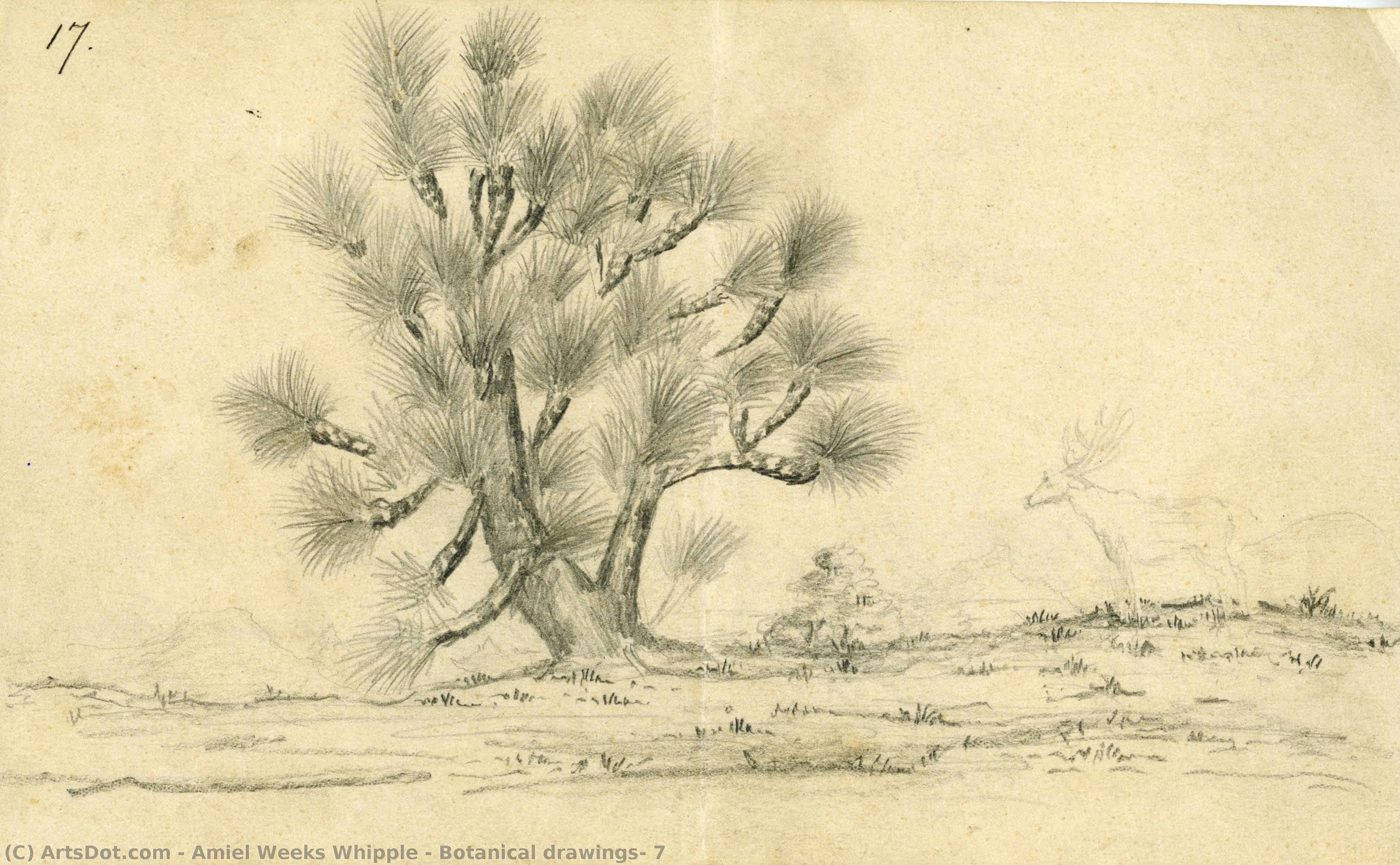
Botanical drawings, 7

 Читать далее
Приобретите цифровое изображение высокого разрешения в улучшенном качестве, которое значительно превосходит онлайн-превью.
Каждый файл тщательно подготавливается нашими специалистами с использованием передовых инструментов и экспертной ручной ретуши. Мы гарантируем исключительную четкость, точную цветопередачу и детальную проработку каждого изображения.
Финальный файл доставляется по электронной почте в течение 72 часов и оптимизирован для немедленного использования в профессиональной среде, при верстке и печати. Это тот же уровень качества, которому доверяют ведущие дизайнерские студии, издательства и галереи.
Цифровое изображение
Скачайте файл высокого разрешения для личного использования, печати и творческих проектов. ( Перейти к печати Купить картину ручной работы)
Включено в каждый заказ цифровых изображений
Гарантия экспертной цифровой доставки
Выбирая ArtsDot.com, вы получаете не просто изображение — вы приобретаете профессионально обработанное цифровое произведение искусства, созданное с безупречной точностью и под защитой гарантии качества. Вот всё, что автоматически входит в ваш заказ:

Мгновенная доставка по e-mail
Ваш цифровой файл в высоком разрешении будет отправлен вам по электронной почте в течение 72 часов после оформления заказа — и сразу станет доступен для использования.

Цифровой файл с ИИ-улучшением
Ваше произведение искусства проходит профессиональную оптимизацию с использованием передовых инструментов ИИ и ручной обработки, что гарантирует максимальную детализацию, четкость и точность цветопередачи.

Бессрочная бесплатная повторная доставка
Случайно удалили или потеряли файл? Не беспокойтесь — мы отправим его вам повторно в любое время и совершенно бесплатно.

Без импортных пошлин — навсегда
Наслаждайтесь вашим произведением искусства мгновенно без таможенных пошлин, сборов или затрат на доставку — цифровые загрузки всегда не облагаются налогом.

Гарантия точности цветопередачи
Мы гарантируем, что ваше цифровое изображение максимально точно передает оригинальные цвета благодаря использованию профессиональных инструментов и систем управления цветом.

Гарантия удовлетворенности 100 дней
Если вы не будете удовлетворены своим цифровым изображением, мы внесем правки или вернем 100% стоимости в течение 100 дней — без лишних вопросов.

100% Гарантия возврата средств
Не удовлетворены покупкой? Получите полный возврат средств в течение 100 дней после получения цифрового файла — без лишних вопросов.

Скидки на оптовые заказы
Купите 3 изображения, сэкономьте 10% — Купите 5, сэкономьте 15% — Купите 10+, сэкономьте 20%. Отличное решение для творческих проектов, галерей и агентств.
Похожие произведения


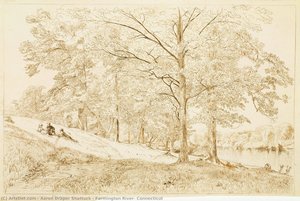
Биография художника
The Surveyor’s Eye: The Dual Legacy of Amiel Weeks Whipple
In the mid-19th century, as the American frontier expanded toward the Pacific, a unique breed of explorer emerged—men who were simultaneously armed with scientific instruments and an artist's profound sensitivity to the landscape. Among these pioneers, Amiel Weeks Whipple stands as a singular figure whose life bridged the gap between rigorous topographical engineering and the evocative documentation of a burgeoning nation. Born in 1817 to a family rooted in the industrious spirit of Massachusetts, Whipple’s early years were shaped by the disciplined intellect of his education at Amherst College. This foundation in mathematics and geology would later become the lens through which he viewed the wild, unmapped territories of the American West, allowing him to see not just terrain to be conquered, but a complex tapestry of biological and geological wonder.
Whipple’s journey into the heart of the continent began with the precision of military service. After graduating from the United States Military Academy at West Point in 1841, his career was defined by the meticulous demands of the U.S. Army Corps of Topographical Engineers. His early assignments—mapping the Patapsco River and surveying the intricate boundaries between the United States and Mexico—required a level of accuracy that demanded absolute focus. Yet, beneath this scientific rigor lay an undeniable artistic impulse. As he traversed rugged canyons and scorched deserts, Whipple did not merely record coordinates; he captured the essence of the land. His work during these surveys was characterized by an ability to translate the monumental scale of the American landscape into detailed, visual narratives that spoke of both grandeur and isolation.
The Transcontinental Vision and Botanical Discovery
The zenith of Whipple’s exploratory career arrived with the Whipple Expedition of 1853–1854. Commissioned by Congress to scout a potential route for the transcontinental railroad along the 35th parallel, Whipple led a party through an arduous 1,800-mile trek from Arkansas to Los Angeles. This was no mere reconnaissance mission; it was a profound scientific odyssey. As his team moved through the territories of present-day Oklahoma, Texas, New Mexico, and Arizona, Whipple’s documentation became a vital record for a nation hungry for knowledge. His expedition was tasked with documenting geological formations, plant life, and the cultures of Native American tribes, tasks he performed with a remarkable eye for detail that blended the precision of a cartographer with the soul of a naturalist.
The legacy of this expedition is etched into the very flora of the American West. The botanical richness encountered during his travels led to the identification and naming of numerous species, most notably the genus Whipplea, named in his honor. This connection between his scientific surveying and the biological world underscores the true nature of his contribution: he was a man who saw the interconnectedness of all things. His reports, published as part of the massive twelve-volume Pacific Railroad Surveys, provided the first-hand accounts that would shape the American consciousness regarding the West. Through his sketches and descriptions, the towering mesas of Arizona and the rugged beauty of the Utah canyons were brought to life for an audience thousands of miles away, transforming distant frontiers into tangible, breathtaking realities.
A Life Defined by Duty and Discovery
The final chapter of Whipple’s life was marked by the profound tragedy of the American Civil War. Transitioning from the role of explorer to that of a combat leader, he served as a Brigadier General, embodying the heavy responsibilities placed upon his shoulders during the nation's greatest crisis. His service led him to the Battle of Chancellorsville, where he sustained mortal wounds, bringing a poignant end to a life that had been so dedicated to the expansion and understanding of his country. Though his physical journey ended in 1863, his intellectual and visual legacy endured.
To study Amiel Weeks Whipple is to study the intersection of science and art during an era of profound transformation. His achievements can be summarized through several enduring contributions:
- Topographical Mastery: His ability to execute complex boundary surveys and railroad route explorations under extreme environmental conditions.
- Scientific Documentation: The creation of detailed geological and botanical records that provided the foundational knowledge for the American West.
- Artistic Observation: A unique visual approach that captured the aesthetic majesty of the frontier, moving beyond mere data to convey the spirit of the landscape.
- Historical Impact: His role in the Pacific Railroad Surveys, which were instrumental in the physical and political integration of the United States.
Ultimately, Whipple remains a symbol of the 19th-century explorer—a man whose compass pointed toward progress, but whose heart remained deeply attuned to the sublime beauty of the natural world.
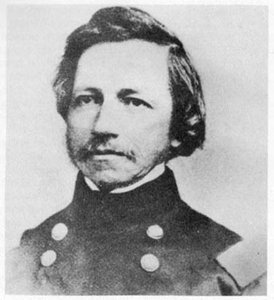
Amiel Weeks Whipple
1817 - 1863 , United States of America
Основные сведения
- Artistic Movement Or Style: Topographical Engineer
- Artists Or Movements Influenced By This Artist: ['']
- Artists Who Influenced This Artist: ['']
- Date Of Death: May 7, 1863
- Full Name: Amiel Weeks Whipple
- Nationality: United States
- Notable Artworks: ['']
- Place Of Birth: Greenwich, Massachusetts