 Предпросмотр
 Поделиться
 Поделиться
 Детали произведения

 Скачать
 Похожие работы
 Рентгенография
 Слайд-шоу
 Статистика
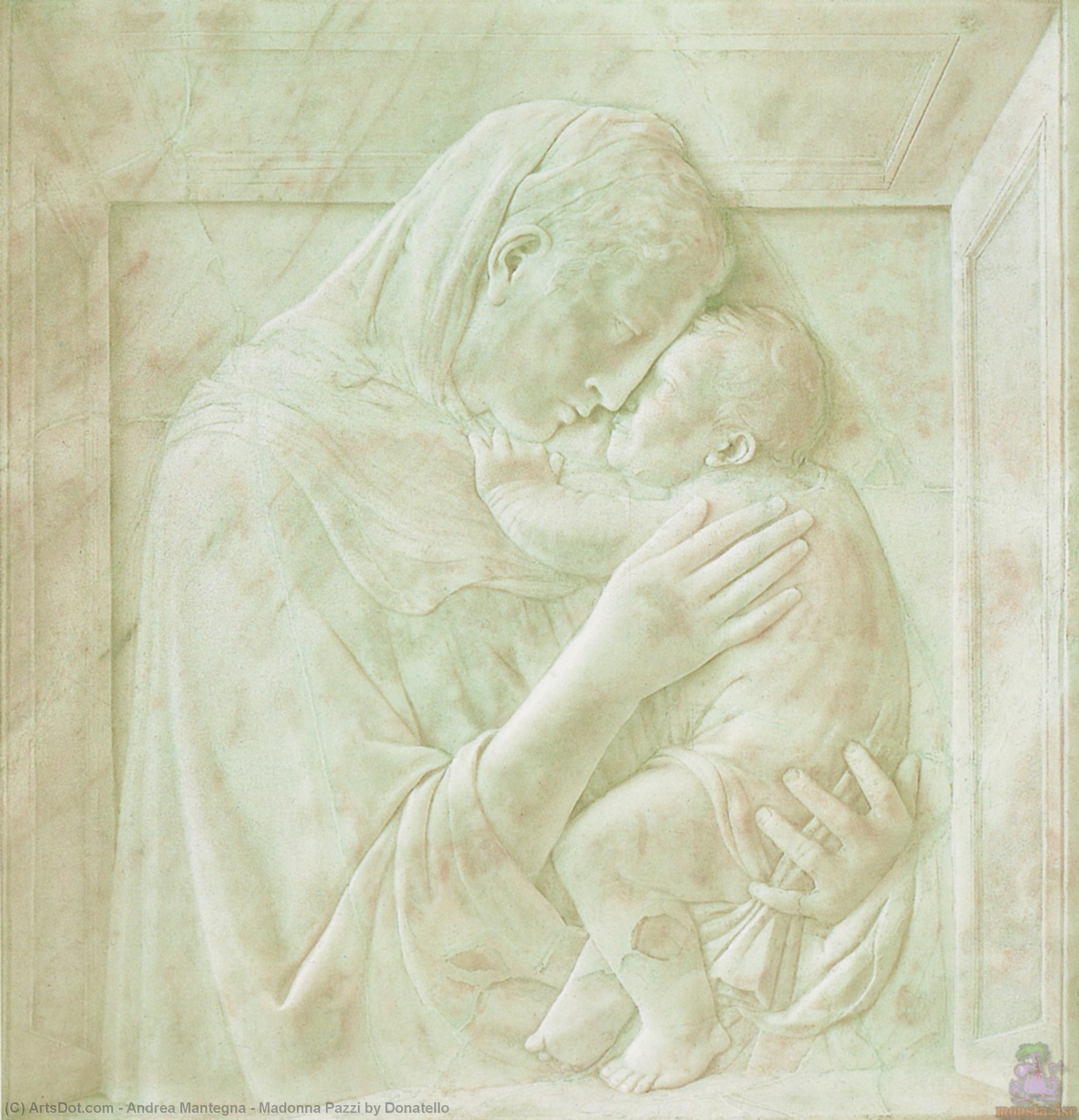
Madonna Pazzi by Donatello


 Читать далее
Масляная репродукция ручной работы
Картина маслом на холсте в выбранном вами размере и раме, написанная на заказ нашими художниками. ( Перейти к печати Перейти к цифровым изображениям)




P118B $10

P118H $10

P118W $10

P438Z $10

P508JH $12

P508YH $12

P805H $10

P805Z $10

P919BZ $10

P919G $10

P919XJ $10

P959ZH $10

P968JZ $12

W106C $8

W218G $10

W218JH $8

W218Y $10

W307PJ $10

W316G $10

W316PJ $8

W316Y $10

W398PJ $8

W4111J $10

W500HY $15

W500JH $15

W692G $12

W849H $8

W940BG $15

W953PJ $8




Выберите один из наших стандартных размеров, соответствующих оригинальным пропорциям произведения искусства.

Вы можете указать собственные размеры, чтобы картина идеально вписалась в выбранную раму или пространство. Если выбранный вами размер не соответствует пропорциям оригинала, мы либо обрежем полотно, либо расширим его за счет дополнительных элементов, написанных вручную. Цифровой макет будет отправлен вам на утверждение перед началом производства.
Обратите внимание, что предварительный просмотр на экране не отражает фактическую обрезку или расширение. Только макет точно покажет окончательную композицию.
Хотя доступны индивидуальные размеры, мы рекомендуем выбирать вариант из предопределенного списка, чтобы сохранить исходные пропорции.
После оформления заказа команда ArtsDot.com свяжется с клиентом по электронной почте для уточнения деталей и предоставит предварительный макет
Доставка по всему миру () за 3–4 недели вместо стандартных 5 недель. (12 Сентябрь). Без компромиссов в качестве.

Бесплатная экспресс-доставка по всему миру

Высококачественный льняной холст

Полное страхование доставки

Гарантия возмещения таможенных пошлин

Гарантия точного соответствия цветов

100-дневная политика возврата (только при обнаружении дефектов)

Гарантия возврата 100% средств

Предложение оптовых скидок
 Вариант со стеклом доступен только для размеров менее 110 см

Madonna Pazzi by Donatello
Техника репродукции
Размер репродукции
-


Итоговая стоимость
$ 263
The Madonna Pazzi by Donatello: A Sculptural Echo of Antiquity
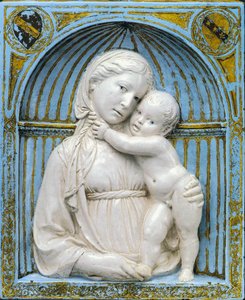
Donatello’s Madonna Pazzi stands as an emblem of the Florentine Renaissance's fascination with classical ideals, meticulously crafted in marble around 1420-1425. Commissioned by Giovanni Villani and Francesco Talenti for their chapel in Sant’Andrea della Minerva—a testament to humanist patronage—the sculpture transcends mere representation; it embodies a profound engagement with Roman artistic traditions. Andrea Mantegna's influence is palpable, particularly evident in the masterful use of perspective and sculptural form, techniques that would define Donatello’s oeuvre and elevate him to the forefront of his generation.- Subject Matter: The Madonna Pazzi depicts Mary cradling the infant Jesus, a motif deeply rooted in Byzantine iconography but reimagined with humanist sensibilities. This depiction aligns perfectly with the broader Renaissance preoccupation with idealized beauty and spiritual contemplation.
- Style & Technique: Donatello’s approach distinguishes itself through “stiacciato,” a technique pioneered by Roman sculptors—specifically Alessandro Filipepi Buonarroti—that creates a shallow relief surface, giving the sculpture an illusion of depth without requiring intricate carving. This method prioritizes tonal variation and subtle modeling to convey texture and volume, mirroring the monumental sculptures of antiquity.
- Historical Context: The sculpture emerged during a period of intense intellectual ferment in Florence, fueled by rediscovered texts from Greece and Rome. Artists like Donatello actively sought inspiration from classical precedents, striving to recapture the grandeur and serenity of Roman art—a deliberate reaction against Gothic formalism.
Compositional Innovation: Mastering Perspective and Spatial Illusion
Donatello’s genius lies not merely in replicating classical forms but in manipulating them to achieve a startling sense of realism. The sculpture's pyramidal composition draws inspiration from Roman temple architecture, emphasizing stability and grandeur. Crucially, Donatello employed a technique known as “forced perspective,” subtly adjusting the horizon line to create an illusion of greater depth—a deliberate homage to Roman architectural innovations that aimed to convey monumental scale. This masterful manipulation of space elevates the Madonna Pazzi beyond a simple depiction of motherhood; it becomes a visual embodiment of humanist ideals concerning proportion and harmony.Symbolism: Reverberations of Antiquity and Spiritual Essence
The Madonna Pazzi’s symbolism speaks to core Renaissance beliefs about divine grace and human dignity. Mary's serene gaze and gentle posture convey compassion and piety, reflecting the Christian tradition’s veneration for purity and humility. The positioning of Jesus—close to Mary’s breast—symbolizes his dependence on her maternal care and foreshadows his future sacrifice. Furthermore, Donatello’s deliberate choice of marble—a material revered in antiquity as embodying permanence and divine beauty—underscores the sculpture's enduring significance as a testament to humanist artistic vision.Legacy & Influence: A Cornerstone of Renaissance Sculpture
The Madonna Pazzi remains an unparalleled exemplar of Florentine Renaissance sculpture, influencing generations of artists who followed Donatello’s path. Its innovative technique and masterful composition established new standards for realism and spatial illusion—a legacy that continues to inspire contemporary sculptors and art historians alike. Reproductions of this iconic artwork offer a captivating glimpse into the artistic spirit of its time, allowing viewers to appreciate the profound impact of classical ideals on Renaissance creativity.Похожие произведения
Биография художника
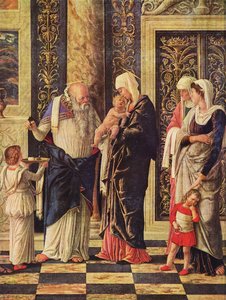
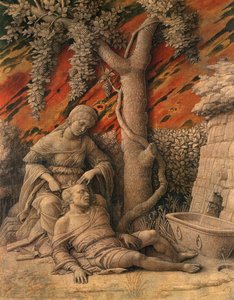
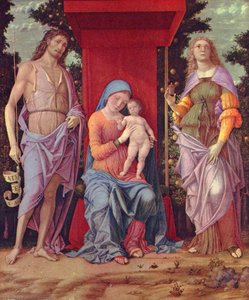
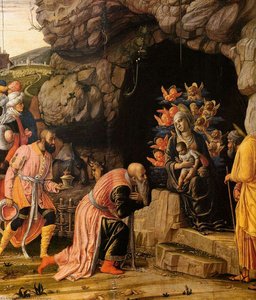
A Renaissance Forged in Antiquity: The Life and Art of Andrea Mantegna
Andrea Mantegna, born near Padua around 1431, stands as a pivotal figure bridging the Early and High Renaissances. His artistic journey wasn’t merely about adopting classical forms; it was an immersive excavation of antiquity, a passionate attempt to resurrect the spirit of Rome within the burgeoning Italian Renaissance. Unlike many contemporaries who drew inspiration from classical models, Mantegna possessed a unique fervor for archaeological accuracy. This obsession stemmed from his formative years under Francesco Squarcione, a painter and collector whose workshop functioned less as a traditional studio and more as an academy dedicated to the study of Roman ruins, sculptures, and inscriptions. It was within these walls, surrounded by fragments of a lost empire, that Mantegna’s artistic vision began to take shape—a vision characterized by sculptural forms, dramatic perspective, and an almost obsessive attention to detail. His early life remains somewhat shrouded in mystery; accounts suggest he was discovered as a promising apprentice, his innate talent recognized and nurtured by Squarcione despite humble origins. This unconventional beginning perhaps fueled Mantegna’s relentless pursuit of artistic mastery and his determination to forge a style distinctly his own.The Gonzaga Court and the Illusion of Reality
Mantegna's career truly blossomed when he entered the service of the Gonzaga family in Mantua, becoming court painter in 1488. This patronage provided him with an unprecedented level of artistic freedom and a platform to realize his most ambitious projects. The Gonzaga’s were not simply patrons; they were collaborators, commissioning works that pushed the boundaries of artistic innovation. It was during this period that Mantegna created what is arguably his masterpiece: the *Camera degli Sposi* (Bridal Chamber) frescoes in the Palazzo Ducale. This groundbreaking work transcends mere decoration; it's a complete illusionistic environment, seamlessly integrating architecture and painting to create an extended sense of space. The frescoes depict scenes from the life of the Gonzaga family—intimate portraits of the ruling dynasty alongside allegorical representations of their power and lineage—and a breathtaking *di sotto in sù* (seen from below) ceiling panel that creates the illusion of an open sky, filled with mythological figures and celestial bodies. This masterful manipulation of perspective wasn’t simply about technical skill; it was about creating a world within a room, blurring the lines between reality and representation. The *Camera degli Sposi* is more than just a painting; it's a meticulously crafted stage for the Gonzaga family’s self-image, reflecting their ambition and their connection to the legacy of Rome. Beyond the *Camera degli Sposi*, Mantegna continued to produce works of exceptional quality for the Gonzaga court, including the monumental series *Triumphs of Caesar*. These paintings, inspired by Roman triumphal processions, are not merely historical depictions; they are elaborate allegories celebrating the power and prestige of the Gonzaga family, presented with a grandeur that rivals the imperial ambitions of ancient Rome.A Master of Perspective and Anatomical Precision
Mantegna’s artistic innovations extended far beyond illusionistic environments. He was a pioneer in the use of perspective, often employing techniques that went against conventional methods to achieve dramatic effects. Frequently, he adjusted the horizon line, creating a sense of monumentality and imposing scale. This technique, coupled with his meticulous attention to anatomical detail, gave his figures an unparalleled sense of weight and presence. He wasn’t content with simply representing the human form; he dissected it, studied its musculature, and rendered it with a precision that was revolutionary for his time. His mastery of *trompe-l'oeil* – creating illusions so convincing they deceive the eye – further enhanced this effect, blurring the boundaries between painting and reality. This dedication to anatomical accuracy wasn’t merely an exercise in technical skill; it reflected Mantegna’s deep engagement with classical sculpture and his desire to emulate the idealized forms of antiquity. He sought not just to depict the human body but to capture its inherent dignity and power. His influence on subsequent generations of artists, including Raphael and Michelangelo, is undeniable, as they built upon his foundations in perspective, anatomy, and composition.Influences and Legacy
Mantegna’s artistic vision was profoundly shaped by several key influences. His early training under Francesco Squarcione instilled in him a deep appreciation for Roman antiquity, fostering a fascination with archaeological discoveries and the study of classical art. The Bellini family—his father-in-law and uncle—also played a significant role, introducing him to Venetian artistic traditions and techniques. However, Mantegna’s style was uniquely his own, blending these influences into a distinctive synthesis that combined the rigor of classical antiquity with the emotional intensity of the Renaissance. His work served as a bridge between the Early and High Renaissances, demonstrating both the meticulous detail of the former and the dynamic energy of the latter. Mantegna's legacy extends far beyond his individual works; he helped to establish a new standard for artistic realism and illusionism, influencing generations of artists who followed. His exploration of classical themes helped revive interest in ancient art and culture, paving the way for the artistic achievements of the High Renaissance. He died in Mantua in 1506, leaving behind a body of work that continues to captivate and inspire viewers today. His paintings are housed in major museums around the world, serving as enduring testaments to his genius and his pivotal role in the history of art.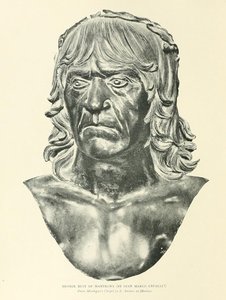
Андреа Мантенья
1431 - 1506 , Италия
Основные сведения
- Artistic Movement Or Style: Раннее Возрождение
- Artists Or Movements Influenced By This Artist:
- Рафаэль
- Микеланджело
- Artists Who Influenced This Artist:
- Донателло
- Якопо Беллуни
- Date Of Birth: 1431
- Date Of Death: 1506
- Full Name: Андреа Мантegna
- Nationality: Итальянский
- Notable Artworks:
- Камера знатных степеней
- Триумфы Цезаря
- Place Of Birth: Падуя, Италия
Похожие статьи

The Enduring Form: Exploring Themes & Techniques in Sculpture Across Historical Periods
Explore the rich history of sculpture from ancient masterpieces to contemporary innovations. Discover key techniques, influential artists & investment potential for discerning art collectors.

The Enduring Form: Sculpture Across History, Technique & Emotional Resonance
Explore the rich history of sculpture with ArtsDot. Discover key techniques, influential artists & investment potential for discerning collectors. Expert insights into valuing and collecting timeless masterpieces.
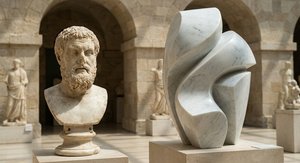
The Enduring Allure of Marble in Art History: From Classical Sculpture to Modern Abstraction
Explore the captivating history of marble sculpture from ancient Greece to modern art. Discover renowned artists like Canova & Michelangelo, carving techniques, and investment insights at ArtsDot.

10 легендарных бронзовых скульптур, изменивших искусство навсегда | ArtsDot
Погрузитесь в мир великих бронзовых скульптур! От Давида Микеланджело до работ Родена – история искусства, техники и вдохновения. Купите репродукции шедевров для вашего интерьера на ArtsDot.com

10 легендарных бронзовых шедевров, изменивших искусство | ArtsDot
Погрузитесь в мир великих бронзовых шедевров! От Давида Донателло до Мыслителя Родена – узнайте историю создания, технику и значение легендарных скульптур. Вдохновение для интерьера и музейное качество репродукций на ArtsDot.com.