

 Предпросмотр
 Поделиться
 Поделиться
 Детали произведения

 Скачать
 Похожие работы
 Рентгенография
 Слайд-шоу
 Статистика
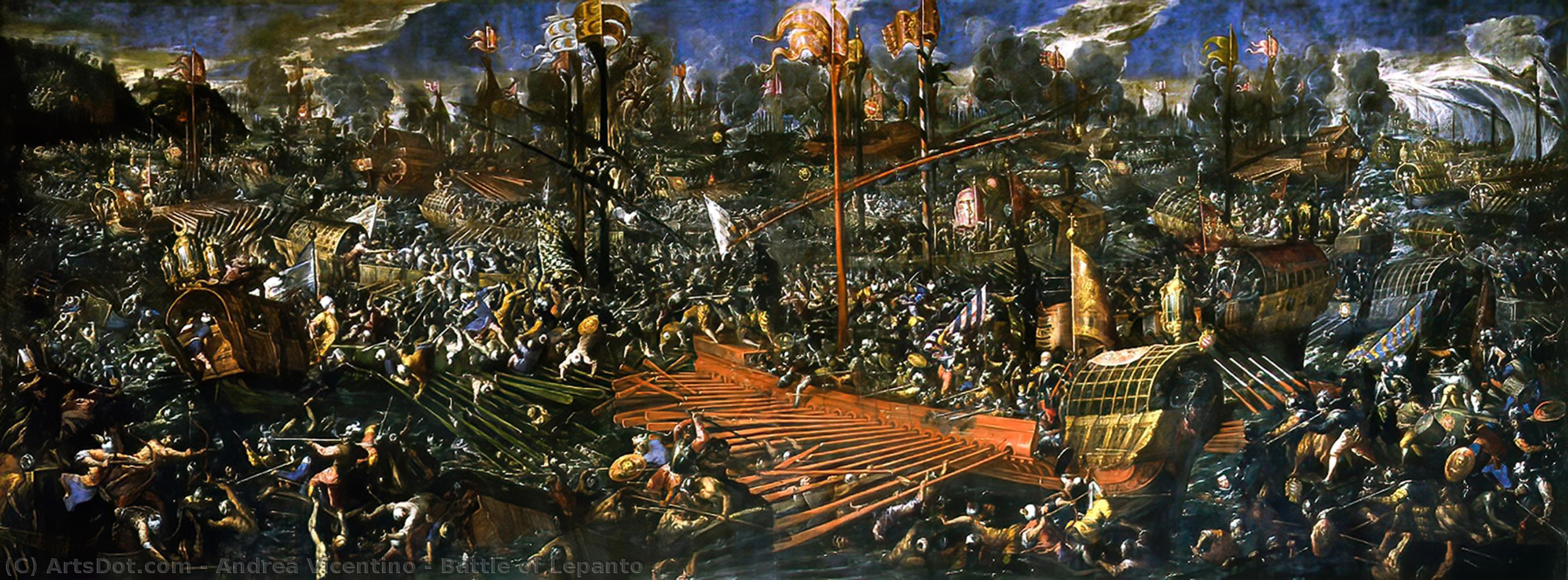
Battle of Lepanto


 Читать далее
Приобретите цифровое изображение высокого разрешения в улучшенном качестве, которое значительно превосходит онлайн-превью.
Каждый файл тщательно подготавливается нашими специалистами с использованием передовых инструментов и экспертной ручной ретуши. Мы гарантируем исключительную четкость, точную цветопередачу и детальную проработку каждого изображения.
Финальный файл доставляется по электронной почте в течение 72 часов и оптимизирован для немедленного использования в профессиональной среде, при верстке и печати. Это тот же уровень качества, которому доверяют ведущие дизайнерские студии, издательства и галереи.
Цифровое изображение
Скачайте файл высокого разрешения для личного использования, печати и творческих проектов. ( Перейти к печати Купить картину ручной работы)
Включено в каждый заказ цифровых изображений
Гарантия экспертной цифровой доставки
Выбирая ArtsDot.com, вы получаете не просто изображение — вы приобретаете профессионально обработанное цифровое произведение искусства, созданное с безупречной точностью и под защитой гарантии качества. Вот всё, что автоматически входит в ваш заказ:

Мгновенная доставка по e-mail
Ваш цифровой файл в высоком разрешении будет отправлен вам по электронной почте в течение 72 часов после оформления заказа — и сразу станет доступен для использования.

Цифровой файл с ИИ-улучшением
Ваше произведение искусства проходит профессиональную оптимизацию с использованием передовых инструментов ИИ и ручной обработки, что гарантирует максимальную детализацию, четкость и точность цветопередачи.

Бессрочная бесплатная повторная доставка
Случайно удалили или потеряли файл? Не беспокойтесь — мы отправим его вам повторно в любое время и совершенно бесплатно.

Без импортных пошлин — навсегда
Наслаждайтесь вашим произведением искусства мгновенно без таможенных пошлин, сборов или затрат на доставку — цифровые загрузки всегда не облагаются налогом.

Гарантия точности цветопередачи
Мы гарантируем, что ваше цифровое изображение максимально точно передает оригинальные цвета благодаря использованию профессиональных инструментов и систем управления цветом.

Гарантия удовлетворенности 100 дней
Если вы не будете удовлетворены своим цифровым изображением, мы внесем правки или вернем 100% стоимости в течение 100 дней — без лишних вопросов.

100% Гарантия возврата средств
Не удовлетворены покупкой? Получите полный возврат средств в течение 100 дней после получения цифрового файла — без лишних вопросов.

Скидки на оптовые заказы
Купите 3 изображения, сэкономьте 10% — Купите 5, сэкономьте 15% — Купите 10+, сэкономьте 20%. Отличное решение для творческих проектов, галерей и агентств.
The Epic Drama of Battle: Vicentino's Vision at Lepanto
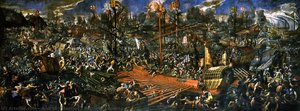
To stand before Andrea Vicentino’s monumental depiction of the Battle of Lepanto is to be swept away by a torrent of history, color, and sheer human drama. This oil on canvas from 1603 is not merely a painting; it is a visceral echo of a pivotal moment in maritime warfare and religious fervor. The air seems thick with salt spray, gunpowder smoke, and the cries of men locked in desperate combat. Vicentino masterfully captures the chaotic grandeur of the clash between the Christian Holy League and the formidable Ottoman fleet. One feels the very weight of history pressing down from the canvas, a testament to the sheer scale of conflict that defined an era.
Mastery of Mannerism and Composition
As a Venetian Mannerist painter, Vicentino imbued this scene with a dynamic energy characteristic of his time. His technique is breathtaking in its detail; observe the intricate rendering of sails catching the wind, the glint off polished armor, and the desperate gestures of the combatants. The composition itself is a whirlwind—a deliberate orchestration of colliding forms that guides the viewer's eye across the breadth of the canvas. It speaks to an artist deeply versed not only in anatomy and perspective but also in the dramatic staging required for grand historical narratives. Every brushstroke contributes to the overwhelming sense of motion, making the static surface feel vibrantly alive.
A Historical Crossroads: The Significance of 1571
The subject matter anchors the viewer firmly in the late sixteenth century. The Battle of Lepanto, fought on October 7, 1571, was more than just a naval skirmish; it represented a perceived turning point between civilizations and faiths. Vicentino’s choice to immortalize this event elevates the painting from mere genre scene to profound historical document. For the collector or admirer of art history, owning a reproduction allows one to possess a tangible link to such a monumental geopolitical struggle, transforming a wall space into a gallery of global significance.
Emotional Resonance and Decorative Impact
Beyond its historical weight, the emotional impact of this work is undeniable. It pulses with themes of courage, sacrifice, and the relentless tide of conflict. For interior design, such a piece serves as an unparalleled focal point. Imagine it dominating a grand hall or library; its scale commands attention while its narrative depth invites contemplation. While the subject matter is intense, Vicentino’s artistic handling ensures that the drama remains elevated—a spectacle of human spirit against overwhelming odds. Reproducing this work allows modern sensibilities to appreciate the raw power and sophisticated artistry of early Baroque epic painting.
Похожие произведения
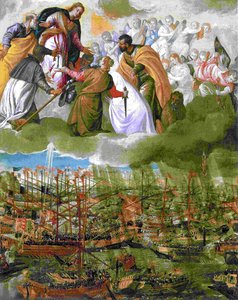

Биография художника
The Venetian Master of Mannerist Grandeur
Andrea Vicentino, a name that echoes through the corridors of the late Renaissance, stands as a pivotal figure in the Venetian artistic landscape. Born in the architecturally rich city of Vicenza around 1542, his early life was shaped by the profound traditions of the Maganza School. Under the watchful eye and expert tutelage of Giovanni Battista Maganza, Vicentino developed a command over monumental compositions and refined aesthetics that would later define his career. This formative period provided him with more than just technical skill; it instilled in him a deep understanding of how art could serve as a vessel for both civic pride and religious devotion.
As he matured, the artist’s identity became as fluid and vibrant as the Venetian art world itself. Known variously as Andrea Michieli or Michelli, his movement toward Venice in the mid-1570s marked a transformative era in his development. By 1583, he had officially registered with the Fraglia, the prestigious Venetian guild of painters. This affiliation was not merely a professional milestone but a gateway to the most influential circles of patronage in the Republic, allowing him to weave his brushstrokes into the very fabric of Venetian political and spiritual life.
A Legacy Written in the Palazzo Ducale
The true magnitude of Vicentino’s talent is perhaps best witnessed in his monumental collaborations within the Palazzo Ducale. Working alongside the legendary Tintoretto, Vicentino contributed to some of the most significant decorative programs of the era. His hand is visible in the grandeur of The Arrival of Henry III at Venice, a masterpiece located in the Sala delle Quattro Porte that captures the historical weight of the Habsburg monarch's visit. Through his work, the halls of the palace—including the Sala del Senato and Sala dello Scrutinio—were transformed into theatrical stages where history and myth converged.
His ability to navigate the complexities of Mannerism allowed him to master a style characterized by:
- Dramatic Composition: The use of elongated forms and intricate arrangements to create a sense of intellectual complexity.
- Luminous Coloration: A mastery of light and pigment that reflected the rich, atmospheric traditions of the Venetian school.
- Narrative Depth: An ability to blend historical accuracy with an almost cinematic sense of movement and emotion.
The Intersection of Devotion and Epic Drama
Beyond the political splendor of Venice, Vicentino’s oeuvre reached into the sacred heart of Italy. His ambitious undertaking at the Treviso Cathedral, the Madonna of the Rosary, serves as a testament to his capacity for profound religious expression. In this work, the artist moved away from the chaotic energy of battle to embrace a more intimate, devotional language, utilizing intricate detail and a soft, luminous glow to inspire piety in the faithful.
Yet, he was equally capable of capturing the visceral chaos of conflict. His 1603 depiction of the Battle of Lepanto remains one of his most evocative achievements. In this oil on canvas, the viewer is swept into a torrent of salt spray, gunpowder smoke, and the desperate cries of combatants. It is here that Vicentino’s Mannerist roots meet the raw energy of the late Renaissance, creating a visual echo of the clash between the Christian Holy League and the Ottoman fleet. Through his brush, the historical event transcends mere documentation to become an epic drama of human struggle and religious fervor.
Ultimately, the significance of Andrea Vicentino lies in his role as a bridge between eras. He carried the refined elegance of the Maganza tradition into the high-stakes, dramatic world of Venetian Mannerism, leaving behind a legacy of works that continue to command reverence for their technical brilliance and emotional resonance.
Andrea Vicentino
1542 - 1617 , Italy
Основные сведения
- Artistic Movement Or Style: Late Renaissance/Mannerist
- Artists Or Movements Influenced By This Artist: ['Tintoretto']
- Artists Who Influenced This Artist: ['Giovanni Battista Maganza']
- Date Of Birth: ca. 1542
- Date Of Death: ca. 1617
- Full Name: Andrea Vicentino
- Nationality: Italian
- Notable Artworks:
- Battle of Lepanto
- Virgin and Child entroned, with St Francis of Assisi, John the Baptist and a St. Bishop
- Place Of Birth: Vicenza, Italy