


 Предпросмотр
 Поделиться
 Поделиться
 Детали произведения

 Скачать
 Похожие работы
 Рентгенография
 Слайд-шоу
 Статистика
Мама Стойка (Улица Софии)
 Акрил на холсте
- Настенный декор
- Conceptual art, assemblage
 75.0 x 59.0 cm
 Национальная галерея Сингапура
 Читать далее
Приобретите цифровое изображение высокого разрешения в улучшенном качестве, которое значительно превосходит онлайн-превью.
Каждый файл тщательно подготавливается нашими специалистами с использованием передовых инструментов и экспертной ручной ретуши. Мы гарантируем исключительную четкость, точную цветопередачу и детальную проработку каждого изображения.
Финальный файл доставляется по электронной почте в течение 72 часов и оптимизирован для немедленного использования в профессиональной среде, при верстке и печати. Это тот же уровень качества, которому доверяют ведущие дизайнерские студии, издательства и галереи.
Цифровое изображение
Скачайте файл высокого разрешения для личного использования, печати и творческих проектов. ( Перейти к печати Купить картину ручной работы)
Включено в каждый заказ цифровых изображений
Гарантия экспертной цифровой доставки
Выбирая ArtsDot.com, вы получаете не просто изображение — вы приобретаете профессионально обработанное цифровое произведение искусства, созданное с безупречной точностью и под защитой гарантии качества. Вот всё, что автоматически входит в ваш заказ:

Мгновенная доставка по e-mail
Ваш цифровой файл в высоком разрешении будет отправлен вам по электронной почте в течение 72 часов после оформления заказа — и сразу станет доступен для использования.

Цифровой файл с ИИ-улучшением
Ваше произведение искусства проходит профессиональную оптимизацию с использованием передовых инструментов ИИ и ручной обработки, что гарантирует максимальную детализацию, четкость и точность цветопередачи.

Бессрочная бесплатная повторная доставка
Случайно удалили или потеряли файл? Не беспокойтесь — мы отправим его вам повторно в любое время и совершенно бесплатно.

Без импортных пошлин — навсегда
Наслаждайтесь вашим произведением искусства мгновенно без таможенных пошлин, сборов или затрат на доставку — цифровые загрузки всегда не облагаются налогом.

Гарантия точности цветопередачи
Мы гарантируем, что ваше цифровое изображение максимально точно передает оригинальные цвета благодаря использованию профессиональных инструментов и систем управления цветом.

Гарантия удовлетворенности 100 дней
Если вы не будете удовлетворены своим цифровым изображением, мы внесем правки или вернем 100% стоимости в течение 100 дней — без лишних вопросов.

100% Гарантия возврата средств
Не удовлетворены покупкой? Получите полный возврат средств в течение 100 дней после получения цифрового файла — без лишних вопросов.

Скидки на оптовые заказы
Купите 3 изображения, сэкономьте 10% — Купите 5, сэкономьте 15% — Купите 10+, сэкономьте 20%. Отличное решение для творческих проектов, галерей и агентств.
Mama Stall (Sophia Road): A Vibrant Echo of Singaporean Life
Ang Ah Tee’s “Mama Stall (Sophia Road)” isn't merely a depiction of a marketplace; it’s an immersive experience captured on canvas. Painted in 1986, this artwork embodies the spirit of Conceptual art and assemblage—a stylistic approach that prioritizes idea over traditional representation.
David Hammons, born July 24, 1943, in Springfield, Illinois, stands as a pivotal figure in contemporary sculpture. His artistic journey began outside formal academic training, fueled by a childhood marked by socioeconomic hardship and an early aversion to drawing—a reaction stemming from witnessing his family’s struggles.
This formative experience instilled within Hammons a profound awareness of social inequality and the often-unacknowledged realities faced by marginalized communities. These themes would become foundational to his artistic practice, informing his exploration of identity and challenging societal norms through provocative installations.
Style and Technique: Watercolor & Acrylics – A Harmonious Blend
“Mama Stall” showcases Ang Ah Tee’s masterful command of watercolor and acrylic pigments. The artist skillfully blends hues to create a luminous palette that faithfully reproduces the bustling atmosphere of Sophia Road, Singapore. Notice the layering of colors—particularly in capturing the dappled sunlight filtering through the foliage above the market stalls—demonstrating meticulous attention to detail.
Hammons’s sculptural work often utilizes found objects and unconventional materials – a technique mirroring Tee's approach in transforming everyday elements into powerful visual statements. This deliberate choice emphasizes materiality and invites viewers to consider the relationship between art and its environment.
Historical Context: Singapore’s Cultural Landscape
Singapore, at the time of “Mama Stall”’s creation, was undergoing significant transformations as it embraced multiculturalism and economic growth. Tee's artwork serves as a snapshot of this dynamic period—a celebration of local traditions alongside the burgeoning urban landscape.
Influenced by artists like Charles White, Bruce Nauman, and John Baldessari – whose explorations into conceptual art similarly questioned artistic conventions – Ang Ah Tee’s work aligns with a broader movement prioritizing intellectual engagement over purely aesthetic concerns. The artist's inclusion in the Cultural Medallion program underscores Singapore’s commitment to supporting artistic excellence.
Symbolism & Emotional Impact: Capturing Essence
"Mama Stall" transcends mere visual representation; it aims to convey an emotional resonance—the vibrancy of daily life, the energy of a community exchanging goods and fostering connections. The scattered birds symbolize freedom and movement, mirroring the dynamism of the marketplace scene.
Hammons’s sculptures similarly grapple with weighty subjects – race, identity, and social justice – reflecting Tee's dedication to confronting uncomfortable truths through artistic expression. Ultimately, “Mama Stall” invites contemplation on how art can illuminate the human experience and capture the essence of a particular place and time.
Where To Find This Artwork Reproduction
Interested in owning a stunning reproduction of Ang Ah Tee’s “Mama Stall”? Visit ArtsDot for high-quality prints and canvases available in various sizes.
Похожие произведения



Биография художника
David Hammons: A Sculptor of Urban Echoes
David Hammons, born in Springfield, Illinois, on July 24, 1943, is an American artist whose work has profoundly shaped the landscape of contemporary art. His career, spanning over half a century, is characterized by a unique blend of performance, sculpture, and found object assemblage – a potent combination that confronts issues of race, identity, and social commentary with both startling directness and subtle complexity. Hammons’s journey began not within the hallowed halls of formal art education, but through an early exposure to drawing and a subsequent disdain for the discipline itself, born from witnessing his family's struggles during his childhood. This formative experience instilled in him a deep-seated awareness of social inequality and the often-invisible realities faced by marginalized communities – themes that would become central to his artistic practice.Early Influences and Los Angeles Rebellion
Hammons’s early years in Los Angeles proved pivotal, exposing him to a vibrant and experimental art scene. He attended Chouinard Art Institute (now CalArts) and the Otis Art Institute, absorbing influences from a diverse group of artists who would later become known as the “LA Rebellion.” This collective, including figures like Charles White, Bruce Nauman, and John Baldessari, challenged prevailing artistic conventions with their politically charged work and exploration of personal identity. Hammons’s time within this circle fostered a spirit of collaboration and experimentation, laying the groundwork for his distinctive approach to art-making. Notably, he formed Studio Z (a.k.a. LA Rebellion) alongside Senga Nengudi and others, creating a space for shared artistic vision and pushing boundaries through performance and conceptual practices. The influence of artists like Charles White, with his focus on depicting the Black experience, is particularly evident in Hammons’s early work, though he ultimately forged his own path, utilizing found objects to create powerful visual metaphors.The Language of Symbolism and Urban Detritus
Hammons's artistic language evolved dramatically after relocating to New York City in 1974. He began to systematically collect discarded materials – bottle caps, chicken bones, hair clippings, and other remnants of urban life – transforming these seemingly mundane objects into potent symbols within his sculptures and installations. His work frequently engages with the iconography of African American culture, drawing on imagery from barbershops, street corners, and everyday experiences. The “Bliz-aard Ball Sale” (1983), for example, saw Hammons selling snowballs – a symbol of winter’s harshness and the challenges faced by Black communities – while simultaneously referencing the aspirational dreams of becoming an athlete. Similarly, his *How Ya Like Me Now?* series (1988) utilized images of black figures from popular culture to critique racial stereotypes and explore themes of identity and representation. Hammons's use of found objects isn’t merely decorative; it’s a deliberate strategy for disrupting conventional notions of beauty and value, forcing viewers to confront the overlooked aspects of urban existence.Performance and Body as Medium
A defining characteristic of Hammons’s practice is his incorporation of performance art. He frequently uses his own body as a medium, employing techniques like greasing himself and transferring images onto paper – creating what he calls “body prints.” These works are not simply self-portraits; they are explorations of the Black male form, imbued with layers of meaning related to vulnerability, resilience, and social visibility. His performance piece *Outrageous Grace* (1980) involved him walking through a crowded street while covered in grease, an act that challenged notions of public space and confronted issues of race and class. Hammons’s willingness to expose his own body – often in unconventional ways – demonstrates a radical commitment to confronting uncomfortable truths and disrupting established artistic norms.Legacy and Critical Recognition
David Hammons's impact on contemporary art is undeniable. His work has been exhibited extensively at major museums and galleries worldwide, including the Museum of Modern Art (MoMA) in New York City. He’s consistently resisted traditional gallery exhibitions, preferring to present his work in public spaces – parks, sidewalks, and urban environments – where it can engage with a wider audience. Hammons's art continues to provoke dialogue about race, identity, and social justice, cementing his position as one of the most important and influential artists working today. His ability to transform discarded objects into powerful symbols, coupled with his willingness to confront difficult subjects through performance and sculpture, ensures that David Hammons’s legacy will continue to resonate for generations to come.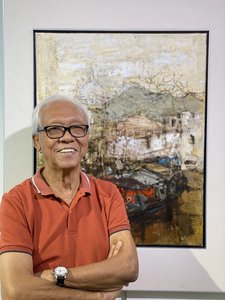
Анг Ах Ти
1943 - , США