

 Предпросмотр
 Поделиться
 Поделиться
 Детали произведения

 Скачать
 Похожие работы
 Рентгенография
 Слайд-шоу
 Статистика
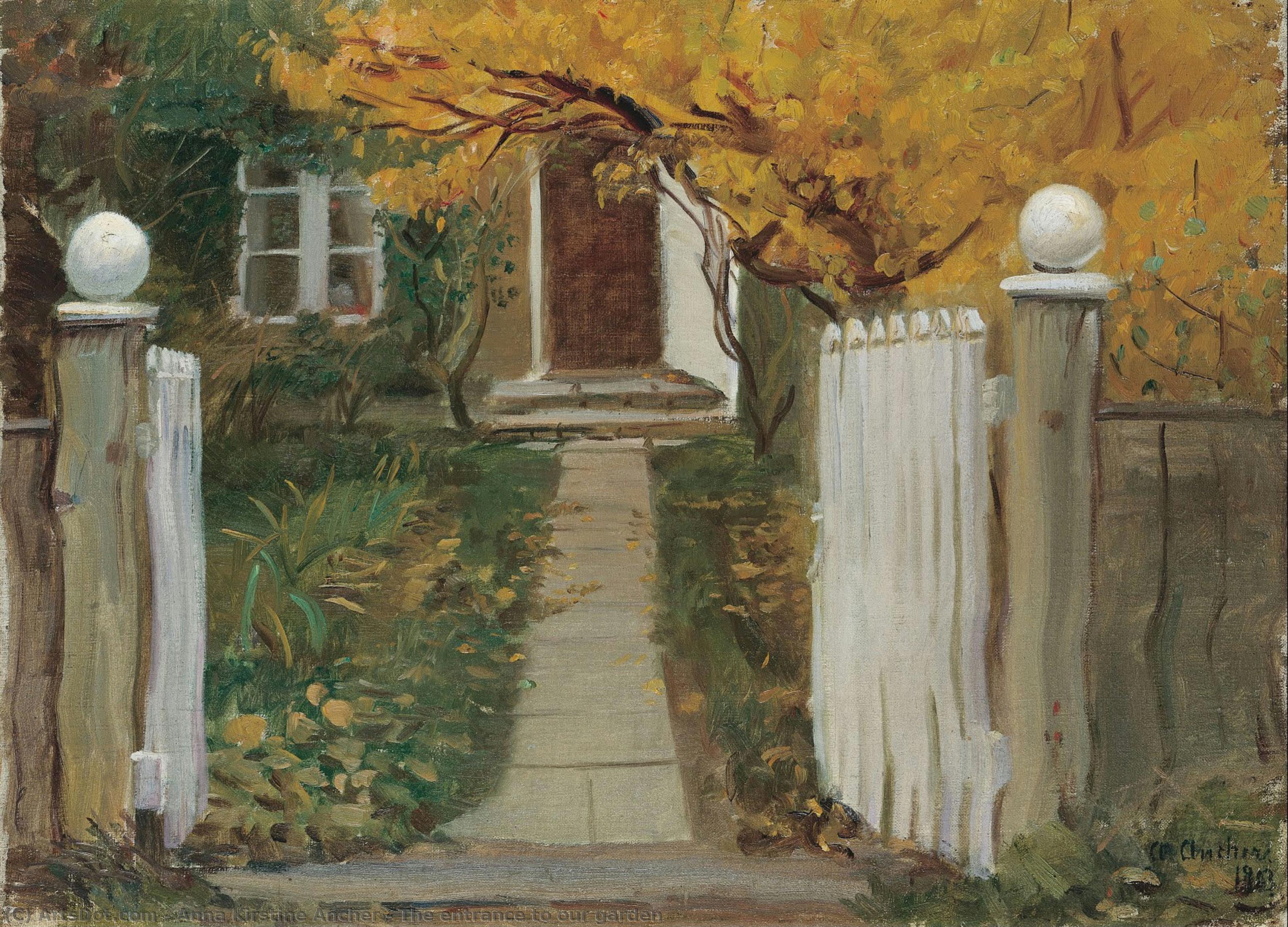
The entrance to our garden
 Acrylic On Canvas
- WallArt
- Impressionism
 50.0 x 36.0 cm
 Skagens Museum
 Читать далее
Приобретите цифровое изображение высокого разрешения в улучшенном качестве, которое значительно превосходит онлайн-превью.
Каждый файл тщательно подготавливается нашими специалистами с использованием передовых инструментов и экспертной ручной ретуши. Мы гарантируем исключительную четкость, точную цветопередачу и детальную проработку каждого изображения.
Финальный файл доставляется по электронной почте в течение 72 часов и оптимизирован для немедленного использования в профессиональной среде, при верстке и печати. Это тот же уровень качества, которому доверяют ведущие дизайнерские студии, издательства и галереи.
Цифровое изображение
Скачайте файл высокого разрешения для личного использования, печати и творческих проектов. ( Перейти к печати Купить картину ручной работы)
Включено в каждый заказ цифровых изображений
Гарантия экспертной цифровой доставки
Выбирая ArtsDot.com, вы получаете не просто изображение — вы приобретаете профессионально обработанное цифровое произведение искусства, созданное с безупречной точностью и под защитой гарантии качества. Вот всё, что автоматически входит в ваш заказ:

Мгновенная доставка по e-mail
Ваш цифровой файл в высоком разрешении будет отправлен вам по электронной почте в течение 72 часов после оформления заказа — и сразу станет доступен для использования.

Цифровой файл с ИИ-улучшением
Ваше произведение искусства проходит профессиональную оптимизацию с использованием передовых инструментов ИИ и ручной обработки, что гарантирует максимальную детализацию, четкость и точность цветопередачи.

Бессрочная бесплатная повторная доставка
Случайно удалили или потеряли файл? Не беспокойтесь — мы отправим его вам повторно в любое время и совершенно бесплатно.

Без импортных пошлин — навсегда
Наслаждайтесь вашим произведением искусства мгновенно без таможенных пошлин, сборов или затрат на доставку — цифровые загрузки всегда не облагаются налогом.

Гарантия точности цветопередачи
Мы гарантируем, что ваше цифровое изображение максимально точно передает оригинальные цвета благодаря использованию профессиональных инструментов и систем управления цветом.

Гарантия удовлетворенности 100 дней
Если вы не будете удовлетворены своим цифровым изображением, мы внесем правки или вернем 100% стоимости в течение 100 дней — без лишних вопросов.

100% Гарантия возврата средств
Не удовлетворены покупкой? Получите полный возврат средств в течение 100 дней после получения цифрового файла — без лишних вопросов.

Скидки на оптовые заказы
Купите 3 изображения, сэкономьте 10% — Купите 5, сэкономьте 15% — Купите 10+, сэкономьте 20%. Отличное решение для творческих проектов, галерей и агентств.
A Window Into Skagen’s Soul: Exploring Anna Kirstine Ancher's “The Entrance to Our Garden”
Anna Kirstine Brøndum Ancher, universally recognized as Anna Ancher, stands as a cornerstone of Danish Impressionism and arguably the most celebrated figure within the Skagen Painter collective. Born in 1859 amidst the windswept shores of Skagen – a remote fishing village nestled at Jutland’s northernmost tip – her artistic journey was inextricably intertwined with the very landscape that would become synonymous with her distinctive aesthetic. Unlike many contemporaries drawn to Skagen's dramatic Nordic light, Ancher possessed an unparalleled connection to her birthplace; she *lived* there, breathed its air, and absorbed its ceaseless rhythms of change. This profound immersion fueled a creative spirit that transcended mere observation, resulting in paintings imbued with an authenticity and emotional resonance rarely achieved by artists distanced from their formative surroundings. Her father, Erik Andersen Brøndum, proprietor of the prestigious Brøndums Hotel – a haven for artistic pilgrims seeking to capture Skagen’s ethereal beauty – undoubtedly nurtured her early passion for art through constant exposure to stimulating intellectual discourse and creative camaraderie. From her earliest years, Ancher was surrounded by an environment brimming with artistic inspiration, shaping her lifelong dedication to portraying the subtleties of everyday life with remarkable sensitivity and precision.Style and Technique: Impressionistic Luminosity
“The Entrance to Our Garden,” completed around 1900, exemplifies Ancher’s signature Impressionist style—a deliberate rejection of academic conventions in favor of capturing fleeting moments of light and color. Departing from traditional realism, Ancher employed loose brushstrokes and vibrant hues to convey the atmosphere of a tranquil Skagen garden at dusk. The painting utilizes broken color – layering translucent glazes over underlying pigments – creating an illusion of shimmering luminescence that perfectly encapsulates the diffused glow of twilight filtering through the foliage. Careful attention is paid to tonal variations, subtly modulating light and shadow to sculpt form and imbue the scene with depth. Unlike many Impressionists who favored expansive landscapes, Ancher focused on intimate interiors—a deliberate choice reflecting her belief in portraying human experience within its immediate context. This technique prioritizes capturing not just what *is* seen but also how it *feels*, prioritizing emotional impact over photographic accuracy.Historical Context: The Skagen Painter Colony
“The Entrance to Our Garden” resides firmly within the vibrant milieu of the Skagen Painter colony—a group of Danish artists who established a permanent residence in Skagen during the late 19th and early 20th centuries. Drawn by the region’s unparalleled light conditions, these painters sought to liberate themselves from artistic constraints imposed by Parisian academies, embracing instead a more spontaneous and expressive approach. Ancher was among the most prolific members of this influential collective, alongside Edvard Munch, Karl Nordström Johannsen, Lauritz Tuxen, and Johannes Larsen. The Skagen Painters championed a humanist vision—celebrating rural life, familial bonds, and the beauty of the natural world—reflecting the broader cultural currents of their time. Their work served as a powerful counterpoint to prevailing artistic trends, establishing Impressionism as a dominant force in Danish art and cementing Skagen’s reputation as an epicenter of artistic innovation.Symbolism: Domestic Tranquility and Artistic Reflection
Beyond its masterful technique, “The Entrance to Our Garden” resonates with subtle symbolic layers. The depiction of a simple garden gate—a motif frequently revisited by Ancher—represents not merely physical space but also the boundaries between inner contemplation and outward engagement. The soft pastel hues – predominantly greens, whites, and yellows – evoke feelings of serenity and peace, mirroring Ancher’s own desire to capture the essence of domestic tranquility. Furthermore, the inclusion of two white globes atop the fence symbolizes illumination—both literal and metaphorical—representing Ancher's unwavering commitment to artistic exploration and her profound appreciation for Skagen’s radiant light. The painting serves as a testament to Ancher’s ability to transform ordinary scenes into expressions of enduring beauty and emotional depth.Emotional Impact: Capturing Essence Through Light
Ultimately, “The Entrance to Our Garden” succeeds in conveying a palpable sense of warmth and nostalgia—a feeling deeply rooted in Ancher's own recollections of Skagen life. The luminous quality of the painting captures not just visual splendor but also the intangible spirit of place—the quiet contentment derived from observing familiar surroundings bathed in golden light. It invites viewers to pause, contemplate, and reconnect with the simple pleasures of existence, mirroring Ancher’s artistic ethos: to distill complex emotions into evocative images that transcend time and circumstance. This artwork remains a poignant reminder of Ancher's enduring legacy as one of Denmark’s most beloved Impressionist painters—a testament to her unwavering dedication to portraying human experience with sensitivity, artistry, and an unparalleled understanding of light’s transformative power.Похожие произведения
Биография художника
Anna Ancher: A Life Illuminated by Skagen’s Light
Anna Kirstine Brøndum Ancher, universally known as Anna Ancher, occupies a truly exceptional place in the history of Danish art – a position forged not just through her artistic talent but also by her deep connection to a specific time and place. Born in 1859 in Skagen, a remote fishing village clinging to the very northernmost tip of Jutland, she was inextricably linked to the landscape, its people, and the ever-shifting light that defined this unique corner of Denmark. Unlike many of her contemporaries drawn to Skagen by the allure of the dramatic Nordic winter, Anna *was* Skagen – born, raised, and profoundly shaped by its bracing winds, vibrant community, and the constant dance of sunlight on the sea. This intimate relationship with her surroundings infused her work with an unparalleled authenticity and emotional resonance, distinguishing her from artists who merely observed from a distance. Her father, Erik Andersen Brøndum, was the proprietor of the renowned Brøndums Hotel – a bustling hub for visiting artists seeking inspiration in Skagen’s raw beauty, providing Anna with constant exposure to creative energy and intellectual exchange from an early age. This formative environment laid the groundwork for a life dedicated entirely to capturing the essence of her beloved village on canvas.Early Years and Artistic Training
Anna's artistic inclinations manifested remarkably early, prompting her family to provide her with opportunities for formal training. She began her artistic education at the Vilhelm Kyhn College of Painting in Copenhagen, where she honed her foundational skills in drawing and developed a distinctive style characterized by meticulous observation and a nuanced understanding of color theory. However, it was her time spent studying in Paris under the tutelage of Pierre Puvis de Chavannes – a renowned Symbolist painter known for his evocative murals and allegorical figures – that truly broadened her artistic horizons. This Parisian sojourn proved invaluable, exposing her to new techniques and perspectives, yet she steadfastly maintained her connection to her Nordic roots, drawing inspiration from the light and atmosphere of Skagen. Crucially, during this period, she encountered Marie Triepcke (later Krøyer), another talented artist who would become a lifelong friend and collaborator. Their shared artistic pursuits and intellectual discussions undoubtedly enriched their creative journeys. Returning to Denmark, Anna married Michael Ancher in 1880 – a fellow Skagen painter whose own talent and unwavering support proved instrumental to her success. Their union was not merely a personal one; it became a powerful partnership of mutual inspiration and artistic collaboration.The Essence of Skagen: Intimate Portraits and Light’s Dance
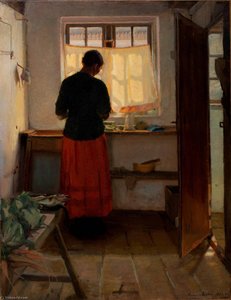
Anna Ancher's artistic focus centered almost exclusively on portraying the everyday lives of the people of Skagen – fishermen, their wives, children, and local artisans – within intimate domestic settings. She deliberately eschewed grand historical narratives or mythological subjects, instead choosing to capture the quiet beauty and profound emotional depth found in ordinary moments. Her paintings are characterized by an extraordinary sensitivity to light and color, meticulously rendered to convey the fleeting effects of sunlight streaming through windows, illuminating interiors with a warm, inviting glow, or reflecting off the wet surfaces of boats returning from the sea. Works such as *Blue Ane* (1882) exemplify her mastery of color interplay, while *The Girl in the Kitchen* (1883-1886) offers a poignant and deeply moving glimpse into the lives of Skagen’s residents. She possessed an exceptional ability to evoke atmosphere and emotion through subtle shifts in tone and texture – capturing not just what she saw but also how it *felt* to be present within those scenes. Her later works, including *Interior with Clematis* (1913), further demonstrate her evolving skill in exploring the complex relationship between light, shadow, and human experience. Anna’s approach was deeply rooted in observation and a profound understanding of the natural world, resulting in paintings that are both visually stunning and emotionally resonant.A Legacy of Innovation and Female Artistic Voice
Anna Ancher's contributions to Danish art extend far beyond her individual paintings. As one of the first female artists to achieve widespread recognition within the male-dominated artistic circles of her time, she challenged conventional expectations and paved the way for future generations of women painters. Her work played a pivotal role in the development of Danish Impressionism and the broader Nordic Modern Breakthrough movement – a period characterized by a renewed interest in capturing the essence of everyday life and embracing innovative techniques. Furthermore, Anna’s unwavering commitment to portraying the lives of ordinary people, particularly women, offered a refreshing counterpoint to the prevailing artistic trends that often focused on idealized subjects or historical events. Her legacy is not simply one of aesthetic beauty but also of courage, perseverance, and a profound belief in the power of art to illuminate the human experience. Today, her paintings are treasured within prestigious collections such as the Hirschsprung Collection in Copenhagen, the Helga Ancher Foundation, and the Skagen Museum – enduring testaments to her artistic merit and lasting influence. The Anchers’ home in Skagen has been preserved as a museum, *Anchers Hus*, offering visitors a unique opportunity to step back in time and experience the world that inspired her art.Key Works
* *Blue Ane* (1882) * *The Girl in the Kitchen* (1883-1886) * *Syende fiskerpige* (Fishing Girl Sewing, 1887) * *Interior with Clematis* (1913) * *Sheep Shearing* (1894)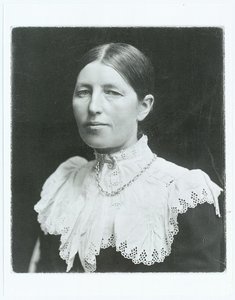
Анна Анчер
1859 - 1935 , Дания
Основные сведения
- Artistic Movement Or Style: Импрессионизм, скандинавское искусство
- Artists Or Movements Influenced By This Artist: ['Ханс Андерсен Брендекильд']
- Artists Who Influenced This Artist:
- Пьер Пувис де Шаванн
- Мари Триепке Крёйер
- Date Of Birth: 18 августа 1859 г.
- Date Of Death: 15 апреля 1935 г.
- Full Name: Анна Кристина Брёндум Анчер
- Nationality: Датский
- Notable Artworks:
- Сияние в синей комнате
- Девочка на кухне
- Рыбаки
- Place Of Birth: Скьяген, Дания