


 Предпросмотр
 Поделиться
 Поделиться
 Детали произведения

 Скачать
 Похожие работы
 Рентгенография
 Слайд-шоу
 Статистика
Retrato del retrato de Sor María Ygnacia del Espíritu Santo
 Oil On Canvas
- WallArt
- Contemporary Realism
 2012
2012- Renaissance
 91.0 x 91.0 cm
 Fundación Universidad de las Américas Puebla
 Читать далее
Приобретите цифровое изображение высокого разрешения в улучшенном качестве, которое значительно превосходит онлайн-превью.
Каждый файл тщательно подготавливается нашими специалистами с использованием передовых инструментов и экспертной ручной ретуши. Мы гарантируем исключительную четкость, точную цветопередачу и детальную проработку каждого изображения.
Финальный файл доставляется по электронной почте в течение 72 часов и оптимизирован для немедленного использования в профессиональной среде, при верстке и печати. Это тот же уровень качества, которому доверяют ведущие дизайнерские студии, издательства и галереи.
Цифровое изображение
Скачайте файл высокого разрешения для личного использования, печати и творческих проектов. ( Перейти к печати Купить картину ручной работы)
Включено в каждый заказ цифровых изображений
Гарантия экспертной цифровой доставки
Выбирая ArtsDot.com, вы получаете не просто изображение — вы приобретаете профессионально обработанное цифровое произведение искусства, созданное с безупречной точностью и под защитой гарантии качества. Вот всё, что автоматически входит в ваш заказ:

Мгновенная доставка по e-mail
Ваш цифровой файл в высоком разрешении будет отправлен вам по электронной почте в течение 72 часов после оформления заказа — и сразу станет доступен для использования.

Цифровой файл с ИИ-улучшением
Ваше произведение искусства проходит профессиональную оптимизацию с использованием передовых инструментов ИИ и ручной обработки, что гарантирует максимальную детализацию, четкость и точность цветопередачи.

Бессрочная бесплатная повторная доставка
Случайно удалили или потеряли файл? Не беспокойтесь — мы отправим его вам повторно в любое время и совершенно бесплатно.

Без импортных пошлин — навсегда
Наслаждайтесь вашим произведением искусства мгновенно без таможенных пошлин, сборов или затрат на доставку — цифровые загрузки всегда не облагаются налогом.

Гарантия точности цветопередачи
Мы гарантируем, что ваше цифровое изображение максимально точно передает оригинальные цвета благодаря использованию профессиональных инструментов и систем управления цветом.

Гарантия удовлетворенности 100 дней
Если вы не будете удовлетворены своим цифровым изображением, мы внесем правки или вернем 100% стоимости в течение 100 дней — без лишних вопросов.

100% Гарантия возврата средств
Не удовлетворены покупкой? Получите полный возврат средств в течение 100 дней после получения цифрового файла — без лишних вопросов.

Скидки на оптовые заказы
Купите 3 изображения, сэкономьте 10% — Купите 5, сэкономьте 15% — Купите 10+, сэкономьте 20%. Отличное решение для творческих проектов, галерей и агентств.
Antonio Álvarez Morán’s ‘Retrato del Retrato de Sor María Ygnacia del Espíritu Santo’: A Window into Faith and Tradition
This captivating oil painting, titled “Retrato del Retrato de Sor María Ygnacia del Espíritu Santo,” offers a profound glimpse into the devotional practices of 18th-century Spain through the skilled hand of Antonio Álvarez Morán. Executed in 2012, this piece transcends mere portraiture; it’s an immersive experience of faith, meticulously rendered with a reverence that speaks to centuries of artistic tradition. The central figure, a nun identified as Sor María Ygnacia del Espíritu Santo, is presented with dignified solemnity, clutching a rosary and holding the Bible – potent symbols of her unwavering belief. Flanking her are angelic and soldierly figures, adding layers of narrative complexity and reflecting the dualities inherent in religious life: piety versus protection, spirituality versus earthly authority.
- A Masterful Composition: The painting’s composition is deliberately centered, drawing the viewer's eye directly to Sor María Ygnacia’s face – a study in serene contemplation. The use of shallow perspective and layered shading creates a sense of depth, while geometric elements within the ornate gold frame provide a formal counterpoint to the organic forms of the figure and her surroundings.
- Technique & Materials: Álvarez Morán's technique is characterized by meticulous brushwork and glazing, hallmarks of Spanish Baroque painting. The impasto-like texture, particularly evident in the fabric folds and lettering, adds a tactile quality to the work, inviting close inspection and revealing the artist’s deliberate layering of color and detail. The use of oil paints on canvas ensures rich luminosity and longevity.
Decoding Symbolism: Faith, History, and Narrative
Beyond its aesthetic qualities, “Retrato del Retrato de Sor María Ygnacia del Espíritu Santo” is laden with symbolic meaning. The inclusion of the angel and soldier figures suggests a broader context – a representation of divine guidance alongside earthly defense. Crucially, the densely layered text that forms the background isn’t merely decorative; it's biographical information about the subject, anchoring the painting within its historical moment. This layering of narrative—visual and textual—reinforces the theme of faith as a continuous thread connecting the past to the present.
- Religious Iconography: The work aligns with established religious iconography prevalent in 18th-century Spanish art, reflecting the deep piety of the era.
- Historical Context: The painting offers a window into the lives and beliefs of women within the Catholic Church during this period.
The Artist’s Vision & Emotional Impact
Antonio Álvarez Morán's artistic approach, rooted in realism yet infused with a deep understanding of religious symbolism, results in an artwork that evokes a powerful sense of reverence and solemnity. The soft, diffused lighting further enhances this effect, illuminating the subject’s face and highlighting the textures of the paint. The overall impression is one of dignified piety – a connection to religious history that resonates across time. This reproduction captures not just an image but the very essence of faith and devotion, making it a compelling addition to any collection or interior space.
Size:** 91 x 91 cm Date:** 2012 Artist:** Antonio Álvarez MoránПохожие произведения


Биография художника
Joan Mitchell: A Landscape of the Soul
Joan Mitchell (1925–1992) wasn’t simply a painter; she was an explorer, venturing into the raw and visceral territories of color and form to capture the essence of experience. Her career, spanning over four decades from her debut in New York in 1952 until her passing in France, is marked by a remarkable evolution—a journey from early figurative work to a powerfully abstract style deeply rooted in observation and emotion. Born in Chicago amidst an environment that fostered artistic appreciation – frequent visits to the symphony and exposure to poetry – Mitchell’s initial training at the School of the Art Institute of Chicago laid the groundwork for her distinctive approach. However, it was her year spent in France (1949-1950) that proved transformative, pushing her towards a more fragmented and expressive style, a departure from traditional representation. This period witnessed a shift toward abstraction, fueled by encounters with European modernism and a growing desire to convey inner landscapes rather than merely depicting external ones. Mitchell’s work is immediately recognizable for its bold use of color—a palette often described as “violent” or “intense,” yet always imbued with a profound sense of feeling. She didn't simply apply colors; she wrestled with them, layering and juxtaposing hues to create dynamic fields that pulsated with energy. Her subjects – primarily landscapes, though increasingly incorporating elements of architecture and the human figure—were rarely rendered realistically. Instead, they served as catalysts for her emotional response, becoming vehicles for expressing a complex range of feelings: joy, sorrow, anxiety, and wonder. Influences on Mitchell’s work are diverse and layered. The gestural abstraction of Jackson Pollock undoubtedly played a role, though she developed a distinctly more controlled and deliberate approach. She also drew inspiration from the works of German Expressionists like Ernst Ludwig Kirchner, whose use of color to convey psychological states resonated deeply with her own artistic vision. Furthermore, Mitchell’s engagement with poetry—particularly the work of W.H. Auden and Ezra Pound—informed her process, encouraging a simultaneous exploration of visual and verbal imagery.The Emergence of Abstract Expressionism
Mitchell's rise to prominence coincided with the burgeoning movement of Abstract Expressionism in the 1950s. While she initially hesitated to fully embrace the label, her work undeniably shared key characteristics with this influential style: a focus on spontaneous gesture, an exploration of inner experience, and a rejection of traditional representational conventions. However, Mitchell’s approach diverged from some of her male counterparts in the movement. Her landscapes were rarely monumental or heroic; instead, they possessed a quiet intimacy, reflecting a more personal and introspective sensibility. Her early exhibitions at Betty Parsons Gallery in New York helped establish her reputation within the Abstract Expressionist circle, showcasing works like “Red and Blue” (1958) and “Orange and Black Wall” (1959), which demonstrated her mastery of color and her ability to evoke complex emotions through purely abstract means. These paintings weren’t simply arrangements of shapes and colors; they were windows into Mitchell's soul, revealing a deeply felt connection to the natural world and a profound understanding of human emotion.Technique and Process
Mitchell’s painting process was characterized by a remarkable physicality and a willingness to embrace chance. She often worked directly on the canvas with large brushes, applying paint in thick, gestural strokes—a technique she referred to as “scumbling.” She would build up layers of color, scraping back and reworking areas until she achieved the desired effect. Mitchell’s studio was a chaotic but inspiring space, filled with sketches, photographs, and studies – evidence of her meticulous observation and relentless experimentation. She frequently used photographs as reference material, not to replicate reality, but to distill essential elements—light, shadow, texture—and translate them into color fields. Her process wasn't about imposing a preconceived idea onto the canvas; it was about allowing the materials themselves to guide her hand, resulting in paintings that felt both spontaneous and carefully considered.Legacy and Recognition
Despite facing initial resistance from some critics who questioned the “meaning” of her abstract landscapes, Joan Mitchell’s work gradually gained recognition as a significant contribution to American art. Her inclusion in the 1960 Whitney Museum of American Art retrospective on Abstract Expressionism solidified her place within the movement. Throughout her career, she exhibited extensively in major museums and galleries around the world, including the Tate Gallery in London, the Musée d’Art Moderne de la Ville de Paris, and the National Gallery of Art in Washington D.C. Today, Joan Mitchell is celebrated as one of the most important abstract artists of the post-war era—a visionary whose bold use of color and her deeply personal approach to landscape painting continue to resonate with audiences today. Her work resides in numerous prestigious collections, including the San Francisco Museum of Modern Art (SFMOMA), the British Museum n London, and the Tel Aviv Museum of Art, ensuring that her powerful vision will endure for generations to come.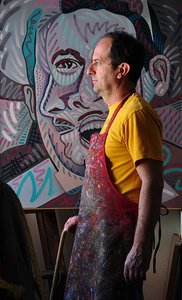
Антонио Альварес Моран
1959 - , Мексика