


 Предпросмотр
 Поделиться
 Поделиться
 Детали произведения

 Скачать
 Похожие работы
 Рентгенография
 Слайд-шоу
 Статистика
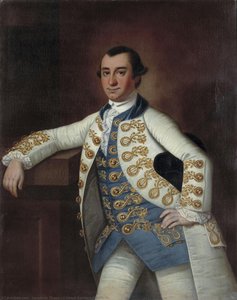
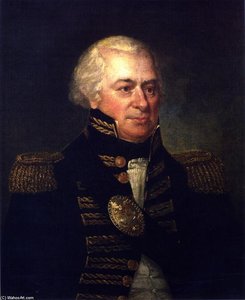
Portrait of Teniente de Navío Emparan

 Читать далее
Масляная репродукция ручной работы
Картина маслом на холсте в выбранном вами размере и раме, написанная на заказ нашими художниками. ( Перейти к печати Перейти к цифровым изображениям)




































Выберите один из наших стандартных размеров, соответствующих оригинальным пропорциям произведения искусства.

Вы можете указать собственные размеры, чтобы картина идеально вписалась в выбранную раму или пространство. Если выбранный вами размер не соответствует пропорциям оригинала, мы либо обрежем полотно, либо расширим его за счет дополнительных элементов, написанных вручную. Цифровой макет будет отправлен вам на утверждение перед началом производства.
Обратите внимание, что предварительный просмотр на экране не отражает фактическую обрезку или расширение. Только макет точно покажет окончательную композицию.
Хотя доступны индивидуальные размеры, мы рекомендуем выбирать вариант из предопределенного списка, чтобы сохранить исходные пропорции.
После оформления заказа команда ArtsDot.com свяжется с клиентом по электронной почте для уточнения деталей и предоставит предварительный макет
Доставка по всему миру () за 3–4 недели вместо стандартных 5 недель. (15 Сентябрь). Без компромиссов в качестве.

Бесплатная экспресс-доставка по всему миру

Высококачественный льняной холст

Полное страхование доставки

Гарантия возмещения таможенных пошлин

Гарантия точного соответствия цветов

100-дневная политика возврата (только при обнаружении дефектов)

Гарантия возврата 100% средств

Предложение оптовых скидок
 Вариант со стеклом доступен только для размеров менее 110 см

Portrait of Teniente de Navío Emparan
Техника репродукции
Размер репродукции
-


Итоговая стоимость
$ 263
Похожие произведения
Биография художника
A Neoclassical Voice of Enlightenment Spain
Antonio Carnicero y Mancio stands as a pivotal figure in Spanish art during the late Baroque and early neoclassical periods, embodying the intellectual fervor and artistic innovation characteristic of the Enlightenment. Born in Salamanca, Spain, in 1748, he descended from a family deeply steeped in artistic tradition. His father, Alejandro Carnicero, was a renowned sculptor who served the royal court of Charles III, fostering an environment that nurtured Antonio’s burgeoning talent from his earliest years. Alongside his brothers, Gregorio and Isidro—both accomplished artists in their own right—Antonio received an exceptional education that laid the groundwork for a prolific career spanning painting, printmaking, and theatrical design.
His formative training began at the Royal Academy of Fine Arts of San Fernando in Madrid, where he entered in 1758. It was here that he honed his technical skills under renowned instructors and absorbed the stylistic precepts of the neoclassical movement, which favored clarity, order, and classical ideals. Recognizing the necessity of an artistic pilgrimage to truly master his craft, Carnicero embarked on a transformative journey to Rome in 1766. Accompanied by his brother Isidro, he immersed himself in the vibrant artistic milieu of the papal city. Studying under masters such as Giovanni Battista Piranesi and Giuseppe Fabrizi profoundly shaped his aesthetic sensibilities, infusing his work with a sophisticated understanding of light, structure, and classical composition.
Mastery of Portraiture and Historical Narrative
Upon returning to Madrid in 1766, Carnicero swiftly established himself as a respected artist, securing prestigious commissions for ecclesiastical institutions, aristocratic patrons, and the royal household. He possessed a remarkable ability to blend classical ideals with a distinct Spanish realism, producing works imbued with grace, elegance, and meticulous detail. His talent for portraiture is particularly noteworthy; he captured the essence of his subjects with a refined dignity that reflected the social hierarchies of the era. Notable examples include his Portrait of Teniente de Navío Emparan, which showcases naval authority through precise detail, and his Portrait of María Luisa of Parma, a work that exemplifies neoclassical elegance.
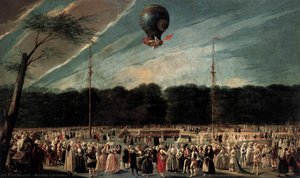
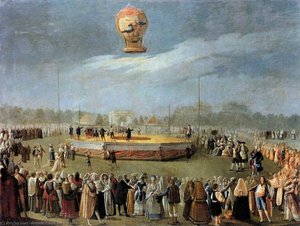
Beyond the intimate scale of portraiture, Carnicero demonstrated an extraordinary versatility in capturing the grander, more dynamic moments of his time. He was a master of visual storytelling, capable of documenting both the political figures of his day—such as Pedro Rodríguez de Campomanes—and the technological wonders of the age. One of his most captivating achievements is his depiction of the Ascent of the Monsieur Bouclé-s Montgolfier Balloon in the Gardens of Aranjuez. This oil painting serves as a breathtaking historical window, capturing the bustling energy and scientific wonder surrounding the early hot air balloon era, rendered with the rich textures and atmospheric depth characteristic of his mature style.
A Legacy of Versatility and Cultural Impact
The scope of Carnicero’s artistic output extended far beyond the confines of easel painting. He was a true polymath of the visual arts, contributing significantly to various decorative and illustrative disciplines. His career was marked by several key achievements that solidified his place in Spanish art history:
- Royal Collaborations: He worked on monumental tapestry cartoons commissioned by Charles IV for the royal palace, demonstrating his skill as a large-scale designer.
- Theatrical Innovation: As a decorator for Madrid's Teatro de la Cruz and Teatro del Principe, he helped shape the visual landscape of Spanish performing arts.
- Literary Illustration: Between 1780 and 1782, he provided exquisite illustrations for a deluxe printing of Don Quixote, bridging the gap between fine art and literature.
- Printmaking and Miniatures: He was recognized as an excellent miniaturist and engraver, showcasing a precision that allowed him to work across vastly different scales.
Ultimately, Antonio Carnicero y Mancio’s significance lies in his ability to act as a bridge between eras. His work captures the transition from the ornate flourishes of the Baroque to the disciplined clarity of Neoclassicism, all while documenting the profound societal shifts of 18th and 19th-century Spain. Through his portraits, genre scenes, and historical chronicles, he left behind a visual legacy that continues to offer invaluable insights into the spirit of the Enlightenment.
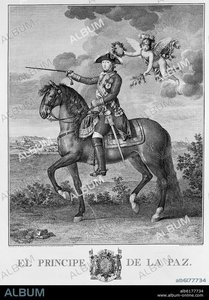
Antonio Carnicero y Mancio
1748 - 1814 , Spain
Основные сведения
- Artistic Movement Or Style: Neoclassical
- Artists Or Movements Influenced By This Artist: ['Romanticism']
- Artists Who Influenced This Artist:
- Alessandro Albacyni
- Francisco Bayeu
- Date Of Birth: January 10, 1748
- Date Of Death: 1814
- Full Name: Antonio Carnicero y Mancio
- Nationality: Spanish
- Notable Artworks:
- Portrait of Pedro Rodríguez de Campomanes
- Ascent of the Monsieur Bouclé-s Montgolfier Balloon in the G....dens of Aranjuez
- Place Of Birth: Salamanca, Spain
Похожие статьи
Величие XVIII века: Топ-10 шедевров искусства для вашего интерьера
Погрузитесь в эпоху рококо и барокко! Топ-10 шедевров XVIII века от Буше, Фрагонара и Рейнольдса. Узнайте историю создания культовых картин и вдохновитесь для декора вашего дома. Репродукции высокого качества на ArtsDot.com
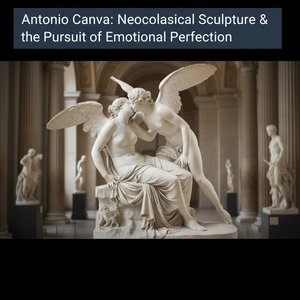
Antonio Canova: Neoclassical Sculpture & the Pursuit of Emotional Perfection
Explore the life & art of Antonio Canova, the greatest Neoclassical sculptor. Discover his masterpieces, innovative techniques, and lasting influence on fine art collecting. Expert insights for discerning investors.
Rafael de Penagos: A Study in Spanish Portraiture & Artistic Identity
Explore the life & art of Rafael de Penagos, a leading Spanish Art Deco illustrator. Discover his iconic 'Penagos Woman', commercial work, and lasting legacy. Learn about this pivotal figure in 20th-century Spanish art history.
10 Шедевров Неоклассицизма: Искусство, Определившее Эпоху | ArtsDot
Погрузитесь в мир неоклассицизма! 10 шедевров от Давида, Кановы и других великих художников. Узнайте историю создания культовых картин и найдите идеальную репродукцию для вашего интерьера на ArtsDot.com

Топ-5 стилей искусства для современных офисов: повышение продуктивности и благополучия сотрудников
Узнайте, как искусство может повысить продуктивность и благополучие ваших сотрудников! Топ-5 стилей для вдохновляющего офисного пространства. Советы экспертов по выбору и интеграции.