

 Предпросмотр
 Поделиться
 Поделиться
 Детали произведения

 Скачать
 Похожие работы
 Рентгенография
 Слайд-шоу
 Статистика
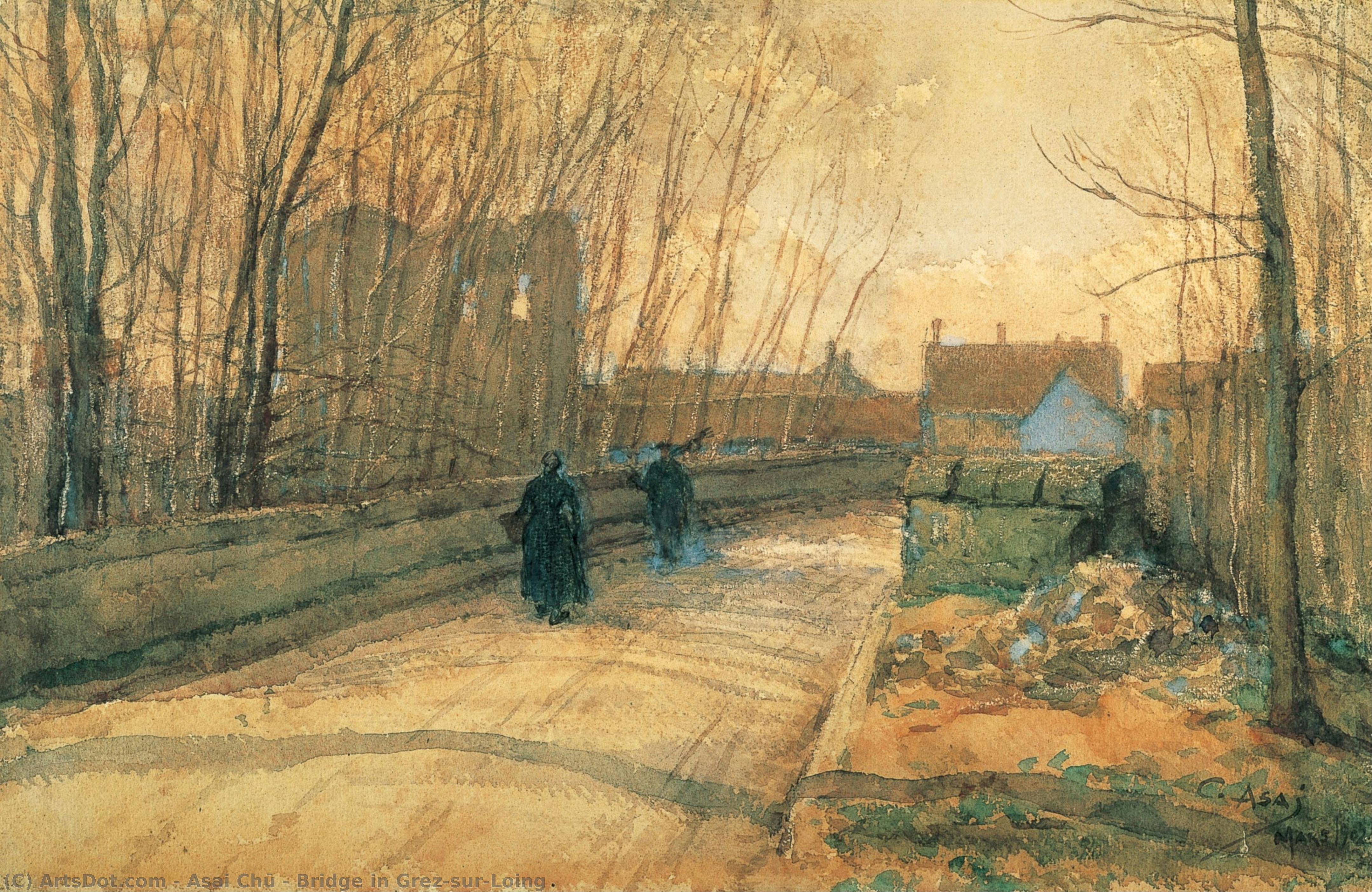
Bridge in Grez-sur-Loing
 Oil
Oil- WallArt
- Impressionism
 1902
1902- 19th Century
 435.0 x 284.0 cm
 Artizon Museum
 Читать далее
Масляная репродукция ручной работы
Картина маслом на холсте в выбранном вами размере и раме, написанная на заказ нашими художниками. ( Перейти к печати Перейти к цифровым изображениям)




P118B $10

P118H $10

P118W $10

P438Z $10

P508JH $12

P508YH $12

P805H $10

P805Z $10

P919BZ $10

P919G $10

P919XJ $10

P959ZH $10

P968JZ $12

W106C $8

W218G $10

W218JH $8

W218Y $10

W307PJ $10

W316G $10

W316PJ $8

W316Y $10

W398PJ $8

W4111J $10

W500HY $15

W500JH $15

W692G $12

W849H $8

W940BG $15

W953PJ $8




Выберите один из наших стандартных размеров, соответствующих оригинальным пропорциям произведения искусства.

Вы можете указать собственные размеры, чтобы картина идеально вписалась в выбранную раму или пространство. Если выбранный вами размер не соответствует пропорциям оригинала, мы либо обрежем полотно, либо расширим его за счет дополнительных элементов, написанных вручную. Цифровой макет будет отправлен вам на утверждение перед началом производства.
Обратите внимание, что предварительный просмотр на экране не отражает фактическую обрезку или расширение. Только макет точно покажет окончательную композицию.
Хотя доступны индивидуальные размеры, мы рекомендуем выбирать вариант из предопределенного списка, чтобы сохранить исходные пропорции.
После оформления заказа команда ArtsDot.com свяжется с клиентом по электронной почте для уточнения деталей и предоставит предварительный макет
Доставка по всему миру () за 3–4 недели вместо стандартных 5 недель. (11 Сентябрь). Без компромиссов в качестве.

Бесплатная экспресс-доставка по всему миру

Высококачественный льняной холст

Полное страхование доставки

Гарантия возмещения таможенных пошлин

Гарантия точного соответствия цветов

100-дневная политика возврата (только при обнаружении дефектов)

Гарантия возврата 100% средств

Предложение оптовых скидок
 Вариант со стеклом доступен только для размеров менее 110 см

Bridge in Grez-sur-Loing
Техника репродукции
Размер репродукции
-


Итоговая стоимость
$ 263
A Serene Encounter with the Loing
In the quietude of 1902, Asai Chū captured a moment of profound stillness in his masterpiece, Bridge in Grez-sur-Loing. This expansive work invites the viewer to step into a pastoral dreamscape where time seems to decelerate. The scene unfolds along the banks of a gentle river, where a quaint French village meets the soft light of a departing day. As we gaze upon the bridge, we are not merely looking at a structure of stone and wood, but at a gateway between the bustling world and a sanctuary of peace. The composition is populated by the rhythmic movement of daily life; figures stroll leisurely along the riverside paths, their presence adding a human warmth to the landscape. A solitary horse, positioned toward the right, anchors the scene in a sense of rustic authenticity, reminding us of an era when the pace of life was dictated by the sun and the seasons rather than the clock.
The emotional resonance of this painting lies in its ability to evoke a deep sense of nostalgia and tranquility. For the collector or interior designer, this piece serves as a window into a lost world of simplicity. The atmosphere is thick with a gentle, melancholic beauty, achieved through a masterful command of light and shadow. There is a palpable softness to the air, as if the mist from the river is just beginning to settle over the town. This sense of peace makes the artwork an ideal centerpiece for spaces designed for reflection, such as a quiet study, a library, or a sophisticated living area where one seeks to cultivate an aura of calm and elegance.
The Fusion of East and West
To understand the technical brilliance of Bridge in Grez-sur-Loing, one must look toward the unique biography of its creator. Asai Chū was a pioneer of yōga, or Western-style painting, in Japan, and this work stands as a testament to his extraordinary ability to synthesize disparate artistic traditions. Having studied under the Italian master Antonio Fontanesi, Chū brought a sophisticated understanding of European Impressionist techniques—specifically the treatment of light and atmospheric perspective—to his canvas. Yet, beneath the oil-painted surface, there remains an unmistakable sensitivity to composition and space that echoes the refined restraint of traditional Japanese aesthetics.
The technique employed here is nothing short of masterful. Chū utilizes a delicate palette of muted earth tones, soft blues, and verdant greens to build a sense of depth that draws the eye toward the horizon. The brushwork is fluid yet controlled, allowing the textures of the water, the stone of the bridge, and the fabric of the pedestrians' clothing to feel tactile and real. For those seeking a high-quality reproduction, it is essential to appreciate how these subtle gradations of color and light are preserved, ensuring that the painting retains its ability to transform a room. This artwork is not merely a decoration; it is an invitation to experience the historical intersection of two great artistic worlds, captured in a single, breathtaking moment of French provincial life.
Похожие произведения
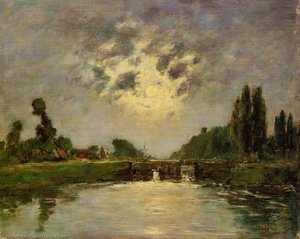
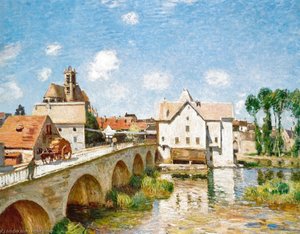
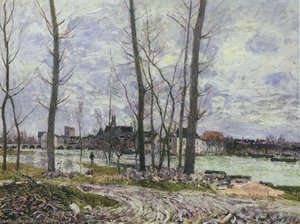
Биография художника
Asai Chū: Pioneer of Western-Style Painting in Japan
Early Life and Education
- Born: 1856, Chiba City, Japan.
- Asai Chū was born into an ex-samurai class household in Sakura, Kantō region of Japan. His father served as a retainer of the Sakura domain and also acted as principal of the domain school.
- He initially pursued English language studies in Tokyo in 1873 but soon became captivated by the arts.
- In 1876, he enrolled at the Kobubijutsu Gakkō (Technical Fine Arts School), one of the first institutions to offer Western-style art training in Japan.
- Crucially, he studied under Antonio Fontanesi, an Italian artist hired by the Meiji government to introduce oil painting techniques.
Artistic Development and Influences
- Asai Chū’s early work reflected a blend of traditional Japanese aesthetics with newly acquired Western techniques.
- Key Influence: Antonio Fontanesi played a pivotal role in shaping his understanding of oil painting, composition, and light.
- He embraced plein air painting – working outdoors directly from nature – a hallmark of Impressionism.
- A later trip to France (1902-1904) allowed him to immerse himself in the Impressionist school, further refining his style.
Major Achievements and Artistic Contributions
- In 1889, Asai Chū founded the Meiji Bijutsukai (Meiji Art Society), a landmark organization that brought together Western-style painters in Japan.
- He became a professor at the Tokyo School of Fine Arts (now Tokyo University of the Arts) in 1898, contributing to art education.
- Following his return from France, he established the Kansai Bijutsu-in (Kansai Arts Institute) and took a professorship at the Kyoto Kōtō Kōgei Gakkō (Kyoto School of Arts and Crafts).
- Notable Works: Include “Spring Ridge,” “Woman Sewing,” “Morning Sun”, “Le Village de Kotaba” and "Pulling Boat". These paintings showcase his mastery of Impressionistic techniques applied to Japanese landscapes and scenes.
Legacy and Historical Significance
- Asai Chū was instrumental in bridging the gap between traditional Japanese art and Western artistic movements.
- He trained numerous students who went on to become prominent figures in the Japanese art world, including Sōtarō Yasui and Ryuzaburo Umehara.
- He also tutored the celebrated poet Masaoka Shiki in Western art techniques.
- Interestingly, he served as a model for a character in Natsume Sōseki’s novel, *Sanshirō*, highlighting his cultural impact.
- Several of his works have been designated as Important Cultural Properties by the Japanese government's Agency for Cultural Affairs, recognizing their artistic and historical value.
Themes and Style
- Themes: Asai Chū frequently depicted landscapes, village life, and domestic scenes. His work often captures the serene beauty of rural Japan.
- Style: He is known for his Impressionistic style characterized by loose brushwork, a focus on light and atmosphere, and a vibrant color palette.
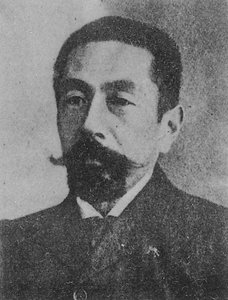
Asai Chū
1856 - 1907 , Japan
Основные сведения
- Birth Date: 1856
- Birth Place: Chiba City, Japan
- Death Date: 1907
- Influenced:
- Sōtarō Yasui
- Ryuzaburo Umehara
- Masaoka Shiki
- Influenced By: Antonio Fontanesi
- Movement: Yōga (Western-style painting)
- Name: Asai Chū
- Nationality: Japanese
- Notable Works:
- Spring Ridge
- Woman Sewing
- Morning Sun
- Le Village de Kotaba
Похожие статьи

Evocations of Place: A Historical Journey Through Landscape Art
Explore the rich history of landscape art with ArtsDot. Discover renowned artists, movements like Impressionism & Romanticism, and expert guidance for collecting timeless pieces. Find your perfect serene escape today!
Serene Visions: Exploring Themes of Tranquility in Art History & Contemporary Practice
Explore the history of serene landscape art & discover artists who evoke tranquility. Find the perfect calming artwork for your home with expert guidance from ArtsDot.

Топ-10 шедевров импрессионизма: пейзажи, изменившие искусство | ArtsDot
Погрузитесь в мир импрессионизма! Откройте 10 шедевров Моне, Ренуара и других великих художников. Узнайте историю создания культовых пейзажей и вдохновитесь для декора вашего дома. Репродукции картин высокого качества на ArtsDot.com.

Топ-10 шедевров импрессионизма: пейзажи, изменившие искусство | ArtsDot
Погрузитесь в мир импрессионизма! Откройте топ-10 шедевров Моне, Ренуара и других великих художников. Узнайте историю создания культовых пейзажей и вдохновитесь для декора интерьера. Репродукции картин высокого качества на ArtsDot.com

Джон Констебль: 25 шедевров английского пейзажа для вашего интерьера
Погрузитесь в мир английского пейзажа с Джоном Констеблом! 25 шедевров романтизма, история создания картин и вдохновение для вашего интерьера. Репродукции высокого качества на ArtsDot.com – искусство для ценителей.