

 Поделиться
 Поделиться
 Детали произведения

 Скачать
 Похожие работы
 Слайд-шоу
 Статистика
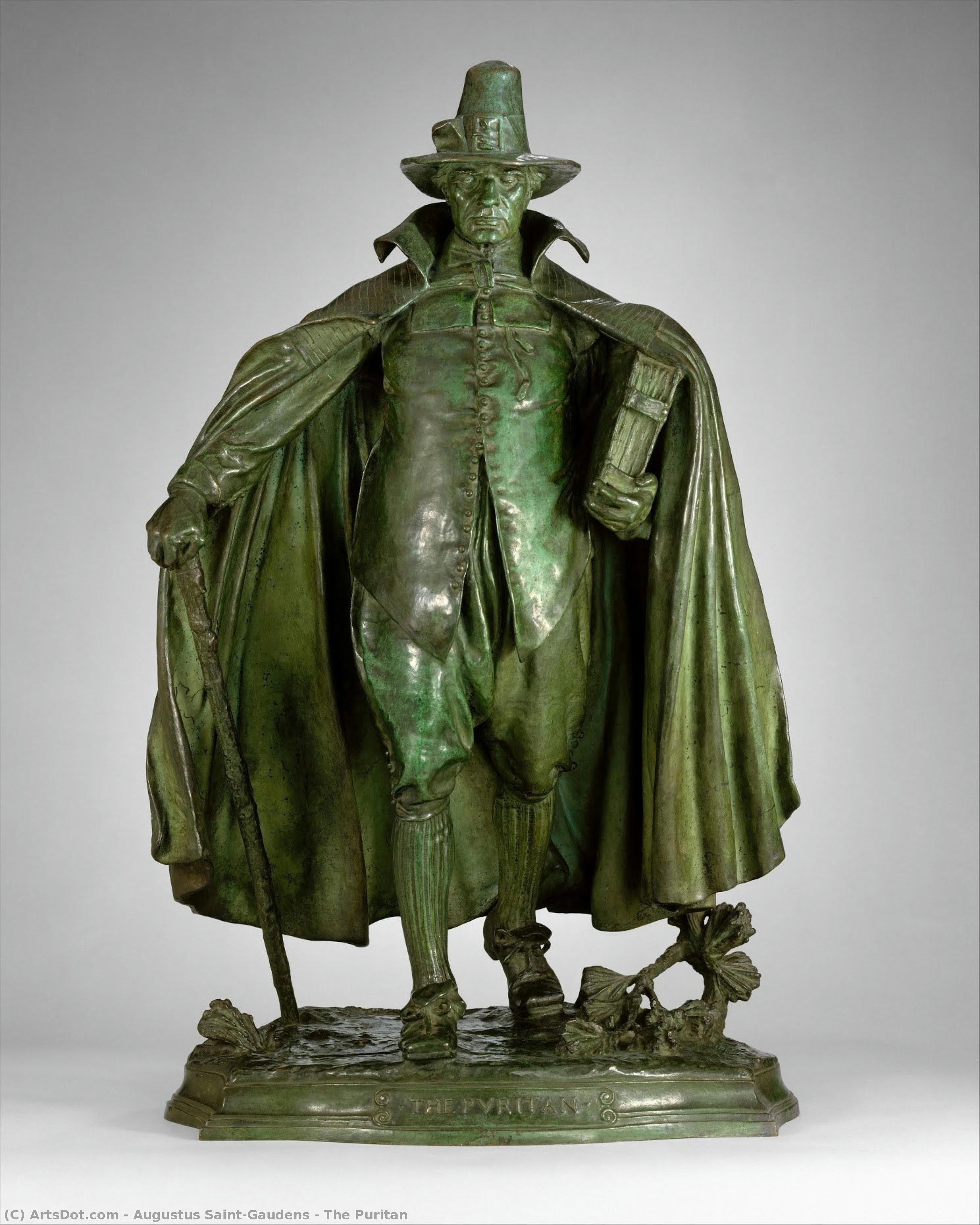
The Puritan
 Bronze
- Sculpture
- Contemporary Realism
 1899
1899- 19th Century
 77.0 x 47.0 cm
 Музей Метрополитен
 Читать далее
Приобретите цифровое изображение высокого разрешения в улучшенном качестве, которое значительно превосходит онлайн-превью.
Каждый файл тщательно подготавливается нашими специалистами с использованием передовых инструментов и экспертной ручной ретуши. Мы гарантируем исключительную четкость, точную цветопередачу и детальную проработку каждого изображения.
Финальный файл доставляется по электронной почте в течение 72 часов и оптимизирован для немедленного использования в профессиональной среде, при верстке и печати. Это тот же уровень качества, которому доверяют ведущие дизайнерские студии, издательства и галереи.
Цифровое изображение
Скачайте файл высокого разрешения для личного использования, печати и творческих проектов. ( Перейти к печати Купить картину ручной работы)
Включено в каждый заказ цифровых изображений
Гарантия экспертной цифровой доставки
Выбирая ArtsDot.com, вы получаете не просто изображение — вы приобретаете профессионально обработанное цифровое произведение искусства, созданное с безупречной точностью и под защитой гарантии качества. Вот всё, что автоматически входит в ваш заказ:

Мгновенная доставка по e-mail
Ваш цифровой файл в высоком разрешении будет отправлен вам по электронной почте в течение 72 часов после оформления заказа — и сразу станет доступен для использования.

Цифровой файл с ИИ-улучшением
Ваше произведение искусства проходит профессиональную оптимизацию с использованием передовых инструментов ИИ и ручной обработки, что гарантирует максимальную детализацию, четкость и точность цветопередачи.

Бессрочная бесплатная повторная доставка
Случайно удалили или потеряли файл? Не беспокойтесь — мы отправим его вам повторно в любое время и совершенно бесплатно.

Без импортных пошлин — навсегда
Наслаждайтесь вашим произведением искусства мгновенно без таможенных пошлин, сборов или затрат на доставку — цифровые загрузки всегда не облагаются налогом.

Гарантия точности цветопередачи
Мы гарантируем, что ваше цифровое изображение максимально точно передает оригинальные цвета благодаря использованию профессиональных инструментов и систем управления цветом.

Гарантия удовлетворенности 100 дней
Если вы не будете удовлетворены своим цифровым изображением, мы внесем правки или вернем 100% стоимости в течение 100 дней — без лишних вопросов.

100% Гарантия возврата средств
Не удовлетворены покупкой? Получите полный возврат средств в течение 100 дней после получения цифрового файла — без лишних вопросов.

Скидки на оптовые заказы
Купите 3 изображения, сэкономьте 10% — Купите 5, сэкономьте 15% — Купите 10+, сэкономьте 20%. Отличное решение для творческих проектов, галерей и агентств.
A Monument of Moral Fortitude
In the quiet presence of Augustus Saint-Gaudens’s 'The Puritan,' one does not merely encounter a sculpture, but a profound dialogue with history itself. Completed at the turn of the 20th century, this bronze masterpiece serves as a powerful distillation of the American spirit—a blend of rugged individualism and an unyielding, pious resolve. The figure, modeled after the idealized settler, stands as a sentinel of the Protestant ethos that once defined the landscape of Massachusetts. There is an undeniable gravity to the work; it captures the weight of a person shaped by faith, duty, and the austere beauty of the New England frontier. For the discerning collector or designer, this piece offers more than aesthetic value; it provides a focal point of historical depth and contemplative stillness.
The sculpture’s physical presence is defined by Saint-Gaudens’s masterful command of bronze casting. Through the meticulous process of investment casting, the artist achieved a surface that breathes with life. The characteristic greenish patina, a result of intentional chemical aging, lends the work an air of timelessness, as if it has weathered centuries of silent observation. Every fold in the figure's period clothing and every subtle contour of his stern facial features is rendered with remarkable precision. This interplay of light and shadow across the textured bronze creates a sense of movement within the stillness, drawing the eye to the intricate details of the hat and the heavy drapery that anchors the figure to its base.
Symbolism and the Soul of the American Renaissance
Beyond its technical brilliance, 'The Puritan' is rich with symbolic resonance. The composition is intentionally centered and imposing, designed to command respect and invite introspection. The figure’s posture—upright, resolute, and slightly inward-looking—suggests a man deeply engaged in spiritual or intellectual labor. Elements such as the traditional hat and the presence of a book serve as silent narrators, speaking to the importance of knowledge, scripture, and the disciplined lifestyle of the early settlers. It is a work that embodies the American Renaissance, a period where artists sought to fuse classical European training with a burgeoning national identity.
For those looking to integrate such a piece into a curated interior, 'The Puritan' offers an unparalleled emotional impact. Whether placed in a sunlit library, a formal study, or a grand entryway, the sculpture introduces a sense of permanence and dignity. It does not demand attention through loud colors or dramatic gestures; instead, it earns its place through a quiet, commanding authority. A high-quality reproduction of this work allows the modern space to benefit from the somber elegance and historical weight of Saint-Gaudens’s vision, making it an exquisite choice for those who appreciate art that tells a story of enduring strength and moral integrity.
Похожие произведения
Биография художника
A Legacy Forged in Bronze: The Life and Art of Augustus Saint-Gaudens
Born in Dublin, Ireland, in 1848, Augustus Saint-Gaudens’s journey to becoming one of America's most celebrated sculptors began with humble origins. His early life was marked by a transatlantic shift; at just six months old, his family immigrated to New York City, where his father practiced the trade of shoemaking. This blend of Irish and French heritage would subtly inform Saint-Gaudens’s artistic sensibility—a unique fusion of classical ideals and an emerging American identity. From a young age, he displayed a remarkable aptitude for visual arts, initially honing his skills as an apprentice cameo cutter before formally studying at the Cooper Union and the National Academy of Design. These formative years laid the groundwork for a career that would redefine sculpture in the United States, moving beyond mere imitation to embrace a distinctly American voice.European Influences and Artistic Development
The pursuit of artistic mastery led Saint-Gaudens across the Atlantic to Europe in 1867. He first immersed himself in the vibrant art scene of Paris, studying at the École des Beaux-Arts under François Jouffroy. This period was crucial, exposing him to the prevailing academic style and the rich sculptural traditions of France. However, it was his subsequent sojourn to Rome that truly solidified his artistic foundation. Surrounded by the remnants of classical antiquity, Saint-Gaudens absorbed the principles of form, composition, and naturalism that would become hallmarks of his work. He wasn’t simply replicating ancient models; he was internalizing a philosophy of art—a belief in the power of sculpture to convey emotion, narrative, and enduring human values. His early works, like *Hiawatha*, reveal this nascent synthesis of classical technique with contemporary subject matter, hinting at the innovative path he would forge. He returned to New York in 1875, equipped not just with technical skill but a refined artistic vision.Monuments to Memory: Major Achievements and Artistic Style
Saint-Gaudens’s career blossomed in the late 19th and early 20th centuries, marked by a series of monumental commissions that cemented his reputation as America's premier sculptor. The *Admiral David Farragut Monument* (1881) in New York City was an early triumph, showcasing his ability to capture both grandeur and psychological depth. However, it was the *Robert Gould Shaw Memorial* (1884-1897), dedicated on Boston Common, that truly established him as a master storyteller in bronze. This poignant depiction of the 54th Massachusetts Volunteer Infantry Regiment—one of the first African American units to fight in the Civil War—was revolutionary for its time. Saint-Gaudens eschewed traditional heroic poses, instead portraying the soldiers in a dynamic march, conveying both their courage and vulnerability with remarkable realism. Standing Lincoln (1884-1887) in Chicago, replicated in other locations, stands as another testament to his skill in portraiture, capturing the solemnity and wisdom of the 16th President. His later works, such as the *William Tecumseh Sherman Monument* (1892-1903) and the equestrian statue of *General John Logan* (1894-1897), continued to demonstrate his mastery of scale and composition. Beyond monumental public art, Saint-Gaudens also left an indelible mark on American coinage, designing the iconic $20 “Double Eagle” and $10 “Indian Head” gold coins—widely regarded as some of the most beautiful coins ever minted.The Cornish Colony and a Lasting Influence
Saint-Gaudens’s influence extended beyond his own artistic output. In 1885, he established the "Cornish Colony" in New Hampshire, transforming a rural farm into a thriving artistic community. This haven attracted painters, sculptors, writers, and architects—a gathering of creative minds that fostered innovation and collaboration. The Cornish Colony became a symbol of the American Renaissance, embodying a spirit of artistic experimentation and national pride. Saint-Gaudens was not only a prolific artist but also a dedicated teacher, mentoring a generation of sculptors who carried on his legacy. His emphasis on naturalism, technical skill, and emotional depth profoundly shaped the course of American sculpture. He championed the Beaux-Arts ideal—a commitment to classical forms and rigorous training—while simultaneously forging a uniquely American aesthetic that celebrated the nation’s history, heroes, and ideals. His work continues to inspire awe and admiration, reminding us of the power of art to commemorate, to provoke thought, and to elevate the human spirit.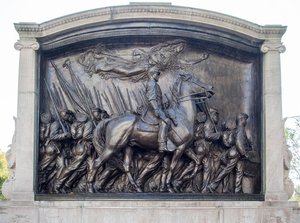
Augustus Saint-Gaudens
1848 - 1907