

 Предпросмотр
 Поделиться
 Поделиться
 Детали произведения

 Скачать
 Похожие работы
 Рентгенография
 Слайд-шоу
 Статистика
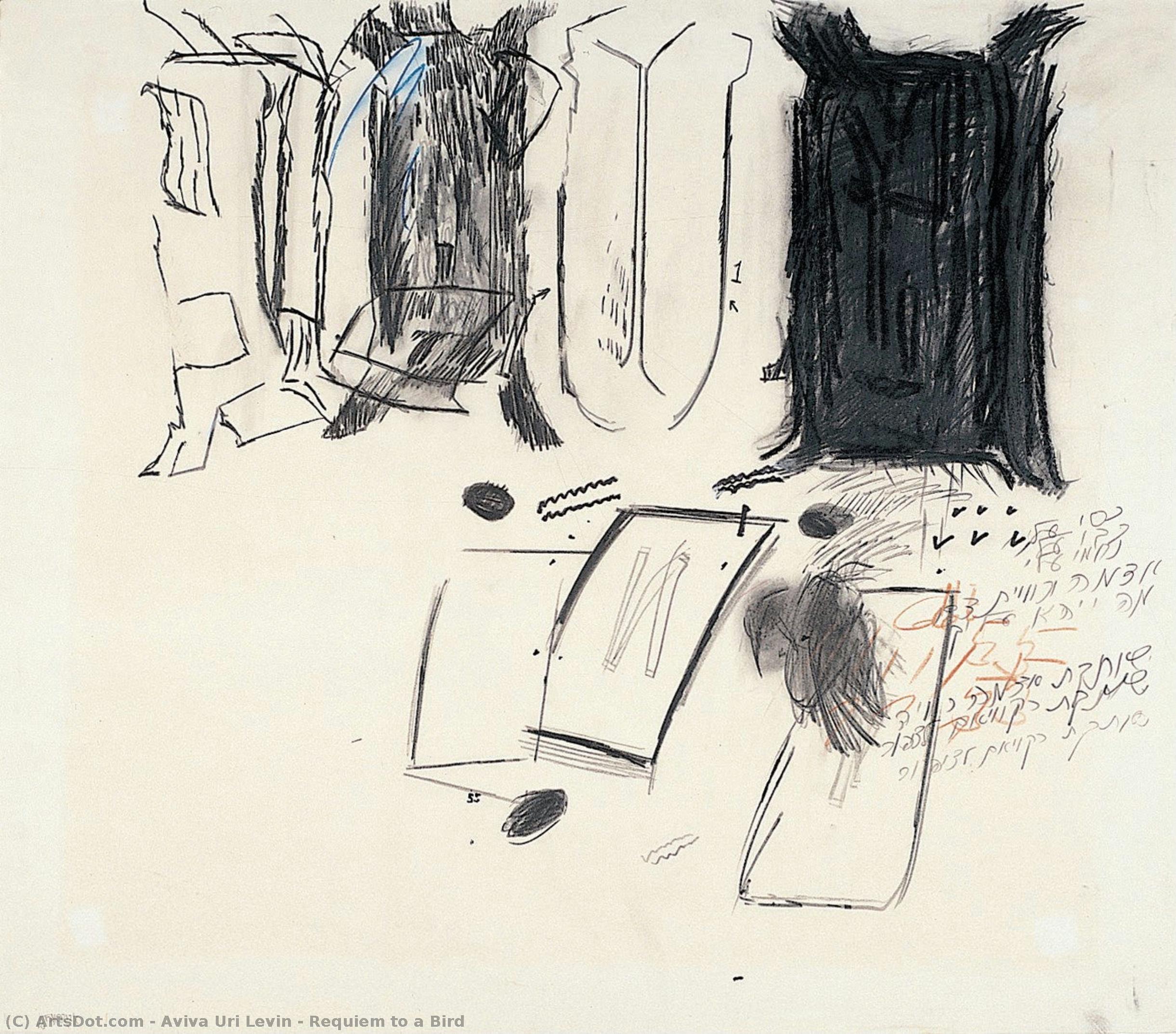
Requiem to a Bird
 Acrylic On Canvas
- WallArt
- Abstract Expressionism
 1976
1976 70.0 x 81.0 cm
 Tel Aviv Museum of Art
 Читать далее
Приобретите цифровое изображение высокого разрешения в улучшенном качестве, которое значительно превосходит онлайн-превью.
Каждый файл тщательно подготавливается нашими специалистами с использованием передовых инструментов и экспертной ручной ретуши. Мы гарантируем исключительную четкость, точную цветопередачу и детальную проработку каждого изображения.
Финальный файл доставляется по электронной почте в течение 72 часов и оптимизирован для немедленного использования в профессиональной среде, при верстке и печати. Это тот же уровень качества, которому доверяют ведущие дизайнерские студии, издательства и галереи.
Цифровое изображение
Скачайте файл высокого разрешения для личного использования, печати и творческих проектов. ( Перейти к печати Купить картину ручной работы)
Включено в каждый заказ цифровых изображений
Гарантия экспертной цифровой доставки
Выбирая ArtsDot.com, вы получаете не просто изображение — вы приобретаете профессионально обработанное цифровое произведение искусства, созданное с безупречной точностью и под защитой гарантии качества. Вот всё, что автоматически входит в ваш заказ:

Мгновенная доставка по e-mail
Ваш цифровой файл в высоком разрешении будет отправлен вам по электронной почте в течение 72 часов после оформления заказа — и сразу станет доступен для использования.

Цифровой файл с ИИ-улучшением
Ваше произведение искусства проходит профессиональную оптимизацию с использованием передовых инструментов ИИ и ручной обработки, что гарантирует максимальную детализацию, четкость и точность цветопередачи.

Бессрочная бесплатная повторная доставка
Случайно удалили или потеряли файл? Не беспокойтесь — мы отправим его вам повторно в любое время и совершенно бесплатно.

Без импортных пошлин — навсегда
Наслаждайтесь вашим произведением искусства мгновенно без таможенных пошлин, сборов или затрат на доставку — цифровые загрузки всегда не облагаются налогом.

Гарантия точности цветопередачи
Мы гарантируем, что ваше цифровое изображение максимально точно передает оригинальные цвета благодаря использованию профессиональных инструментов и систем управления цветом.

Гарантия удовлетворенности 100 дней
Если вы не будете удовлетворены своим цифровым изображением, мы внесем правки или вернем 100% стоимости в течение 100 дней — без лишних вопросов.

100% Гарантия возврата средств
Не удовлетворены покупкой? Получите полный возврат средств в течение 100 дней после получения цифрового файла — без лишних вопросов.

Скидки на оптовые заказы
Купите 3 изображения, сэкономьте 10% — Купите 5, сэкономьте 15% — Купите 10+, сэкономьте 20%. Отличное решение для творческих проектов, галерей и агентств.
Requiem to a Bird – An Exploration of Lineage and Loss
Aviva Uri Levin’s “Requiem to a Bird,” created in 1976, stands as a testament to the enduring power of abstract expressionism and its ability to convey profound emotional resonance. This striking monochrome drawing—currently housed within the Tel Aviv Museum of Art—captures a scene fraught with tension and contemplation, inviting viewers into a dialogue about memory, grief, and artistic innovation.Composition and Technique: Embracing Chaos Within Order
The artwork’s visual impact immediately commands attention due to its densely populated composition. Rather than adhering to conventional spatial conventions, Uri Levin eschews perspective entirely, presenting an unsettling panorama of chairs, suitcases, musical instruments—a piano and violin—and scattered handwritten text arranged in a manner that defies logical arrangement. Thick, gestural lines dominate the surface, interwoven with areas of dense crosshatching, creating a palpable sense of movement and textural complexity. This technique—characteristic of Levin’s distinctive style—emphasizes spontaneity and emotional immediacy, mirroring the spirit of New Horizons, the influential artistic collective to which she belonged. The deliberate absence of horizon line contributes to an overall feeling of disorientation, forcing the eye to navigate a landscape devoid of familiar landmarks.Symbolism and Emotional Depth: Echoes of Ukrainian Roots
The title itself—"Requiem"—immediately establishes a thematic framework centered on mourning and remembrance. Uri Levin’s artistic journey was profoundly shaped by personal loss; her mother's untimely death instilled within her an unwavering sensitivity to themes of vulnerability and sorrow. This formative experience informs the artwork’s visual language, suggesting that the seemingly chaotic arrangement serves as a conduit for repressed emotions—a visual representation of psychological fragmentation. The inclusion of musical instruments – piano and violin – further amplifies this symbolic dimension, hinting at attempts to articulate feelings beyond words. Furthermore, Levin's Ukrainian Zionist heritage underscores the importance of resilience and cultural identity within her artistic vision.Historical Context: Pioneering Abstract Lineage
“Requiem to a Bird” emerged during a period of significant artistic experimentation in Israel—specifically, the burgeoning New Horizons movement—which championed radical departures from established conventions. Uri Levin’s refusal to utilize color aligns with this broader trend, prioritizing pure abstraction and focusing on conveying subjective emotion through expressive line. Influenced by artists like Hans Hartung and Raffi Lavie, Levin's work represents a pivotal contribution to Israeli art history, establishing her as a visionary who challenged artistic norms and paved the way for subsequent generations of artists.Legacy and Influence: A Continuing Dialogue
Aviva Uri Levin’s legacy extends beyond her individual achievements; she profoundly impacted the artistic sensibilities of younger practitioners like Raffi Lavie—a testament to her enduring influence on Israeli art discourse. Her unwavering dedication to abstraction—a stylistic choice that resonated with the ethos of experimentation—continues to inspire collectors and enthusiasts alike, securing “Requiem to a Bird” as an emblem of artistic innovation and emotional depth.Похожие произведения
![Abstract Composition [triptych] — Vaclav Vytlacil, Abstract Expressionism](/media/artworks/images-thumb/08/3c/083c0675045645fd42d4e6c6d63f1ced.jpg)
Биография художника
The Lineage of Loss and Light: The Life of Aviva Uri
Aviva Uri (1922–1989) remains one of the most singular and evocative figures in the history of Israeli modernism, a painter whose work breathed life into the stark, expressive power of the line. Born in Tel Aviv to a family shaped by the resilience of Ukrainian Zionist refugee traditions, Uri’s early existence was marked by a profound sense of absence; her mother passed away shortly after her birth, an event that many scholars believe instilled in her a lifelong sensitivity to themes of vulnerability and psychological fragmentation. Raised under the influence of her father, Azriel Uri—a man deeply embedded in the intellectual fervor of Zionist activism—she grew up within a milieu of egalitarian ideals and a fervent belief in the creation of a new cultural identity. This backdrop of historical transformation provided the fertile soil from which her unique artistic voice would eventually emerge.
Her artistic development was not merely a matter of technical training but a rhythmic evolution shaped by movement and mentorship. Before she ever gripped a brush, Uri studied dance under the renowned Gertrude Kraus, an experience that infused her later compositions with a foundational sense of kinetic energy and spatial awareness. As she transitioned into the visual arts, she sought guidance from masters such as Moshe Castel and David Hendler, figures who helped refine her ability to translate emotion onto paper. These formative years also introduced her to the aesthetic philosophies of Japanese and Chinese drawing, which offered an alternative to the heavy, oil-based traditions of the West. By embracing the simplicity of ink and the spontaneity of the stroke, Uri positioned herself as a pioneer of a different kind of abstraction—one that favored the raw immediacy of the mark over the meticulous layering of color.
A Rejection of Convention: Style and Technique
What truly set Aviva Uri apart from her contemporaries in the "New Horizons" group was her deliberate, almost radical, rejection of conventional art practices. While many artists of her era sought prestige through the complex mixing of oils and the pursuit of grander scales, Uri found her strength in the intimate and the monochrome. She eschewed the professional blending of pigments, choosing instead to work almost exclusively with drawing on paper. Her technique was characterized by thick, gestural lines and dense crosshatching that created a palpable sense of movement and textural complexity. In works such as "Requiem to a Bird" (1976), she demonstrated an unparalleled ability to use chaos to create order, presenting unsettling panoramas of scattered objects—chairs, suitcases, musical instruments—that defy logical arrangement yet resonate with deep emotional truth.
This stylistic choice was more than just a technical preference; it was a philosophical stance. By stripping away the distraction of color, Uri forced the viewer to confront the pure essence of form and the psychological weight of the line itself. Her work suggested an alternative to the prevailing trends of her time, looking toward the individualistic spirit of artists like Hans Hartung rather than the established Parisian schools. This focus on the "free line" allowed her to explore themes of memory and grief with a directness that was both unsettling and beautiful. Her presence in the art world was as striking as her work; she cultivated an enigmatic persona, often appearing in oversized black clothing with white face makeup and dark eye-shadow, a visual extension of the stark, high-contrast world she created on paper.
Legacy and Recognition
The impact of Aviva Uri’s oeuvre extends far beyond the boundaries of her own drawings, as her expressive approach left an indelible mark on subsequent generations of Israeli artists, most notably influencing the work of Raffi Lavie. Her ability to bridge the gap between personal trauma and universal abstraction ensured that her place in the canon of modern art was firmly secured. Throughout her career, she received numerous prestigious accolades that recognized both her technical mastery and her contribution to the national culture, including:
- Dizengoff Prize for Painting and Sculpture (1953 & 1956), marking her early ascent in the Tel Aviv art scene.
- Sandberg Prize for Israeli Art from the Israel Museum (1976), a testament to her enduring significance.
- Prize of the Lea Porat Council of Culture and Art (1985).
- America-Israel Cultural Foundation Award (1986).
- Histadrut Prize (1989) and the Gutman Prize (1989), honors bestowed during her final year.
Today, Aviva Uri is remembered not just as a painter of lines, but as an architect of emotion. Her work remains a vital dialogue between the seen and the felt, a testament to how the simplest of marks—a single, sweeping stroke of ink—can carry the weight of an entire history of loss, resilience, and rebirth.

aviva uri levin
1922 - 1989 , Israel
Основные сведения
- Artistic Movement Or Style: New Horizons
- Artists Or Movements Influenced By This Artist: ['Cy Twombly']
- Artists Who Influenced This Artist:
- Hans Hartung
- David Hendler
- Raffi Lavie
- Date Of Birth: March 12, 1922
- Date Of Death: September 1, 1989
- Full Name: Aviva Uri Levin
- Nationality: Israeli
- Notable Artworks: ['Requiem to a Bird']
- Place Of Birth: Tel Aviv, Israel