 Предпросмотр
 Поделиться
 Поделиться
 Детали произведения

 Скачать
 Похожие работы
 Рентгенография
 Слайд-шоу
 Статистика
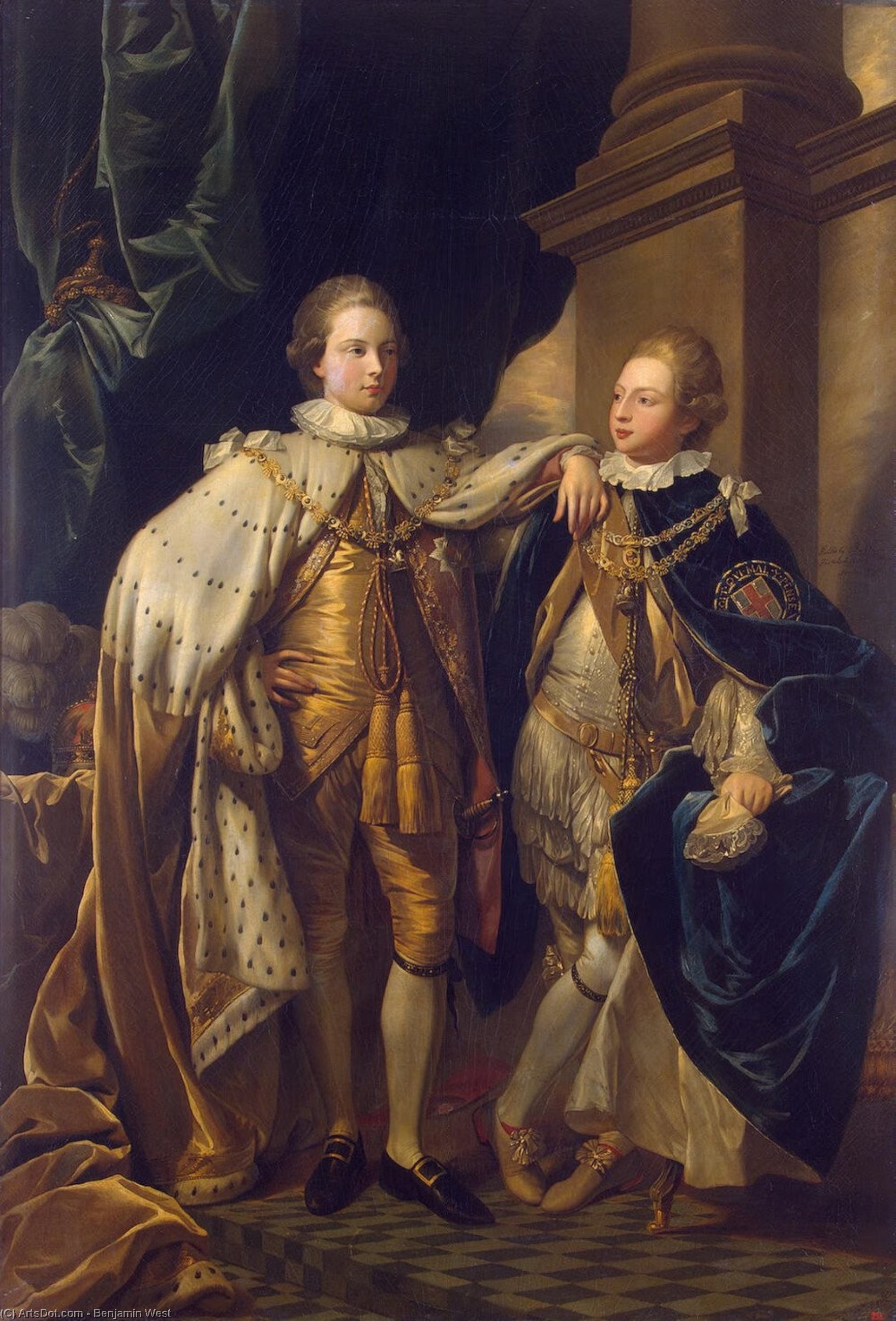
Portrait of George, Prince of Wales, and Prince Frederick, later Duke of York
 Oil On Canvas
- WallArt
- Neoclassicism
 1778
1778 241.0 x 166.0 cm
 Эрмитаж
 Читать далее
Масляная репродукция ручной работы
Картина маслом на холсте в выбранном вами размере и раме, написанная на заказ нашими художниками. ( Перейти к печати Перейти к цифровым изображениям)




P118B $10

P118H $10

P118W $10

P438Z $10

P508JH $12

P508YH $12

P805H $10

P805Z $10

P919BZ $10

P919G $10

P919XJ $10

P959ZH $10

P968JZ $12

W106C $8

W218G $10

W218JH $8

W218Y $10

W307PJ $10

W316G $10

W316PJ $8

W316Y $10

W398PJ $8

W4111J $10

W500HY $15

W500JH $15

W692G $12

W849H $8

W940BG $15

W953PJ $8




Выберите один из наших стандартных размеров, соответствующих оригинальным пропорциям произведения искусства.

Вы можете указать собственные размеры, чтобы картина идеально вписалась в выбранную раму или пространство. Если выбранный вами размер не соответствует пропорциям оригинала, мы либо обрежем полотно, либо расширим его за счет дополнительных элементов, написанных вручную. Цифровой макет будет отправлен вам на утверждение перед началом производства.
Обратите внимание, что предварительный просмотр на экране не отражает фактическую обрезку или расширение. Только макет точно покажет окончательную композицию.
Хотя доступны индивидуальные размеры, мы рекомендуем выбирать вариант из предопределенного списка, чтобы сохранить исходные пропорции.
После оформления заказа команда ArtsDot.com свяжется с клиентом по электронной почте для уточнения деталей и предоставит предварительный макет
Доставка по всему миру () за 3–4 недели вместо стандартных 5 недель. (10 Сентябрь). Без компромиссов в качестве.

Бесплатная экспресс-доставка по всему миру

Высококачественный льняной холст

Полное страхование доставки

Гарантия возмещения таможенных пошлин

Гарантия точного соответствия цветов

100-дневная политика возврата (только при обнаружении дефектов)

Гарантия возврата 100% средств

Предложение оптовых скидок
 Вариант со стеклом доступен только для размеров менее 110 см

Portrait of George, Prince of Wales, and Prince Frederick, later Duke of York
Техника репродукции
Размер репродукции
-


Итоговая стоимость
$ 263
A Window into the Royal Court: Benjamin West’s Double Portrait
Benjamin West’s “Portrait of George, Prince of Wales, and Prince Frederick, later Duke of York” (1778) is more than just a likeness; it's a meticulously crafted tableau vivant offering a rare glimpse into the social dynamics and burgeoning political currents of 18th-century Britain. Housed within the walls of The Hermitage in St. Petersburg, this oil on canvas masterpiece transcends mere portraiture, becoming a study in power, familial connection, and the subtle anxieties of a nation poised on the brink of revolution. West, a pivotal figure bridging the worlds of Neoclassicism and Romanticism – and uniquely American in his artistic development – expertly captures not just appearances but also the personalities and roles of these two young men destined for significant futures.
Image: Portrait of George, Prince of Wales, and Prince Frederick, later Duke of York by WEST, Benjamin
Formal Grace and Subtle Tension
The composition immediately establishes a sense of formality. Both princes are rendered in the crisp attire characteristic of their station – Prince George, the elder, proudly wears the symbols of his impending reign: a crown signifying his future role as King George IV. His posture is upright, confident, projecting an image of regal authority. Prince Frederick, on the right, adopts a slightly more relaxed stance, yet remains impeccably dressed in the robes of the Garter, further emphasizing his noble lineage and connection to the established order. The background, a carefully considered checkered pattern – a detail often overlooked – adds visual interest and subtly anchors the scene within its historical context. It’s not merely decorative; it evokes the formality of courtly life and the structured world they inhabit.
A Royal Conversation
The painting isn't frozen in static pose. West masterfully suggests an ongoing conversation, a shared moment of interaction between the brothers. Prince George leans slightly towards Frederick, his hand resting lightly on the younger prince’s shoulder – a gesture of familial affection tempered by the inherent power dynamic. This intimate touch contrasts sharply with the formality of their attire and the surrounding setting, hinting at a bond that transcends titles and expectations. The subtle shift in body language speaks volumes about the complex relationship between these two young men, heirs to the British throne.
Historical Context: Brothers in Arms and Shadows of Change
The painting’s historical significance extends far beyond its aesthetic qualities. It depicts George, Prince of Wales (later King George IV), and Frederick, later Duke of York, during a period of immense political and social change. George was known for his extravagant tastes and often clashed with Parliament, while Frederick, despite his future role as commander-in-chief of the British Army, struggled with personal challenges and ultimately suffered from debilitating mental illness. The painting captures them at a pivotal moment – young men poised to inherit a kingdom grappling with shifting political landscapes and the looming shadow of revolution. The fact that West was commissioned by King George III himself underscores the importance placed on projecting an image of stability and continuity during this turbulent era.
Symbolism and Legacy
West’s work resonates with echoes of earlier portraiture, notably Van Dyck's depictions of royalty. However, West subtly updates these traditions, injecting a sense of realism and psychological depth rarely seen in his predecessors. The painting serves as a valuable historical document, offering insights into the lives of the British royal family during the 18th century. Furthermore, it’s part of a broader artistic conversation – alongside works by Johann Zoffany and other contemporaries – reflecting the evolving standards and techniques of portraiture at the time. Reproductions like those offered by ArtsDot.com allow us to appreciate West's skill and the historical richness contained within this captivating image.
Похожие произведения
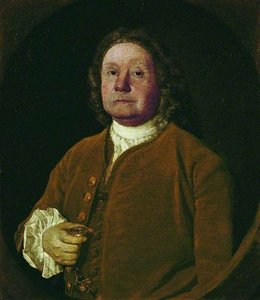
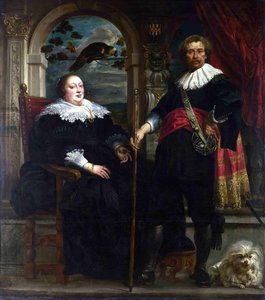
Биография художника
A Pioneer Bridging Worlds: The Life and Legacy of Benjamin West
Born in 1738 amidst the burgeoning landscape of colonial Pennsylvania, Benjamin West emerged as a pivotal figure in the transatlantic art world, a painter who skillfully navigated the currents of Neoclassicism and Romanticism while forging a uniquely American artistic identity. His story is one of remarkable self-education, unwavering ambition, and an extraordinary ability to connect with both aristocratic patrons and revolutionary ideals. From humble beginnings—his father an innkeeper in Springfield—West’s innate talent was nurtured by early exposure to the arts, reportedly learning rudimentary techniques from Native Americans before receiving any formal training. This unconventional start instilled within him a spirit of innovation that would characterize his entire career. He quickly established himself as a sought-after portraitist in Philadelphia and New York, but a thirst for deeper artistic knowledge propelled him towards Europe in 1760, embarking on a journey that would irrevocably alter the course of American art.From Italy to London: Forging a Path to Recognition
West’s arrival in Italy marked a turning point. Immersing himself in the artistic heartland of Europe, he studied the masters—Titian, Raphael—and engaged with contemporary Neoclassical thinkers like Anton Rafael Mengs and Angelica Kauffman. This period was crucial in shaping his aesthetic sensibilities, instilling within him an appreciation for classical form and historical narrative. He spent years meticulously copying works by these giants, absorbing their techniques and developing a profound understanding of composition, color theory, and the idealized beauty championed by Neoclassicism. However, it was London that ultimately became his adopted home and artistic center. Arriving in 1763, West swiftly ascended the ranks of the British art scene, captivating audiences with his ambitious canvases and securing the patronage of King George III. This royal endorsement not only provided financial stability but also cemented his position as a leading figure within the establishment. A defining moment came with his election to the Royal Academy in 1769, an institution he would later preside over as President from 1792 until his death. His influence extended beyond his own artistic production; West became a champion for American artists seeking training in Europe, offering guidance and support to generations of aspiring painters like Allston, Copley, and Morse.Revolutionizing Historical Painting: Technique and Controversy
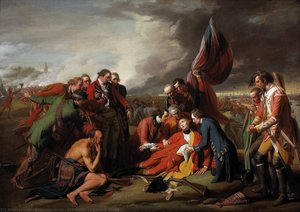
West’s impact on the art world wasn't merely about achieving technical mastery; it was about challenging conventions. He dared to reimagine historical painting, moving away from rigid adherence to classical precedent and embracing a more contemporary sensibility. The Death of General Wolfe (1770), arguably his most famous work, exemplifies this revolutionary approach. By depicting the fallen general surrounded by figures in *contemporary* military attire rather than traditional Roman garb, West sparked considerable debate. Critics questioned the historical accuracy, but audiences were captivated by the immediacy and emotional resonance of the scene. It was a bold move, reflecting a shift towards greater realism and narrative power in history painting—a departure from the idealized, often distant depictions favored by earlier artists. This work demonstrated his willingness to experiment with modern dress within a classical framework, setting a precedent for future generations of historical painters. His style evolved over time, incorporating elements of Romanticism into his later works, yet always retaining a commitment to ambitious composition and detailed execution. Other notable pieces like Thetis Bringing the Armor to Achilles, The Three Sisters, The Fright of Astyanax, and The Cave of Despair demonstrate his versatility and mastery across a range of mythological and historical themes.A Lasting Legacy: Shaping Artistic Identity
Benjamin West’s legacy extends far beyond the canvases he created. He fundamentally altered the landscape of American art, establishing history painting as a viable genre for American artists and fostering a sense of national artistic identity. His presidency of the Royal Academy solidified his influence on British art, promoting innovation and supporting emerging talent.- He championed a more accessible and emotionally engaging style of historical representation.
- His studio became a haven for American artists seeking training in Europe.
- He bridged the gap between Neoclassicism and the burgeoning Romantic movement.
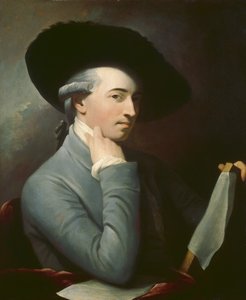
Бенджамин Вест
1738 - 1820 , Соединенные Штаты Америки
Основные сведения
- Artistic Movement Or Style: Неоклассицизм, Романтизм
- Artists Or Movements Influenced By This Artist:
- Аллстон
- Копли
- Морс
- Artists Who Influenced This Artist:
- Титян
- Рафаэль
- Менгс
- Гамвитт
- Кауффман
- Date Of Birth: 1738-10-10
- Date Of Death: 1820-03-11
- Full Name: Benjamin West
- Nationality: Американский
- Notable Artworks:
- Смерть генерала Вулф
- Тетис с доспехами для Ахиллеса
- Три сестры
- Испуг Астанакса
- Place Of Birth: Springfield, США
Похожие статьи
Benjamin West: Transatlantic Ambition & Shaping American Art
Explore the life & legacy of Benjamin West, pioneering American artist and Royal Academy president. Discover his Neoclassical masterpieces, transatlantic influence, and lasting impact on art history. Learn more at ArtsDot.

Жорж Сёра: 25 шедевров великого мастера пуантилизма | ArtsDot
Откройте для себя 25 шедевров Жоржа Сёра – пионера пуантилизма! Узнайте историю создания культовых картин, технику письма и влияние импрессионизма. Репродукции высокого качества на ArtsDot.com. Искусство для вашего интерьера.

Frederick William Jackson: Capturing the American West Through Luminist Vision & Narrative Detail
Explore the captivating works of Frederick William Jackson, a pioneer of Western realism & Luminist painting. Discover his atmospheric landscapes, depictions of Native American life, and lasting legacy. Learn more at ArtsDot.
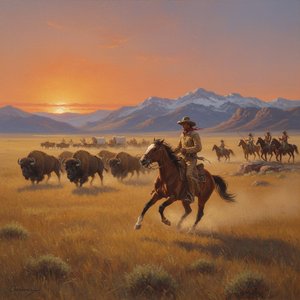
Charles Marion Russell: Capturing the American West Through a Romantic Lens
Explore the captivating world of Charles Marion Russell, 'the cowboy artist.' Discover his life, iconic paintings, advocacy for Native Americans, and investment potential. A guide for discerning art collectors.

Жорж Брак: 25 шедевров кубизма для ценителей искусства и интерьера
Откройте для себя 25 шедевров Жоржа Брака – пионера кубизма! Узнайте историю создания культовых картин, технику и влияние французского художника на искусство XX века. Репродукции высокого качества для вашего интерьера на ArtsDot.com.