

 Предпросмотр
 Поделиться
 Поделиться
 Детали произведения

 Скачать
 Похожие работы
 Рентгенография
 Слайд-шоу
 Статистика
Fair In Brittany

 Читать далее
Жикле / Арт-принт
Печать (жикле) или холст музейного качества с быстрыми сроками изготовления и широким выбором вариантов отделки. ( Купить картину ручной работы Перейти к цифровым изображениям)




P118B $10

P118H $10

P118W $10

P438Z $10

P508JH $12

P508YH $12

P805H $10

P805Z $10

P919BZ $10

P919G $10

P919XJ $10

P959ZH $10

P968JZ $12

W106C $8

W218G $10

W218JH $8

W218Y $10

W307PJ $10

W316G $10

W316PJ $8

W316Y $10

W398PJ $8

W4111J $10

W500HY $15

W500JH $15

W692G $12

W849H $8

W940BG $15

W953PJ $8




Выберите один из наших стандартных размеров, соответствующих оригинальным пропорциям произведения искусства.

Вы можете указать свои собственные размеры, чтобы репродукция идеально подошла под конкретную раму или пространство. Если выбранный вами размер не будет соответствовать пропорциям оригинала, мы либо обрежем произведение, либо дополним изображение зеркальным отражением краев или однотонной заливкой. Перед началом производства вам будет отправлен цифровой макет для утверждения.
Пожалуйста, обратите внимание, что предварительный просмотр на экране не отображает фактическую обрезку или расширение изображения. Только макет точно покажет финальную композицию.
Несмотря на возможность заказа индивидуальных размеров, мы рекомендуем выбирать размер из предопределенного списка, чтобы сохранить оригинальные пропорции.
Доставка по всему миру () за 2 недели вместо стандартных 4/5 недель. (11 Сентябрь)

Бесплатная экспресс-доставка по всему миру

Высококачественный льняной холст

Полное страхование доставки

Гарантия возмещения таможенных пошлин

Гарантия точного соответствия цветов

100-дневная политика возврата (только при обнаружении дефектов)

Гарантия возврата 100% средств

Предложение оптовых скидок
 Вариант со стеклом доступен только для размеров менее 110 см

Fair In Brittany
Жикле / Арт-принт
Размер репродукции
-


Итоговая стоимость
$ 62
A Vision of Brittany: Decoding Boris Grigoriev’s Enigmatic Composition
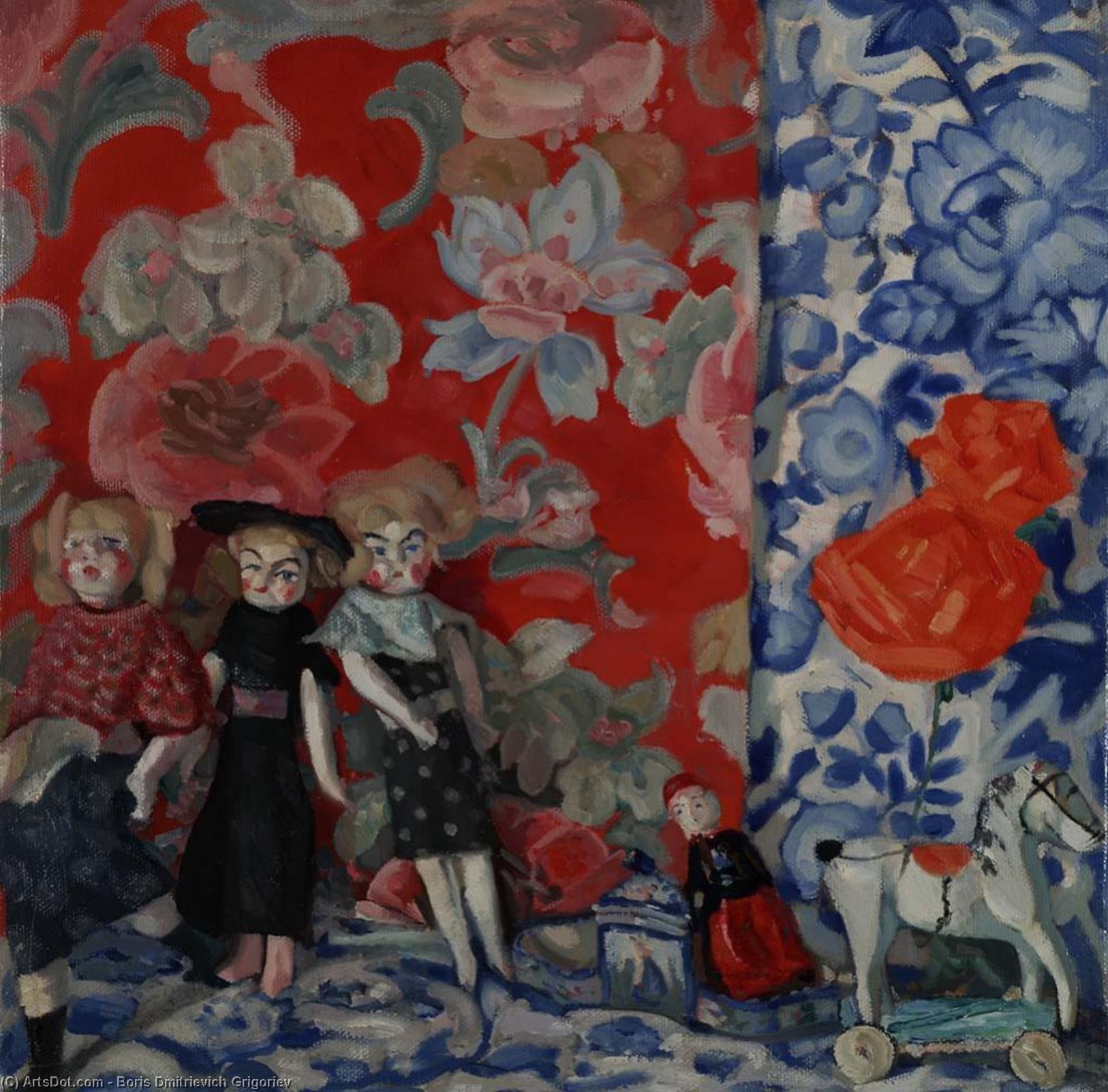
Boris Dmitrievich Grigoriev's *Fair In Brittany* is a captivating and unsettling work that exemplifies the artist’s unique position within early 20th-century Russian art. Painted sometime during his period of stylistic exploration, this piece transcends simple representation, offering instead a potent blend of Expressionism and Symbolism that invites deep contemplation. It’s a painting that doesn't merely depict a scene; it evokes a mood – one of wistful melancholy and underlying tension.Subject & Composition: A Divided World
The artwork is strikingly divided into two distinct visual realms. On the left, we are immersed in a dense field of vibrant red, teeming with large, stylized floral blooms—roses and peonies dominating the space. Within this almost claustrophobic garden stand three figures, rendered as doll-like girls. Their elaborate costumes and pensive expressions suggest a sense of detachment or lost innocence. The right side offers a sharp contrast: a meticulously detailed scene reminiscent of blue and white porcelain, depicting a horse and rider. This juxtaposition is key to understanding the painting’s complexity; it's a dialogue between organic chaos and controlled order, passion and restraint.Technique & Style: Impasto & Emotional Color
Grigoriev masterfully employs contrasting techniques to reinforce this duality. The floral side explodes with loose, energetic brushwork and heavy *impasto* – thick layers of paint that create a tactile surface and heighten the emotional intensity. Conversely, the porcelain scene is executed with precision and control, showcasing a refined attention to detail. The color palette is equally significant. The dominant red evokes passion, perhaps even danger or suppressed emotion, while the cool blues and whites offer a counterpoint, suggesting distance or serenity. This deliberate use of color isn’t merely aesthetic; it's deeply emotive, driving the painting’s psychological impact.Historical Context: A Russian Artist in Transition
Born in 1886, Grigoriev navigated a period of immense artistic upheaval in Russia. He initially embraced Impressionism, becoming part of the “Studio of Impressionists” group, before aligning himself with the more avant-garde "World of Art" movement. *Fair In Brittany* reflects this stylistic evolution – it’s not purely Impressionistic but incorporates elements of Symbolism and Expressionism, demonstrating his willingness to experiment and push boundaries. His personal history—born out of wedlock—also subtly informs his work, often exploring themes of alienation and societal constraints.Symbolism & Interpretation: Dolls, Dreams & Disquiet
The doll-like figures are particularly compelling. Their stylized features and painted expressions suggest artificiality, fragility, and a sense of isolation. Are they representations of idealized femininity? Or perhaps symbols of lost childhood or societal expectations imposed upon women? The Breton setting—Brittany being a region steeped in folklore and Celtic mythology—adds another layer of intrigue. The painting feels dreamlike, almost hallucinatory, prompting viewers to question the reality presented before them. It’s a work that resists easy answers, inviting multiple interpretations.Emotional Impact & Aesthetic Appeal
*Fair In Brittany* is not a comfortable painting; it's designed to provoke thought and elicit an emotional response. The unbalanced composition, the unsettling juxtaposition of elements, and the melancholic figures all contribute to a sense of unease. However, this very disquiet is what makes the artwork so compelling. Its bold colors, dynamic brushwork, and intriguing symbolism make it a striking statement piece—ideal for collectors seeking unique and thought-provoking art or interior designers aiming to create spaces that are both visually stunning and intellectually stimulating. It’s a work that stays with you long after you've looked away.Похожие произведения
Биография художника
Boris Dmitrievich Grigoriev: A Life Painted in Russian Soul
Born on July 11, 1886, in the small town of Rybinsk, nestled along the banks of the Volga River, Boris Dmitrievich Grigoriev’s early life was steeped in a quiet melancholy that would profoundly shape his artistic vision. His mother, Klara von Lindenberg, a woman of Swedish descent, brought a subtle European influence to his upbringing – an element that, alongside his unconventional birth and the social constraints of Tsarist Russia, contributed to a complex and often introspective character. The circumstances surrounding his birth, born out of wedlock, cast a long shadow over his formative years, a theme that would subtly permeate his later works, hinting at unspoken burdens and a yearning for belonging.
His artistic journey began formally at the Stroganov Art School in Moscow from 1903 to 1907, under the tutelage of Dmitri Shcherbinovsky. This institution, renowned for fostering a generation of avant-garde artists, provided Grigoriev with a solid foundation in drawing and composition. He then continued his studies at the Imperial Academy of Arts in St. Petersburg until 1913, where he was exposed to the teachings of esteemed figures like Alexander Kiselyov and Dmitry Kardovsky – masters who instilled within him an appreciation for line as a fundamental element of artistic expression, a principle that would become strikingly evident throughout his oeuvre.
The Blossoming of Style: Impressionism and Beyond
Grigoriev’s artistic style evolved dramatically over time, initially rooted in the vibrant hues and fleeting moments of Impressionism. In 1909, he joined the “Studio of Impressionists,” a group dedicated to exploring the possibilities of capturing light and atmosphere. However, Grigoriev's artistic sensibilities quickly transcended mere imitation; he embraced the bold experimentation and social commentary characteristic of the *World of Art* (Mir Iskusstva) movement, which gained momentum in 1913. This association exposed him to a diverse circle of intellectuals and artists, fueling his desire to capture the essence of Russian life – not just its picturesque landscapes, but also its complex social fabric and the psychological depths of its people.
His influences were multifaceted, drawing from both European masters like Monet and Renoir, who had mastered the ephemeral qualities of light, and a distinctly Russian sensibility. He was particularly drawn to the works of the Symbolist movement, which explored themes of spirituality, mythology, and the subconscious – elements that would find their way into his evocative imagery.
A Palette of National Identity: Key Works and Themes
Grigoriev’s most significant contribution to Russian art lies in his exploration of national identity. His 1918 album, “Rasseïa,” stands as a testament to this ambition – an attempt to distill the very soul of Russia into a series of evocative images, portraying it not merely as a geographical entity but as a living, breathing phenomenon. This work reflects a deep desire to understand and represent the Russian people in all their complexity.
His portraits are equally compelling, capturing the personalities of prominent figures like Vsevolod Meyerhold, Maxim Gorky, and Sergei Rachmaninov with remarkable sensitivity and psychological insight. Each portrait is more than just a likeness; it’s an attempt to reveal the inner life of the subject – their hopes, fears, and aspirations. Notable series include “Faces of Russia” and “Faces of the World,” which showcase his interest in portraying diverse individuals from various cultures, reflecting a broader worldview.
Significant paintings such as *Sunflowers* (1917-1919), *Village* (1918), and *Peasants in the Field* (1920) exemplify his masterful use of color and rhythm. These works, imbued with a sense of both vibrancy and melancholy, capture the beauty and hardship of rural life in Russia – a recurring theme throughout his career.
A Legacy Etched in Color: Historical Significance
Boris Grigoriev’s impact on Russian art extends beyond his individual creations. He played a crucial role in shaping the trajectory of the Russian avant-garde, contributing to its innovative spirit and challenging traditional artistic conventions. His work resonated deeply with audiences during his lifetime, earning him recognition both within Russia and abroad – with exhibitions held in Paris, New York, Berlin, and Rio de Janeiro. Despite facing challenges as an émigré artist, he remained steadfastly committed to his Russian roots, continually seeking to express the essence of his homeland through his art.
Tragically, Grigoriev’s life was cut short in 1939 in Cagnes-sur-Mer, France. His untimely death represents a profound loss for the world of art – a brilliant talent extinguished before its full potential could be realized. However, his legacy endures through his paintings, which continue to captivate viewers with their emotional depth, vibrant colors, and evocative portrayal of Russian life.
Artistic Characteristics: A Synthesis of Styles
Grigoriev’s artistic style is a unique synthesis of various influences – Impressionism, Symbolism, and the bold experimentation of the avant-garde. His paintings are characterized by an intense emotionality, conveyed through the skillful use of color and dynamic composition. He employed rhythmic structures to create a sense of movement and energy, while his portraits were notable for their psychological depth and ability to capture the inner lives of his subjects. Ultimately, Grigoriev’s work represents a powerful expression of Russian identity – a testament to the beauty, complexity, and enduring spirit of a nation.
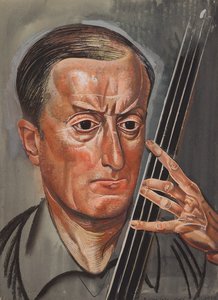
boris dmitrievich grigoriev
1886 - 1939 , Россия
Основные сведения
- Artistic Movement Or Style: Avant-garde
- Artists Or Movements Influenced By This Artist: ['World of Art']
- Artists Who Influenced This Artist:
- Dmitry Shcherbinovsky
- Alexander Kiselyov
- Date Of Birth: 1886-07-11
- Date Of Death: 1939-02-07
- Full Name: Boris Dmitrievich Grigoriev
- Nationality: Russian
- Notable Artworks:
- Rasseïa
- Lady in a Top Hat
- The Blue Bay, Brazil
- Place Of Birth: Rybinsk, Russia
Похожие статьи
10 Шедевров Немецкого Экспрессионизма: Искусство Эмоций и Вдохновения | ArtsDot
Погрузитесь в мир немецкого экспрессионизма! Узнайте истории создания шедевров Мунка, Кирхнера, Кандинского и других великих художников. Репродукции картин высокого качества для вашего интерьера на ArtsDot.com. Откройте всю коллекцию онлайн!
Victor Vasnetsov: Myth, Nationalism & the Revival of Russian Fairy Tale Painting
Explore the captivating world of Victor Vasnetsov, a co-founder of Russian folklorist painting. Discover his iconic works, influence on national identity, and lasting legacy in this expert guide.
Смелые шедевры: Топ-10 произведений искусства для яркого интерьера от ArtsDot.com
Откройте для себя 10 смелых шедевров искусства – от Ван Гога до Пикассо! Узнайте истории художников, техники и вдохновение за культовыми работами. Купите репродукции картин высокого качества для вашего интерьера на ArtsDot.com.
Рой Лихтенштейн: 25 шедевров поп-арта для вашего интерьера | ArtsDot
Откройте для себя 25 культовых работ Роя Лихтенштейна – ярких символов поп-арта! Узнайте историю создания шедевров, технику и вдохновение художника. Репродукции картин Лихтенштейна премиум-качества на ArtsDot.com. Идеальный декор для вашего интерьера.
Ivan Bilibin: A Synthesis of Folklore, Modernism & National Identity in Russian Illustration
Explore the enchanting world of Ivan Bilibin, a master Russian illustrator who synthesized folklore, Art Nouveau & national identity. Discover his iconic fairy tale illustrations and legacy with ArtsDot.