


 Предпросмотр
 Поделиться
 Поделиться
 Детали произведения

 Скачать
 Похожие работы
 Рентгенография
 Слайд-шоу
 Статистика
Portrait of Peter Kapitza
 Oil On Canvas
- WallArt
- Academic Realism
 1926
1926 107.0 x 90.0 cm
 Читать далее
Приобретите цифровое изображение высокого разрешения в улучшенном качестве, которое значительно превосходит онлайн-превью.
Каждый файл тщательно подготавливается нашими специалистами с использованием передовых инструментов и экспертной ручной ретуши. Мы гарантируем исключительную четкость, точную цветопередачу и детальную проработку каждого изображения.
Финальный файл доставляется по электронной почте в течение 72 часов и оптимизирован для немедленного использования в профессиональной среде, при верстке и печати. Это тот же уровень качества, которому доверяют ведущие дизайнерские студии, издательства и галереи.
Цифровое изображение
Скачайте файл высокого разрешения для личного использования, печати и творческих проектов. ( Перейти к печати Купить картину ручной работы)
Включено в каждый заказ цифровых изображений
Гарантия экспертной цифровой доставки
Выбирая ArtsDot.com, вы получаете не просто изображение — вы приобретаете профессионально обработанное цифровое произведение искусства, созданное с безупречной точностью и под защитой гарантии качества. Вот всё, что автоматически входит в ваш заказ:

Мгновенная доставка по e-mail
Ваш цифровой файл в высоком разрешении будет отправлен вам по электронной почте в течение 72 часов после оформления заказа — и сразу станет доступен для использования.

Цифровой файл с ИИ-улучшением
Ваше произведение искусства проходит профессиональную оптимизацию с использованием передовых инструментов ИИ и ручной обработки, что гарантирует максимальную детализацию, четкость и точность цветопередачи.

Бессрочная бесплатная повторная доставка
Случайно удалили или потеряли файл? Не беспокойтесь — мы отправим его вам повторно в любое время и совершенно бесплатно.

Без импортных пошлин — навсегда
Наслаждайтесь вашим произведением искусства мгновенно без таможенных пошлин, сборов или затрат на доставку — цифровые загрузки всегда не облагаются налогом.

Гарантия точности цветопередачи
Мы гарантируем, что ваше цифровое изображение максимально точно передает оригинальные цвета благодаря использованию профессиональных инструментов и систем управления цветом.

Гарантия удовлетворенности 100 дней
Если вы не будете удовлетворены своим цифровым изображением, мы внесем правки или вернем 100% стоимости в течение 100 дней — без лишних вопросов.

100% Гарантия возврата средств
Не удовлетворены покупкой? Получите полный возврат средств в течение 100 дней после получения цифрового файла — без лишних вопросов.

Скидки на оптовые заказы
Купите 3 изображения, сэкономьте 10% — Купите 5, сэкономьте 15% — Купите 10+, сэкономьте 20%. Отличное решение для творческих проектов, галерей и агентств.
A Glimpse into Early 20th Century Sophistication
This captivating portrait of Peter Kapitza transports us directly into the charged atmosphere of the early 1920s. The subject is rendered with an undeniable air of intellectual gravitas, seated in a chair whose ornate design speaks volumes about the era's taste for elaborate craftsmanship. He embodies a studied nonchalance; hands casually tucked into his pockets, a cigarette held with practiced ease—these details coalesce to paint a picture not merely of a man, but of a certain sophisticated archetype: the thoughtful businessman or the contemplative intellectual.
The artist, Boris Mikhailovich Kustodiev, captures this moment with remarkable acuity. His technique allows every fold of the suit and tie, every subtle line etched around the eyes, to contribute to the overall narrative. The man’s gaze is perhaps the most arresting element; it seems fixed on something just beyond the frame, suggesting a deep internal monologue or a profound engagement with unseen ideas. It is a portrait that invites the viewer not just to look, but to ponder.
The Hand of Boris Mikhailovich Kustodiev
To understand this work is to appreciate the hand that guided the brush. Kustodiev’s career was deeply interwoven with the vibrant tapestry of Russian life, a spirit he rendered with passionate fervor. While his oeuvre often celebrates the broader sweep of Russian character, here we see him applying that masterful touch to an intimate study of personality. His background, steeped in the traditions of masters like Ilya Repin, lends this piece a monumental quality, even when depicting a seemingly casual moment.
The richness of the paint application and the depth achieved in rendering skin tones suggest a mastery over oil painting techniques. The detail is meticulous, yet it never feels labored; rather, it flows naturally from the artist's deep understanding of human form and psychological nuance. Owning a reproduction of this piece allows one to connect with that historical moment of artistic peak.
Symbolism and Atmosphere
The cigarette itself functions as more than just an accessory; it is a potent symbol of the period—a marker of leisure, contemplation, and perhaps a touch of melancholy sophistication. The ornate chair grounds the figure in a specific, elegant setting, suggesting status while his pensive expression hints at deeper currents beneath the polished surface. Kustodiev seems to be exploring the tension between outward presentation and inner life, a theme timelessly resonant.
For the collector or designer, this painting offers an immediate infusion of historical drama and refined taste into any space. It speaks of grand drawing rooms, libraries filled with weighty tomes, and conversations held under gaslight—a palpable sense of cultured history.
A Touch for Your Interior
Considering its dimensions of 107 x 90 cm, this portrait serves as a substantial focal point. It possesses the gravitas required to anchor a formal living area or an executive study. When considering a high-quality reproduction, one is acquiring more than just art; it is acquiring a piece of captured atmosphere—the thoughtful silence before a great idea takes shape. It promises conversation, depth, and undeniable aesthetic pedigree.
Похожие произведения


Биография художника
A Life Immersed in Russian Spirit
Boris Mikhailovich Kustodiev, born on March 7, 1878, in Astrakhan, Russia, was an artist whose work became inextricably linked to a vibrant and often idealized depiction of Russian life. His early years were shaped by a profound sense of provinciality, a consequence of the financial hardships that followed his father’s untimely death – a respected professor of philosophy, history, and logic at the local theological seminary. This formative experience, witnessing the struggles of merchants and the everyday lives of common folk, deeply influenced the themes that would dominate his artistic output throughout his career. Kustodiev's education began within the walls of the Astrakhan theological seminary, yet it was private lessons with Pavel Vlasov, a devoted student of Vasily Perov, that truly ignited his artistic passion and provided him with a foundational understanding of realistic painting techniques. This pivotal connection led him to St. Petersburg and the prestigious Imperial Academy of Arts, where he studied under the renowned Ilya Repin from 1896 to 1903. Repin recognized Kustodiev’s considerable talent early on, even inviting him to assist with a monumental commemorative painting – an invaluable opportunity that honed his skills and firmly established his commitment to capturing the essence of Russian identity. This period was not merely about instruction; it was a crucial mentorship, shaping his artistic vision and providing him with a deep appreciation for the power of visual storytelling.Artistic Development and Key Themes
Kustodiev’s artistic journey unfolded across a diverse range of genres – portraiture, genre scenes brimming with life, and meticulously illustrated books. However, he consistently returned to portraying the richness and complexity of Russian culture, particularly the lives of the merchant class. His style evolved organically over time, initially rooted in Realism but gradually incorporating elements of Art Nouveau’s decorative flair and flowing lines. He possessed an extraordinary ability – a rare gift – not just to *represent* what he saw, but also to capture the atmosphere, the mood, and the very spirit of a place or moment. The merchant class, with their intricate traditions, elaborate customs, and often-hidden wealth, became a recurring motif in his work, reflecting those early childhood impressions from Astrakhan. Paintings like *The Merchant’s Wife* (1918), a masterpiece of quiet dignity and understated beauty, stand as powerful testaments to this enduring fascination, offering a glimpse into the lives of individuals often overlooked by history. Beyond portraits, Kustodiev masterfully depicted scenes of everyday life – bustling marketplaces overflowing with goods, lively festivals like Maslenitsa (Pancake Week) celebrated with joyous abandon, and serene landscapes that evoked a deep sense of national pride and connection to the Russian land. His work wasn’t simply representational; it was infused with a palpable love for Russia and its people, a sentiment that resonated deeply with viewers. He traveled extensively throughout Europe – France, Spain, Italy – seeking inspiration and broadening his artistic horizons, yet always felt drawn back to his homeland, believing that true artistic expression stemmed from the heart of Russian culture.Influences and Artistic Style
Kustodiev’s artistic development was profoundly shaped by several key influences. Vasily Perov, his initial mentor, instilled in him a commitment to depicting the lives of ordinary people with honesty and empathy. Ilya Repin, his teacher at the Imperial Academy of Arts, provided invaluable guidance on composition, technique, and the importance of capturing psychological depth in his subjects. The works of Russian realist painters like Petrov and Repin served as a foundation for Kustodiev’s style, emphasizing detailed observation and a commitment to portraying the realities of Russian life. However, he also embraced elements of Art Nouveau, incorporating flowing lines, vibrant colors, and decorative motifs into his paintings – a reflection of the artistic trends of his time. This fusion of realism and stylistic innovation resulted in a distinctive visual language that is both deeply rooted in Russian tradition and imbued with a sense of modern elegance. His use of color was particularly noteworthy; he employed rich, saturated hues to evoke emotion and create a visually arresting effect. Kustodiev’s paintings are characterized by their meticulous detail, vibrant colors, and a remarkable ability to capture the essence of his subjects – whether they were merchants, peasants, or members of the aristocracy.Overcoming Adversity: Resilience and Artistic Output
In 1916, Kustodiev's life took an unexpected and devastating turn when he suffered a severe spinal injury, resulting in paraplegia. This debilitating condition confined him to a wheelchair and dramatically altered his physical capabilities. Many would have succumbed to despair, but Kustodiev’s spirit remained unbroken. Instead of allowing his physical limitations to extinguish his creative flame, he channeled his energy into painting with renewed intensity. Despite the immense challenges, he continued to produce an astonishing volume of work – portraits, genre scenes, and illustrations – often working from memory and imagination. This period saw a shift in his artistic style, characterized by an intensified joyfulness and a bolder use of color. It’s as if, unable to fully experience life through his body, he poured all of his energy into recreating its beauty on canvas, celebrating the simple pleasures of everyday existence. His paintings from this era – *Fontanka* (1916) and *Maslenitsa* (1916), for example – are imbued with a sense of optimism and resilience that is both poignant and inspiring.Legacy and Historical Significance
Boris Kustodiev’s contribution to Russian art lies in his ability to capture the spirit of an era – a time of profound social change, political upheaval, and burgeoning cultural identity. He wasn't merely documenting reality; he was interpreting it through a lens of nostalgia, affection, and deep understanding. His paintings offer invaluable insights into the lives of ordinary Russians during the late 19th and early 20th centuries, preserving their traditions, customs, and values for posterity. His work resonated deeply with audiences then and continues to captivate viewers today, serving as a window into a bygone era. Kustodiev’s influence can be seen in the works of subsequent generations of Russian artists who sought to celebrate their national identity and depict the beauty of everyday life. His paintings are now held in prominent collections across Russia – including the Kramskoy Museum of Fine Arts in Voronezh and the Kharkov Museum of Art in Ukraine – ensuring that his artistic vision will continue to inspire and enrich for years to come. He remains a beloved figure in Russian art, celebrated for his vibrant depictions of Russian life and his unwavering spirit in the face of adversity.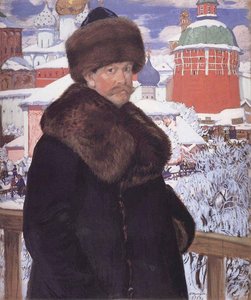
Борис Кустодиев
1878 - 1927 , Россия
Основные сведения
- Artistic Movement Or Style: Реализм, модерн
- Artists Or Movements Influenced By This Artist: ['Русский модерн']
- Artists Who Influenced This Artist:
- Василий Перов
- Илья Репин
- Date Of Birth: 7 марта 1878 г.
- Date Of Death: 28 мая 1927 г.
- Full Name: Борис Михайлович Кустодиев
- Nationality: Русский
- Notable Artworks:
- Дружина гулящей барыни
- Масленица
- Фонтанка
- Place Of Birth: Астрахан, Россия