

 Предпросмотр
 Поделиться
 Поделиться
 Детали произведения

 Скачать
 Похожие работы
 Рентгенография
 Слайд-шоу
 Статистика
Peasant Family
 Oil On Canvas
- WallArt
- Baroque
 1640
1640- Early Modern
 113.0 x 159.0 cm
 Лувр
Лувр
 Читать далее
Масляная репродукция ручной работы
Картина маслом на холсте в выбранном вами размере и раме, написанная на заказ нашими художниками. ( Перейти к печати Перейти к цифровым изображениям)




P118B $10

P118H $10

P118W $10

P438Z $10

P508JH $12

P508YH $12

P805H $10

P805Z $10

P919BZ $10

P919G $10

P919XJ $10

P959ZH $10

P968JZ $12

W106C $8

W218G $10

W218JH $8

W218Y $10

W307PJ $10

W316G $10

W316PJ $8

W316Y $10

W398PJ $8

W4111J $10

W500HY $15

W500JH $15

W692G $12

W849H $8

W940BG $15

W953PJ $8




Выберите один из наших стандартных размеров, соответствующих оригинальным пропорциям произведения искусства.

Вы можете указать собственные размеры, чтобы картина идеально вписалась в выбранную раму или пространство. Если выбранный вами размер не соответствует пропорциям оригинала, мы либо обрежем полотно, либо расширим его за счет дополнительных элементов, написанных вручную. Цифровой макет будет отправлен вам на утверждение перед началом производства.
Обратите внимание, что предварительный просмотр на экране не отражает фактическую обрезку или расширение. Только макет точно покажет окончательную композицию.
Хотя доступны индивидуальные размеры, мы рекомендуем выбирать вариант из предопределенного списка, чтобы сохранить исходные пропорции.
После оформления заказа команда ArtsDot.com свяжется с клиентом по электронной почте для уточнения деталей и предоставит предварительный макет
Доставка по всему миру () за 3–4 недели вместо стандартных 5 недель. (12 Сентябрь). Без компромиссов в качестве.

Бесплатная экспресс-доставка по всему миру

Высококачественный льняной холст

Полное страхование доставки

Гарантия возмещения таможенных пошлин

Гарантия точного соответствия цветов

100-дневная политика возврата (только при обнаружении дефектов)

Гарантия возврата 100% средств

Предложение оптовых скидок
 Вариант со стеклом доступен только для размеров менее 110 см

Peasant Family
Техника репродукции
Размер репродукции
-


Итоговая стоимость
$ 263
A Glimpse into Rustic Dignity: The World of Antoine Le Nain's Peasant Family
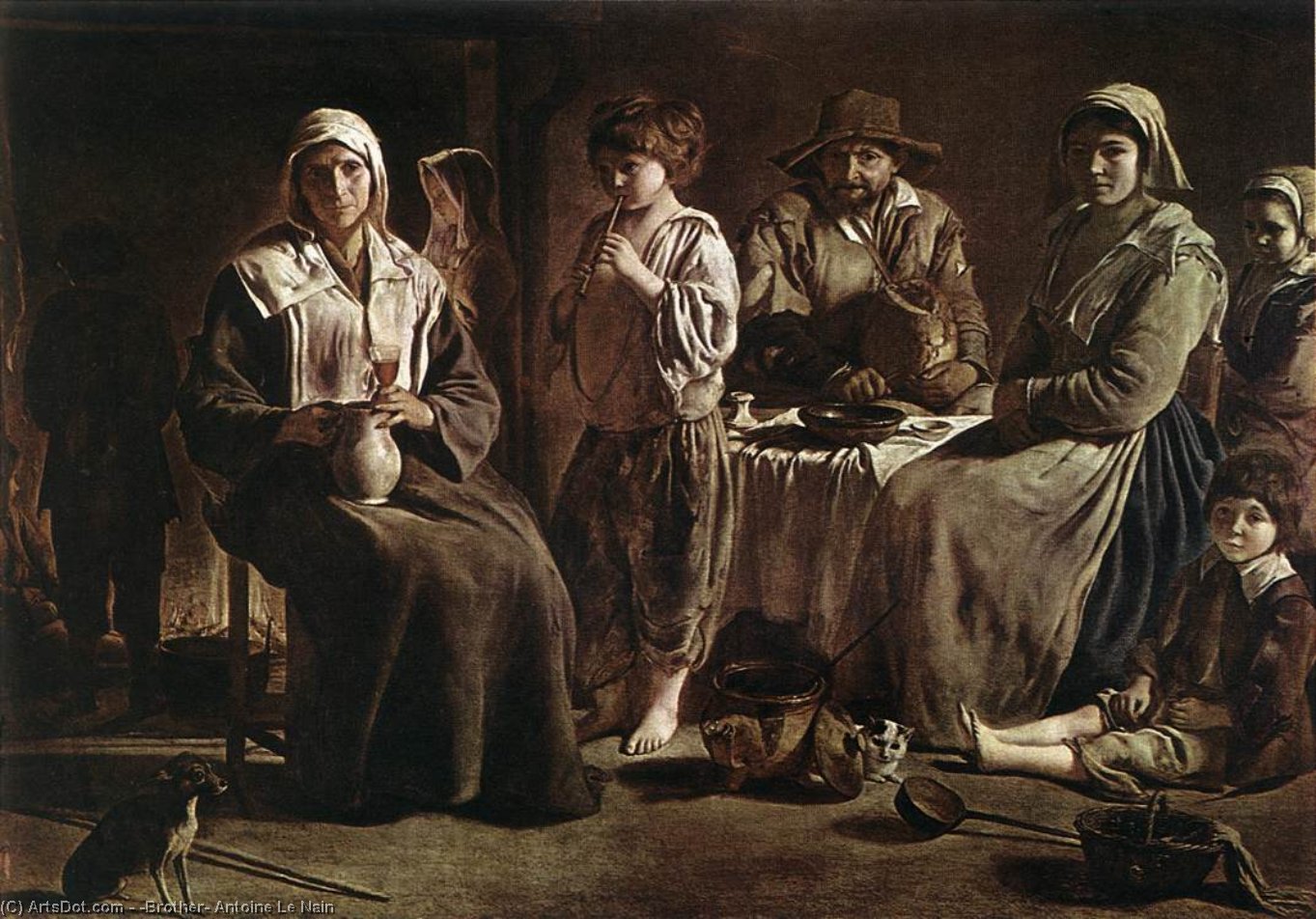
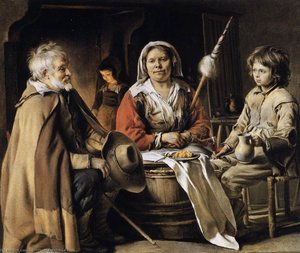
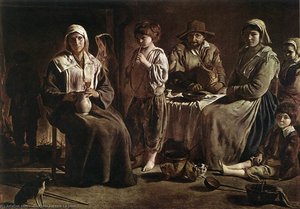
To stand before "Peasant Family" by Antoine Le Nain is not merely to observe a painting; it is to step through the soft, warm veil of time and into the quiet heart of 17th-century French life. Created in 1640, this oil on canvas masterpiece transcends simple genre scene classification. It offers an intimate portrait of humanity—a moment suspended in amber light, capturing the dignity inherent in everyday existence. The Le Nain brothers, masters of rendering the ordinary extraordinary, turned their gaze away from grand mythological epics and toward the profound narratives unfolding within humble domestic walls. This work speaks to a time when life was lived close to the earth, and Antoine Le Nain possessed an unparalleled gift for translating that quiet resonance onto canvas.
Composition and the Art of Stillness
The composition itself is a masterclass in controlled energy. Gathered around a modest table, at least six figures populate the scene, their various postures—some seated with thoughtful repose, others standing in gentle conversation—creating a dynamic yet deeply harmonious arrangement. Notice how the artist guides the eye: from the objects resting on the table, perhaps a jug or a bowl, to the subtle interaction between the figures and even the peacefully resting dog nearby. The use of earth tones dominates the palette, wrapping the entire scene in a blanket of rustic warmth. Yet, it is these subtle accents, like the faint whisper of blue visible on one garment, that prevent the overall mood from becoming monotonous, providing just enough visual counterpoint to keep the viewer engaged.
Technique and the Soft Glow of Realism
Technically, "Peasant Family" showcases a remarkable commitment to naturalism. The soft, almost diffused lighting is key to its emotional impact; it seems to emanate from an unseen source, bathing the scene in a gentle glow that enhances every fold of clothing and every texture of wood. Le Nain’s brushwork, while detailed enough to suggest the rough weave of peasant attire, remains remarkably subtle, allowing the viewer to feel the weight and reality of the moment depicted. This sensitivity to light and shadow is what elevates the piece from mere documentation to profound art.
Symbolism of Simple Living
The symbolism here is not overt; it is woven into the very fabric of daily routine. The gathering around the table suggests community, shared sustenance, and the unbreakable bonds of family life. In an era often obsessed with aristocratic grandeur, the Le Nains found nobility in the mundane. This painting celebrates resilience—the quiet strength found in mutual presence. It invites us, the modern viewer, to pause our hurried pace and consider the beauty embedded within simple rituals.
Bringing History Home: Owning a Masterpiece
For those who wish to incorporate this historical depth into their own living spaces, acquiring a high-quality reproduction of "Peasant Family" offers an unparalleled connection to art history. It allows one to curate an interior that whispers tales of 17th-century French life. Whether placed in a rustic dining room or a thoughtfully appointed drawing-room, the painting’s inherent warmth and narrative power will serve as a timeless focal point, inviting contemplation and conversation for generations to come.
Похожие произведения


Биография художника
The Enigmatic World of the Le Nain Brothers
The name “Le Nain” – meaning “the dwarf” in French – evokes a sense of mystery, and fittingly shrouds the lives and work of Antoine, Louis, and Mathieu Le Nain. These three brothers, active in 17th-century France, stand as unique figures in the Baroque period, celebrated for their profoundly realistic depictions of everyday life, particularly the peasantry. Unlike many of their contemporaries who focused on mythological or religious narratives, the Le Nains turned their attention to the lives of ordinary people, imbuing them with a dignity and quiet strength rarely seen in art before their time. Their collaborative nature only deepens the intrigue; for centuries, scholars have debated which brother was responsible for specific paintings, as they signed their works simply “Lenain,” obscuring individual authorship.
Early Life and Artistic Formation
Born in or near Laon, a town in Picardy, France, the Le Nain brothers emerged from relatively obscure beginnings. Mathieu, born in 1607, was the youngest of the three. Antoine (circa 1600) and Louis (circa 1603) followed, though precise birthdates remain uncertain. By 1630, all three had established a shared workshop in Paris, a pivotal move that cemented their artistic partnership. Antoine’s admission to the Parisian painters' guild was crucial, allowing his brothers to train under him without incurring fees—a testament to their familial dedication and collaborative spirit. Initially, their paintings reflected the prevailing styles of the era, with religious subjects influenced by French artists like Philippe de Champaigne and Jacques Blanchard. However, a significant shift occurred around 1640, sparked by exposure to the work of Italian master Orazio Gentileschi, whose dramatic use of light and shadow left an indelible mark on their evolving style.
A New Vision: Genre Painting and Peasant Life
The Le Nains’ most enduring legacy lies in their genre paintings—scenes depicting everyday life. They were among the first French artists to elevate the peasantry to the level of serious artistic subject matter, portraying them not as idealized figures or comic stereotypes, but as individuals with inherent dignity and quiet resilience. Paintings like *The Well* and *Landscape with Peasants and a Chapel* showcase their meticulous attention to detail, capturing the textures of rough clothing, weathered faces, and the earthy tones of the rural landscape. Their compositions are often characterized by a sense of stillness and introspection, inviting viewers to contemplate the lives and experiences of these humble subjects. While remarkably realistic, their peasants possess an almost classical composure, suggesting a degree of idealization that sets them apart from purely documentary depictions.
Collaboration, Style, and Technical Mastery
The collaborative nature of the Le Nain workshop presents a unique challenge to art historians attempting to attribute specific works to individual brothers. Their shared studio fostered a remarkable consistency in style, making it difficult to discern distinct artistic personalities. However, scholars have identified certain tendencies—Antoine is often associated with more formal portraiture and religious scenes, while Mathieu’s work is characterized by larger compositions and a greater emphasis on narrative detail. Regardless of authorship, the Le Nains shared a mastery of technique, particularly their use of *impasto* – applying paint thickly to create texture and depth. Their palette favored earthy tones—browns, ochres, and grays—which contribute to the somber yet dignified atmosphere of their paintings. The influence of Caravaggio’s tenebrism, with its dramatic contrasts of light and shadow, is also evident in their work.
Legacy and Historical Significance
In 1648, all three Le Nain brothers were received into the newly founded French Academy, a testament to their growing reputation and artistic merit. Despite this recognition, their fame waned in the centuries following their deaths. It wasn’t until the 19th century that they were rediscovered, championed by art historians like Champfleury who recognized their groundbreaking realism and influence on later artists. Gustave Courbet, Édouard Manet, and other Realist painters of the 19th century drew inspiration from the Le Nains' unflinching portrayal of everyday life, acknowledging them as precursors to modern artistic sensibilities. Today, the Le Nain brothers are celebrated for their unique contribution to French Baroque painting—a legacy built on collaboration, technical mastery, and a profound respect for the dignity of ordinary people. Their paintings offer a glimpse into a world often overlooked by art history, reminding us that beauty and meaning can be found in the most humble of subjects.
Основные сведения
- Artistic Movement Or Style: Baroque, Genre painting
- Artists Or Movements Influenced By This Artist:
- Gustave Courbet
- Édouard Manet
- Artists Who Influenced This Artist:
- Orazio Gentileschi
- Philippe de Champaigne
- Date Of Birth: c. 1600
- Date Of Death: May 25, 1648
- Full Name: Antoine Le Nain
- Nationality: French
- Notable Artworks:
- The Well
- Backgammon Players
- Adoration of the Shepherds
- Place Of Birth: Laon, France
Похожие статьи
Топ-10 знаменитых картин в "грибных" тонах: искусство для вашего интерьера
Погрузитесь в мир искусства с нашей коллекцией из 10 знаменитых картин в "грибных" тонах! Узнайте истории Моне, Ван Гога и других великих мастеров. Репродукции высокого качества для вашего интерьера на ArtsDot.com.
Earthen Hues: Exploring the Psychological & Artistic Significance of Earth Tones
Explore the captivating world of earth tones! Discover their historical significance, psychological impact & artistic techniques. Find inspiration for your home decor and museum-quality reproductions at ArtsDot.
Топ-10 шедевров в песочных тонах: искусство, вдохновляющее интерьер
Погрузитесь в мир искусства с нашей коллекцией из 10 шедевров в песочных тонах! Узнайте истории Моне, Ван Гога и других великих художников. Репродукции картин для вдохновения интерьера – на ArtsDot.com
The Resonance of Earthly Tones: Exploring Nuance, History & Emotional Impact in Art
Explore the captivating world of earth tones in art! Discover historical context, emotional resonance & artistic techniques behind these timeless colors. Find inspiration for your home decor and museum-quality reproductions.
The Resonance of Earth Tones: Exploring Emotional Depth & Artistic Context in Paintings
Explore the captivating world of earth tones in painting! Discover the historical context, emotional resonance, and artistic techniques behind these timeless colors. Learn how to create harmonious spaces with natural palettes.