

 Предпросмотр
 Поделиться
 Поделиться
 Детали произведения

 Скачать
 Похожие работы
 Рентгенография
 Слайд-шоу
 Статистика
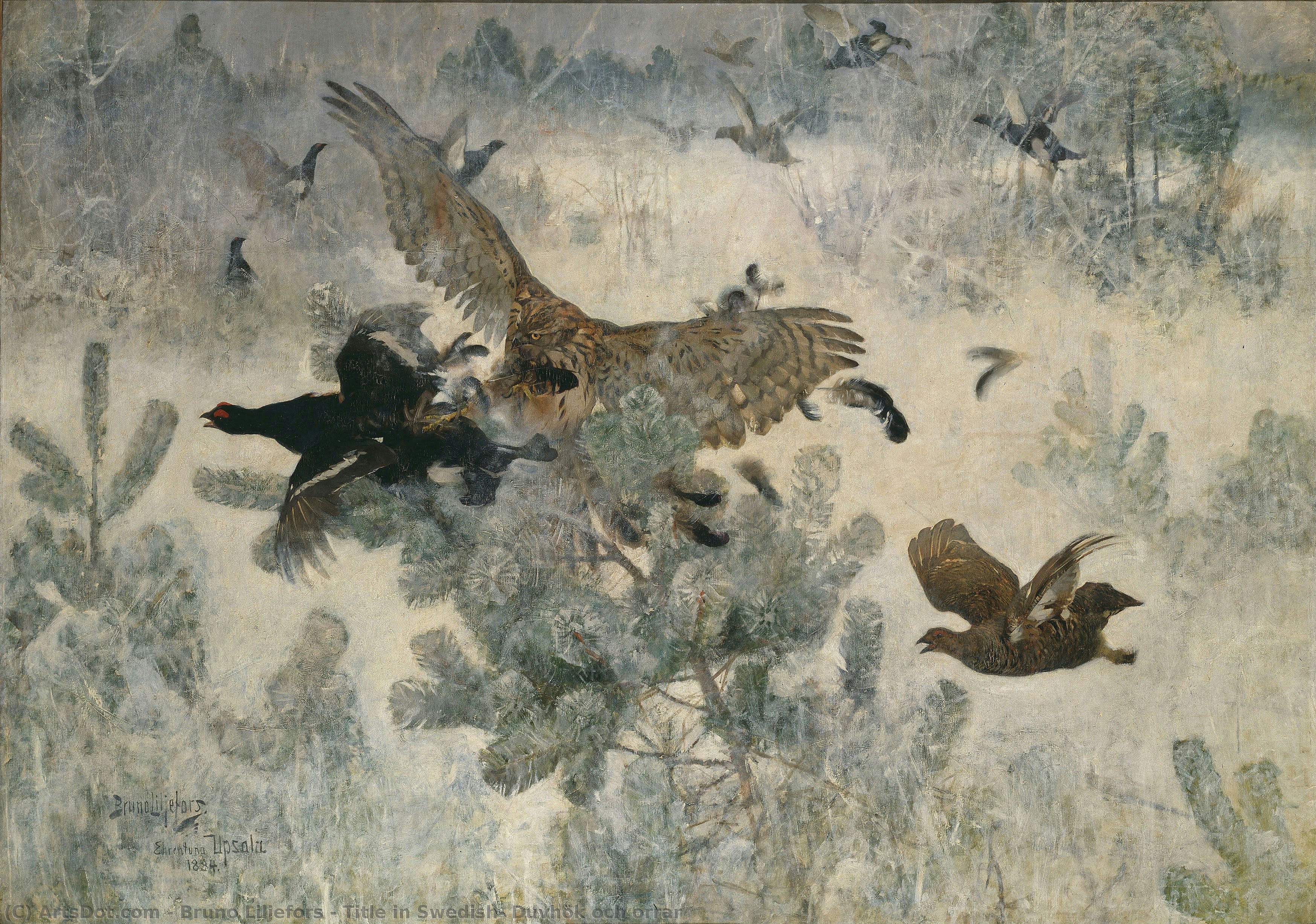
Title in Swedish: Duvhök och orrar
 Acrylic On Canvas
- WallArt
- Impressionistic Techniques
 1884
1884 2030.0 x 1430.0 cm
 Национальный музей Швеции
 Читать далее
Приобретите цифровое изображение высокого разрешения в улучшенном качестве, которое значительно превосходит онлайн-превью.
Каждый файл тщательно подготавливается нашими специалистами с использованием передовых инструментов и экспертной ручной ретуши. Мы гарантируем исключительную четкость, точную цветопередачу и детальную проработку каждого изображения.
Финальный файл доставляется по электронной почте в течение 72 часов и оптимизирован для немедленного использования в профессиональной среде, при верстке и печати. Это тот же уровень качества, которому доверяют ведущие дизайнерские студии, издательства и галереи.
Цифровое изображение
Скачайте файл высокого разрешения для личного использования, печати и творческих проектов. ( Перейти к печати Купить картину ручной работы)
Включено в каждый заказ цифровых изображений
Гарантия экспертной цифровой доставки
Выбирая ArtsDot.com, вы получаете не просто изображение — вы приобретаете профессионально обработанное цифровое произведение искусства, созданное с безупречной точностью и под защитой гарантии качества. Вот всё, что автоматически входит в ваш заказ:

Мгновенная доставка по e-mail
Ваш цифровой файл в высоком разрешении будет отправлен вам по электронной почте в течение 72 часов после оформления заказа — и сразу станет доступен для использования.

Цифровой файл с ИИ-улучшением
Ваше произведение искусства проходит профессиональную оптимизацию с использованием передовых инструментов ИИ и ручной обработки, что гарантирует максимальную детализацию, четкость и точность цветопередачи.

Бессрочная бесплатная повторная доставка
Случайно удалили или потеряли файл? Не беспокойтесь — мы отправим его вам повторно в любое время и совершенно бесплатно.

Без импортных пошлин — навсегда
Наслаждайтесь вашим произведением искусства мгновенно без таможенных пошлин, сборов или затрат на доставку — цифровые загрузки всегда не облагаются налогом.

Гарантия точности цветопередачи
Мы гарантируем, что ваше цифровое изображение максимально точно передает оригинальные цвета благодаря использованию профессиональных инструментов и систем управления цветом.

Гарантия удовлетворенности 100 дней
Если вы не будете удовлетворены своим цифровым изображением, мы внесем правки или вернем 100% стоимости в течение 100 дней — без лишних вопросов.

100% Гарантия возврата средств
Не удовлетворены покупкой? Получите полный возврат средств в течение 100 дней после получения цифрового файла — без лишних вопросов.

Скидки на оптовые заказы
Купите 3 изображения, сэкономьте 10% — Купите 5, сэкономьте 15% — Купите 10+, сэкономьте 20%. Отличное решение для творческих проектов, галерей и агентств.
A Symphony of Winter’s Grip: Exploring Bruno Liljefors' Duvhök och Orrar
Bruno Liljefors’ “Duvhök och Orrar” – translated as “Hawk and Owls” – isn’t merely a painting; it’s a distillation of the Swedish winter landscape, imbued with an arresting immediacy that speaks to both scientific observation and profound artistic emotion. Completed in 1884, this monumental canvas embodies Liljefors' signature style: a breathtakingly realistic portrayal of wildlife interwoven with Impressionistic brushstrokes that capture the ephemeral beauty of fleeting moments. It resides within the Uppsala Kunsthalle’s collection, securing its place as one of Sweden’s most treasured artistic achievements.The Scene Unfolds: Observation and Artistic Capture
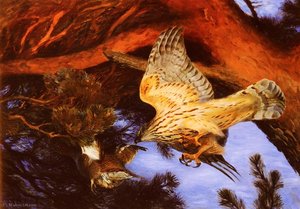
The painting depicts a snowy field teeming with black grouse – *Tetrao tetrax* – their plumage rendered in meticulous detail against the stark white expanse. Dominating the composition is a goshawk (*Accipiter gentilis*) poised mid-strike, its powerful wings outstretched as it pursues a juvenile hawk. Liljefors’ genius lies not just in accurately depicting these birds but in conveying the palpable tension of their encounter – the drama of survival played out against the backdrop of winter's unforgiving cold. He meticulously recreated this scene outdoors, applying grey-white paint thinly with a half-dry brush to achieve an atmospheric effect that perfectly embodies the swirling snow and biting wind characteristic of Ärentuna, north of Uppsala where Liljefors spent his winters.Technique and Impressionistic Vision
Liljefors’ technique was revolutionary for its time. Rejecting academic conventions, he embraced Impressionism's focus on capturing light and color as perceived by the eye – a bold departure from traditional artistic representations. Yet, unlike many Impressionists who prioritized fleeting impressions, Liljefors combined this approach with painstaking anatomical accuracy. He painstakingly studied specimens of hawks and grouse, meticulously sketching them before applying his vibrant palette to canvas. The resulting texture is remarkable; visible brushstrokes create a sense of movement and dynamism, mirroring the frantic activity of the birds themselves. This layering of technique – observation coupled with Impressionistic artistry – elevates “Duvhök och Orrar” beyond mere depiction into an immersive experience for the viewer.Historical Context: Liljefors' Pursuit of Naturalism
Liljefors’ artistic endeavors were driven by a fervent belief in the importance of portraying nature truthfully. He was deeply influenced by Darwinian theory, recognizing the interconnectedness of all living organisms and striving to capture their essence with uncompromising realism. The painting reflects the broader intellectual currents of its era – a burgeoning interest in scientific inquiry alongside an appreciation for the sublime beauty of the natural world. It stands as testament to Liljefors’ conviction that art could illuminate the wonders of existence and inspire awe.Symbolism: More Than Just Birds
Beyond its stunning visual impact, “Duvhök och Orrar” carries symbolic weight. The hawk represents power and dominance, while the juvenile hawk symbolizes vulnerability and innocence – a poignant juxtaposition reflecting the cyclical nature of life and death within the ecosystem. The snow itself serves as a metaphor for hardship and resilience, mirroring Liljefors’ own unwavering dedication to his craft despite facing considerable challenges during his lifetime. Ultimately, the painting invites contemplation on themes of predation, survival, and the enduring beauty of the natural world.Emotional Resonance: A Masterpiece That Still Captivates
“Duvhök och Orrar” transcends mere artistic skill; it evokes a profound emotional response. The painting’s dynamism captures the thrill of observation, transporting the viewer to the frozen landscape of Ärentuna and immersing them in the drama of the avian world. It speaks to our primal fascination with wildlife and reminds us of the fragility of existence within the grand scheme of nature. Liljefors' ability to convey both scientific precision and emotional depth solidified his legacy as one of Sweden’s greatest artists—a painter who dared to confront the sublime beauty and inherent brutality of the natural world, resulting in a timeless masterpiece that continues to inspire admiration and contemplation today.Похожие произведения

Биография художника
A Master of Wild Encounters: The Life and Art of Bruno Liljefors
Bruno Andreas Liljefors, born in Uppsala, Sweden, in 1860, emerged as a pivotal figure in late nineteenth and early twentieth-century art, celebrated primarily for his dynamic depictions of wildlife. He wasn’t merely an animal painter; he was a chronicler of nature's raw drama, a master of capturing fleeting moments of predator and prey locked in their ancient dance. Liljefors distinguished himself through an innovative blend of Impressionistic techniques with meticulous observation, creating works that resonated with both scientific accuracy and emotional power. His influence extended far beyond his native Sweden, impacting generations of wildlife artists who followed. His early life offered little indication of the artistic path he would forge. Though born into a modest family—his father was an official in the mining industry—a natural talent for drawing quickly became apparent. Local shopkeepers recognized and nurtured this gift, providing young Bruno with art supplies that fueled his burgeoning passion. This early encouragement laid the foundation for formal training at the Royal Swedish Academy of Fine Arts in Stockholm beginning in 1879.From Academic Roots to Impressionistic Visions
Liljefors’s artistic journey wasn't immediate or straightforward. His initial studies adhered to the academic realism prevalent at the time, focusing on historical painting and traditional subjects. However, a period of travel across Europe—Düsseldorf, Venice, Florence, Rome, and Paris—proved transformative. Exposure to diverse artistic currents, particularly in France, ignited a shift towards Impressionism. He found himself drawn to the loose brushwork, vibrant colors, and emphasis on capturing fleeting moments of light that characterized the work of artists like Claude Monet and Pierre-Auguste Renoir. This newfound aesthetic sensibility wasn’t simply adopted wholesale; Liljefors ingeniously integrated it with his deep understanding of animal behavior and anatomy. He didn't just paint animals *in* nature, he painted nature *through* the animals, conveying their essence within a dynamic environment. This period also saw him engage with the Scandinavian artist colony in Gréz-sur-Loing, further refining his artistic vision and fostering connections that would shape his career. The influence of Japanese woodblock prints, with their unique perspectives and flattened compositions, also began to subtly permeate his work, adding another layer of complexity to his evolving style.The Drama of the Wild: Defining Liljefors’s Style
Liljefors carved a niche for himself by focusing on scenes of predation—the hawk descending upon its prey, the sea eagle pursuing an eider duck, the fox stalking a hare. These weren't merely depictions of violence; they were explorations of nature’s inherent drama, rendered with remarkable sensitivity and psychological insight. He avoided sensationalism or moralizing, instead presenting these encounters as natural occurrences within a larger ecological framework. His technique was crucial to achieving this effect. Liljefors employed broken brushstrokes and a vibrant palette to capture the play of light and shadow across feathers, fur, and landscapes. He possessed an exceptional ability to render camouflage patterns, demonstrating a keen understanding of how animals blend into their surroundings. This wasn’t simply about visual accuracy; it was about conveying the animal's perspective—how they perceive and interact with their environment. To ensure authenticity, Liljefors maintained a menagerie of live animals at his home, allowing him to study their movements and behaviors firsthand. He didn’t rely on sketches or photographs; he painted from life, imbuing his works with an immediacy and vitality that set them apart.Legacy and Enduring Influence
Bruno Liljefors died in Stockholm in 1939, leaving behind a body of work that continues to captivate audiences today. His paintings are held in major museums across Sweden and internationally, serving as testaments to his artistic skill and enduring vision. He remains an iconic figure in Swedish art and culture, celebrated for his ability to capture the essence of the natural world with both scientific precision and poetic grace. His influence on subsequent generations of wildlife artists is undeniable. Artists like Michael Coleman have openly acknowledged their debt to Liljefors’s innovative techniques and profound understanding of animal behavior. Beyond the realm of fine art, Liljefors's work has also had a subtle but significant impact on our perception of nature itself. His paintings encourage us to look more closely at the world around us, to appreciate the beauty and complexity of ecological relationships, and to recognize the inherent drama that unfolds in even the most seemingly tranquil landscapes. His legacy is not merely one of artistic achievement, but also of fostering a deeper connection between humanity and the natural world. He stands as a testament to the power of art to illuminate, inspire, and ultimately, to remind us of our place within the grand tapestry of life.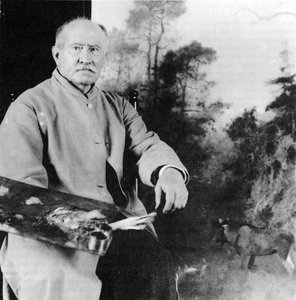
Bruno Liljefors
1860 - 1939