

 Предпросмотр
 Поделиться
 Поделиться
 Детали произведения

 Скачать
 Похожие работы
 Рентгенография
 Слайд-шоу
 Статистика
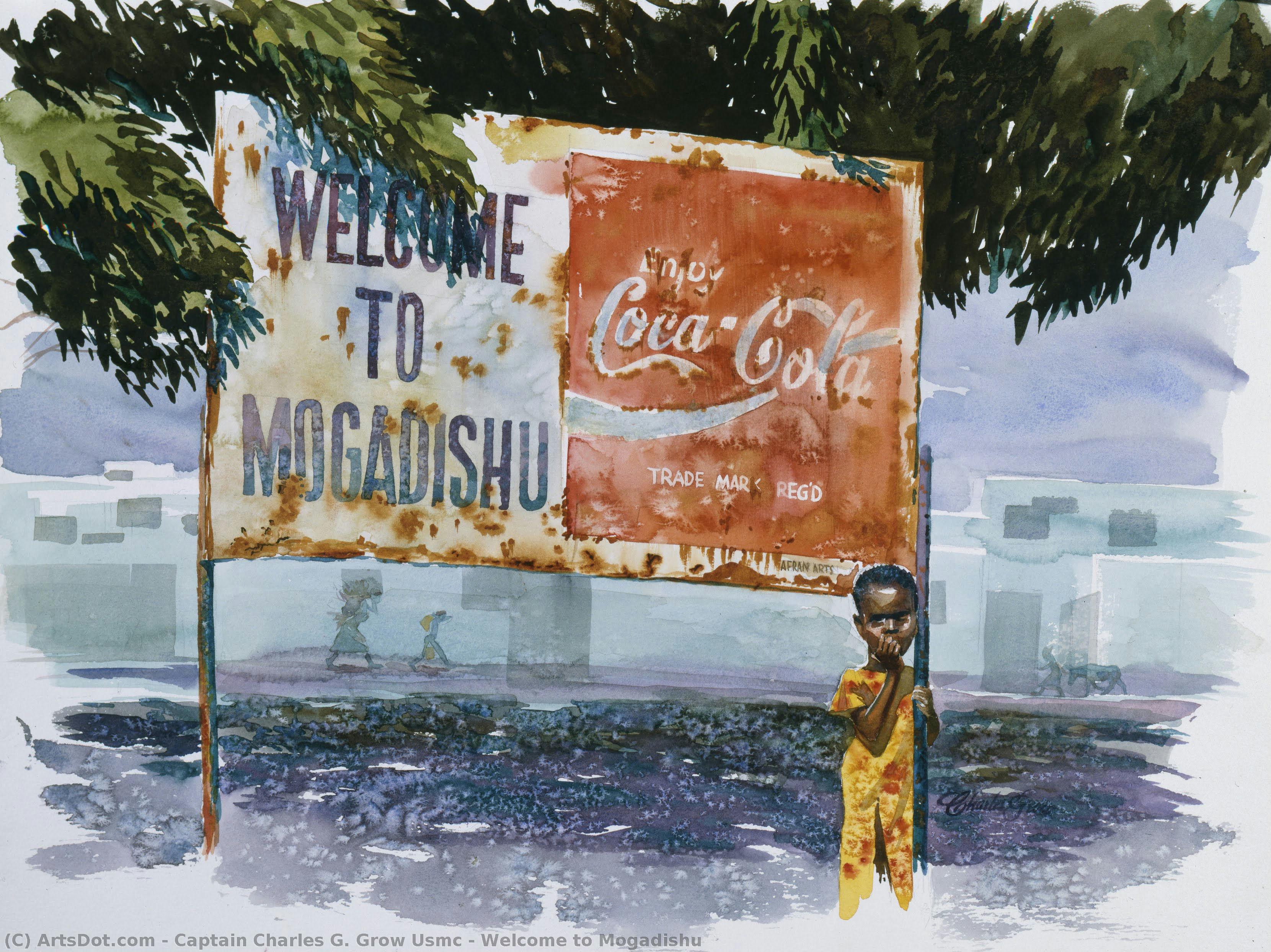
Welcome to Mogadishu


 Читать далее
Приобретите цифровое изображение высокого разрешения в улучшенном качестве, которое значительно превосходит онлайн-превью.
Каждый файл тщательно подготавливается нашими специалистами с использованием передовых инструментов и экспертной ручной ретуши. Мы гарантируем исключительную четкость, точную цветопередачу и детальную проработку каждого изображения.
Финальный файл доставляется по электронной почте в течение 72 часов и оптимизирован для немедленного использования в профессиональной среде, при верстке и печати. Это тот же уровень качества, которому доверяют ведущие дизайнерские студии, издательства и галереи.
Цифровое изображение
Скачайте файл высокого разрешения для личного использования, печати и творческих проектов. ( Перейти к печати Купить картину ручной работы)
Включено в каждый заказ цифровых изображений
Гарантия экспертной цифровой доставки
Выбирая ArtsDot.com, вы получаете не просто изображение — вы приобретаете профессионально обработанное цифровое произведение искусства, созданное с безупречной точностью и под защитой гарантии качества. Вот всё, что автоматически входит в ваш заказ:

Мгновенная доставка по e-mail
Ваш цифровой файл в высоком разрешении будет отправлен вам по электронной почте в течение 72 часов после оформления заказа — и сразу станет доступен для использования.

Цифровой файл с ИИ-улучшением
Ваше произведение искусства проходит профессиональную оптимизацию с использованием передовых инструментов ИИ и ручной обработки, что гарантирует максимальную детализацию, четкость и точность цветопередачи.

Бессрочная бесплатная повторная доставка
Случайно удалили или потеряли файл? Не беспокойтесь — мы отправим его вам повторно в любое время и совершенно бесплатно.

Без импортных пошлин — навсегда
Наслаждайтесь вашим произведением искусства мгновенно без таможенных пошлин, сборов или затрат на доставку — цифровые загрузки всегда не облагаются налогом.

Гарантия точности цветопередачи
Мы гарантируем, что ваше цифровое изображение максимально точно передает оригинальные цвета благодаря использованию профессиональных инструментов и систем управления цветом.

Гарантия удовлетворенности 100 дней
Если вы не будете удовлетворены своим цифровым изображением, мы внесем правки или вернем 100% стоимости в течение 100 дней — без лишних вопросов.

100% Гарантия возврата средств
Не удовлетворены покупкой? Получите полный возврат средств в течение 100 дней после получения цифрового файла — без лишних вопросов.

Скидки на оптовые заказы
Купите 3 изображения, сэкономьте 10% — Купите 5, сэкономьте 15% — Купите 10+, сэкономьте 20%. Отличное решение для творческих проектов, галерей и агентств.
A Window into a Fading Era
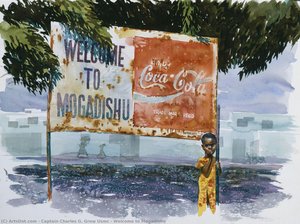
In the evocative watercolor "Welcome to Mogadishu," created in 1993 by Captain Charles G. Grow, we are invited to witness a moment frozen in the amber of conflict and transition. The artwork presents a poignant scene of urban decay, where a weathered, dilapidated sign serves as the primary protagonist. This sign, bearing its welcoming message with a sense of faded grandeur, stands before a building that bears the scars of time and upheaval. Through Grow’s lens, the viewer is not merely looking at a street corner in Somalia; they are experiencing a profound sense of melancholy and the heavy atmosphere of a world caught in the throes of change. The composition utilizes an elevated perspective to draw the eye down a receding street toward a distant, hazy shoreline, creating a deep sense of atmospheric perspective that makes the far-off horizon feel both unreachable and hauntingly beautiful.
The emotional resonance of the piece lies in its delicate balance between destruction and endurance. While the primary subject matter focuses on the deterioration of the urban landscape, there is an underlying current of resilience. The presence of a small child figure within the scene acts as a powerful symbolic element, suggesting that even amidst the wreckage of war and the erosion of infrastructure, life persists with a quiet, stubborn strength. This juxtaposition between the crumbling man-made structures and the enduring human spirit provides a depth that makes the painting much more than a mere topographical record; it is a meditation on the cyclical nature of history and the persistence of hope in the most desolate of settings.
Mastery of Watercolor and Light
Technically, "Welcome to Mogadishu" showcases Grow’s sophisticated command over the watercolor medium. Utilizing a wet-on-wet technique, the artist achieves seamless transitions between tones, allowing colors to bleed into one another with a soft, organic fluidity. This method is particularly effective in rendering the hazy, diffused light that permeates the scene, contributing significantly to the subdued and somber mood. The texture of the work is rich and tactile, achieved through the careful layering of translucent washes that create a sense of depth and grit. Visible brushstrokes are not hidden but rather celebrated, adding an expressive, raw quality to the piece that mirrors the ruggedness of the subject matter.
The color palette is masterfully restrained, relying on muted earth tones—browns, oranges, and ochres—interspersed with subtle hints of blue and green. This limited range prevents the scene from feeling overly dramatic, instead fostering a sense of realism and quiet contemplation. For collectors and interior designers, this piece offers a sophisticated aesthetic; its tonal harmony allows it to integrate seamlessly into spaces that value understated elegance and historical depth. As a high-quality reproduction, the artwork retains the delicate nuances of Grow’s original brushwork, offering an opportunity to bring a piece of profound historical narrative and artistic mastery into any curated collection or thoughtfully designed interior.
Похожие произведения

Биография художника
A Life Etched in Conflict: The Art of Charles Grow
Charles Grow, born in Philadelphia in 1964, is an artist whose life has been inextricably linked to the realities of modern warfare. More than simply a recorder of events, Grow embodies the role of the combat artist – a witness translating the raw intensity and complex emotions of conflict into enduring visual narratives. His journey began with enlistment in the Marine Corps in 1982, where he served not as a traditional infantryman but as a photographer and graphics specialist. This early exposure to visual communication laid the foundation for his later artistic pursuits, providing him with both technical skills and an intimate understanding of military culture. Grow’s self-taught artistic inclinations were nurtured through classes at the Savannah College of Art and Design, bridging his practical experience with formal training.From Desert Storm to Curator: A Career Defined by Service
Grow's career took a defining turn during Operation Desert Storm, where he served as a combat artist. This deployment wasn’t merely an assignment; it was an immersion into the heart of conflict, demanding that he capture not just the physical landscape but also the psychological weight borne by those engaged in battle. He didn’t observe from a safe distance, but rather embedded himself within the units, documenting their experiences with watercolor and paper – materials chosen perhaps for their immediacy and vulnerability, contrasting sharply with the harshness of the environment. Following his service in Desert Storm, Grow continued to create art during subsequent conflicts, solidifying his reputation as a uniquely positioned chronicler of war. He retired from the Marine Corps in 2003 at the rank of Captain, but his dedication to preserving and interpreting military history didn’t end there. He transitioned into a curatorial role at the National Museum of the Marine Corps, eventually becoming Deputy Director in 2007 before retiring in 2020. This shift allowed him to shape how these stories were presented to the public, ensuring that the sacrifices and experiences of those he served with were not forgotten.The Power of Watercolor: Technique as Testimony
Grow’s artistic style is characterized by a masterful use of watercolor, a medium often associated with delicacy and subtlety. This choice is particularly striking given the subject matter he tackles – the brutal realities of war. The fluidity of watercolor allows him to capture fleeting moments, the shifting light and shadows of battlefields, and the emotional turbulence of combat. His works aren’t hyperrealistic depictions; instead, they convey a sense of atmosphere and immediacy, prioritizing feeling over precise detail. The use of watercolor also speaks to the ephemeral nature of memory and experience, suggesting that these events are constantly being re-evaluated and reconstructed. Welcome to Mogadishu, for example, is not simply a representation of an urban landscape but a poignant meditation on resilience in the face of decay. The washes of color evoke both the heat and dust of the environment and the underlying sense of loss and struggle.Beyond the Battlefield: A Legacy of Remembrance
While Grow’s work is most recognized for its depictions of Operation Desert Storm and the Gulf War, his contributions extend far beyond these specific conflicts. He has consistently sought to honor the experiences of Marines across generations, recognizing that each conflict leaves an indelible mark on those who serve. His role as curator at the National Museum of the Marine Corps was instrumental in expanding the museum’s collection and ensuring a more comprehensive representation of military history. He remains actively involved in the combat art community, mentoring emerging artists and advocating for the importance of visual storytelling in understanding war. His legacy is not simply one of artistic achievement but also of service – a commitment to preserving the memories and honoring the sacrifices of those who have defended their country.Historical Significance & Continuing Impact
Charles Grow’s work occupies a unique space within the broader context of military art. Unlike traditional war paintings commissioned by governments to glorify conflict, Grow's pieces offer a more nuanced and often sobering perspective. He doesn’t shy away from depicting the human cost of war, capturing the exhaustion, fear, and resilience of individual soldiers. This honesty resonates deeply with audiences, providing a powerful counterpoint to idealized representations of combat. His art serves as a vital historical document, offering insights into the realities of modern warfare that are often absent from official accounts.- Grow’s work provides invaluable primary source material for historians and researchers.
- He has helped to elevate the profile of combat art as a legitimate form of artistic expression.
- His mentorship of emerging artists ensures that this tradition will continue for generations to come.
captain charles g. grow usmc
1964 - , United States of America
Основные сведения
- Artistic Movement Or Style: Combat Art
- Current Status: Living
- Date Of Birth: 1964
- Full Name: Charles G. Grow
- Nationality: American
- Notable Artworks: ['Welcome to Mogadishu']
- Place Of Birth: Philadelphia, USA