 Предпросмотр
 Поделиться
 Поделиться
 Детали произведения

 Скачать
 Похожие работы
 Рентгенография
 Слайд-шоу
 Статистика
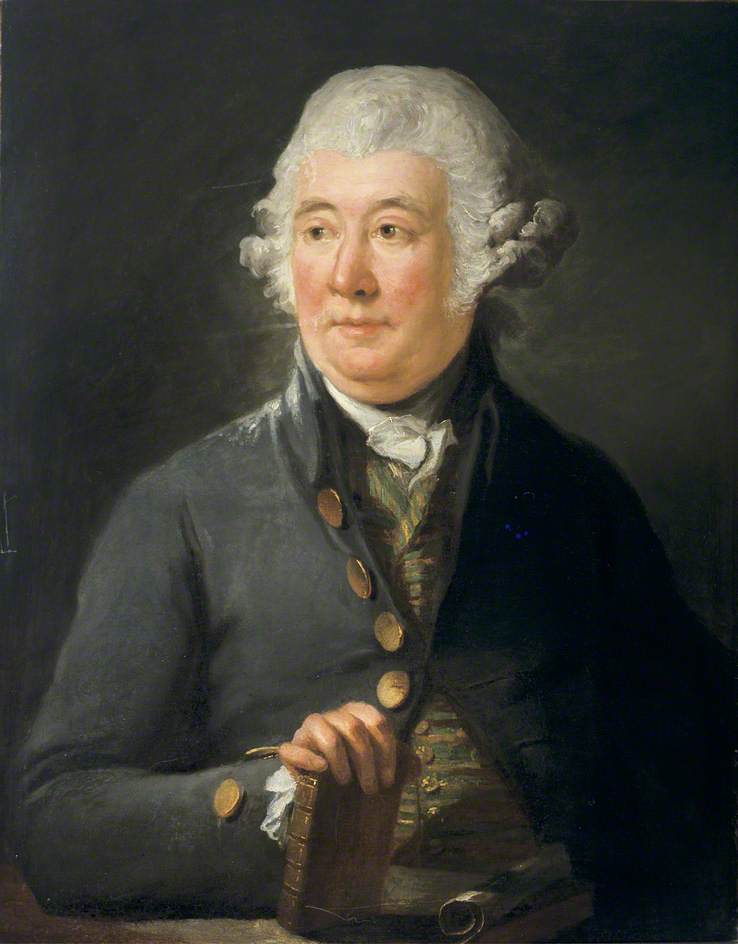
Sir William Chambers (1722–1796)
 Oil On Canvas
- WallArt
- Rococo Portraiture
 1790
1790 75.0 x 60.0 cm
 RIBA Library Drawings And Archives Collections
 Читать далее
Жикле / Арт-принт
Печать (жикле) или холст музейного качества с быстрыми сроками изготовления и широким выбором вариантов отделки. ( Купить картину ручной работы Перейти к цифровым изображениям)




P118B $10

P118H $10

P118W $10

P438Z $10

P508JH $12

P508YH $12

P805H $10

P805Z $10

P919BZ $10

P919G $10

P919XJ $10

P959ZH $10

P968JZ $12

W106C $8

W218G $10

W218JH $8

W218Y $10

W307PJ $10

W316G $10

W316PJ $8

W316Y $10

W398PJ $8

W4111J $10

W500HY $15

W500JH $15

W692G $12

W849H $8

W940BG $15

W953PJ $8




Выберите один из наших стандартных размеров, соответствующих оригинальным пропорциям произведения искусства.

Вы можете указать свои собственные размеры, чтобы репродукция идеально подошла под конкретную раму или пространство. Если выбранный вами размер не будет соответствовать пропорциям оригинала, мы либо обрежем произведение, либо дополним изображение зеркальным отражением краев или однотонной заливкой. Перед началом производства вам будет отправлен цифровой макет для утверждения.
Пожалуйста, обратите внимание, что предварительный просмотр на экране не отображает фактическую обрезку или расширение изображения. Только макет точно покажет финальную композицию.
Несмотря на возможность заказа индивидуальных размеров, мы рекомендуем выбирать размер из предопределенного списка, чтобы сохранить оригинальные пропорции.
Доставка по всему миру () за 2 недели вместо стандартных 4/5 недель. (11 Сентябрь)

Бесплатная экспресс-доставка по всему миру

Высококачественный льняной холст

Полное страхование доставки

Гарантия возмещения таможенных пошлин

Гарантия точного соответствия цветов

100-дневная политика возврата (только при обнаружении дефектов)

Гарантия возврата 100% средств

Предложение оптовых скидок
 Вариант со стеклом доступен только для размеров менее 110 см

Sir William Chambers (1722–1796)
Жикле / Арт-принт
Размер репродукции
-


Итоговая стоимость
$ 62
A Portrait of Power and Refinement: Sir William Chambers by Carl Fredrik von Breda
Carl Fredrik von Breda’s 1790 portrait of Sir William Chambers is more than a simple likeness; it's a carefully constructed tableau of power, intellect, and the understated elegance that defined the Georgian era. The painting immediately commands attention with its rich palette – deep blues and golds dominating the composition, punctuated by the crisp white of Chambers’ wig and the subtle grey of his background. It’s a work steeped in the Rococo tradition, yet imbued with a distinctly British sensibility, reflecting Breda's time spent honing his craft amidst the artistic currents of London.
Chambers himself was a pivotal figure in 18th-century England. A brilliant architect and surveyor, he served as the principal designer for Carlton House, one of the grandest private residences of its time, and played a crucial role in the rebuilding of St Paul’s Cathedral after the Great Fire. The portrait captures him not merely as a public servant but as a man of considerable social standing and intellectual prowess. His posture is dignified yet approachable, his gaze direct and assured – qualities that speak to both his professional success and personal character.
The Language of Rococo: Technique and Detail
Breda’s mastery lies in his ability to translate the principles of Rococo into a powerfully evocative image. The painting is executed in oil on canvas, utilizing a layering technique that creates an astonishingly tactile surface. Notice the meticulous rendering of fabric – the heavy folds of the coat, the delicate sheen of the buttons, and the subtle texture of the wig. Breda’s brushwork is remarkably fluid, creating a sense of movement and life within the static portrait. The use of chiaroscuro—the dramatic contrast between light and shadow—further enhances the three-dimensionality of the figure, drawing the viewer's eye to Chambers’ face and emphasizing his features.
- Color Palette: Deep blues, golds, and subtle greys create a sense of wealth and sophistication.
- Brushwork: Fluid and layered, contributing to the painting’s tactile quality.
- Chiaroscuro: Dramatic lighting emphasizes form and creates depth.
Symbolism and Context
Beyond its technical brilliance, the portrait is laden with symbolic meaning. The dark blue coat, a color associated with nobility and authority, immediately establishes Chambers’ status. The gold buttons are not merely decorative; they represent wealth, power, and recognition of his achievements. The wig, a fashionable accessory during the 18th century, speaks to Chambers' adherence to social norms while simultaneously hinting at the artificiality of appearances. The restrained background—a simple grey wall—serves to highlight the subject, reinforcing his importance within the composition.
Furthermore, the portrait reflects the broader cultural context of its time – a period marked by both aristocratic privilege and burgeoning Enlightenment ideals. Chambers’ role as an architect and surveyor embodies this duality, representing the intersection of tradition and innovation. The painting serves as a testament to his influence on Georgian society and a window into the world of 18th-century England.
A Legacy of Elegance: Reproduction and Appreciation
Reproductions of “Sir William Chambers” by Carl Fredrik von Breda offer an exceptional opportunity to bring this captivating portrait into your home or office. The intricate details, rich colors, and masterful composition are faithfully captured in high-quality prints, allowing you to appreciate the artistry of this remarkable work for years to come. Whether displayed as a statement piece in a grand salon or as a subtle accent in a more intimate setting, this portrait embodies the elegance, sophistication, and enduring legacy of Georgian England.
Похожие произведения
Биография художника
Carl Frederik von Breda: A Swedish Master Bridging Tradition and Innovation
Carl Frederik von Breda, born in Stockholm in 1759, stands as a pivotal figure in the history of European portraiture – an artist who skillfully navigated the currents of tradition and innovation, earning him the enduring title “the Van Dyck of Sweden.” His journey wasn’t confined to the borders of his homeland; rather, it unfolded through a fascinating interplay between Swedish artistic heritage and the vibrant influences of London’s burgeoning art scene. Descended from Pieter von Breda, a Dutch emigrant who established himself in Sweden around 1670, Carl inherited not only an artistic lineage – his grandfather Lucas was a painter, and his father, Lucas the younger, an art collector and arbitrator – but also a remarkable cosmopolitan sensibility that would profoundly shape his career. This upbringing instilled within him a deep appreciation for aesthetics, laying the foundation for his future success as both a portraitist and a cultural observer. From a young age, Breda demonstrated exceptional talent, enrolling at the Royal Swedish Academy of Arts at nineteen where he studied historical and portrait painting under Lorens Pasch the Younger, absorbing the established techniques and conventions of the time. Early recognition swiftly followed; prizes were awarded, and by 1784, he was already exhibiting nineteen paintings and receiving commissions for portraits of prominent figures – including Duchess Hedvig Elisabeth Charlotte, Crown Prince Gustavus Adolphus, and, most notably, King Gustavus III himself. These early works, while rooted in the established Swedish style, hinted at a burgeoning ambition that extended far beyond its familiar boundaries.The Transformative Influence of London and Joshua Reynolds
A defining moment arrived when Breda faced a difficult choice after losing a competition at the Academy. Rather than succumbing to the conventional path towards Paris or Rome – the traditional centers of artistic training – he made an audacious decision: he relocated his family to London in 1786. This move proved to be nothing short of transformative, fundamentally altering the trajectory of his artistic development. In London, Breda sought out and secured tutelage under Sir Joshua Reynolds, a leading figure in the British art world and a master of portraiture. While Reynolds’s instruction wasn't characterized by intensive, formalized lessons, his influence on Breda was profound, instigating what has been described as a “revolutionary change” in the young artist’s style. Reynolds championed a more dynamic approach to painting – looser brushwork, brighter colors, and a greater emphasis on capturing the sitter’s personality and character. Crucially, he encouraged Breda to move beyond mere likeness, urging him to imbue his portraits with a sense of life and emotion. Breda quickly established a successful studio on St James's Street, attracting a clientele drawn from London’s intellectual and social elite – the “learned men and literati,” as they were known. He became highly sought after for his ability to capture not just physical resemblance but also intellect, wit, and even subtle nuances of character. His portraits during this period are testaments to this shift in focus, depicting prominent figures such as abolitionists Thomas Clarkson and James Ramsay, engineers James Watt and Matthew Boulton of the famed Lunar Society, botanist William Withering, and the celebrated Italian opera singer Teresa Vandoni. These weren’t merely commissions; they were engagements with some of the most forward-thinking minds and cultural luminaries of the era – a reflection of Breda's own expanding intellectual horizons.A Synthesis of Styles: The Portrait of Reynolds
A particularly significant work from this period is Breda’s portrait of Sir Joshua Reynolds himself, completed in 1791 as a diploma piece for admission to the Stockholm Academy of Arts. This painting stands as a powerful symbol of both artistic admiration and a deliberate assertion of Breda's own evolving style. It demonstrates a masterful synthesis of Reynolds’s influence – the bold brushwork, vibrant colors, and dynamic composition – with Breda’s own distinctly Swedish sensibility. The portrait is not simply a likeness; it captures Reynolds’s intellectual presence and commanding personality, conveying a sense of both respect and a subtle challenge to the established order. The painting's success cemented Breda’s reputation as a rising star in the British art world, signaling his growing confidence and artistic maturity.Return to Sweden and Artistic Maturity
In 1796, after nearly a decade in London, Carl Frederik von Breda returned to Stockholm, accepting a prestigious professorship at the Royal Swedish Academy of Arts. This marked a new phase in his career – one characterized by artistic consolidation, a deepening engagement with Swedish society, and a distinctive style honed during his years abroad. Immediately upon his return, he was inundated with portrait commissions, quickly becoming a leading figure in the burgeoning Swedish art scene. His brushwork became even bolder and more spirited, reflecting the energy and dynamism he had absorbed in London. The late 1790s are often considered to be among his most productive and creatively fulfilling years, marked by a masterful synthesis of classical training with a distinctly Romantic sensibility. Notable portraits from this period include those of his father Lucas, two of his nephews, the scholar Nils von Rosenstein, and, perhaps most famously, Teresa Vandoni – a captivating depiction of the Italian opera singer that remains one of his most celebrated works. The portrait of Vandoni is particularly striking, capturing her dramatic presence and vocal artistry with remarkable sensitivity and an understanding of theatricality. These works demonstrate Breda’s ability to not only master technical skill but also to imbue his portraits with a profound sense of human emotion and character.Legacy and Historical Significance
Carl Frederik von Breda's impact on Swedish art extended far beyond the sheer volume of his output. His exposure to British artistic trends – particularly the influence of Joshua Reynolds – played a crucial role in modernizing portraiture within Sweden, inspiring subsequent generations of artists to embrace new techniques and stylistic approaches. He wasn’t simply a painter of faces; he was a visual chronicler of his time, creating a rich tapestry of images that documented some of the leading scientific, intellectual, and cultural figures of the late 18th and early 19th centuries. His portraits of members of the Lunar Society, for example – a group of pioneering scientists, engineers, and intellectuals – offer invaluable insights into this influential circle of innovators. Breda’s legacy is secured not only through his individual masterpieces but also through his role as a bridge between tradition and innovation, a testament to his artistic vision and enduring contribution to the world of portraiture. He remains remembered today as “the Van Dyck of Sweden,” an epithet that encapsulates his skill, elegance, and lasting impact on Swedish art history.Key Works & Collections
- James Watt: A compelling portrait of the renowned engineer, held in the National Portrait Gallery, London.
- Matthew Boulton: Another significant work depicting a member of the Lunar Society, residing in Birmingham Museum and Art Gallery.
- Teresa Vandoni: Often considered his most celebrated piece, capturing the essence of the Italian opera singer.
- Portrait of Joshua Reynolds: A testament to Breda’s admiration for his mentor and a key work in establishing his own artistic credentials.
- Mrs. William Hartigan: An example of his skill in capturing the elegance and refinement of society figures.
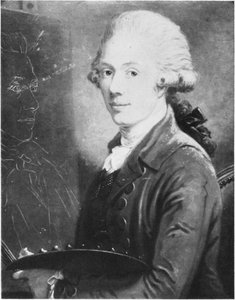
Carl Fredrik von Breda
1759 - 1818 , Швеция
Основные сведения
- Artistic Movement Or Style: Портрет, Романтизм
- Artists Or Movements Influenced By This Artist: ['Шведские портретисты']
- Artists Who Influenced This Artist:
- Лоренс Паск мл.
- Джошуа Рэйстон
- Date Of Birth: 1759
- Date Of Death: 1818
- Full Name: Carl Fredrik von Breda
- Nationality: Шведский
- Notable Artworks:
- Портрет Рэйстона
- Тереза Вандони
- Джеймс Уатт
- Мэтью Болтон
- Place Of Birth: Стокгольм, Швеция
Похожие статьи
Sir William Nicholson: A Study in Post-Impressionist Portraiture & Decorative Modernism
Explore the life & work of Sir William Nicholson, a pivotal British Post-Impressionist painter. Discover his striking portraits, innovative woodcuts, and lasting influence on early 20th-century art. Expert insights for collectors.

Sir William Blake Richmond: A Visionary of Aestheticism & Symbolism
Explore the life & art of Sir William Blake Richmond, a pivotal figure bridging Pre-Raphaelitism and Aestheticism. Discover his stunning portraits, mosaics at St Paul's Cathedral, and lasting influence on Victorian art.
Сир Джошуа Рейнольдс: 25 шедевров портретной живописи для ценителей искусства и декора
Погрузитесь в мир Сира Джошуа Рейнольдса! 25 величайших портретов английского искусства XVIII века. Узнайте историю создания шедевров, технику живописи и вдохновитесь для декора интерьера. Репродукции картин высокого качества на ArtsDot.com.
Sir Hubert von Herkomer: A Life Painted with Realism, Ambition & Victorian Art
Explore the life & art of Sir Hubert von Herkomer, a pivotal Victorian realist painter. Discover his powerful portraits, social commentary & pioneering film work. Learn about his legacy and find high-quality reproductions at ArtsDot.

Альфред Муннингс: 25 шедевров британского импрессионизма для вашего интерьера | ArtsDot
Погрузитесь в мир Альфреда Муннингса! 25 шедевров британского импрессионизма, запечатлевших красоту лошадей и сельской Англии. Репродукции картин высокого качества для вашего интерьера на ArtsDot.com.