 Предпросмотр
 Поделиться
 Поделиться
 Детали произведения

 Скачать
 Похожие работы
 Рентгенография
 Слайд-шоу
 Статистика
Комната в доме на высокой горе
 Масло на холсте
- Настенный декор
- Vienna Secession
 1903
1903 135.0 x 89.0 cm
 Wien Museum
 Читать далее
Масляная репродукция ручной работы
Картина маслом на холсте в выбранном вами размере и раме, написанная на заказ нашими художниками. ( Перейти к печати Перейти к цифровым изображениям)




P118B $10

P118H $10

P118W $10

P438Z $10

P508JH $12

P508YH $12

P805H $10

P805Z $10

P919BZ $10

P919G $10

P919XJ $10

P959ZH $10

P968JZ $12

W106C $8

W218G $10

W218JH $8

W218Y $10

W307PJ $10

W316G $10

W316PJ $8

W316Y $10

W398PJ $8

W4111J $10

W500HY $15

W500JH $15

W692G $12

W849H $8

W940BG $15

W953PJ $8




Выберите один из наших стандартных размеров, соответствующих оригинальным пропорциям произведения искусства.

Вы можете указать собственные размеры, чтобы картина идеально вписалась в выбранную раму или пространство. Если выбранный вами размер не соответствует пропорциям оригинала, мы либо обрежем полотно, либо расширим его за счет дополнительных элементов, написанных вручную. Цифровой макет будет отправлен вам на утверждение перед началом производства.
Обратите внимание, что предварительный просмотр на экране не отражает фактическую обрезку или расширение. Только макет точно покажет окончательную композицию.
Хотя доступны индивидуальные размеры, мы рекомендуем выбирать вариант из предопределенного списка, чтобы сохранить исходные пропорции.
После оформления заказа команда ArtsDot.com свяжется с клиентом по электронной почте для уточнения деталей и предоставит предварительный макет
Доставка по всему миру () за 3–4 недели вместо стандартных 5 недель. (11 Сентябрь). Без компромиссов в качестве.

Бесплатная экспресс-доставка по всему миру

Высококачественный льняной холст

Полное страхование доставки

Гарантия возмещения таможенных пошлин

Гарантия точного соответствия цветов

100-дневная политика возврата (только при обнаружении дефектов)

Гарантия возврата 100% средств

Предложение оптовых скидок
 Вариант со стеклом доступен только для размеров менее 110 см

Комната в доме на высокой горе
Техника репродукции
Размер репродукции
-


Итоговая стоимость
$ 313
Drawing-Room in House on the Hohe Warte - Carl Moll
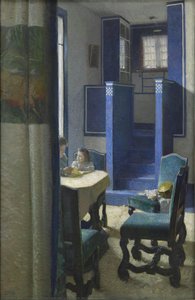
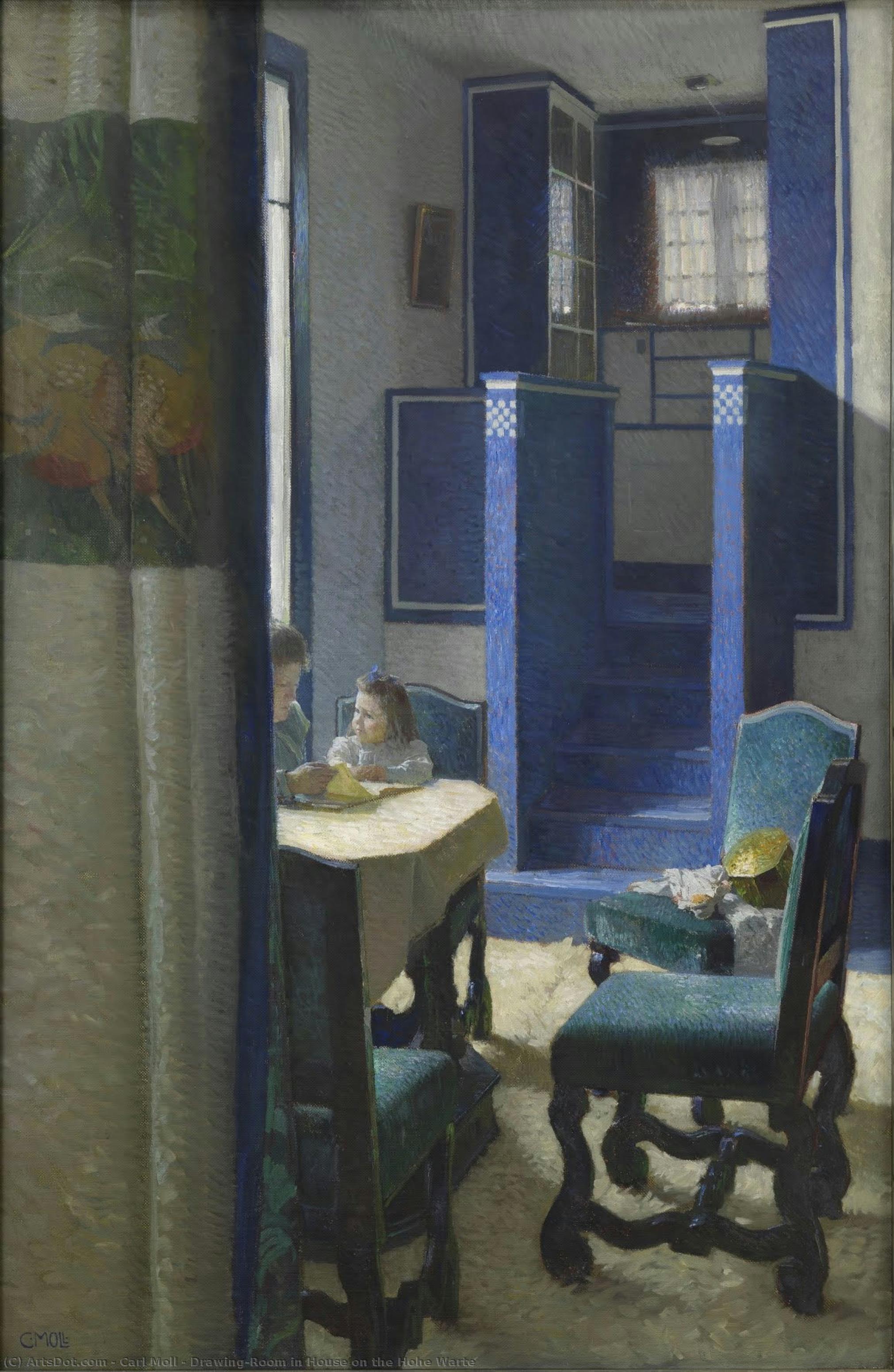
Carl Moll’s “Drawing-Room in House on the Hohe Warte,” painted in 1903, stands as a cornerstone of Viennese Art Nouveau and Secession aesthetics. More than just a depiction of domestic interior space, it embodies a profound exploration of light, color, and psychological nuance—elements meticulously crafted by Moll’s masterful hand.
- Historical Context: The painting emerged from the vibrant artistic milieu of Vienna at the turn of the century, coinciding with the burgeoning influence of Impressionism and Symbolism. It reflects a desire to break free from academic conventions and embrace new expressive possibilities, mirroring the broader cultural shifts occurring in Europe.
- Style & Technique: Moll employed Pointillist techniques—a method championed by Georges Seurat and Paul Signac—to achieve remarkable luminosity and textural complexity. Tiny dots of pigment arranged according to optical principles create an illusion of depth and vibrancy, capturing the ethereal quality of twilight and conveying a sense of serene contemplation.
- Composition: The painting’s central vanishing point directs the viewer's gaze towards a large window overlooking a garden—a deliberate compositional choice intended to evoke feelings of openness and tranquility. Furniture is strategically positioned to create spatial relationships, emphasizing harmony and balance.
- Color Palette: Dominant hues of muted blue permeate the walls and furnishings, contrasted by warmer tones in textiles and figures. Moll’s palette isn't merely decorative; it serves as a conduit for conveying emotional resonance—the coolness of blue representing introspection, while the warmth of amber reflecting comfort and conviviality.
- Symbolism & Emotional Impact: “Drawing-Room” transcends mere representation, delving into themes of domesticity, solitude, and artistic contemplation. The painting’s subdued palette and carefully orchestrated composition invite viewers to immerse themselves in a moment of quiet beauty—a testament to Moll's ability to capture the essence of human experience through visual artistry.
The artwork resides at Wien Museum (Vienna, Austria), where it continues to captivate audiences with its luminous colors and evocative atmosphere. Its enduring appeal underscores Moll’s legacy as a pioneer of Viennese Modernism—a figure whose artistic vision remains remarkably relevant today.
Reproductions of “Drawing-Room in House on the Hohe Warte” are available from ArtsDot.com, offering collectors and interior designers alike the opportunity to experience the sublime beauty of Moll’s masterpiece firsthand.
Похожие произведения
Биография художника
Carl Moll: A Pioneer of Austrian Modernism
Early Life and Education
- Born Carl Julius Rudolf Moll on April 23, 1861, in Vienna, Austria.
- He received his artistic training at the prestigious Academy of Fine Arts Vienna.
- Moll studied under Christian Griepenkerl and later with Emil Jakob Schindler, father of Alma Mahler-Werfel.
- A significant personal event occurred in 1892 when he married Anna von Bergen, Schindler’s widow, following a prior romantic involvement.
Artistic Development and Influences
- Initially influenced by the atmospheric realism prevalent in Vienna during his early career.
- Moll embraced the techniques of French Impressionism, particularly Pointillism, which became a defining characteristic of his style.
- He skillfully integrated Pointillist methods with a meticulous organization of the painting’s surface, creating unique visual effects.
- His work demonstrates an interest in capturing light and atmosphere, alongside detailed depictions of interiors and landscapes.
The Vienna Secession and Modern Art
- In 1897, Moll became a founding member of the Vienna Secession, a group of artists who broke away from traditional artistic institutions.
- He played a crucial role in advocating for modern art exhibitions, notably encouraging the use of the Belvedere Gallery for this purpose in 1903.
- In 1905, alongside Gustav Klimt, Moll left the Secession, though he remained actively involved in Vienna’s vibrant art scene.
- He was instrumental in introducing new artistic movements to Vienna, including organizing the first exhibition of Vincent van Gogh's work in the city.
Major Works and Themes
- Moll is celebrated for his interior scenes, such as “Der Frühstückstisch (The Breakfast Table)” and “Drawing-Room in House on the Hohe Warte,” which showcase opulent settings and detailed realism.
- His landscapes, like "Baumallee in Bruntál," demonstrate his mastery of Pointillist techniques and atmospheric perspective.
- Recurring themes in his work include domesticity, leisure, and the beauty of the natural world.
- He also created still life paintings, demonstrating a keen eye for composition and color.
Historical Significance and Legacy
- Carl Moll was a pivotal figure in the development of Austrian Modernism, bridging the gap between traditional academic painting and avant-garde movements.
- His contributions to the Vienna Secession helped establish Vienna as a major center for artistic innovation at the turn of the 20th century.
- Despite his later association with Nazism, his artistic achievements continue to be recognized and appreciated today.
- In recent years, Moll’s works have achieved record prices at auction, reflecting growing interest in his oeuvre.
Final Years and Death
- Tragically, Carl Moll committed suicide in Vienna at the end of World War II, along with his daughter Maria and son-in-law Richard Eberstaller.
- This act occurred as Soviet forces approached the city, and all three had been early supporters of the Nazi party.
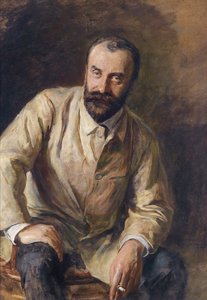
Carl Moll
1861 - 1945 , Austria
Основные сведения
- Birth Date: 1861-04-23
- Birth Place: Vienna, Austria
- Death Date: 1945-04-12
- Influenced By: French Impressionists
- Movement: Art Nouveau, Vienna Secession, Pointillism
- Name: Carl Moll
- Nationality: Austrian
- Notable Works:
- Drawing-Room in House on the Hohe Warte
- Der Frühstückstisch (The Breakfast Table)
- Baumallee in Bruntál
Похожие статьи
10 шедевров модерна: искусство, изменившее декор и вдохновившее художников
Погрузитесь в мир модерна! 10 шедевров от Мухи, Климта и Гауди – история искусства, изящные линии, флоральные мотивы. Купите репродукции картин модерн премиум-качества на ArtsDot.com и вдохновите свой интерьер!
Koloman Moser: A Synthesis of Art Nouveau, Secessionism & the Gesamtkunstwerk Ideal
Explore the life & work of Koloman Moser, a pivotal figure in the Vienna Secession & Wiener Werkstätte. Discover his stunning graphic design, architecture, and applied arts – a true pioneer of Viennese Art Nouveau. Learn more at ArtsDot.
Gustav Klimt: A Golden Legacy of Sensuality & Symbolism in Viennese Art
Explore the captivating world of Gustav Klimt with ArtsDot. Discover his iconic paintings, the Vienna Secession movement, & enduring legacy. High-quality reproductions available.
The Vienna Secession: A Rebellion of Form & Spirit in Fin-de-Siècle Art
Discover the revolutionary Vienna Secession art movement! Explore Klimt, Olbrich & more. Learn about its history, characteristics & lasting influence on modern art. High-quality reproductions available.
25 Шедевров Густава Климта: Искусство, Декор и Золотой Век Австрийского Модерна
Погрузитесь в мир Густава Климта! 25 шедевров австрийского модерна, символизма и золотой живописи. Узнайте истории создания знаменитых картин Климта и вдохновитесь для декора интерьера. Репродукции музейного качества на ArtsDot.com.