

 Предпросмотр
 Поделиться
 Поделиться
 Детали произведения

 Скачать
 Похожие работы
 Рентгенография
 Слайд-шоу
 Статистика
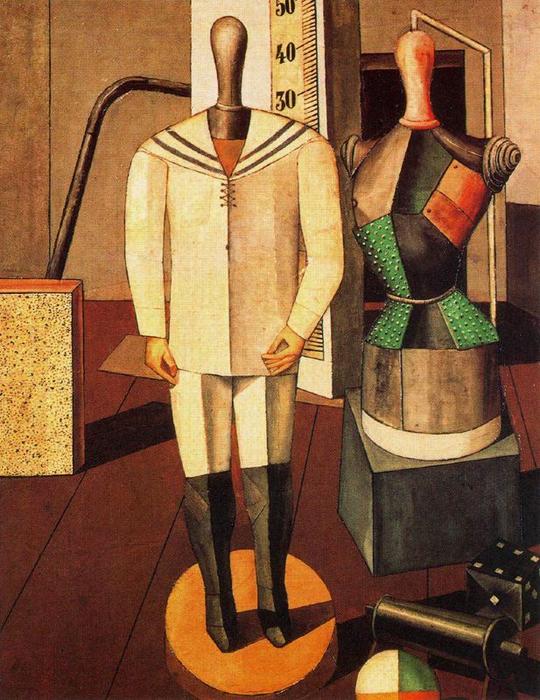
Mother and Son
 Oil On Panel
- Metaphysical art
 1917
1917- Modern
 87.0 x 58.0 cm
 Читать далее
Приобретите цифровое изображение высокого разрешения в улучшенном качестве, которое значительно превосходит онлайн-превью.
Каждый файл тщательно подготавливается нашими специалистами с использованием передовых инструментов и экспертной ручной ретуши. Мы гарантируем исключительную четкость, точную цветопередачу и детальную проработку каждого изображения.
Финальный файл доставляется по электронной почте в течение 72 часов и оптимизирован для немедленного использования в профессиональной среде, при верстке и печати. Это тот же уровень качества, которому доверяют ведущие дизайнерские студии, издательства и галереи.
Цифровое изображение
Скачайте файл высокого разрешения для личного использования, печати и творческих проектов. ( Перейти к печати Купить картину ручной работы)
Включено в каждый заказ цифровых изображений
Гарантия экспертной цифровой доставки
Выбирая ArtsDot.com, вы получаете не просто изображение — вы приобретаете профессионально обработанное цифровое произведение искусства, созданное с безупречной точностью и под защитой гарантии качества. Вот всё, что автоматически входит в ваш заказ:

Мгновенная доставка по e-mail
Ваш цифровой файл в высоком разрешении будет отправлен вам по электронной почте в течение 72 часов после оформления заказа — и сразу станет доступен для использования.

Цифровой файл с ИИ-улучшением
Ваше произведение искусства проходит профессиональную оптимизацию с использованием передовых инструментов ИИ и ручной обработки, что гарантирует максимальную детализацию, четкость и точность цветопередачи.

Бессрочная бесплатная повторная доставка
Случайно удалили или потеряли файл? Не беспокойтесь — мы отправим его вам повторно в любое время и совершенно бесплатно.

Без импортных пошлин — навсегда
Наслаждайтесь вашим произведением искусства мгновенно без таможенных пошлин, сборов или затрат на доставку — цифровые загрузки всегда не облагаются налогом.

Гарантия точности цветопередачи
Мы гарантируем, что ваше цифровое изображение максимально точно передает оригинальные цвета благодаря использованию профессиональных инструментов и систем управления цветом.

Гарантия удовлетворенности 100 дней
Если вы не будете удовлетворены своим цифровым изображением, мы внесем правки или вернем 100% стоимости в течение 100 дней — без лишних вопросов.

100% Гарантия возврата средств
Не удовлетворены покупкой? Получите полный возврат средств в течение 100 дней после получения цифрового файла — без лишних вопросов.

Скидки на оптовые заказы
Купите 3 изображения, сэкономьте 10% — Купите 5, сэкономьте 15% — Купите 10+, сэкономьте 20%. Отличное решение для творческих проектов, галерей и агентств.
An Intimate Encounter in Color and Form
In the quiet, evocative depths of Carlo Carrà’s 1917 masterpiece, "Mother and Son," we are invited into a domestic space that transcends mere portraiture to become a profound meditation on human connection. This oil on panel work, measuring 87 x 58 cm, captures a moment of stillness that feels both deeply personal and cosmically significant. The composition centers on the tender, yet psychologically complex, relationship between two figures, rendered with a technique that balances the tactile reality of the subjects with the avant-garde experimentation of the early twentieth century. As one gazes upon the canvas, the immediate sense is one of intimacy, yet there is an underlying tension—a subtle vibration of energy that speaks to Carrà’s unique ability to marry the stillness of Metaphysical art with the dynamic spirit of Futurism.
The scene unfolds within an indoor setting where every object seems to pulse with its own silent narrative. A man stands near a mannequin, his presence grounded by a white jacket and dark boots, while other figures flank the periphery, creating a sense of a lived-in, shared environment. The artist utilizes bold lines and a vibrant yet controlled palette to guide the eye through the room, ensuring that the viewer does not merely observe the scene but inhabits it. For the discerning collector or interior designer, this painting offers a sophisticated focal point, capable of anchoring a room with its rich textures and the commanding presence of its historical weight.
Symbolism and the Passage of Time
Beyond the visible figures, Carrà weaves a tapestry of symbolism that invites deep intellectual engagement. One cannot overlook the clock hanging prominently on the wall, a classic memento mori that serves as a silent sentinel over the scene. It represents the inexorable passing of time, contrasting the fleeting moment of maternal affection with the eternal progression of the universe. This temporal awareness adds a layer of melancholy to the work, suggesting that while the bond between mother and son is profound, it exists within a world of constant flux.
Adding a touch of unexpected vitality to this contemplative atmosphere is the presence of a sports ball resting near the bottom of the frame. This element introduces a sense of playfulness and kinetic potential, breaking the heavy psychological weight of the composition with a reminder of youth and spontaneous energy. It is this very juxtaposition—the heavy with the light, the eternal with the momentary—that makes "Mother and Son" such a captivating subject for study. The painting does not merely depict a room; it depicts the tension of existence itself.
A Legacy of Italian Modernism
To understand the brilliance of "Mother and Son," one must consider Carrà’s position within the turbulent landscape of Italian art history. Having moved through the radical energy of Futurism toward the more dreamlike, enigmatic realms of Metaphysical art, Carrà was a master of capturing the "soul" of modern life. His work stands in a unique dialogue with his contemporaries; where artists like Mario Sironi might focus on the monumental and the architectural, or De Pisis on the fleeting impressionistic light, Carrà delves into the psychological complexity of the human figure.
For those seeking to bring the prestige of the Pinacoteca di Brera into their private collections, a high-quality reproduction of this work offers more than just decoration. It is an opportunity to possess a piece of the Italian avant-garde. The emotional intensity and the masterful use of light and shadow in "Mother and Son" provide endless inspiration, making it an ideal acquisition for those who appreciate art that challenges the mind while soothing the spirit. Owning such a piece is an homage to a period of unparalleled artistic rebellion and discovery.
Похожие произведения

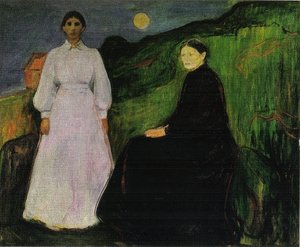
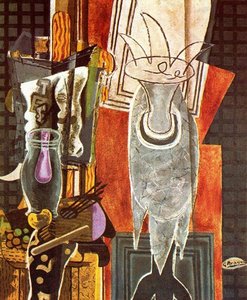
Биография художника
Carlo Carrà: A Pioneer of Futurist and Metaphysical Painting
Carlo Carrà (1881-1966) stands as one of the most influential figures in Italian art of the first half of the 20th century, a painter whose uncompromising vision reshaped artistic expression and cemented his place within the avant-garde movement. Born in Alessandria, Piedmont, he began his artistic journey with practical experience as a mural decorator—a formative encounter that instilled in him an appreciation for craftsmanship and color—values which would permeate his entire oeuvre. This early exposure to visual communication profoundly impacted his subsequent explorations of form and emotion.Early Life and Artistic Influences
Carrà’s childhood was marked by necessity, propelling him toward a profession that demanded physical engagement with materials. At twelve years old, he abandoned his family to apprentice as a mural decorator—a decision that honed his technical skills and instilled in him an understanding of the transformative power of color. His formative years were further enriched by a trip to Paris at the turn of the century, where he immersed himself in the burgeoning artistic landscape of the Exposition Universelle. This immersion exposed him to the revolutionary ideas circulating amongst French artists—particularly Cubism—inspiring him to question traditional representational conventions. Simultaneously, his brief sojourn in London brought him into contact with exiled Italian anarchists—a political dimension subtly informing his early works and reflecting a spirit of rebellion against established norms. Returning to Milan in 1901, Carrà enrolled at the Brera Academy, studying under Cesare Tallone, yet even within this academic framework, he retained an unwavering desire for artistic innovation.The Futurist Explosion
The year 1910 irrevocably altered Italian art’s trajectory with the signing of the manifesto of the Futurist painters—a declaration spearheaded by Umberto Boccioni, Luigi Russolo, and Giacomo Balla. Futurism was a radical ideology—an exuberant celebration of modernity, speed, technology, youth, and the machine age's relentless energy—rejecting the past in favor of an optimistic anticipation of the future. Carrà’s involvement with this movement marked a decisive break from academic tradition; he embraced dynamism and abstraction as tools for conveying the urgency of the era. His early Futurist paintings, such as *The Funeral of the Anarchist Galli* (1911) and *Rhythms of Objects* (1911), exemplify these principles—fragments of figures and objects colliding in a whirlwind of color and movement, mirroring the chaotic energy of urban life. The painting captures not just what is seen but how it feels—a visceral experience designed to shock and provoke contemplation. Carrà’s Futurist aesthetic was characterized by bold chromatic contrasts and fractured perspectives—techniques that challenged viewers to reconsider their understanding of reality.Metaphysical Painting: A Return to Silence
Around 1917, Carrà experienced a profound artistic transformation influenced by his collaboration with Giorgio de Chirico—a partnership that birthed Metaphysical Painting (*Pittura Metafisica*)—a stylistic departure from Futurism’s frenetic energy. De Chirico's unsettling imagery—characterized by dreamlike spaces and enigmatic figures—resonated deeply with Carrà, prompting him to explore themes of psychological depth and existential contemplation. This marked a shift toward simplified forms and muted colors—a deliberate rejection of Futurist dynamism in favor of an introspective gaze. His Metaphysical paintings—such as *Lot’s Daughters* (1915) and *The House of Love* (1922)—present scenes imbued with a sense of stillness and mystery—often featuring mannequins or architectural fragments—creating unsettling juxtapositions that invite viewers to question the nature of perception. Carrà's Metaphysical style sought to capture not just what is visible but what lies beneath—a profound exploration of the subconscious mind and its relationship to reality.Legacy and Artistic Significance
Carrà’s artistic legacy extends far beyond his individual paintings; he profoundly impacted subsequent generations of artists, establishing himself as a pivotal figure in Italian art history. His unwavering commitment to experimentation—spanning Futurism through Metaphysical Painting and culminating in a mature realist style—demonstrates remarkable intellectual curiosity and artistic courage. He championed the Futurist movement’s embrace of dynamism and abstraction—challenging conventional notions of representation—and contributed significantly to the development of Surrealist aesthetics. Carrà's influence can be seen in the works of artists who followed him, cementing his place as a visionary innovator whose enduring vision continues to inspire artistic discourse today. He passed away peacefully in Milan on April 13, 1966, leaving behind an unparalleled body of work—a testament to his unwavering dedication to artistic exploration and his indelible contribution to the history of modern art.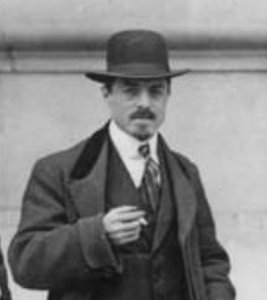
Карло Карра
1881 - 1966 , Италия
Основные сведения
- Artistic Movement Or Style: Футуризм и Метафизическое искусство
- Artists Or Movements Influenced By This Artist: ['Сюрреализм']
- Artists Who Influenced This Artist:
- Умберто Боччони
- Джорджио де Кирико
- Date Of Birth: 1881-02-11
- Full Name: Carlo Carrà
- Nationality: Итальянский
- Notable Artworks:
- Голоса смерти
- Ритмы предметов
- Дочери Лота
- Place Of Birth: Alessandria, Италия