

 Предпросмотр
 Поделиться
 Поделиться
 Детали произведения

 Скачать
 Похожие работы
 Рентгенография
 Слайд-шоу
 Статистика
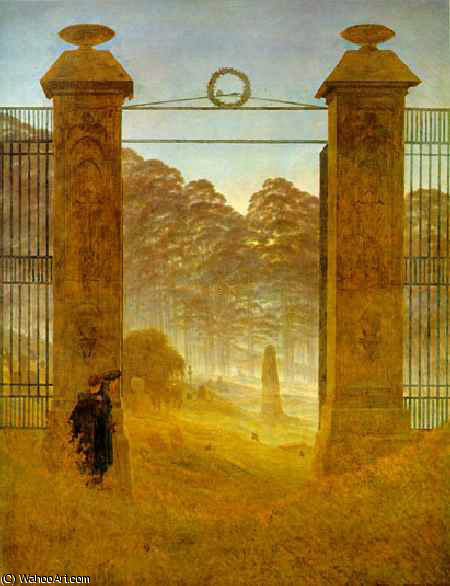
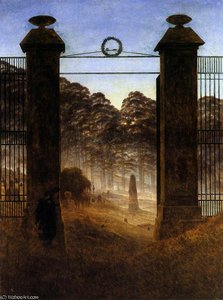
Cemetery at Dusk


 Читать далее
Приобретите цифровое изображение высокого разрешения в улучшенном качестве, которое значительно превосходит онлайн-превью.
Каждый файл тщательно подготавливается нашими специалистами с использованием передовых инструментов и экспертной ручной ретуши. Мы гарантируем исключительную четкость, точную цветопередачу и детальную проработку каждого изображения.
Финальный файл доставляется по электронной почте в течение 72 часов и оптимизирован для немедленного использования в профессиональной среде, при верстке и печати. Это тот же уровень качества, которому доверяют ведущие дизайнерские студии, издательства и галереи.
Цифровое изображение
Скачайте файл высокого разрешения для личного использования, печати и творческих проектов. ( Перейти к печати Купить картину ручной работы)
Включено в каждый заказ цифровых изображений
Гарантия экспертной цифровой доставки
Выбирая ArtsDot.com, вы получаете не просто изображение — вы приобретаете профессионально обработанное цифровое произведение искусства, созданное с безупречной точностью и под защитой гарантии качества. Вот всё, что автоматически входит в ваш заказ:

Мгновенная доставка по e-mail
Ваш цифровой файл в высоком разрешении будет отправлен вам по электронной почте в течение 72 часов после оформления заказа — и сразу станет доступен для использования.

Цифровой файл с ИИ-улучшением
Ваше произведение искусства проходит профессиональную оптимизацию с использованием передовых инструментов ИИ и ручной обработки, что гарантирует максимальную детализацию, четкость и точность цветопередачи.

Бессрочная бесплатная повторная доставка
Случайно удалили или потеряли файл? Не беспокойтесь — мы отправим его вам повторно в любое время и совершенно бесплатно.

Без импортных пошлин — навсегда
Наслаждайтесь вашим произведением искусства мгновенно без таможенных пошлин, сборов или затрат на доставку — цифровые загрузки всегда не облагаются налогом.

Гарантия точности цветопередачи
Мы гарантируем, что ваше цифровое изображение максимально точно передает оригинальные цвета благодаря использованию профессиональных инструментов и систем управления цветом.

Гарантия удовлетворенности 100 дней
Если вы не будете удовлетворены своим цифровым изображением, мы внесем правки или вернем 100% стоимости в течение 100 дней — без лишних вопросов.

100% Гарантия возврата средств
Не удовлетворены покупкой? Получите полный возврат средств в течение 100 дней после получения цифрового файла — без лишних вопросов.

Скидки на оптовые заказы
Купите 3 изображения, сэкономьте 10% — Купите 5, сэкономьте 15% — Купите 10+, сэкономьте 20%. Отличное решение для творческих проектов, галерей и агентств.
A Twilight Meditation on Mortality
In the quiet, shadowed realm of Caspar David Friedrich’s Cemetery at Dusk, the viewer is not merely observing a landscape, but participating in a profound spiritual encounter. Created around 1830, this masterpiece stands as a cornerstone of the Romantic movement, a period defined by its rejection of cold rationalism in favor of the raw, unbridled power of human emotion and the sublime. The scene unfolds with a heavy, contemplative stillness, presenting a weathered metal gate flanked by stone pillars that act as a threshold between the known world and the infinite unknown. As the sun retreats, leaving behind a muted palette of somber greys, deep blues, and earthy browns, the painting invites us to linger in the twilight of existence, where the boundaries between life and death become beautifully blurred.
Friedrich’s technical mastery is evident in his ability to marry meticulous detail with an expansive, atmospheric perspective. Every texture—from the cold, rugged surface of the stone pillars to the skeletal silhouettes of the distant trees—is rendered with a deliberate precision that grounds the viewer in reality even as the subject matter drifts into the metaphysical. His use of light is particularly haunting; it is not a light that illuminates, but rather a light that recedes, creating a sense of depth and mystery. This technique draws the eye through the gate and into the hazy, indistinct background, mirroring the way memory or faith pulls the human spirit toward things unseen.
The Language of Symbols and Solitude
To gaze upon this work is to read a visual poem composed of profound symbols. The gate itself serves as a potent metaphor for transition—a physical and psychological barrier representing the passage into the afterlife or the inevitable closure of life's chapters. Friedrich, whose early life was shadowed by the tragic loss of his mother and siblings, infused his landscapes with an acute awareness of human vulnerability. The sparse vegetation and the presence of solitary figures, often seen from behind in his signature Rückenfiguren style, serve to reduce the individual to a state of humble contemplation amidst the grandeur of nature. These figures do not dominate the landscape; instead, they are integrated into it, acting as proxies for our own search for meaning within the vastness of the universe.
For the discerning collector or interior designer, Cemetery at Dusk offers more than just aesthetic beauty; it provides a focal point of deep intellectual and emotional resonance. A high-quality reproduction of this piece brings an atmosphere of sophisticated melancholy and quiet dignity to any space. Whether placed in a library, a study, or a contemplative living area, the painting acts as a window into the soul, encouraging moments of stillness and introspection. It is a work that does not demand attention through loudness, but commands it through its enduring, silent strength, making it an incomparable addition to a collection dedicated to the timeless beauty of the Romantic spirit.
Похожие произведения
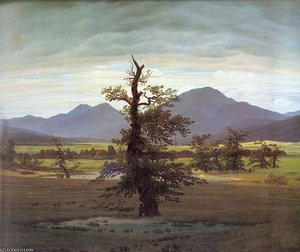
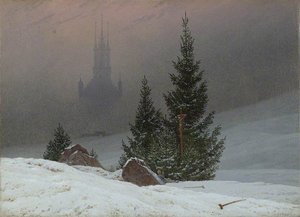
Биография художника
A Solitary Vision: The Life and Art of Caspar David Friedrich
Born in the Baltic port city of Greifswald in 1774, Caspar David Friedrich’s life was steeped in a melancholic atmosphere that would profoundly shape his artistic vision. His early years were marked by loss – the deaths of his mother and siblings fostered a sensitivity to mortality and transience that became central themes in his work. Initially educated by his older brother Christian in drawing, Friedrich’s formal training began at the University of Leipzig, where he pursued both art and theology, though neither degree was completed. This dual interest—a fascination with the visual world alongside a deep spiritual questioning—would prove crucial to his development as an artist. Further studies in Copenhagen honed his technical skills, exposing him to landscape painting traditions that would serve as a foundation for his unique style, yet it was not imitation he sought but rather expression—a means of conveying inner emotional states through the language of nature.The Birth of Romantic Landscape
Friedrich’s artistic journey wasn't merely about depicting scenery; it was about imbuing landscapes with profound symbolic meaning. He moved away from the meticulous detail favored by earlier artists, embracing a more personal and expressive approach. His paintings are characterized by an emphasis on the sublime—evoking feelings of awe, terror, and spiritual connection in the face of nature’s grandeur. The use of *Rückenfiguren*, figures seen from behind, became a signature element, inviting viewers to step into the scene and share in the contemplative experience. Natural elements like ancient trees, towering mountains, swirling fog, and crumbling ruins weren't simply picturesque details; they were potent symbols representing life’s cycles, spiritual longing, and the weight of history. His palette, often muted with blues, grays, and browns, further enhanced the mood of introspection He pioneered a way to depict landscapes not as mere views but as reflections of the human soul—a revolutionary concept for its time.Iconic Works and Enduring Themes
Several paintings stand out as defining examples of Friedrich’s artistic achievement. “Abbey in the Oakwood” (1809-1810), a haunting image of a ruined churchyard enveloped by bare trees, speaks powerfully to themes of mortality and spiritual decay. It exemplifies his masterful use of light and shadow to convey emotion and symbolism. Perhaps his most famous work, “Wanderer Above the Sea of Fog” (c. 1818), encapsulates the Romantic ideal of the individual confronting the vastness and mystery of existence. The figure, silhouetted against a swirling sea of mist, embodies both human aspiration and insignificance—a poignant reminder of our vulnerability in the face of nature’s immensity. “Chalk Cliffs on Rügen” (1818) demonstrates his mastery of atmospheric effects and subtly conveys a sense of national identity—a growing concern in the fragmented political landscape of early 19th-century Germany. The composition draws inspiration from Dutch Masters like Jacob van Ruisdael, reflecting Friedrich’s admiration for classical artistic traditions. Even more dramatic is “The Sea of Ice” (1824), a chilling depiction of an Arctic wasteland, representing nature’s immense power and indifference to human fate—a testament to the sublime and Friedrich's ability to capture the psychological impact of confronting overwhelming natural forces. Recurring throughout his oeuvre are themes of nature as a manifestation of the divine, the fragility of humanity in the face of cosmic forces, melancholy, solitude, spiritual yearning, and a burgeoning sense of German nationalism.Influences and Artistic Development
Friedrich’s artistic development was shaped by several key influences. He studied under Johann Christian Dahl, whose landscapes instilled in him a fascination with dramatic atmospheric conditions and expressive brushwork. Furthermore, he absorbed the philosophical ideas of Immanuel Kant, particularly Kant's concept of transcendental idealism—the notion that our experience is fundamentally shaped by mental categories rather than objective reality. This intellectual engagement informed Friedrich’s artistic vision, prompting him to explore the relationship between perception and consciousness. He skillfully blended elements of Dutch Golden Age landscape painting with his own distinctive style, creating images that are both aesthetically beautiful and emotionally resonant.Legacy and Rediscovery
Friedrich’s art resonated deeply with audiences during his lifetime, though it wasn't universally appreciated. Nevertheless, he experienced a significant revival in the late 20th century, becoming widely recognized as one of the most important figures in German Romanticism—a movement that championed emotion, imagination, and individualism. His pioneering approach to landscape painting influenced subsequent generations of artists who sought to express inner feelings through visual means. He remains a pivotal figure whose work continues to inspire contemplation and spiritual awakening, reminding us of the profound connection between humanity and the natural world, and the enduring power of art to convey complex ideas about existence and morality. His contribution to artistic history is undeniable.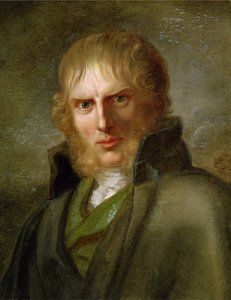
Каспар Давид Фридрих
1774 - 1840 , Германия
Основные сведения
- Artistic Movement Or Style: Романтизм
- Artists Or Movements Influenced By This Artist:
- Символисты
- Сюрреалисты
- Artists Who Influenced This Artist:
- Нидерландские мастера
- Дж.К. Даль
- Date Of Birth: 5 сентября 1774 г.
- Date Of Death: 7 мая 1840 г.
- Full Name: Каспер Давид Фридрих
- Nationality: Немецкий
- Notable Artworks:
- Абатство в дубовом лесу
- Бродяга над морем тумана
- Морские скалы Ругенсберга
- Place Of Birth: Грейфсвальд, Германия