

 Предпросмотр
 Поделиться
 Поделиться
 Детали произведения

 Скачать
 Похожие работы
 Рентгенография
 Слайд-шоу
 Статистика
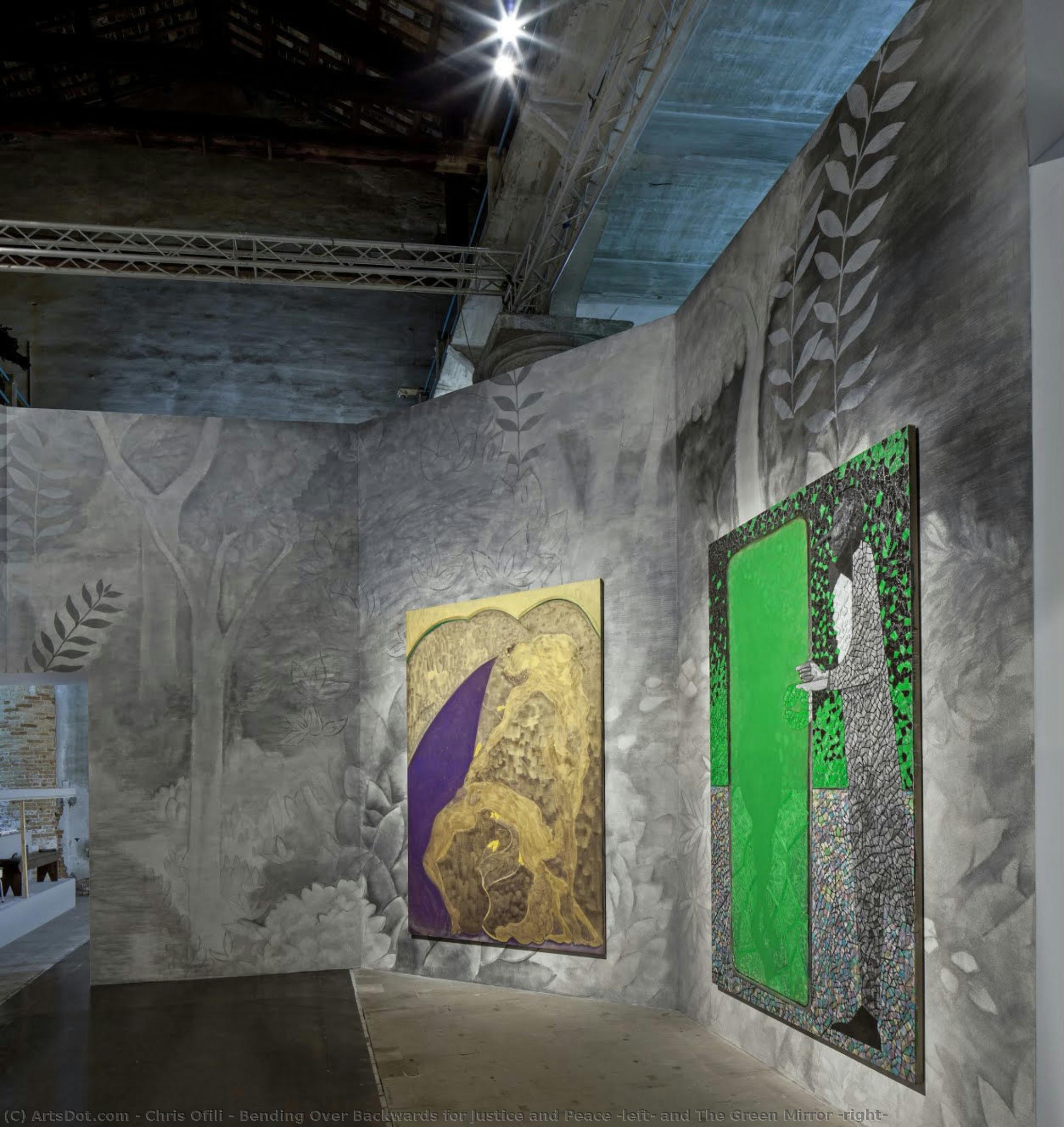
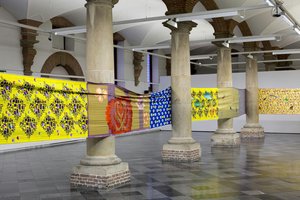
Bending Over Backwards for Justice and Peace (left) and The Green Mirror (right)


 Читать далее
Приобретите цифровое изображение высокого разрешения в улучшенном качестве, которое значительно превосходит онлайн-превью.
Каждый файл тщательно подготавливается нашими специалистами с использованием передовых инструментов и экспертной ручной ретуши. Мы гарантируем исключительную четкость, точную цветопередачу и детальную проработку каждого изображения.
Финальный файл доставляется по электронной почте в течение 72 часов и оптимизирован для немедленного использования в профессиональной среде, при верстке и печати. Это тот же уровень качества, которому доверяют ведущие дизайнерские студии, издательства и галереи.
Цифровое изображение
Скачайте файл высокого разрешения для личного использования, печати и творческих проектов. ( Перейти к печати Купить картину ручной работы)
Включено в каждый заказ цифровых изображений
Гарантия экспертной цифровой доставки
Выбирая ArtsDot.com, вы получаете не просто изображение — вы приобретаете профессионально обработанное цифровое произведение искусства, созданное с безупречной точностью и под защитой гарантии качества. Вот всё, что автоматически входит в ваш заказ:

Мгновенная доставка по e-mail
Ваш цифровой файл в высоком разрешении будет отправлен вам по электронной почте в течение 72 часов после оформления заказа — и сразу станет доступен для использования.

Цифровой файл с ИИ-улучшением
Ваше произведение искусства проходит профессиональную оптимизацию с использованием передовых инструментов ИИ и ручной обработки, что гарантирует максимальную детализацию, четкость и точность цветопередачи.

Бессрочная бесплатная повторная доставка
Случайно удалили или потеряли файл? Не беспокойтесь — мы отправим его вам повторно в любое время и совершенно бесплатно.

Без импортных пошлин — навсегда
Наслаждайтесь вашим произведением искусства мгновенно без таможенных пошлин, сборов или затрат на доставку — цифровые загрузки всегда не облагаются налогом.

Гарантия точности цветопередачи
Мы гарантируем, что ваше цифровое изображение максимально точно передает оригинальные цвета благодаря использованию профессиональных инструментов и систем управления цветом.

Гарантия удовлетворенности 100 дней
Если вы не будете удовлетворены своим цифровым изображением, мы внесем правки или вернем 100% стоимости в течение 100 дней — без лишних вопросов.

100% Гарантия возврата средств
Не удовлетворены покупкой? Получите полный возврат средств в течение 100 дней после получения цифрового файла — без лишних вопросов.

Скидки на оптовые заказы
Купите 3 изображения, сэкономьте 10% — Купите 5, сэкономьте 15% — Купите 10+, сэкономьте 20%. Отличное решение для творческих проектов, галерей и агентств.
Chris Ofili: Bending Over Backwards for Justice and Peace (left) and The Green Mirror (right) – A Dialogue Between Tradition and Provocation
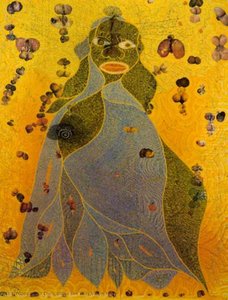
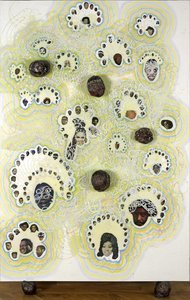
Chris Ofili’s “Bending Over Backwards for Justice and Peace” and “The Green Mirror,” created in 2015, represent a fascinating confluence of influences—a deliberate reimagining of Western painting traditions interwoven with the vibrant energy of African art and hip-hop aesthetics. These two canvases stand as testament to Ofili’s unwavering commitment to exploring complex themes of social justice, confronting uncomfortable truths about history, and pushing the boundaries of artistic expression. The artwork immediately captivates viewers with its striking visual dichotomy. On the left panel, a meticulously rendered depiction of a human figure bends over backwards—a gesture symbolizing vulnerability and striving for equilibrium amidst turbulent circumstances. The figure’s posture is countered by the right panel, dominated by an expansive green mirror reflecting fragmented images of figures and landscapes. This juxtaposition establishes a dynamic tension that underscores Ofili's central concern: the struggle to reconcile opposing perspectives and achieve harmony in a world rife with discord. Ofili’s technique—primarily oil on linen—is characterized by a masterful blending of meticulous detail and expressive brushwork. He employs layering techniques, building up textures and hues gradually to create surfaces that shimmer with luminosity and invite contemplation. The deliberate use of elephant dung, a material initially encountered during Ofili's transformative journey to Zimbabwe in 1992, serves as more than just an unconventional medium; it embodies the artist’s engagement with African cultural heritage and his willingness to challenge conventional notions of beauty and artistic value. As he himself describes, this incorporation reflects “inspiration from the dotted abstract designs created by San rock painters,” signaling a conscious dialogue with ancient visual traditions. The Holy Virgin Mary (1996), Ofili's most celebrated work—and arguably his most controversial—provides crucial context for understanding his artistic trajectory. This monumental painting confronts viewers with a jarring juxtaposition of sacred imagery and explicit erotic content, prompting profound questions about faith, sexuality, and representation. The glittering background of gold paint is punctuated by collaged pornographic fragments surrounding the Virgin Mary figure, who stares intently toward her beholder—a gesture that simultaneously conveys vulnerability and defiance. This audacious artistic statement solidified Ofili’s position as a pioneer of YBAs (Young British Artists), demonstrating his ability to provoke emotional responses and ignite critical debate. Beyond its formal qualities, “Bending Over Backwards for Justice and Peace” and “The Green Mirror” resonate with broader social commentary. The inclusion of portraits of influential figures—James Brown, Miles Davis, Muhammad Ali, Nelson Mandela—references the artist’s admiration for icons of black culture and activism. Furthermore, Ofili's engagement with themes explored in Ovid’s Metamorphoses—particularly the motif of transformation—suggests a desire to grapple with historical narratives and challenge dominant ideologies. The canvases’ expansive hues—primarily blues and greens—evoke feelings of serenity and contemplation, yet simultaneously convey an urgency for confronting injustice and striving for positive change. Finally, Ofili's recent explorations into Western painting traditions—inspired by Matisse, Gauguin, and Rothko—demonstrate his ongoing fascination with artistic innovation and his willingness to revisit established stylistic conventions. His commissioned series for London’s National Gallery and Royal Opera House incorporates motifs drawn from Ovid’s Metamorphoses, abandoning the dynamic patterning of his earlier work in favor of large washes of jewel-toned hues that prioritize visual impact over intricate detail. This deliberate shift underscores Ofili's belief that art can serve as a powerful vehicle for conveying complex emotions and ideas—a conviction evident throughout his oeuvre.Похожие произведения




Биография художника
Robert Rauschenberg: A Life in Flux
Robert Rauschenberg, a name synonymous with innovation and playful disruption within the art world, wasn’t simply an artist; he was a restless explorer of materials, processes, and the very definition of what constitutes “art.” Born Milton Ernest Rauschenberg in Port Arthur, Texas, in 1925, his early life – shaped by fundamentalist Christian parents and a childhood steeped in the rhythms of rural America – would profoundly influence his later work. This grounding in everyday experience, juxtaposed with an innate curiosity and a willingness to dismantle established conventions, became the bedrock of his extraordinary career, spanning nearly six decades and leaving an indelible mark on 20th-century art.
Rauschenberg’s artistic journey began at the University of Texas at Austin, where he initially studied philosophy before gravitating towards painting. However, it was in New York City during the late 1940s and early 1950s that his true creative revolution ignited. He immersed himself in the vibrant scene of post-war Abstract Expressionism, encountering figures like Jackson Pollock and Mark Rothko. Yet, Rauschenberg quickly rejected the purely gestural approach favored by many of his contemporaries, seeking instead to integrate elements of chance, found objects, and popular culture into his work. This marked a pivotal shift towards what would become known as “Combines,” a term coined by art critic Clement Greenberg to describe Rauschenberg’s groundbreaking hybrid paintings.
The Rise of the Combine
The Combines – works like *Monogram* (1955) and *Max Ernst as Private Detective* (1956) – represented a radical departure from traditional painting. These pieces weren't simply canvases adorned with paint; they were complex assemblages incorporating everything from fabric, photographs, newspaper clippings, rubber tires, and even taxidermied animals. Rauschenberg meticulously layered these disparate elements, often using silkscreen techniques to create intricate patterns and textures. The process itself was deliberately unpredictable, relying on chance encounters between materials and the artist’s intuitive responses. As he himself described, “I wanted to make a painting that wasn't a painting.”
The influence of Dadaism and Surrealism is readily apparent in Rauschenberg’s early work, particularly his use of collage and assemblage. However, unlike the often ironic detachment of Dada, Rauschenberg infused his art with a sense of genuine engagement with the world around him. He wasn't merely critiquing society; he was actively participating in it, blurring the boundaries between high art and low culture, private and public.
Autobiography: A Monumental Reflection
In 1968, Rauschenberg created *Autobiography*, a monumental print that stands as perhaps his most ambitious and revealing work. Commissioned by Marion Javits, the wife of Senator Jacob Javits, the piece was intended to be a comprehensive overview of the artist’s life and career. Printed on three sheets of paper using a billboard press – an industrial printing method typically reserved for advertising – *Autobiography* is a chaotic yet meticulously organized montage of images, text, and found objects. It incorporates photographs of Rauschenberg himself, X-rays of his body, maps, diagrams, and snippets from his personal writings.
The print’s sprawling format—over sixteen feet tall—mirrors the breadth and complexity of Rauschenberg's artistic practice. The inclusion of seemingly random elements – an umbrella, a wheel, a piece of fabric – reflects his fascination with everyday objects and their potential as sources of inspiration. *Autobiography* is not merely a self-portrait; it’s a meditation on art itself, questioning the nature of representation, authorship, and the very act of remembering.
Beyond the Combine: Printmaking and Late Work
While the Combines remain Rauschenberg's most iconic achievement, his artistic output extended far beyond this singular approach. He became a master printmaker, experimenting with diverse techniques – lithography, screenprinting, woodcut – to create works of remarkable beauty and complexity. His prints often incorporated elements of collage and assemblage, echoing the spirit of his paintings but adapted to the unique properties of the medium.
In his later years, Rauschenberg continued to push boundaries, exploring themes of memory, identity, and the relationship between art and life. He created large-scale installations, incorporating found objects and performance elements into his work. His late works, characterized by their vibrant colors and layered imagery, demonstrate a remarkable consistency of vision—a continuing commitment to experimentation, chance, and the playful interrogation of artistic conventions. Robert Rauschenberg died in May 2008, leaving behind a legacy as one of the most innovative and influential artists of the 20th century.
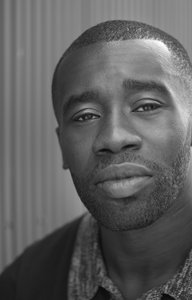
chris ofili
1968 - , United Kingdom
Основные сведения
- Artistic Movement Or Style:
- Assemblage
- Pop Art
- Neo-Dada
- Abstract Expressionism
- Artists Or Movements Influenced By This Artist:
- Andy Warhol
- Minimalism
- Artists Who Influenced This Artist:
- Jackson Pollock
- Mark Rothko
- Jasper Johns
- Date Of Birth: October 22, 1925
- Date Of Death: May 12, 2008
- Full Name: Robert Rauschenberg
- Nationality: American
- Notable Artworks:
- Canyon
- Monogram
- Autobiography
- Place Of Birth: Port Arthur, Texas, USA