

 Предпросмотр
 Поделиться
 Поделиться
 Детали произведения

 Скачать
 Похожие работы
 Рентгенография
 Слайд-шоу
 Статистика
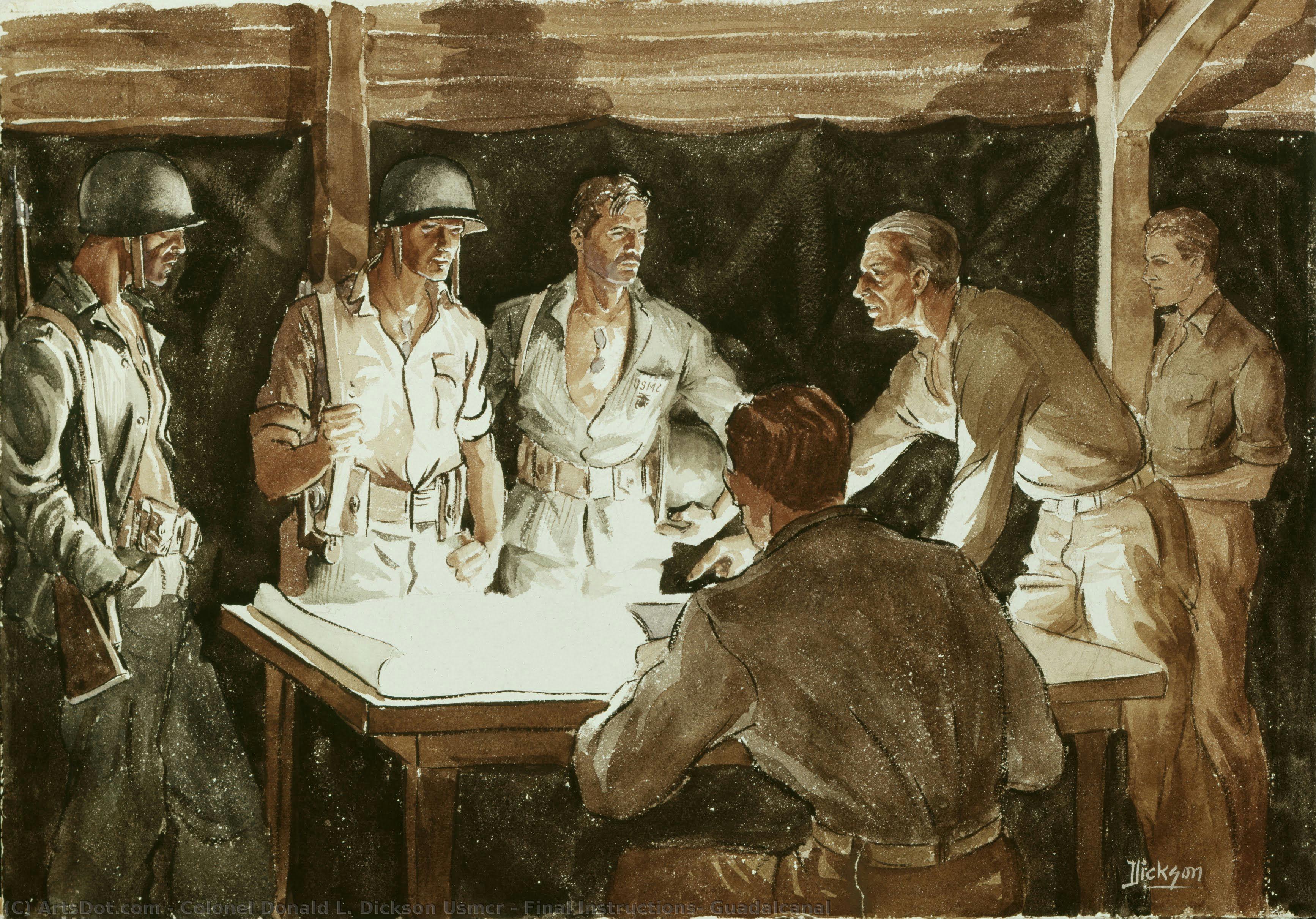
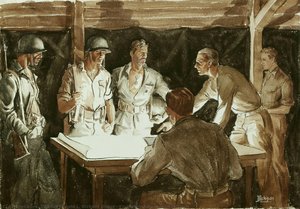
Final Instructions, Guadalcanal


 Читать далее
Приобретите цифровое изображение высокого разрешения в улучшенном качестве, которое значительно превосходит онлайн-превью.
Каждый файл тщательно подготавливается нашими специалистами с использованием передовых инструментов и экспертной ручной ретуши. Мы гарантируем исключительную четкость, точную цветопередачу и детальную проработку каждого изображения.
Финальный файл доставляется по электронной почте в течение 72 часов и оптимизирован для немедленного использования в профессиональной среде, при верстке и печати. Это тот же уровень качества, которому доверяют ведущие дизайнерские студии, издательства и галереи.
Цифровое изображение
Скачайте файл высокого разрешения для личного использования, печати и творческих проектов. ( Перейти к печати Купить картину ручной работы)
Включено в каждый заказ цифровых изображений
Гарантия экспертной цифровой доставки
Выбирая ArtsDot.com, вы получаете не просто изображение — вы приобретаете профессионально обработанное цифровое произведение искусства, созданное с безупречной точностью и под защитой гарантии качества. Вот всё, что автоматически входит в ваш заказ:

Мгновенная доставка по e-mail
Ваш цифровой файл в высоком разрешении будет отправлен вам по электронной почте в течение 72 часов после оформления заказа — и сразу станет доступен для использования.

Цифровой файл с ИИ-улучшением
Ваше произведение искусства проходит профессиональную оптимизацию с использованием передовых инструментов ИИ и ручной обработки, что гарантирует максимальную детализацию, четкость и точность цветопередачи.

Бессрочная бесплатная повторная доставка
Случайно удалили или потеряли файл? Не беспокойтесь — мы отправим его вам повторно в любое время и совершенно бесплатно.

Без импортных пошлин — навсегда
Наслаждайтесь вашим произведением искусства мгновенно без таможенных пошлин, сборов или затрат на доставку — цифровые загрузки всегда не облагаются налогом.

Гарантия точности цветопередачи
Мы гарантируем, что ваше цифровое изображение максимально точно передает оригинальные цвета благодаря использованию профессиональных инструментов и систем управления цветом.

Гарантия удовлетворенности 100 дней
Если вы не будете удовлетворены своим цифровым изображением, мы внесем правки или вернем 100% стоимости в течение 100 дней — без лишних вопросов.

100% Гарантия возврата средств
Не удовлетворены покупкой? Получите полный возврат средств в течение 100 дней после получения цифрового файла — без лишних вопросов.

Скидки на оптовые заказы
Купите 3 изображения, сэкономьте 10% — Купите 5, сэкономьте 15% — Купите 10+, сэкономьте 20%. Отличное решение для творческих проектов, галерей и агентств.
A Moment Frozen in Command
In the quiet, heavy atmosphere of 1942, amidst the humid tension of the Pacific Theater, Colonel Donald L. Dickson captured more than just a military briefing; he immortalized the weight of decision-making. Final Instructions, Guadalcanal serves as a profound window into a pivotal moment in World War II history. The scene unfolds around a central table where a group of Marines is gathered, their silhouettes and postures conveying a shared sense of purpose and gravity. There is an undeniable intimacy in the way the figures are clustered, suggesting a brotherhood forged not just by rank, but by the imminent shared destiny that awaited them on the shores of Guadalcanal. The composition draws the viewer into the inner circle, making us feel like silent witnesses to the strategic whispers and the solemnity of the orders being delivered.
The technique employed by Dickson reflects his unique dual identity as both a trained artist from the Worcester Art Museum and a combat-hardened Marine. There is a raw, documentary-like precision in the depiction of the uniforms and the arrangement of the men, yet it is elevated by a painterly sensibility that captures the flickering light and the shadows of the command post. The way the light falls upon the table and the faces of the officers creates a dramatic chiaroscuro effect, emphasizing the importance of the documents being reviewed. This interplay of light and shadow does more than provide depth; it symbolizes the uncertainty of the war itself—the clarity of duty clashing with the murky unknown of the jungle campaign ahead.
For the discerning collector or interior designer, this piece offers a sophisticated narrative element that transcends mere decoration. It is an evocative work of historical realism that brings a sense of strength, discipline, and heritage to any space. The muted tones and the structured composition make it an ideal centerpiece for a study, a library, or a formal gallery wall, where its themes of leadership and resilience can be deeply appreciated. Owning a reproduction of this masterpiece is not simply about acquiring art; it is about preserving a fragment of history, inviting the contemplative energy of those brave souls into the modern home.
Похожие произведения
Биография художника
Paul Cézanne: Bridging Impressionism and Modernity
Born in Aix-en-Provence, France, on January 19, 1839, Paul Cézanne remains a pivotal figure in the transition from late 19th-century Impressionism to the burgeoning movements of early 20th-century modern art. His life was one of quiet dedication to his craft, marked by a relentless pursuit of formal structure and an innovative approach to color and perspective. While initially influenced by the vibrant palettes and fleeting moments captured by Impressionists like Monet and Renoir, Cézanne ultimately forged a unique path, laying the groundwork for Cubism and other radical developments in art history. His legacy lies not just in his individual paintings but in the profound impact he had on subsequent generations of artists.
Early Influences and Artistic Development
Cézanne’s early artistic training was somewhat conventional, studying at the École des Beaux-Arts in Paris. However, it was his time spent observing the landscapes around Aix – particularly Mont Sainte-Victoire, a towering peak that dominated the horizon – which profoundly shaped his artistic vision. He meticulously studied this subject throughout his career, creating hundreds of variations on its form and color. Initially, Cézanne’s work reflected the Impressionist emphasis on capturing light and atmosphere. However, he soon began to move beyond mere representation, experimenting with a more structured approach to composition and drawing. He sought to capture not just what he *saw*, but also the underlying geometric forms that constituted the world around him.
- Impressionism’s Influence: Cézanne initially admired Impressionist painters like Monet, absorbing their techniques for capturing light and color.
- The Mont Sainte-Victoire Series: This iconic subject became central to his artistic development, allowing him to explore form, perspective, and the effects of light.
- Breaking with Academic Tradition: Cézanne deliberately rejected the rigid rules of academic art, prioritizing personal observation and expressive representation over strict adherence to established conventions.
Formal Innovations and a New Pictorial Language
Cézanne’s most significant contribution was his revolutionary approach to painting technique. He systematically dismantled traditional notions of perspective, flattening space and employing multiple viewpoints within a single composition. He did this not through illusionistic depth, but by building up forms with small, broken brushstrokes—a technique he famously described as “putting in the black.” This method created a sense of solidity and structure, transforming his landscapes into dynamic arrangements of planes and volumes. His use of color was equally innovative; he moved away from the bright, pure hues favored by Impressionists, opting for earth tones, muted greens, and ochres to create a more subdued and atmospheric effect.
- Multiple Perspectives: Cézanne frequently depicted objects and landscapes from multiple viewpoints simultaneously, challenging traditional notions of spatial representation.
- Broken Brushstrokes: His distinctive technique involved applying small, separate brushstrokes that built up forms and created a sense of texture and depth.
- Earth Tones and Muted Colors: He favored a palette of subdued colors to create atmospheric effects and emphasize the formal qualities of his compositions.
Key Works and Lasting Legacy
Among Cézanne’s most celebrated works are *The Card Players* (1898), *The Bathers* (c. 1906-1907), and the numerous paintings depicting Mont Sainte-Victoire. These works exemplify his innovative approach to composition, color, and form. His influence extended far beyond his own lifetime, inspiring artists such as Van Gogh, Matisse, Picasso, and Braque—the very figures who would pioneer Cubism. Cézanne’s emphasis on structure, simplification, and the exploration of underlying forms paved the way for a radical shift in artistic representation, fundamentally altering the course of modern art. He died in Aix-en-Provence on October 22, 1906, leaving behind a body of work that continues to captivate and challenge viewers today.
Cézanne’s Place in Art History
Paul Cézanne is often considered a pivotal figure between Impressionism and Cubism. He didn't simply reject the Impressionist style, but rather built upon its foundations to create something entirely new. His work demonstrated that art could be more than just a representation of reality; it could also be an exploration of form, structure, and color. Cézanne’s legacy is one of innovation, experimentation, and profound influence—a testament to the enduring power of his artistic vision.
colonel donald l. dickson usmcr
1906 - 1974 , United States of America
Основные сведения
- Artistic Movement Or Style: Post-Impressionism
- Artists Or Movements Influenced By This Artist:
- Cubism
- Impressionism
- Artists Who Influenced This Artist:
- Jean-Auguste–Dominique Ingres
- William-Adolphe Bouguereau
- Date Of Birth: 19 January 1839
- Date Of Death: 22 October 1906
- Full Name: Paul Cézanne
- Nationality: French
- Notable Artworks:
- The Card Players
- The Bathers
- Mont Sainte-Victoire
- Place Of Birth: Paris, France