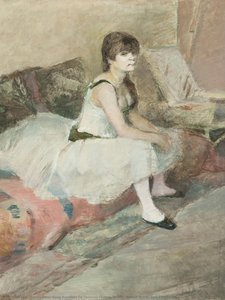
 Предпросмотр
 Поделиться
 Поделиться
 Детали произведения

 Скачать
 Похожие работы
 Рентгенография
 Слайд-шоу
 Статистика
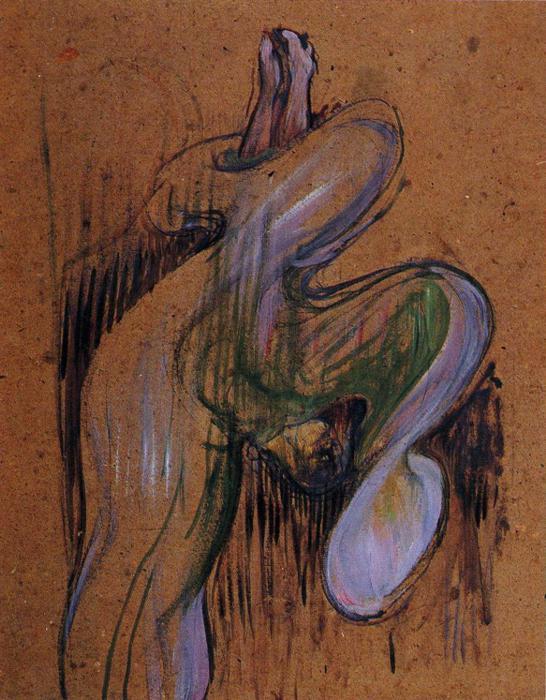
Lo e Fuller in
 Oil On Board
- Post-Impressionism
 1893
1893- 19th Century
 63.0 x 45.0 cm
 Читать далее
Жикле / Арт-принт
Печать (жикле) или холст музейного качества с быстрыми сроками изготовления и широким выбором вариантов отделки. ( Купить картину ручной работы Перейти к цифровым изображениям)




P118B $10

P118H $10

P118W $10

P438Z $10

P508JH $12

P508YH $12

P805H $10

P805Z $10

P919BZ $10

P919G $10

P919XJ $10

P959ZH $10

P968JZ $12

W106C $8

W218G $10

W218JH $8

W218Y $10

W307PJ $10

W316G $10

W316PJ $8

W316Y $10

W398PJ $8

W4111J $10

W500HY $15

W500JH $15

W692G $12

W849H $8

W940BG $15

W953PJ $8




Выберите один из наших стандартных размеров, соответствующих оригинальным пропорциям произведения искусства.

Вы можете указать свои собственные размеры, чтобы репродукция идеально подошла под конкретную раму или пространство. Если выбранный вами размер не будет соответствовать пропорциям оригинала, мы либо обрежем произведение, либо дополним изображение зеркальным отражением краев или однотонной заливкой. Перед началом производства вам будет отправлен цифровой макет для утверждения.
Пожалуйста, обратите внимание, что предварительный просмотр на экране не отображает фактическую обрезку или расширение изображения. Только макет точно покажет финальную композицию.
Несмотря на возможность заказа индивидуальных размеров, мы рекомендуем выбирать размер из предопределенного списка, чтобы сохранить оригинальные пропорции.
Доставка по всему миру () за 2 недели вместо стандартных 4/5 недель. (12 Сентябрь)

Бесплатная экспресс-доставка по всему миру

Высококачественный льняной холст

Полное страхование доставки

Гарантия возмещения таможенных пошлин

Гарантия точного соответствия цветов

100-дневная политика возврата (только при обнаружении дефектов)

Гарантия возврата 100% средств

Предложение оптовых скидок
 Вариант со стеклом доступен только для размеров менее 110 см

Lo e Fuller in
Жикле / Арт-принт
Размер репродукции
-


Итоговая стоимость
$ 62
Loie Fuller in by Henri de Toulouse-Lautrec: A Dance of Light and Shadow
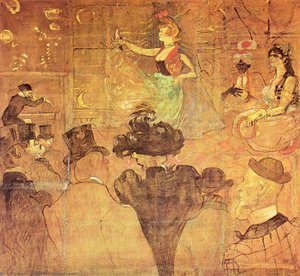
Henri de Toulouse-Lautrec’s “Loie Fuller in” (1893) is more than just a portrait; it's a crystallized moment of artistic innovation, a vibrant snapshot of the Belle Époque, and a testament to the revolutionary spirit of Loie Fuller herself. This oil on board painting, measuring 63 x 45 cm, captures the mesmerizing spectacle of Fuller’s signature performance – her manipulation of shimmering silk scarves suspended from intricate mechanical devices – transforming her into an ethereal figure bathed in dynamic light and color. Toulouse-Lautrec, a master of capturing movement and atmosphere, doesn't simply depict Fuller; he embodies her captivating energy on canvas.
The Artist and His Post-Impressionist Vision
Toulouse-Lautrec’s style was profoundly influenced by Impressionism but pushed beyond its limitations. Like his contemporaries – Paul Cézanne, Vincent van Gogh, and Paul Gauguin – he sought to represent the world as perceived rather than strictly observed. However, unlike the Impressionists' focus on fleeting moments of light, Toulouse-Lautrec embraced bolder lines, flattened forms, and a heightened sense of color intensity. This approach is strikingly evident in “Loie Fuller in,” where the vibrant greens of her dress contrast dramatically with the darker tones of the background, creating a visual dynamism that mirrors the movement of the silk.
A Pioneer’s Performance: Loie Fuller and the Dawn of Modern Dance
To fully appreciate "Loie Fuller in," one must understand the significance of the subject. Loie Fuller was a true pioneer, arguably the first modern dancer. Her performances were not mere entertainment; they were meticulously engineered spectacles that combined dance, light, color, and machinery to create an immersive sensory experience. She used long lengths of silk, suspended from intricate frames, to create flowing curtains of color that seemed to float in mid-air. Toulouse-Lautrec brilliantly captures this illusion, conveying the sheer wonder and technological marvel of Fuller’s work. The painting is a visual record of a performance that fundamentally altered the landscape of artistic expression, paving the way for future avant-garde movements.
Symbolism and Emotional Impact
Beyond its technical brilliance, “Loie Fuller in” resonates with a deeper emotional charge. The pose – arms raised, head tilted – suggests both vulnerability and strength, capturing the dancer’s captivating presence. The use of light is particularly effective; it doesn't simply illuminate Fuller but seems to emanate from her, contributing to the painting’s ethereal quality. The bold lines and vibrant colors evoke a sense of excitement and dynamism, reflecting the spirit of the Belle Époque – an era defined by artistic experimentation, social change, and a celebration of beauty. This piece is a powerful reminder of the transformative power of art and its ability to capture not just appearances but also the very essence of human experience.
Discover More Masterpieces
Explore other captivating works by Henri de Toulouse-Lautrec on our website: https://ArtsDot.com/@/Henri-De-Toulouse-Lautrec-Miss-Loie-Fuller. For a deeper understanding of Post-Impressionism, visit: /art/list/?Filter=A@D3CR9H-Post-Impressionism-Art-Movement.
Похожие произведения
Биография художника
Henri de Toulouse-Lautrec: A Life Painted in Parisian Shadows
Henri Marie Raymond de Toulouse-Lautrec-Monfa, universally known as Toulouse-Lautrec, remains one of the most captivating and enigmatic figures of late 19th-century France. Born into a crumbling aristocratic lineage in Albi on November 24, 1864, his life was a poignant blend of privilege and profound physical limitation. A rare genetic condition – suspected to be pycnodysostosis, though the exact diagnosis remains debated – dramatically stunted his leg growth, resulting in a disproportionate physique that profoundly shaped his artistic vision and his perception of the world. Rather than succumbing to despair, Toulouse-Lautrec channeled this unique perspective into an intensely observant and empathetic engagement with the marginalized inhabitants of Parisian society—the dancers, prostitutes, and performers who populated the vibrant, often scandalous, world of Montmartre. His aristocratic background afforded him access to artistic training, yet it was the raw energy and unvarnished realities of Montmartre that truly ignited his creative spirit, propelling him beyond academic constraints and into a realm of unprecedented artistic freedom.From Formal Training to Bohemian Immersion
Toulouse-Lautrec’s formal artistic education began in Paris under the tutelage of Léon Bonnat and later Fernand Cormon. While he diligently mastered the technical skills expected of a Salon painter – precise draftsmanship, tonal harmony, and careful observation – it was his immersion into the bohemian heart of Montmartre that irrevocably altered his trajectory. He deliberately rejected the prevailing academic focus on historical or mythological subjects, choosing instead to capture the everyday dramas unfolding around him with startling immediacy. His gaze turned towards the dancers at the Moulin Rouge, the prostitutes of the rue des Moulins, the circus performers and café singers who constituted the colorful tapestry of Parisian nightlife. This wasn’t merely a detached observation; it was an active engagement—a deep dive into a world often deliberately ignored by polite society. Toulouse-Lautrec didn't simply *paint* these people; he inhabited their spaces, striving to understand their vulnerabilities, their resilience, and their unique beauty. His early works demonstrate a clear foundation in academic technique, but they quickly evolve, embracing a more daring and unconventional style—a stylistic shift heavily influenced by the evocative imagery of Japanese woodblock prints, which were then gaining popularity throughout Europe, characterized by bold compositions, flattened perspectives, and an emphasis on line.The Language of Line and Color: Defining a Distinctive Style
Toulouse-Lautrec’s artistic innovations are immediately apparent in his distinctive style. He was a master of line—not merely to delineate form but to convey movement, emotion, and character with remarkable fluidity. His lines seemed to vibrate with energy, capturing the fleeting moments of Parisian life. His color palette, while often muted and subtly shaded, possessed an extraordinary vibrancy – a carefully orchestrated blend of ochres, blues, and greens that captured the artificial glow of gaslight, the smoky atmosphere of cabaret halls, and the intimate lighting of bedrooms. He was particularly adept at using lithography—a technique he embraced with enthusiasm—recognizing its potential for mass reproduction while simultaneously allowing him to experiment with intricate detail and expressive textures. This medium enabled him to create a vast body of work – over 400 prints and 31 posters – that cemented his reputation as a chronicler of modern life, transforming advertising into a form of fine art. His posters—for the Moulin Rouge, Jane Avril, Yvette Guilbert, and other prominent figures—were not simply promotional materials; they were meticulously crafted works of art, instantly recognizable for their dynamic compositions, striking imagery, and captivating energy. The iconic *La Blanchisseuse*, sold at auction for $22.4 million in 2005, stands as a testament to his early talent, but it is the later depictions of Montmartre—a vibrant microcosm of Parisian society—that truly define his legacy.A Portrait of an Outsider: Life and Legacy
Toulouse-Lautrec’s life was tragically cut short on September 9, 1901, at the age of 36, a consequence of years battling alcoholism and syphilis. Despite this premature demise, his impact on the art world is immeasurable. He stands as a pivotal figure in the transition from Impressionism to modern art—a bridge between the fleeting impressions of the past and the subjective explorations of the future. He was recognized alongside Cézanne, Van Gogh, Gauguin, and Seurat as a key Post-Impressionist painter, each pushing the boundaries of artistic expression. Toulouse-Lautrec’s influence can be seen in everything from early 20th-century illustration to contemporary graphic design—a testament to his enduring appeal. He didn't merely paint what he saw; he revealed a hidden world—a vibrant and often contradictory portrait of Parisian society, challenging conventional notions of beauty and morality. His work continues to resonate today, reminding us of the power of art to illuminate the human condition in all its complexity and contradiction.Exploring Toulouse-Lautrec’s World Further
- Discover a comprehensive collection of his artwork at /en/artists/comte-henri-marie-raymond-de-toulouse-lautrec-monfa.
- Delve into the world of Post-Impressionism and its key artists at /en/art-movements/post-impressionism.
- Learn more about his life and artistic journey through resources like Wikipedia: https://en.wikipedia.org/wiki/Henri_de_Toulouse-Lautrec
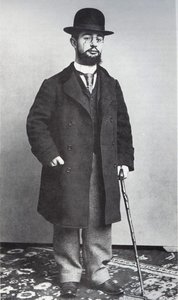
comte henri marie raymond de toulouse-lautrec-monfa
1864 - 1901 , Франция
Основные сведения
- Artistic Movement Or Style: Постимпрессионизм
- Artists Or Movements Influenced By This Artist: ['Пост-импрессионизм']
- Artists Who Influenced This Artist:
- Леон Бонна
- Фернан Кормон
- Date Of Birth: 24 ноября 1864 г.
- Date Of Death: 9 сентября 1901 г.
- Full Name: Henri Marie Raymond de Toulouse-Lautrec-Monfa
- Nationality: Француз
- Notable Artworks:
- La Blanchisseuse
- В тени цирка
- Женщина в постели
- Place Of Birth: Альби, Франция
Похожие статьи
10 Шедевров Постимпрессионизма, Определивших Эпоху | ArtsDot.com
Погрузитесь в мир постимпрессионизма! Откройте 10 шедевров Ван Гога, Моне, Сезанна и других великих художников. История искусства, техники живописи и вдохновение для вашего интерьера на ArtsDot.com. Изысканные репродукции картин ждут вас!
За пределами света и цвета: Импрессионизм против постимпрессионизма для взыскательного коллекционера
Углубленное исследование импрессионизма и постимпрессионизма для ценителей искусства. Анализ ключевых художников, инвестиционный потенциал и коллекционная ценность шедевров.
Beyond Impressionism: Exploring Emotional Depth & Formal Innovation in Post-Impressionist Art
Explore the profound emotional depth & formal innovations of Post-Impressionism with our expert guide. Discover Cézanne, Van Gogh, Gauguin & more. Learn about art history, collecting, and investing in this pivotal movement.

Топ-10 шедевров импрессионизма: искусство мгновения для вашего интерьера
Погрузитесь в мир импрессионизма! Откройте для себя 10 шедевров Моне, Ренуара и других великих мастеров. Узнайте историю создания культовых картин и вдохновитесь для декора интерьера. Репродукции музейного качества на ArtsDot.com.
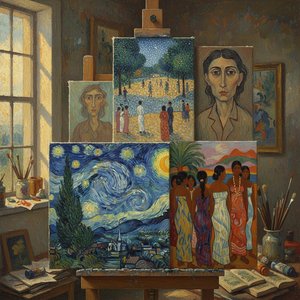
Beyond Impressionism: Exploring the Emotional Depth of Post-Impressionist Painting
Explore the profound emotional depth & innovative techniques of Post-Impressionism with ArtsDot. Discover Cézanne, Van Gogh, Gauguin & more – and their lasting impact on modern art.