Предпросмотр
 Поделиться
 Поделиться
 Детали произведения

 Скачать
 Похожие работы
 Рентгенография
 Слайд-шоу
 Статистика
Portrait of Monsieur Boileau


 Читать далее
Масляная репродукция ручной работы
Картина маслом на холсте в выбранном вами размере и раме, написанная на заказ нашими художниками. ( Перейти к печати Перейти к цифровым изображениям)




P118B $10

P118H $10

P118W $10

P438Z $10

P508JH $12

P508YH $12

P805H $10

P805Z $10

P919BZ $10

P919G $10

P919XJ $10

P959ZH $10

P968JZ $12

W106C $8

W218G $10

W218JH $8

W218Y $10

W307PJ $10

W316G $10

W316PJ $8

W316Y $10

W398PJ $8

W4111J $10

W500HY $15

W500JH $15

W692G $12

W849H $8

W940BG $15

W953PJ $8




Выберите один из наших стандартных размеров, соответствующих оригинальным пропорциям произведения искусства.

Вы можете указать собственные размеры, чтобы картина идеально вписалась в выбранную раму или пространство. Если выбранный вами размер не соответствует пропорциям оригинала, мы либо обрежем полотно, либо расширим его за счет дополнительных элементов, написанных вручную. Цифровой макет будет отправлен вам на утверждение перед началом производства.
Обратите внимание, что предварительный просмотр на экране не отражает фактическую обрезку или расширение. Только макет точно покажет окончательную композицию.
Хотя доступны индивидуальные размеры, мы рекомендуем выбирать вариант из предопределенного списка, чтобы сохранить исходные пропорции.
После оформления заказа команда ArtsDot.com свяжется с клиентом по электронной почте для уточнения деталей и предоставит предварительный макет
Доставка по всему миру () за 3–4 недели вместо стандартных 5 недель. (17 Сентябрь). Без компромиссов в качестве.

Бесплатная экспресс-доставка по всему миру

Высококачественный льняной холст

Полное страхование доставки

Гарантия возмещения таможенных пошлин

Гарантия точного соответствия цветов

100-дневная политика возврата (только при обнаружении дефектов)

Гарантия возврата 100% средств

Предложение оптовых скидок
 Вариант со стеклом доступен только для размеров менее 110 см

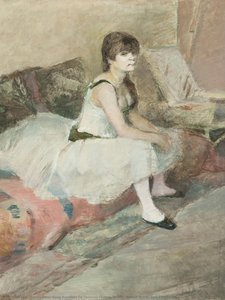
Portrait of Monsieur Boileau
Техника репродукции
Размер репродукции
-


Итоговая стоимость
$ 263
A Night in Montmartre: Toulouse-Lautrec's Captivating Portrait
Henri de Toulouse-Lautrec’s “Monsieur Boileau,” painted in 1893, is more than just a portrait; it’s a vibrant snapshot of Parisian nightlife, a testament to the artist’s unique ability to capture the raw energy and melancholic beauty of Montmartre. This remarkable work, now meticulously reproduced for ArtsDot.com, offers an intimate glimpse into the world of a man – Monsieur Boileau, a café owner – rendered with a startling honesty that transcends mere representation.
The scene unfolds within the dimly lit interior of a Parisian café, a space teeming with life and shadowed by secrets. Toulouse-Lautrec masterfully employs a muted palette dominated by deep browns, ochres, and blues, creating an atmosphere of smoky intimacy. The artist’s brushstrokes are loose and expressive, conveying not just the physical appearance of Boileau but also his character – a man weary yet possessing a quiet dignity. Note the subtle play of light on the face, highlighting the lines etched by experience, and the slightly slumped posture that speaks volumes about the burdens of commerce and perhaps, a touch of loneliness.
The Artist's Vision: Post-Impressionism and Parisian Life
Toulouse-Lautrec’s work falls squarely within the Post-Impressionist movement, yet he forged his own distinct path. Influenced by Impressionism’s focus on capturing fleeting moments and light, he pushed beyond mere optical observation to explore deeper emotional and psychological themes. Unlike many of his contemporaries who sought idealized beauty, Toulouse-Lautrec embraced the gritty reality of Parisian life – its prostitutes, dancers, musicians, and café patrons. He was a keen observer of the marginalized, finding beauty in their unconventional lives.
The painting’s historical context is crucial to understanding its significance. The late 19th century in Paris was a period of immense social and artistic change. The rise of industrialization, urbanization, and new forms of entertainment – particularly the Moulin Rouge and other cabarets – profoundly impacted Parisian society. Toulouse-Lautrec became a chronicler of this era, documenting the changing face of the city with unflinching honesty and remarkable skill.
Symbolism and Technique: A Masterful Composition
Toulouse-Lautrec’s technique is characterized by its bold simplification and expressive brushwork. He employed a pointillist approach – applying small dots of color to build up tones and textures – which contributes to the painting's luminous quality. The composition itself is carefully constructed, drawing the viewer’s eye towards Boileau’s face while simultaneously capturing the bustling activity of the café around him. The inclusion of details like the clock on the wall, a symbol of time’s relentless passage, adds another layer of meaning to the work.
Notice how Toulouse-Lautrec uses color not just for representation but also for emotional effect. The dark tones evoke a sense of mystery and melancholy, while the subtle highlights suggest warmth and humanity. This masterful manipulation of color is a hallmark of his style and contributes significantly to the painting’s enduring appeal.
Emotional Impact and Artistic Legacy
"Monsieur Boileau" resonates with viewers not just for its technical brilliance but also for its poignant portrayal of human experience. It's a portrait that invites contemplation, prompting us to consider themes of loneliness, resilience, and the transient nature of life. Toulouse-Lautrec’s ability to capture such profound emotions through his art is what secures his place as one of the most important and beloved artists of the late 19th century.
ArtsDot.com's hand-painted reproductions faithfully recreate this iconic work, allowing you to experience Toulouse-Lautrec’s vision in stunning detail and quality. Bring a piece of Parisian history into your home or office – a timeless masterpiece that continues to captivate audiences around the world.
Похожие произведения
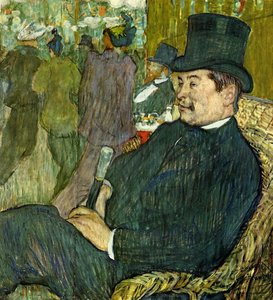
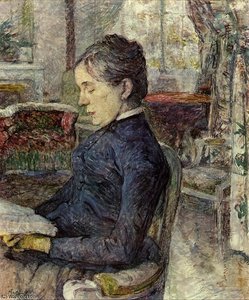
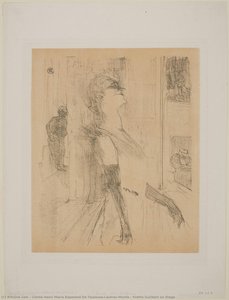
Биография художника
Henri de Toulouse-Lautrec: A Life Painted in Parisian Shadows
Henri Marie Raymond de Toulouse-Lautrec-Monfa, universally known as Toulouse-Lautrec, remains one of the most captivating and enigmatic figures of late 19th-century France. Born into a crumbling aristocratic lineage in Albi on November 24, 1864, his life was a poignant blend of privilege and profound physical limitation. A rare genetic condition – suspected to be pycnodysostosis, though the exact diagnosis remains debated – dramatically stunted his leg growth, resulting in a disproportionate physique that profoundly shaped his artistic vision and his perception of the world. Rather than succumbing to despair, Toulouse-Lautrec channeled this unique perspective into an intensely observant and empathetic engagement with the marginalized inhabitants of Parisian society—the dancers, prostitutes, and performers who populated the vibrant, often scandalous, world of Montmartre. His aristocratic background afforded him access to artistic training, yet it was the raw energy and unvarnished realities of Montmartre that truly ignited his creative spirit, propelling him beyond academic constraints and into a realm of unprecedented artistic freedom.From Formal Training to Bohemian Immersion
Toulouse-Lautrec’s formal artistic education began in Paris under the tutelage of Léon Bonnat and later Fernand Cormon. While he diligently mastered the technical skills expected of a Salon painter – precise draftsmanship, tonal harmony, and careful observation – it was his immersion into the bohemian heart of Montmartre that irrevocably altered his trajectory. He deliberately rejected the prevailing academic focus on historical or mythological subjects, choosing instead to capture the everyday dramas unfolding around him with startling immediacy. His gaze turned towards the dancers at the Moulin Rouge, the prostitutes of the rue des Moulins, the circus performers and café singers who constituted the colorful tapestry of Parisian nightlife. This wasn’t merely a detached observation; it was an active engagement—a deep dive into a world often deliberately ignored by polite society. Toulouse-Lautrec didn't simply *paint* these people; he inhabited their spaces, striving to understand their vulnerabilities, their resilience, and their unique beauty. His early works demonstrate a clear foundation in academic technique, but they quickly evolve, embracing a more daring and unconventional style—a stylistic shift heavily influenced by the evocative imagery of Japanese woodblock prints, which were then gaining popularity throughout Europe, characterized by bold compositions, flattened perspectives, and an emphasis on line.The Language of Line and Color: Defining a Distinctive Style
Toulouse-Lautrec’s artistic innovations are immediately apparent in his distinctive style. He was a master of line—not merely to delineate form but to convey movement, emotion, and character with remarkable fluidity. His lines seemed to vibrate with energy, capturing the fleeting moments of Parisian life. His color palette, while often muted and subtly shaded, possessed an extraordinary vibrancy – a carefully orchestrated blend of ochres, blues, and greens that captured the artificial glow of gaslight, the smoky atmosphere of cabaret halls, and the intimate lighting of bedrooms. He was particularly adept at using lithography—a technique he embraced with enthusiasm—recognizing its potential for mass reproduction while simultaneously allowing him to experiment with intricate detail and expressive textures. This medium enabled him to create a vast body of work – over 400 prints and 31 posters – that cemented his reputation as a chronicler of modern life, transforming advertising into a form of fine art. His posters—for the Moulin Rouge, Jane Avril, Yvette Guilbert, and other prominent figures—were not simply promotional materials; they were meticulously crafted works of art, instantly recognizable for their dynamic compositions, striking imagery, and captivating energy. The iconic *La Blanchisseuse*, sold at auction for $22.4 million in 2005, stands as a testament to his early talent, but it is the later depictions of Montmartre—a vibrant microcosm of Parisian society—that truly define his legacy.A Portrait of an Outsider: Life and Legacy
Toulouse-Lautrec’s life was tragically cut short on September 9, 1901, at the age of 36, a consequence of years battling alcoholism and syphilis. Despite this premature demise, his impact on the art world is immeasurable. He stands as a pivotal figure in the transition from Impressionism to modern art—a bridge between the fleeting impressions of the past and the subjective explorations of the future. He was recognized alongside Cézanne, Van Gogh, Gauguin, and Seurat as a key Post-Impressionist painter, each pushing the boundaries of artistic expression. Toulouse-Lautrec’s influence can be seen in everything from early 20th-century illustration to contemporary graphic design—a testament to his enduring appeal. He didn't merely paint what he saw; he revealed a hidden world—a vibrant and often contradictory portrait of Parisian society, challenging conventional notions of beauty and morality. His work continues to resonate today, reminding us of the power of art to illuminate the human condition in all its complexity and contradiction.Exploring Toulouse-Lautrec’s World Further
- Discover a comprehensive collection of his artwork at /en/artists/comte-henri-marie-raymond-de-toulouse-lautrec-monfa.
- Delve into the world of Post-Impressionism and its key artists at /en/art-movements/post-impressionism.
- Learn more about his life and artistic journey through resources like Wikipedia: https://en.wikipedia.org/wiki/Henri_de_Toulouse-Lautrec
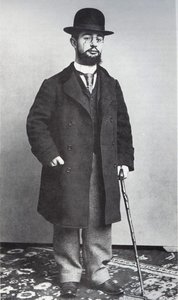
comte henri marie raymond de toulouse-lautrec-monfa
1864 - 1901 , Франция
Основные сведения
- Artistic Movement Or Style: Постимпрессионизм
- Artists Or Movements Influenced By This Artist: ['Пост-импрессионизм']
- Artists Who Influenced This Artist:
- Леон Бонна
- Фернан Кормон
- Date Of Birth: 24 ноября 1864 г.
- Date Of Death: 9 сентября 1901 г.
- Full Name: Henri Marie Raymond de Toulouse-Lautrec-Monfa
- Nationality: Француз
- Notable Artworks:
- La Blanchisseuse
- В тени цирка
- Женщина в постели
- Place Of Birth: Альби, Франция
Похожие статьи
10 шедевров модерна: искусство, изменившее декор и вдохновившее художников
Погрузитесь в мир модерна! 10 шедевров от Мухи, Климта и Гауди – история искусства, изящные линии, флоральные мотивы. Купите репродукции картин модерн премиум-качества на ArtsDot.com и вдохновите свой интерьер!
The Flowing Line & Flourishing Form: Exploring Art Nouveau's Aesthetic Legacy
Explore the captivating world of Art Nouveau! Discover its origins, key artists like Horta & Mucha, regional styles, innovative techniques, and lasting influence on architecture & design. A comprehensive guide for art enthusiasts.

Raphael Kirchner: A Poetic Vision of Belle Époque Society Through Art Nouveau Lithography
Explore the captivating world of Raphael Kirchner, a master of Art Nouveau illustration during the Belle Époque. Discover his iconic 'Kirchner Girls,' pioneering pin-up art & lasting influence.
Alphonse Mucha: A Comprehensive Exploration of Art Nouveau's Master of Decorative Symbolism
Explore the life & art of Alphonse Mucha, master of Art Nouveau! Discover his iconic posters, stunning illustrations, and the monumental Slav Epic. A comprehensive guide for collectors & enthusiasts.

Edmund Dulac: A Master of Golden Age Illustration – Exploring Myth, Symbolism & Art Nouveau Legacy
Explore the captivating world of Edmund Dulac, a master of Golden Age illustration! Discover his enchanting fairy tales, Art Nouveau style, and lasting influence on art & design. Learn about *The Rubaiyat* and more.