

 Предпросмотр
 Поделиться
 Поделиться
 Детали произведения

 Скачать
 Похожие работы
 Рентгенография
 Слайд-шоу
 Статистика
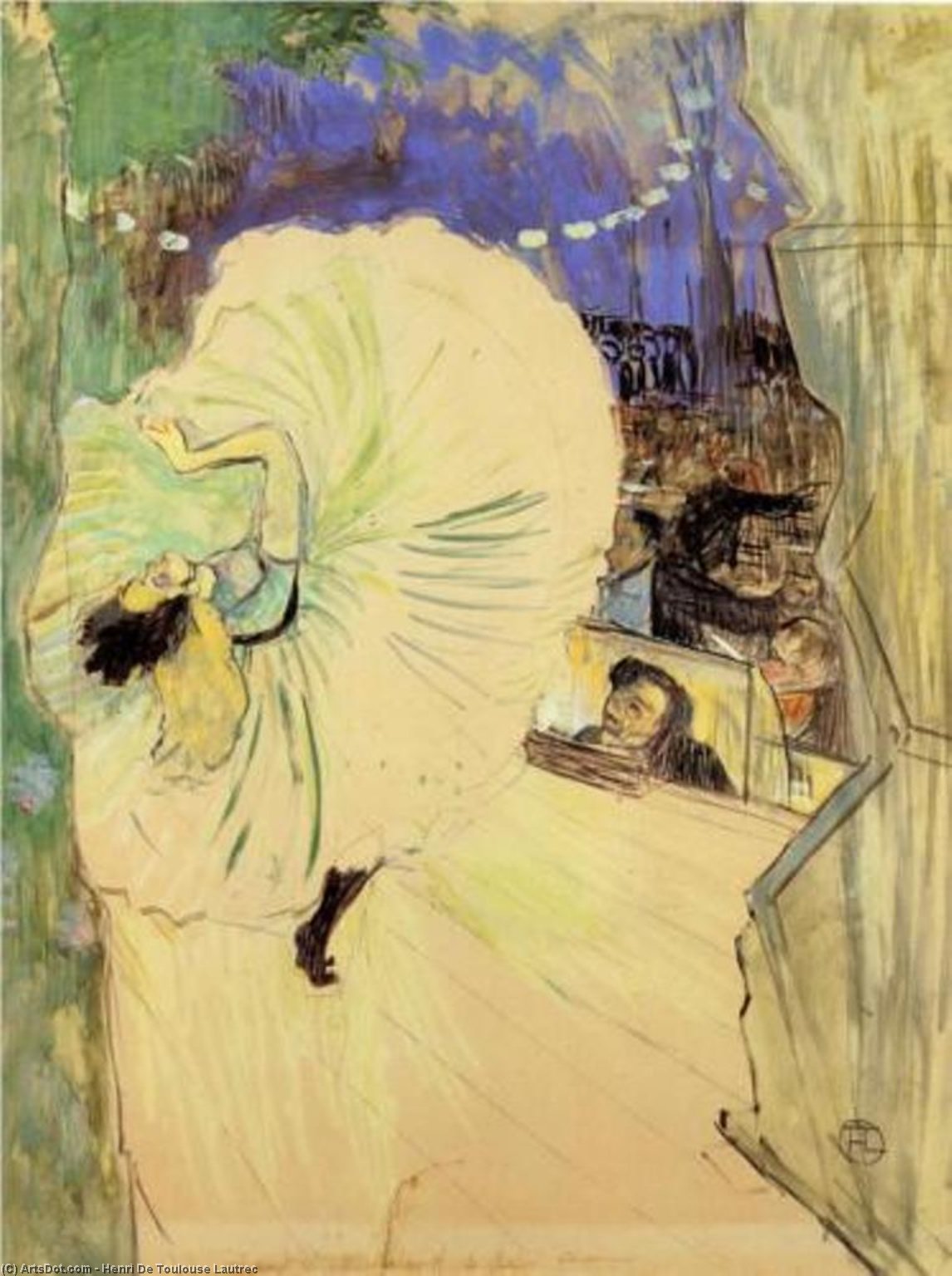
The Cartwheel


 Читать далее
Приобретите цифровое изображение высокого разрешения в улучшенном качестве, которое значительно превосходит онлайн-превью.
Каждый файл тщательно подготавливается нашими специалистами с использованием передовых инструментов и экспертной ручной ретуши. Мы гарантируем исключительную четкость, точную цветопередачу и детальную проработку каждого изображения.
Финальный файл доставляется по электронной почте в течение 72 часов и оптимизирован для немедленного использования в профессиональной среде, при верстке и печати. Это тот же уровень качества, которому доверяют ведущие дизайнерские студии, издательства и галереи.
Цифровое изображение
Скачайте файл высокого разрешения для личного использования, печати и творческих проектов. ( Перейти к печати Купить картину ручной работы)
Включено в каждый заказ цифровых изображений
Гарантия экспертной цифровой доставки
Выбирая ArtsDot.com, вы получаете не просто изображение — вы приобретаете профессионально обработанное цифровое произведение искусства, созданное с безупречной точностью и под защитой гарантии качества. Вот всё, что автоматически входит в ваш заказ:

Мгновенная доставка по e-mail
Ваш цифровой файл в высоком разрешении будет отправлен вам по электронной почте в течение 72 часов после оформления заказа — и сразу станет доступен для использования.

Цифровой файл с ИИ-улучшением
Ваше произведение искусства проходит профессиональную оптимизацию с использованием передовых инструментов ИИ и ручной обработки, что гарантирует максимальную детализацию, четкость и точность цветопередачи.

Бессрочная бесплатная повторная доставка
Случайно удалили или потеряли файл? Не беспокойтесь — мы отправим его вам повторно в любое время и совершенно бесплатно.

Без импортных пошлин — навсегда
Наслаждайтесь вашим произведением искусства мгновенно без таможенных пошлин, сборов или затрат на доставку — цифровые загрузки всегда не облагаются налогом.

Гарантия точности цветопередачи
Мы гарантируем, что ваше цифровое изображение максимально точно передает оригинальные цвета благодаря использованию профессиональных инструментов и систем управления цветом.

Гарантия удовлетворенности 100 дней
Если вы не будете удовлетворены своим цифровым изображением, мы внесем правки или вернем 100% стоимости в течение 100 дней — без лишних вопросов.

100% Гарантия возврата средств
Не удовлетворены покупкой? Получите полный возврат средств в течение 100 дней после получения цифрового файла — без лишних вопросов.

Скидки на оптовые заказы
Купите 3 изображения, сэкономьте 10% — Купите 5, сэкономьте 15% — Купите 10+, сэкономьте 20%. Отличное решение для творческих проектов, галерей и агентств.
The Cartwheel: A Parisian Moment Frozen in Time
Henri de Toulouse-Lautrec’s “The Cartwheel,” painted in 1893, is more than just a depiction of a woman enjoying a fleeting moment on the streets of Montmartre; it's a vibrant snapshot of bohemian life at the turn of the century. The painting immediately draws the eye to its central figure – a young woman radiating youthful energy as she executes a perfect cartwheel against the backdrop of a bustling Parisian street scene. Her flowing dress, rendered in delicate shades of pink and white, catches the light, emphasizing her movement and grace. The surrounding figures, observing with amusement and delight, add to the sense of spontaneous joy and social interaction that defined Montmartre’s artistic community.
Toulouse-Lautrec's distinctive style is immediately recognizable in “The Cartwheel.” He employs a loose, almost sketch-like technique, prioritizing capturing movement and atmosphere over meticulous detail. The brushstrokes are visible, contributing to the painting’s dynamic quality and conveying a sense of immediacy. His use of color is bold yet harmonious – vibrant reds and blues contrast with softer pastels, creating a visually stimulating composition. Notice how he uses light and shadow to sculpt the figures and define their forms, adding depth and realism to this seemingly simple scene.
A Window into Montmartre’s Bohemian Soul
To fully appreciate “The Cartwheel,” it's crucial to understand its historical context. 1893 Paris was a crucible of artistic innovation, fueled by the rise of Impressionism and Post-Impressionism. Montmartre, in particular, had become a magnet for artists, writers, and performers – a haven for those seeking alternative lifestyles outside the constraints of bourgeois society. Toulouse-Lautrec himself became deeply embedded within this vibrant community, documenting its characters and scenes with an unparalleled intimacy.
The painting’s subject matter—a young woman engaged in playful movement—reflects the era's fascination with leisure and entertainment. The presence of the chairs and the cup suggests a moment of respite, perhaps a brief pause before continuing their day. It’s a scene that captures the spirit of carefree enjoyment and social interaction so central to Montmartre’s identity.
Symbolism and Emotional Resonance
Beyond its immediate visual appeal, “The Cartwheel” carries subtle symbolic weight. The cartwheel itself can be interpreted as representing youthful exuberance, freedom, and a rejection of societal norms. The woman's joyful expression embodies the spirit of rebellion and self-expression that characterized Montmartre’s artistic community. Toulouse-Lautrec masterfully captures not just a physical action but also an emotional state – a moment of pure delight and uninhibited movement.
The inclusion of the observing figures adds another layer to the painting's narrative, suggesting a shared experience of joy and camaraderie. It’s a scene that invites us to participate in this fleeting moment, reminding us of the importance of embracing spontaneity and appreciating simple pleasures. “The Cartwheel” is a testament to Toulouse-Lautrec’s ability to transform everyday moments into enduring works of art.
A Reproduction for Your Collection
ArtsDot offers meticulously hand-painted reproductions of “The Cartwheel,” ensuring that you own an authentic piece of art history. Our skilled artisans replicate Toulouse-Lautrec's unique style and techniques with the utmost care, producing a reproduction that captures the original’s vibrancy and emotional depth. Available in various sizes to suit your space and budget, this artwork is perfect for collectors, interior designers, or anyone seeking to bring a touch of Parisian charm into their home.
Похожие произведения
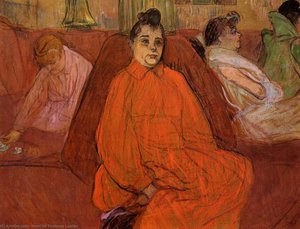
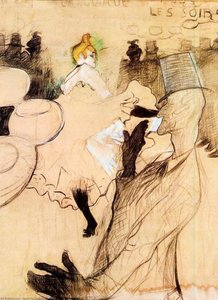
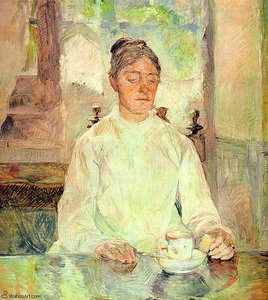
Биография художника
Henri de Toulouse-Lautrec: A Life Painted in Parisian Shadows
Henri Marie Raymond de Toulouse-Lautrec-Monfa, universally known as Toulouse-Lautrec, remains one of the most captivating and enigmatic figures of late 19th-century France. Born into a crumbling aristocratic lineage in Albi on November 24, 1864, his life was a poignant blend of privilege and profound physical limitation. A rare genetic condition – suspected to be pycnodysostosis, though the exact diagnosis remains debated – dramatically stunted his leg growth, resulting in a disproportionate physique that profoundly shaped his artistic vision and his perception of the world. Rather than succumbing to despair, Toulouse-Lautrec channeled this unique perspective into an intensely observant and empathetic engagement with the marginalized inhabitants of Parisian society—the dancers, prostitutes, and performers who populated the vibrant, often scandalous, world of Montmartre. His aristocratic background afforded him access to artistic training, yet it was the raw energy and unvarnished realities of Montmartre that truly ignited his creative spirit, propelling him beyond academic constraints and into a realm of unprecedented artistic freedom.From Formal Training to Bohemian Immersion
Toulouse-Lautrec’s formal artistic education began in Paris under the tutelage of Léon Bonnat and later Fernand Cormon. While he diligently mastered the technical skills expected of a Salon painter – precise draftsmanship, tonal harmony, and careful observation – it was his immersion into the bohemian heart of Montmartre that irrevocably altered his trajectory. He deliberately rejected the prevailing academic focus on historical or mythological subjects, choosing instead to capture the everyday dramas unfolding around him with startling immediacy. His gaze turned towards the dancers at the Moulin Rouge, the prostitutes of the rue des Moulins, the circus performers and café singers who constituted the colorful tapestry of Parisian nightlife. This wasn’t merely a detached observation; it was an active engagement—a deep dive into a world often deliberately ignored by polite society. Toulouse-Lautrec didn't simply *paint* these people; he inhabited their spaces, striving to understand their vulnerabilities, their resilience, and their unique beauty. His early works demonstrate a clear foundation in academic technique, but they quickly evolve, embracing a more daring and unconventional style—a stylistic shift heavily influenced by the evocative imagery of Japanese woodblock prints, which were then gaining popularity throughout Europe, characterized by bold compositions, flattened perspectives, and an emphasis on line.The Language of Line and Color: Defining a Distinctive Style
Toulouse-Lautrec’s artistic innovations are immediately apparent in his distinctive style. He was a master of line—not merely to delineate form but to convey movement, emotion, and character with remarkable fluidity. His lines seemed to vibrate with energy, capturing the fleeting moments of Parisian life. His color palette, while often muted and subtly shaded, possessed an extraordinary vibrancy – a carefully orchestrated blend of ochres, blues, and greens that captured the artificial glow of gaslight, the smoky atmosphere of cabaret halls, and the intimate lighting of bedrooms. He was particularly adept at using lithography—a technique he embraced with enthusiasm—recognizing its potential for mass reproduction while simultaneously allowing him to experiment with intricate detail and expressive textures. This medium enabled him to create a vast body of work – over 400 prints and 31 posters – that cemented his reputation as a chronicler of modern life, transforming advertising into a form of fine art. His posters—for the Moulin Rouge, Jane Avril, Yvette Guilbert, and other prominent figures—were not simply promotional materials; they were meticulously crafted works of art, instantly recognizable for their dynamic compositions, striking imagery, and captivating energy. The iconic *La Blanchisseuse*, sold at auction for $22.4 million in 2005, stands as a testament to his early talent, but it is the later depictions of Montmartre—a vibrant microcosm of Parisian society—that truly define his legacy.A Portrait of an Outsider: Life and Legacy
Toulouse-Lautrec’s life was tragically cut short on September 9, 1901, at the age of 36, a consequence of years battling alcoholism and syphilis. Despite this premature demise, his impact on the art world is immeasurable. He stands as a pivotal figure in the transition from Impressionism to modern art—a bridge between the fleeting impressions of the past and the subjective explorations of the future. He was recognized alongside Cézanne, Van Gogh, Gauguin, and Seurat as a key Post-Impressionist painter, each pushing the boundaries of artistic expression. Toulouse-Lautrec’s influence can be seen in everything from early 20th-century illustration to contemporary graphic design—a testament to his enduring appeal. He didn't merely paint what he saw; he revealed a hidden world—a vibrant and often contradictory portrait of Parisian society, challenging conventional notions of beauty and morality. His work continues to resonate today, reminding us of the power of art to illuminate the human condition in all its complexity and contradiction.Exploring Toulouse-Lautrec’s World Further
- Discover a comprehensive collection of his artwork at /en/artists/comte-henri-marie-raymond-de-toulouse-lautrec-monfa.
- Delve into the world of Post-Impressionism and its key artists at /en/art-movements/post-impressionism.
- Learn more about his life and artistic journey through resources like Wikipedia: https://en.wikipedia.org/wiki/Henri_de_Toulouse-Lautrec
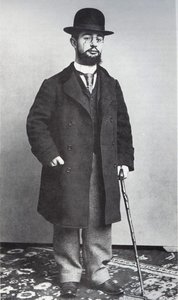
comte henri marie raymond de toulouse-lautrec-monfa
1864 - 1901 , Франция
Основные сведения
- Artistic Movement Or Style: Постимпрессионизм
- Artists Or Movements Influenced By This Artist: ['Пост-импрессионизм']
- Artists Who Influenced This Artist:
- Леон Бонна
- Фернан Кормон
- Date Of Birth: 24 ноября 1864 г.
- Date Of Death: 9 сентября 1901 г.
- Full Name: Henri Marie Raymond de Toulouse-Lautrec-Monfa
- Nationality: Француз
- Notable Artworks:
- La Blanchisseuse
- В тени цирка
- Женщина в постели
- Place Of Birth: Альби, Франция