

 Предпросмотр
 Поделиться
 Поделиться
 Детали произведения

 Скачать
 Похожие работы
 Рентгенография
 Слайд-шоу
 Статистика
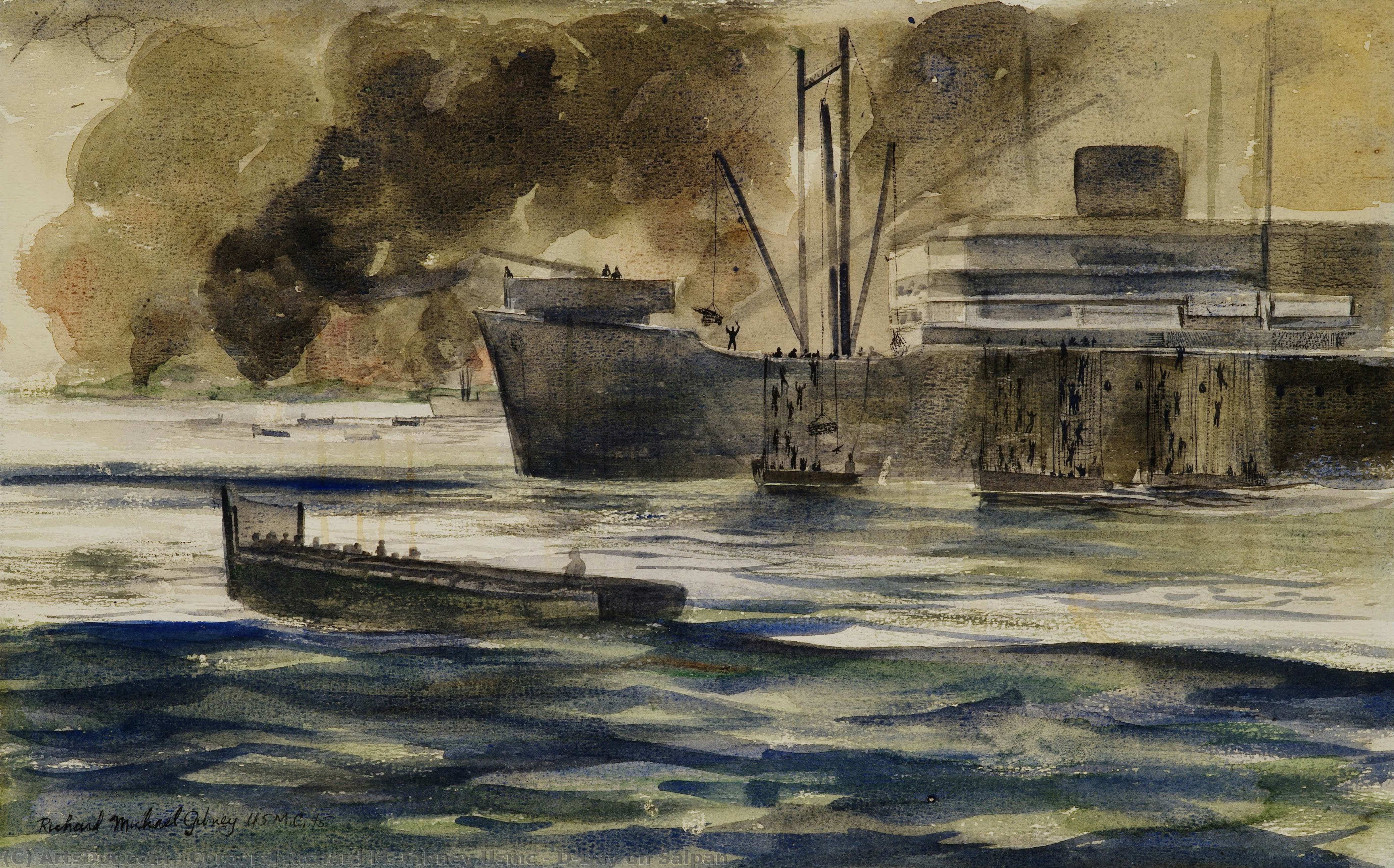
D-Day on Saipan


 Читать далее
Жикле / Арт-принт
Печать (жикле) или холст музейного качества с быстрыми сроками изготовления и широким выбором вариантов отделки. ( Купить картину ручной работы Перейти к цифровым изображениям)




P118B $10

P118H $10

P118W $10

P438Z $10

P508JH $12

P508YH $12

P805H $10

P805Z $10

P919BZ $10

P919G $10

P919XJ $10

P959ZH $10

P968JZ $12

W106C $8

W218G $10

W218JH $8

W218Y $10

W307PJ $10

W316G $10

W316PJ $8

W316Y $10

W398PJ $8

W4111J $10

W500HY $15

W500JH $15

W692G $12

W849H $8

W940BG $15

W953PJ $8




Выберите один из наших стандартных размеров, соответствующих оригинальным пропорциям произведения искусства.

Вы можете указать свои собственные размеры, чтобы репродукция идеально подошла под конкретную раму или пространство. Если выбранный вами размер не будет соответствовать пропорциям оригинала, мы либо обрежем произведение, либо дополним изображение зеркальным отражением краев или однотонной заливкой. Перед началом производства вам будет отправлен цифровой макет для утверждения.
Пожалуйста, обратите внимание, что предварительный просмотр на экране не отображает фактическую обрезку или расширение изображения. Только макет точно покажет финальную композицию.
Несмотря на возможность заказа индивидуальных размеров, мы рекомендуем выбирать размер из предопределенного списка, чтобы сохранить оригинальные пропорции.
Доставка по всему миру () за 2 недели вместо стандартных 4/5 недель. (12 Сентябрь)

Бесплатная экспресс-доставка по всему миру

Высококачественный льняной холст

Полное страхование доставки

Гарантия возмещения таможенных пошлин

Гарантия точного соответствия цветов

100-дневная политика возврата (только при обнаружении дефектов)

Гарантия возврата 100% средств

Предложение оптовых скидок
 Вариант со стеклом доступен только для размеров менее 110 см

D-Day on Saipan
Жикле / Арт-принт
Размер репродукции
-


Итоговая стоимость
$ 62
A Witness to History: The Poignant Waters of Saipan
In the evocative watercolor D-Day on Saipan, we are transported back to the tumultuous summer of 1945, where the boundaries between military duty and artistic observation blur into a singular, breathtaking moment. Created by Corporal Richard M. Gibney, a member of the 1st Battalion, 18th Marines, this piece serves as more than just a historical record; it is a visceral window into the Pacific Theater of World War II. The painting captures a sprawling maritime scene where a massive vessel, perhaps a battleship or a heavy cargo ship, dominates the horizon, its silhouette shrouded in the drifting plumes of smoke that signal the chaos of conflict. Around this central titan, smaller boats navigate the undulating waves, creating a sense of frantic movement and organized desperation that defines the amphibious landings of the era.
The technique employed by Gibney utilizes the delicate, translucent nature of watercolor to convey the heavy atmosphere of war. Unlike the sharp, clinical lines of a photograph, the soft edges and bleeding pigments allow the smoke to merge seamlessly with the sea spray, suggesting the uncertainty and fog of battle. The artist’s ability to balance the immense scale of the naval fleet with the minute, scattered figures of crew members and passengers adds a profound layer of human vulnerability to the composition. Through these fluid brushstrokes, the ocean becomes both a theater of war and a vast, indifferent witness to the unfolding drama.
The Intersection of Combat and Creativity
To understand the emotional weight of this work, one must consider the hand that held the brush. Richard M. Gibney was not merely an observer from afar; he was a demolitions engineer who lived through the brutal realities of Tarawa, Kwajalein, and Okinawa. This firsthand experience imbues D-Day on Saipan with an authenticity that cannot be manufactured. There is a haunting quality to the way the figures are positioned—some clustered in groups, others isolated against the vastness of the Pacific—which mirrors the psychological state of soldiers caught between the adrenaline of invasion and the terrifying solitude of the sea. The painting captures a moment of intense activity, yet beneath the surface movement lies a profound sense of historical gravity.
For collectors and enthusiasts of military art, this piece offers a rare opportunity to possess a fragment of lived history. It is an artwork that transcends simple decoration, offering instead a narrative of resilience and the transformative power of the artist's gaze. The interplay of light on the water and the dark, somber tones of the smoke create a chiaroscuro effect that draws the viewer into the heart of the Pacific campaign. Whether displayed in a private gallery or a sophisticated study, this reproduction serves as a powerful conversation piece, inviting contemplation on the cost of conflict and the enduring legacy of those who bore witness to it.
Похожие произведения
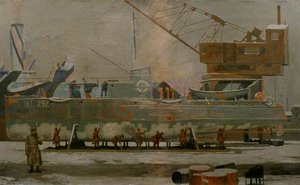
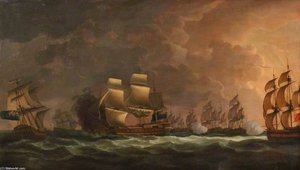
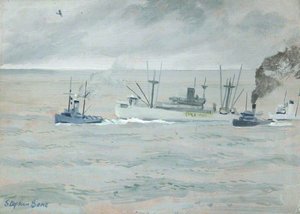
Биография художника
Richard M. Gibney: A Marine’s Brushstrokes of War
Corporal Richard M. Gibney (1922 – 2000) wasn't merely a soldier during World War II; he was a witness, a recorder, and ultimately, an artist who transformed the brutal realities of combat into poignant visual narratives. Born in Saratoga Springs, New York, his early life hinted at a creative spirit—a local art teacher, commercial artist, and curator for the Canajoharie Museum – experiences that would profoundly shape his artistic trajectory. His journey from demolitions engineer to Marine Art Program participant underscores a remarkable confluence of military service and artistic ambition, leading him directly into the heart of one of history’s most defining conflicts.
Gibney's induction into the United States Marines in October 1942 marked the beginning of an extraordinary chapter. He was assigned to 1st Battalion, 18th Marines, 2nd Marine Division, and quickly found himself thrust into the maelstrom of the Pacific Theater. He participated in some of the war’s most pivotal battles: Tarawa, Kwajalein Atoll, Marshall Islands, Tinian, Marianas Islands, Saipan, and ultimately, Okinawa – a crucible where courage, suffering, and resilience were forged daily. It was within this environment of intense action that Gibney began to document his experiences through art, not as a detached observer, but as an active participant grappling with the human cost of war.
The Crucible of Combat Art
Gibney’s artistic approach wasn't about glorifying warfare; it was about capturing its raw essence. He eschewed romanticized depictions, instead focusing on the gritty details – the mud-caked faces of his fellow Marines, the shattered landscapes, and the quiet moments of camaraderie amidst chaos. His work during the battles of Saipan, Tinian, and Okinawa is particularly noteworthy for its stark realism and emotional depth. The “Westlock Tragedy,” a devastating ship explosion that claimed many lives, stands as a testament to Gibney’s ability to convey both horror and humanity within a single image. He meticulously sketched and painted on the front lines, often under fire, transforming fleeting moments into enduring records of war.
His experiences during these campaigns profoundly influenced his artistic development. He honed his skills at Syracuse University and later refined them further at Pennsylvania Academy of Fine Arts and through European travel, studying stained glass and frescoes – influences that would later manifest in the stunning stained-glass windows he designed for the chapel at Parris Island Marine Corps Base. These windows, a monumental undertaking, showcased his mastery of color, light, and narrative, reflecting both the solemnity of faith and the spirit of the Marines.
“The Odyssey” and Beyond
Following World War II, Gibney continued to pursue his artistic passions, creating public murals across the United States – a testament to his commitment to sharing his experiences. However, it was in the 1990s that he embarked on what he considered his magnum opus: “The Odyssey,” a semi-autobiographical series of 52 paintings chronicling the journey of a young Marine through the war. This ambitious project offered a deeply personal reflection on his wartime service, blending memory, emotion, and artistic skill to create a powerful narrative.
Gibney’s legacy extends beyond his individual artworks. He was one of over 100 “combat artists” who served during World War II, documenting the war effort through their unique perspectives. His work is featured in the PBS documentary "They Drew Fire," which explores the experiences of these artists and highlights their contributions to historical understanding. His dedication to preserving the stories of his fellow Marines cemented his place as a significant figure in both the art world and the Marine Corps community.
A Lasting Impact
Richard M. Gibney’s life and work serve as a poignant reminder of the intersection between military service, artistic expression, and the enduring power of human experience. His paintings are not simply depictions of war; they are testaments to courage, resilience, and the profound impact of conflict on those who witness it firsthand. His commitment to capturing these realities with honesty and sensitivity ensures that his art will continue to resonate with audiences for generations to come. The Patrons’ Museum & Educational Center in Gloucester, Massachusetts, houses a bronze bust of Gibney, a fitting tribute to a man who transformed the horrors of war into enduring works of art.
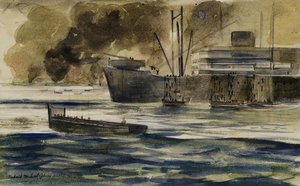
corporal richard m. gibney usmc
1922 - 2000 , United States of America
Основные сведения
- Artistic Movement Or Style: WWII Combat Art
- Artists Who Influenced This Artist: ['None specified],\n "Artists or movements influenced by this artist": [None specified']
- Date Of Birth: 1922-08-27
- Date Of Death: 2000-10-23
- Full Name: Richard M. Gibney
- Nationality: American
- Notable Artworks:
- Run For the Beach, Saipan
- The Oddyssey
- Place Of Birth: Saratoga Springs, USA
Похожие статьи

Ephemeral Visions: Exploring the History & Emotional Resonance of Watercolor Painting
Explore the captivating history of watercolor painting, from ancient techniques to modern masters like Kandinsky & Blake. Discover essential artists, collecting tips & the emotional power of this luminous medium. Expert insights for art enthusiasts.

Ephemeral Visions: Exploring the Artistic Legacy & Contemporary Practice of Watercolor Painting
Explore the captivating world of watercolor painting! Discover its rich history, essential techniques, influential artists & collecting tips. A comprehensive guide for art enthusiasts from ArtsDot.

Ephemeral Visions: Exploring the Artistic Legacy & Nuances of Watercolor Painting
Explore the captivating world of watercolor painting! Discover its rich history, essential techniques, influential artists & collecting tips from art experts. A comprehensive guide for enthusiasts.

Топ-10 легендарных акварелей, изменивших искусство навсегда | ArtsDot
Погрузитесь в мир акварели! Откройте топ-10 легендарных картин Turner, Monet и других великих художников. История искусства, техники живописи и вдохновение для вашего интерьера. Репродукции музейного качества на ArtsDot.com.
Доставка и возврат
APS обеспечивает профессиональную международную доставку произведений искусства с уходом на уровне музея, полным отслеживанием и 100-дневной гарантией возврата денег. От поддержки таможни до Priority Production — доверьтесь прозрачному сервису, безопасной упаковке и надежной доставке для коллекционеров, дизайнеров и галерей.