


 Предпросмотр
 Поделиться
 Поделиться
 Детали произведения

 Скачать
 Похожие работы
 Рентгенография
 Слайд-шоу
 Статистика
D. Catarina of Austria, Queen of Portugal


 Читать далее
Приобретите цифровое изображение высокого разрешения в улучшенном качестве, которое значительно превосходит онлайн-превью.
Каждый файл тщательно подготавливается нашими специалистами с использованием передовых инструментов и экспертной ручной ретуши. Мы гарантируем исключительную четкость, точную цветопередачу и детальную проработку каждого изображения.
Финальный файл доставляется по электронной почте в течение 72 часов и оптимизирован для немедленного использования в профессиональной среде, при верстке и печати. Это тот же уровень качества, которому доверяют ведущие дизайнерские студии, издательства и галереи.
Цифровое изображение
Скачайте файл высокого разрешения для личного использования, печати и творческих проектов. ( Перейти к печати Купить картину ручной работы)
Включено в каждый заказ цифровых изображений
Гарантия экспертной цифровой доставки
Выбирая ArtsDot.com, вы получаете не просто изображение — вы приобретаете профессионально обработанное цифровое произведение искусства, созданное с безупречной точностью и под защитой гарантии качества. Вот всё, что автоматически входит в ваш заказ:

Мгновенная доставка по e-mail
Ваш цифровой файл в высоком разрешении будет отправлен вам по электронной почте в течение 72 часов после оформления заказа — и сразу станет доступен для использования.

Цифровой файл с ИИ-улучшением
Ваше произведение искусства проходит профессиональную оптимизацию с использованием передовых инструментов ИИ и ручной обработки, что гарантирует максимальную детализацию, четкость и точность цветопередачи.

Бессрочная бесплатная повторная доставка
Случайно удалили или потеряли файл? Не беспокойтесь — мы отправим его вам повторно в любое время и совершенно бесплатно.

Без импортных пошлин — навсегда
Наслаждайтесь вашим произведением искусства мгновенно без таможенных пошлин, сборов или затрат на доставку — цифровые загрузки всегда не облагаются налогом.

Гарантия точности цветопередачи
Мы гарантируем, что ваше цифровое изображение максимально точно передает оригинальные цвета благодаря использованию профессиональных инструментов и систем управления цветом.

Гарантия удовлетворенности 100 дней
Если вы не будете удовлетворены своим цифровым изображением, мы внесем правки или вернем 100% стоимости в течение 100 дней — без лишних вопросов.

100% Гарантия возврата средств
Не удовлетворены покупкой? Получите полный возврат средств в течение 100 дней после получения цифрового файла — без лишних вопросов.

Скидки на оптовые заказы
Купите 3 изображения, сэкономьте 10% — Купите 5, сэкономьте 15% — Купите 10+, сэкономьте 20%. Отличное решение для творческих проектов, галерей и агентств.
A Vision of Royal Majesty
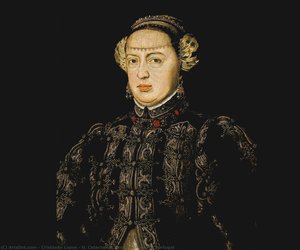
In the quiet, shadowed corridors of history, few images command as much silent authority as D. Catarina of Austria, Queen of Portugal. Painted around 1500 by the skilled hand of Cristóvão Lopes, this portrait is far more than a mere likeness; it is a profound statement of sovereignty and dynastic continuity. The Queen is captured in a three-quarter view, her presence emerging from a deep, nocturnal background that pushes her figure toward the viewer with startling intimacy. There is an unmistakable gravity in her gaze—an austere, dignified expression that speaks to the heavy mantle of her station as the daughter of Felipe and Joana of Castela and sister to the mighty Emperor Carlos V. To behold this work is to encounter the very essence of Renaissance nobility, where every stitch of fabric and every glint of gold serves to reinforce the divine right of the Portuguese crown.
The artistry of Lopes shines through in the meticulous rendering of texture and light, making this piece a masterpiece of tactile illusion. The Queen is draped in a gown of sumptuous black velvet, a material that absorbs the light only to reveal subtle, shimmering depths through the intricate embroidery of gold thread. This interplay between the dark, matte surfaces and the brilliant metallic accents creates a rhythmic visual movement across her torso. Her attire is crowned by an exquisite coif, adorned with a tiara of pearls and gold, alongside delicate pearl earrings that catch the light like droplets of frozen dew. The technique, likely executed in oil on panel, allows for a precision that captures the crisp edges of her royal regalia and the soft, rounded contours of her face, offering a sensory richness that remains captivating centuries later.
Symbolism and the Legacy of the Royal Workshop
Beyond its aesthetic splendor, the portrait functions as a sophisticated piece of political iconography. During this era, portraits were essential diplomatic tools, used to project power across borders and solidify alliances. This specific work follows the prestigious tradition established by the Master António Moro, whose official portraits of the Portuguese sovereigns served as the definitive prototypes for the court. Lopes, working within the lineage of his father Gregório Lopes, masterfully adapted these models to create a visual language of legitimacy. The pearls and gold are not merely ornaments; they are symbols of purity, wealth, and the unshakeable stability of the realm. The very composition—centered, formal, and unyielding—is designed to inspire awe and respect in the observer.
For the discerning collector or interior designer, this reproduction offers a profound sense of historical weight and timeless elegance. It is an ideal centerpiece for spaces that demand a touch of classical sophistication, such as a formal study, a grand library, or a curated gallery wall. The deep, monochromatic palette of blacks and golds provides a versatile foundation that complements both traditional period interiors and contemporary minimalist settings. Owning a piece that echoes the grandeur of the 16th-century Portuguese court allows one to bring a fragment of the Renaissance into the modern home, fostering an atmosphere of contemplative beauty and enduring prestige.
Похожие произведения
Биография художника
A Royal Brush: The Life and Legacy of Cristóvão Lopes
Cristóvão Lopes, a name resonating softly through the annals of 16th-century Portuguese art, stands as a compelling figure bridging the traditions of his father’s workshop with the burgeoning influences of Northern Renaissance portraiture. Born around 1516 in Lisbon, Portugal, Lopes inherited not merely a profession but a dynasty of artistic skill from Gregório Lopes, who served as royal painter to King Manuel I and later John III. While overshadowed by his more celebrated forebear during his lifetime, Cristóvão’s own contributions proved vital in shaping the visual language of the Portuguese court and religious institutions.
The early years of Lopes' artistic development were undoubtedly steeped in the techniques and style of his father. Gregório Lopes was a master of altarpieces, crafting intricate polyptychs filled with devotional imagery for churches across central Portugal. Following his father’s death in 1550, Cristóvão seamlessly assumed the mantle of royal painter to John III in 1551. This transition wasn't simply an inheritance of title; it signified a continuation of a deeply established artistic lineage. However, unlike his father who focused on large-scale religious works, Cristóvão’s career would become increasingly defined by portraiture—a shift that speaks volumes about the evolving tastes and priorities of the Portuguese court.
The Influence of Antonis Mor and a Changing Style
A pivotal moment in Lopes' artistic trajectory arrived with the arrival of Dutch portrait painter Antonis Mor (Antonio Moro) in Portugal during the 1550s. Commissioned to paint official portraits of the royal family, Mor’s precise realism, elegant compositions, and sophisticated handling of light profoundly impacted Portuguese artists, including Cristóvão Lopes. While direct attribution can be challenging due to the workshop practices of the time—and Lopes' own tendency not to sign his works—scholars believe he actively collaborated with or closely emulated Mor’s style. This influence is evident in a subtle yet discernible shift towards greater naturalism and psychological depth in Lopes’ portraits, moving away from the more stylized conventions prevalent earlier.
The Convent of Madre de Deus in Lisbon houses one of Lopes' most significant achievements: an altarpiece featuring portraits of King John III and his wife, Catherine of Austria. This work exemplifies his ability to capture not just physical likeness but also a sense of regal dignity and inner character. Other royal portraits attributed to him are now carefully preserved within the National Museum of Ancient Art in Lisbon, offering glimpses into the faces that governed Portugal during this period. Beyond portraiture, Lopes continued to undertake religious commissions, such as an allegory of Mercy for the Misericórdia Church in Sesimbra, demonstrating a versatility that extended beyond the confines of courtly representation.
A Legacy Defined by Royal Service and Subtle Innovation
Cristóvão Lopes’ career was inextricably linked to the Portuguese monarchy. His role wasn't merely that of an artist; he was a visual architect of royal image, tasked with crafting representations that projected power, piety, and legitimacy. While his name may not be as instantly recognizable as some of his contemporaries, his importance lies in his ability to adapt and refine artistic styles to suit the needs of his patrons. He skillfully absorbed the lessons of Antonis Mor while maintaining a distinctly Portuguese sensibility.
The challenges inherent in attributing works definitively to Lopes—a consequence of workshop collaborations and the absence of signatures—underscore the complexities of art historical research. Nevertheless, the paintings confidently ascribed to him reveal an artist of considerable talent, capable of both meticulous detail and nuanced psychological observation. His work provides a valuable window into the artistic climate of 16th-century Portugal, reflecting the interplay between local traditions and international influences.
Cristóvão Lopes passed away in Lisbon in 1594, leaving behind a legacy not of grand innovation but of consistent quality and dedicated service. His paintings continue to captivate viewers with their quiet dignity and subtle beauty, serving as enduring testaments to the artistry of a royal brush.
cristóvão lopes
1594 , Portugal
Основные сведения
- Artistic Movement Or Style: Renaissance Painting
- Artists Or Movements Influenced By This Artist: ['Antonis Mor']
- Artists Who Influenced This Artist: ['Gregório Lopes']
- Date Of Birth: c. 1516
- Date Of Death: 1594
- Full Name: Cristóvão Lopes
- Nationality: Portuguese
- Notable Artworks:
- D. Catarina of Austria, Queen of Portugal
- Cristóvão Lopes (attrib). Portrait of King John III
- Lopes Catherine of Habsburg
- Lopes John Madre de Deus
- Place Of Birth: Lisbon, Portugal