

 Предпросмотр
 Поделиться
 Поделиться
 Детали произведения

 Скачать
 Похожие работы
 Рентгенография
 Слайд-шоу
 Статистика
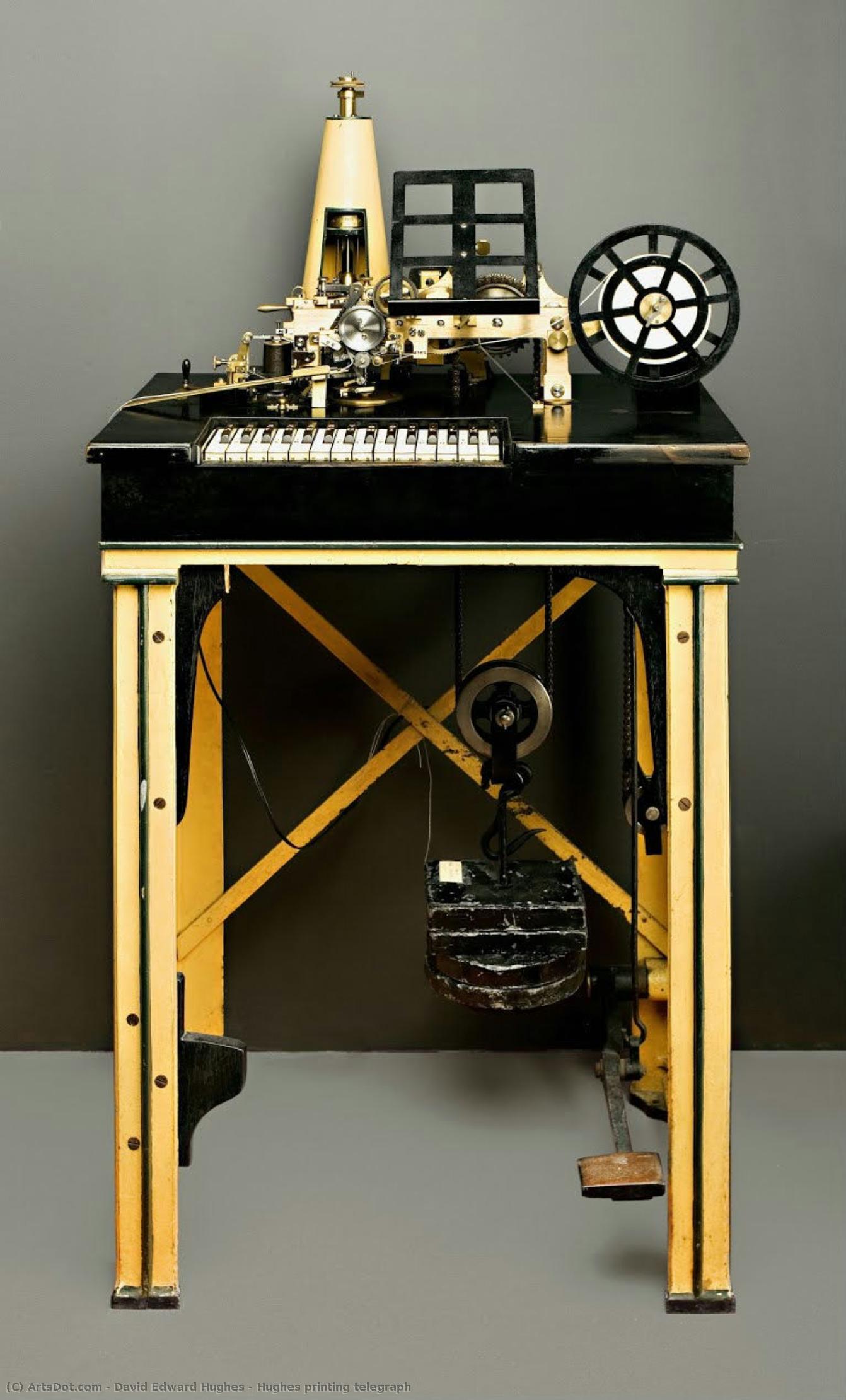
Hughes printing telegraph
 1885
1885 146.0 x 75.0 cm
 Fundação Portuguesa das Comunicações
 Читать далее
Жикле / Арт-принт
Печать (жикле) или холст музейного качества с быстрыми сроками изготовления и широким выбором вариантов отделки. ( Купить картину ручной работы Перейти к цифровым изображениям)




































Выберите один из наших стандартных размеров, соответствующих оригинальным пропорциям произведения искусства.

Вы можете указать свои собственные размеры, чтобы репродукция идеально подошла под конкретную раму или пространство. Если выбранный вами размер не будет соответствовать пропорциям оригинала, мы либо обрежем произведение, либо дополним изображение зеркальным отражением краев или однотонной заливкой. Перед началом производства вам будет отправлен цифровой макет для утверждения.
Пожалуйста, обратите внимание, что предварительный просмотр на экране не отображает фактическую обрезку или расширение изображения. Только макет точно покажет финальную композицию.
Несмотря на возможность заказа индивидуальных размеров, мы рекомендуем выбирать размер из предопределенного списка, чтобы сохранить оригинальные пропорции.
Доставка по всему миру () за 2 недели вместо стандартных 4/5 недель. (11 Сентябрь)

Бесплатная экспресс-доставка по всему миру

Высококачественный льняной холст

Полное страхование доставки

Гарантия возмещения таможенных пошлин

Гарантия точного соответствия цветов

100-дневная политика возврата (только при обнаружении дефектов)

Гарантия возврата 100% средств

Предложение оптовых скидок
 Вариант со стеклом доступен только для размеров менее 110 см

Hughes printing telegraph
Жикле / Арт-принт
Размер репродукции
-


Итоговая стоимость
$ 62
Похожие произведения










Биография художника
A Symphony of Science and Sound: The Life of David Edward Hughes
In the grand tapestry of the nineteenth century, a period defined by the roaring engines of the Industrial Revolution, few figures embodied the harmonious marriage of art and intellect as gracefully as David Edward Hughes. Born in the vibrant atmosphere of London around 1830, Hughes was a man whose very existence seemed tuned to a higher frequency. His early years were steeped in the melodic traditions of a musically gifted family; he was a child prodigy, capable of commanding the harp and the English concertina with a sophistication that belied his tender age. This profound connection to sound would later become the heartbeat of his scientific endeavors, transforming him from a mere musician into one of the most consequential practical experimenters of the Victorian era.
The trajectory of Hughes’s life was shaped by a transatlantic odyssey. As a young child, he emigrated to the United States, a journey that would broaden his horizons and place him in the heart of American academic life. In Kentucky, at the remarkably young age of nineteen, he ascended to a professorship of music at St. Joseph’s College in Bardstown. It was here, amidst the quiet halls of academia, that the seeds of his scientific curiosity began to germinate. He did not merely teach melody; he began to investigate the very physics of vibration and transmission. This period of his life represents a beautiful intersection where the lyrical beauty of music met the rigorous inquiry of natural philosophy, creating a foundation for a career that would eventually bridge the gap between sound and electricity.
The Architecture of Innovation
Hughes’s transition from the concert hall to the laboratory was marked by a series of brilliant, often accidental, breakthroughs. In 1855, driven by a desire to create a machine capable of copying extempore music, he patented the printing telegraph. This device, known as the Hughes Printer, utilized electromagnetism to transmit messages with unprecedented clarity, eventually finding widespread use across the globe through the Western Union Telegraph Company. It was an invention born of musical necessity, yet it became a cornerstone of global communication, proving that the rhythms of notation could be translated into the pulses of electricity.
As he returned to London in 1857, Hughes’s focus shifted toward the invisible frontiers of electromagnetic waves. His work during this era was characterized by an almost poetic sensitivity to the subtle forces of nature. In 1878, he unveiled his improved carbon microphone, a device so sensitive that it could render the microscopic tread of a housefly audible to a vast audience. Perhaps most profoundly, Hughes achieved something that would change history, even if he did not fully grasp its magnitude at the moment. Through his experiments with inductive circuits, he detected what were almost certainly radio transmissions—the invisible whispers of electromagnetic radiation—years before the scientific community had officially recognized their existence. Though skeptics of his time dismissed these phenomena as mere electromagnetic induction, the echoes of his discovery would eventually resonate through the birth of wireless technology.
A Legacy Written in Waves
The historical significance of David Edward Hughes lies not only in the tangible machines he left behind but in the way he expanded the human sensory experience. He was a pioneer who taught us to listen to the invisible. His contributions, ranging from the development of the induction balance—a precursor to modern metal detectors—to his foundational work on the microphone, represent a legacy of pure, unadulterated curiosity.
Reflecting on his life, one finds a man who refused to see boundaries between disciplines. To Hughes, there was no distinction between the resonance of a harp string and the pulse of an electric spark; both were expressions of the same fundamental laws governing our universe. His life remains a testament to the following principles:
- The Unity of Knowledge: The belief that the study of art and the study of science are two sides of the same pursuit of truth.
- The Power of Observation: How a keen, sensitive ear can lead to the discovery of entirely new physical phenomena.
- Generosity of Spirit: His decision to leave the patent for the microphone open to the world, ensuring its widespread adoption for the benefit of all humanity.
Ultimately, David Edward Hughes stands as a luminous figure in the history of science—a man who captured the ephemeral beauty of sound and harnessed it to build the infrastructure of the modern age.
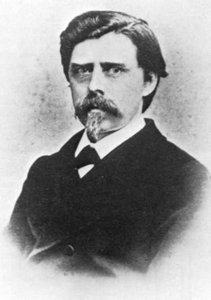
David Edward Hughes
1830 - 1900 , United Kingdom
Основные сведения
- Artistic Movement Or Style: Early Radio Detection
- Artists Or Movements Influenced By This Artist: ['Electromagnetic Radiation']
- Artists Who Influenced This Artist: ['']
- Date Of Birth: 1830-05-16
- Date Of Death: 1900-01-22
- Full Name: David Edward Hughes
- Nationality: British
- Notable Artworks: ['Printing Telegraph']
- Place Of Birth: London, United Kingdom