 Предпросмотр
 Поделиться
 Поделиться
 Детали произведения

 Скачать
 Похожие работы
 Рентгенография
 Слайд-шоу
 Статистика
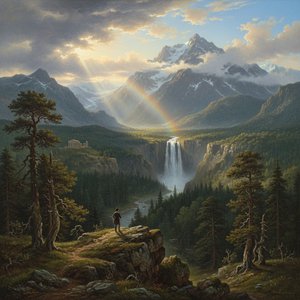
Rocky Mountains and Tired Indians


 Читать далее
Масляная репродукция ручной работы
Картина маслом на холсте в выбранном вами размере и раме, написанная на заказ нашими художниками. ( Перейти к печати Перейти к цифровым изображениям)




































Выберите один из наших стандартных размеров, соответствующих оригинальным пропорциям произведения искусства.

Вы можете указать собственные размеры, чтобы картина идеально вписалась в выбранную раму или пространство. Если выбранный вами размер не соответствует пропорциям оригинала, мы либо обрежем полотно, либо расширим его за счет дополнительных элементов, написанных вручную. Цифровой макет будет отправлен вам на утверждение перед началом производства.
Обратите внимание, что предварительный просмотр на экране не отражает фактическую обрезку или расширение. Только макет точно покажет окончательную композицию.
Хотя доступны индивидуальные размеры, мы рекомендуем выбирать вариант из предопределенного списка, чтобы сохранить исходные пропорции.
После оформления заказа команда ArtsDot.com свяжется с клиентом по электронной почте для уточнения деталей и предоставит предварительный макет
Доставка по всему миру () за 3–4 недели вместо стандартных 5 недель. (11 Сентябрь). Без компромиссов в качестве.

Бесплатная экспресс-доставка по всему миру

Высококачественный льняной холст

Полное страхование доставки

Гарантия возмещения таможенных пошлин

Гарантия точного соответствия цветов

100-дневная политика возврата (только при обнаружении дефектов)

Гарантия возврата 100% средств

Предложение оптовых скидок
 Вариант со стеклом доступен только для размеров менее 110 см

Rocky Mountains and Tired Indians
Техника репродукции
Размер репродукции
-


Итоговая стоимость
$ 263
Rocky Mountains and Tired Indians: A Vision of the American West
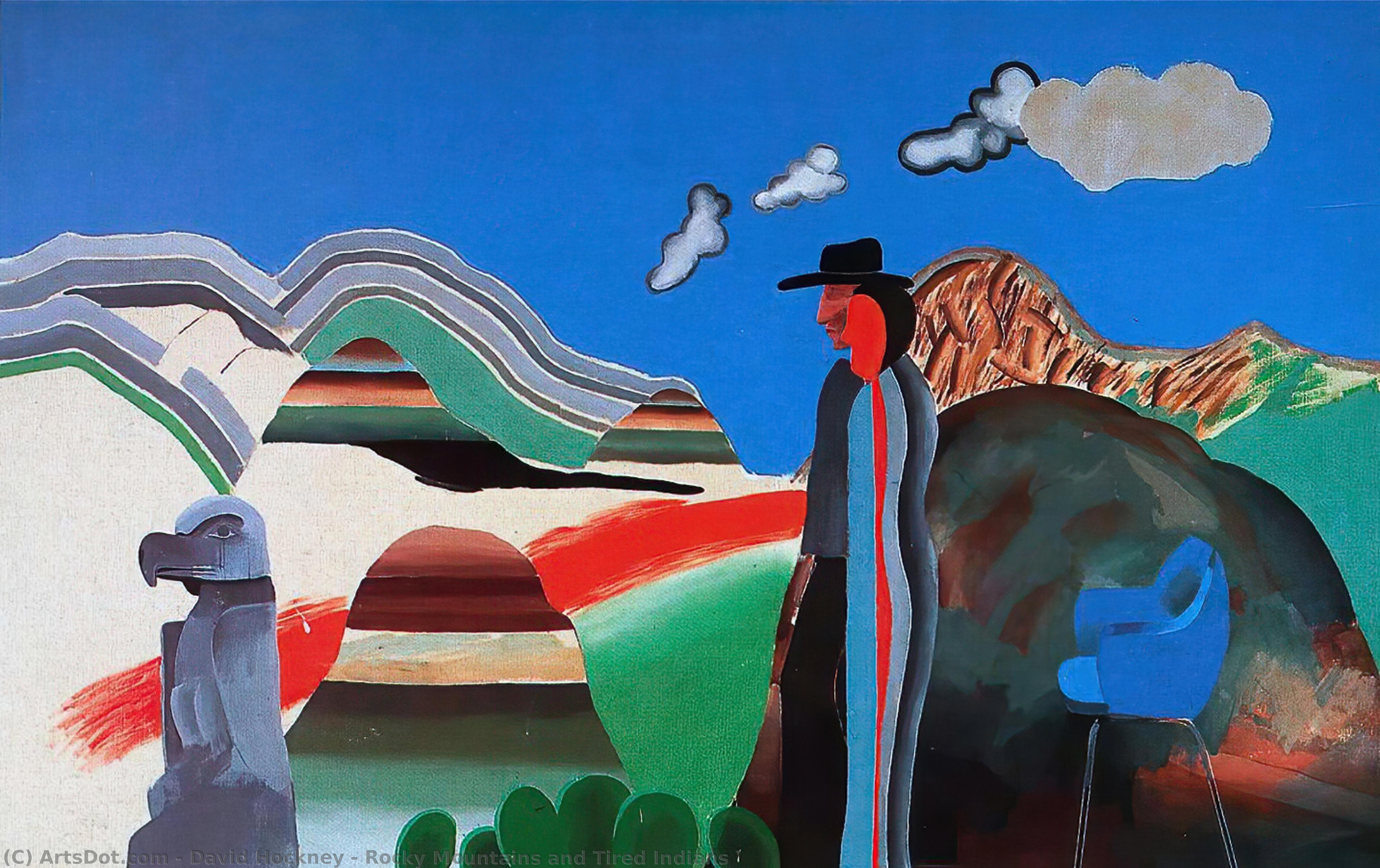
David Hockney’s “Rocky Mountains and Tired Indians” (1965) is more than just a picturesque depiction of the American West; it's a vibrant meditation on perception, isolation, and the burgeoning influence of Pop Art. Painted during Hockney’s extended sojourn in California, this work captures a moment of stark beauty – a rugged mountain range bathed in the golden light of late afternoon, punctuated by the quiet presence of two indigenous figures.
The painting's immediate impact lies in its bold color palette. Hockney eschews the muted tones often associated with landscape paintings of the era, instead employing a riotous array of reds, oranges, and yellows that seem to vibrate with energy. This chromatic intensity was a hallmark of Pop Art’s challenge to traditional artistic conventions, drawing inspiration from advertising and popular culture. The use of acrylic paint allowed for rapid layering and brilliant color saturation – a significant departure from the slower, more laborious techniques favored by many contemporary artists.
A Study in Perspective and Isolation
Hockney's masterful manipulation of perspective immediately draws the viewer into the scene. The mountains dominate the composition, rendered with confident brushstrokes that convey their immense scale and imposing presence. However, it’s the figures – two “tired Indians” as the title suggests – that inject a crucial element of human drama. Their placement on the crest of the mountain, seemingly oblivious to the vastness surrounding them, evokes a powerful sense of isolation and contemplation.
The figures themselves are deliberately ambiguous, almost ghostly in their rendering. This deliberate lack of detail contributes to the painting’s enigmatic quality, inviting viewers to project their own interpretations onto the scene. Hockney was fascinated by the idea of representing reality through simplified forms, a technique he would later explore extensively in his explorations of perspective and spatial relationships.
Symbolism and the American Landscape
“Rocky Mountains and Tired Indians” resonates with the broader themes explored within Caspar David Friedrich’s Romantic landscape paintings – particularly “Rocky Ravine.” Like Friedrich's work, Hockney’s painting utilizes the grandeur of nature to evoke a sense of awe and wonder. However, Hockney’s approach is decidedly more playful and less overtly melancholic. The inclusion of the indigenous figures adds another layer of complexity, prompting reflection on the relationship between humanity and the natural world – a theme particularly relevant in the context of westward expansion and its impact on Native American populations.
The painting's title itself is significant. "Tired Indians" suggests a weariness, perhaps reflecting the displacement and hardship experienced by indigenous peoples during this period. It’s a subtle yet poignant commentary on the historical narrative unfolding within the landscape.
A Legacy of Innovation
David Hockney’s “Rocky Mountains and Tired Indians” stands as a pivotal work in his career, demonstrating his early mastery of color, perspective, and composition. It exemplifies his willingness to challenge artistic conventions and embrace new techniques – ultimately shaping the trajectory of British art in the 20th century. This vibrant reproduction captures not just an image, but the spirit of innovation that defined Hockney’s extraordinary artistic journey.
Похожие произведения
Биография художника
David Hockney: A Life Painted in Light
David Hockney, born July 9, 1937, in Bradford, England, is more than simply a painter; he’s a visual polymath whose career has spanned painting, drawing, printmaking, stage design, and photography. His story begins amidst the grit and determination of Bradford, a landscape that instilled within him a keen observational eye, even as his father, Kenneth Hockney, fostered a spirit of independent thought through conscientious objection during World War II. This early environment shaped a young artist who would consistently challenge conventions and forge his own path. Formal education at Wellington Primary School and Bradford Grammar School laid the foundation for a career that would redefine British art in the 20th and 21st centuries, culminating in studies at Bradford College of Art and later, the prestigious Royal College of Art in London. It was during these formative years that Hockney began to articulate a unique artistic voice, one that blended Pop sensibilities with a distinctly British perspective.The Rise of a Pop Icon and Beyond
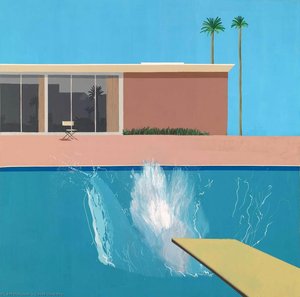
The 1960s witnessed Hockney’s ascent as a pivotal figure within the burgeoning Pop Art movement. However, unlike some contemporaries who wholeheartedly embraced American commercial culture, Hockney brought a uniquely British sensibility to the genre. His work exploded with vibrant color and bold lines, depicting scenes that were both familiar and subtly subversive. A Bigger Splash (1966), perhaps his most iconic early piece, encapsulates this perfectly – a seemingly simple depiction of a swimming pool becomes a meditation on Californian leisure, artifice, and the very act of seeing. This wasn’t merely representation; it was an exploration of how we perceive reality. Critics noted Hockney's masterful use of color theory and compositional techniques—elements that would become hallmarks of his distinctive style. His double portraits, like American Collectors (Fred and Marcia Weisman), demonstrate his remarkable ability to capture not just likeness but also the essence of personality and relationship. The influence of artists such as Francis Bacon – particularly Bacon’s expressive brushstrokes and psychological depth – can be discerned in Hockney's early works, signaling a shared preoccupation with capturing human emotion.Experimentation, Innovation, and the Rescue of Painting
Hockney’s artistic curiosity has never been confined to a single medium. Throughout his career, he’s relentlessly experimented with new technologies and approaches. From his early embrace of lithography and etching to his later explorations of photography – particularly his use of Polaroid composites in the 1980s – Hockney consistently pushed the boundaries of what art could be. He famously declared painting wasn’t dead but needed “rescuing” from its own conventions, leading him to develop innovative techniques like perspective distortions and fragmented viewpoints. This desire to revitalize painting led to ambitious projects such as Pearblossom Hwy., 11–18th April 1986, a complex photomontage that challenged traditional notions of space and representation. Hockney’s meticulous attention to detail—evident in his landscapes and portraits alike—contrasted sharply with the stylistic trends of his time, establishing him as an uncompromising champion of artistic integrity.Recognition, Legacy, and Enduring Influence
David Hockney’s contributions to the art world have been widely recognized throughout his illustrious career. He was appointed Order of the Companion of Honour (CH) in 2018, a testament to his profound impact on British culture. Prior to that, he was elected a Fellow of the Royal Society (FRS) in 2003 and received the Laureate of the Praemium Imperiale for Painting in 2000. His works are held in major museum collections worldwide, and can be readily accessed through online platforms, ensuring his art continues to inspire new generations. Hockney’s influence extends beyond the visual arts; he has become a cultural icon, celebrated for his wit, intelligence, and unwavering commitment to artistic exploration. He remains an active force in the art world, continually challenging expectations and inspiring artists across disciplines. His legacy is secured not only by his stunning canvases but also by his pioneering spirit—a refusal to accept artistic limitations and a steadfast belief in the transformative power of visual expression.Further Explorations
- Place Furstenberg, Paris: A captivating example of Hockney’s interior scenes, showcasing his mastery of color and composition.
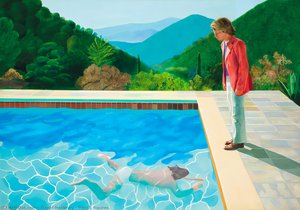
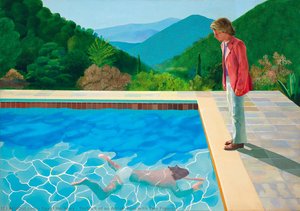
- Portrait of an Artist (Pool with Two Figures): This monumental painting—a landmark achievement in British art—demonstrates Hockney's unparalleled ability to convey emotion through formal innovation.
- We Two Boys Together Clinging: A poignant depiction of homosexual intimacy, reflecting Hockney’s courageous exploration of personal themes and challenging societal prejudices.
- Discover more about fellow British Pop artist Pauline Boty—a kindred spirit who shared Hockney's commitment to artistic experimentation.
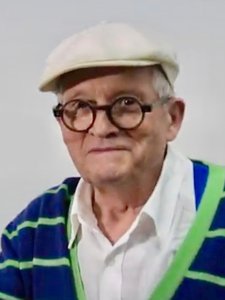
Дэвид Хокней
1937 - , Великобритания
Основные сведения
- Artistic Movement Or Style: Поп-арт
- Artists Or Movements Influenced By This Artist: ['Импрессионизм']
- Artists Who Influenced This Artist:
- Фрэнк Лисли
- Паулина Боты
- Date Of Birth: 9 июля 1937 г.
- Full Name: David Hockney
- Nationality: британский
- Notable Artworks:
- Бассейн. Две фигуры
- Большой разброс
- Портрет художника
- Place Of Birth: Брэдфорд, Великобритания
Похожие статьи

Evocations of Place: A Historical Journey Through Landscape Art
Explore the rich history of landscape art with ArtsDot. Discover renowned artists, movements like Impressionism & Romanticism, and expert guidance for collecting timeless pieces. Find your perfect serene escape today!
David Hockney: A Retrospective on Pop Art's Chronicler of Light, Space, and the Everyday
Explore the life & work of David Hockney, Pop Art's master chronicler. Discover his iconic paintings, Californian landscapes, and lasting influence on modern art. Expert analysis for collectors.
Evoking Nature's Sublime: A Comprehensive Exploration of 19th-Century Landscape Painting
Explore the captivating world of 19th-century landscape painting! Discover renowned artists like Friedrich & Monet, key movements, and find the perfect artwork to bring nature's serenity into your home. Expert insights at ArtsDot.

Романтический пейзаж: 10 шедевров, изменивших искусство | ArtsDot.com
Погрузитесь в мир романтического пейзажа! 10 шедевров Фридриха, Тёрнера и других гениев. Узнайте историю создания культовых картин и вдохновитесь для декора интерьера. Репродукции высокого качества на ArtsDot.com.

Джон Констебль: 25 шедевров английского пейзажа для вашего интерьера
Погрузитесь в мир английского пейзажа с Джоном Констеблом! 25 шедевров романтизма, история создания картин и вдохновение для вашего интерьера. Репродукции высокого качества на ArtsDot.com – искусство для ценителей.