

 Предпросмотр
 Поделиться
 Поделиться
 Детали произведения

 Скачать
 Похожие работы
 Рентгенография
 Слайд-шоу
 Статистика
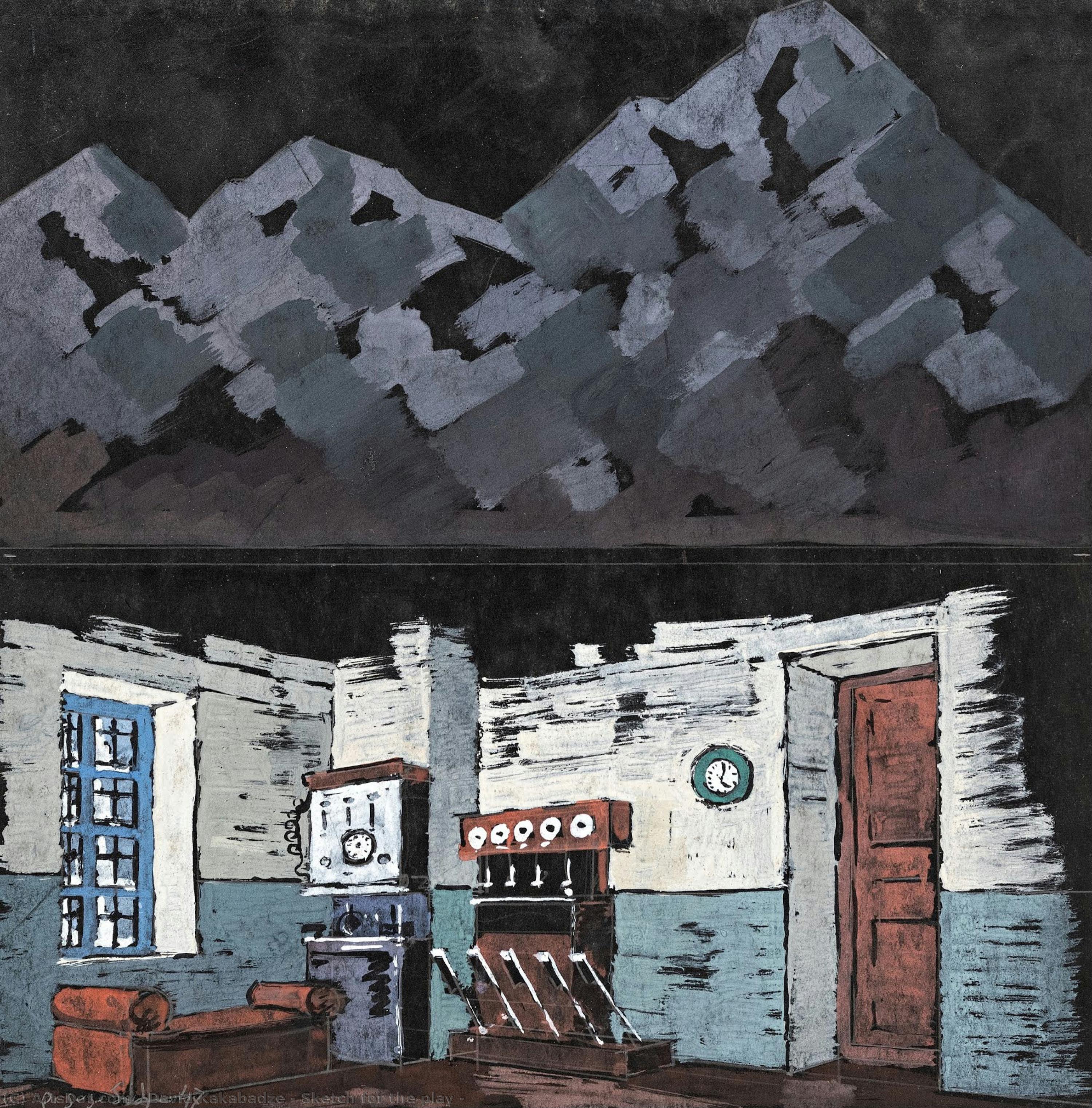
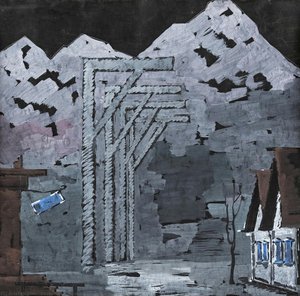
Sketch for the play
 Acrylic On Canvas
- WallArt
- Expressionism
 1947
1947 30.0 x 30.0 cm
 Дворец искусств Грузии - Музей культурного наследия
 Читать далее
Приобретите цифровое изображение высокого разрешения в улучшенном качестве, которое значительно превосходит онлайн-превью.
Каждый файл тщательно подготавливается нашими специалистами с использованием передовых инструментов и экспертной ручной ретуши. Мы гарантируем исключительную четкость, точную цветопередачу и детальную проработку каждого изображения.
Финальный файл доставляется по электронной почте в течение 72 часов и оптимизирован для немедленного использования в профессиональной среде, при верстке и печати. Это тот же уровень качества, которому доверяют ведущие дизайнерские студии, издательства и галереи.
Цифровое изображение
Скачайте файл высокого разрешения для личного использования, печати и творческих проектов. ( Перейти к печати Купить картину ручной работы)
Включено в каждый заказ цифровых изображений
Гарантия экспертной цифровой доставки
Выбирая ArtsDot.com, вы получаете не просто изображение — вы приобретаете профессионально обработанное цифровое произведение искусства, созданное с безупречной точностью и под защитой гарантии качества. Вот всё, что автоматически входит в ваш заказ:

Мгновенная доставка по e-mail
Ваш цифровой файл в высоком разрешении будет отправлен вам по электронной почте в течение 72 часов после оформления заказа — и сразу станет доступен для использования.

Цифровой файл с ИИ-улучшением
Ваше произведение искусства проходит профессиональную оптимизацию с использованием передовых инструментов ИИ и ручной обработки, что гарантирует максимальную детализацию, четкость и точность цветопередачи.

Бессрочная бесплатная повторная доставка
Случайно удалили или потеряли файл? Не беспокойтесь — мы отправим его вам повторно в любое время и совершенно бесплатно.

Без импортных пошлин — навсегда
Наслаждайтесь вашим произведением искусства мгновенно без таможенных пошлин, сборов или затрат на доставку — цифровые загрузки всегда не облагаются налогом.

Гарантия точности цветопередачи
Мы гарантируем, что ваше цифровое изображение максимально точно передает оригинальные цвета благодаря использованию профессиональных инструментов и систем управления цветом.

Гарантия удовлетворенности 100 дней
Если вы не будете удовлетворены своим цифровым изображением, мы внесем правки или вернем 100% стоимости в течение 100 дней — без лишних вопросов.

100% Гарантия возврата средств
Не удовлетворены покупкой? Получите полный возврат средств в течение 100 дней после получения цифрового файла — без лишних вопросов.

Скидки на оптовые заказы
Купите 3 изображения, сэкономьте 10% — Купите 5, сэкономьте 15% — Купите 10+, сэкономьте 20%. Отличное решение для творческих проектов, галерей и агентств.
A Storm Within: David Kakabadze’s ‘Sketch for the Play’
David Kakabadze's “Sketch for the Play,” painted in 1947, isn’t merely a depiction of a landscape; it’s an immersion into a turbulent emotional state. This arresting work, measuring a modest 30x30 cm, immediately commands attention with its dramatic interplay of color and texture – a visual representation of internal conflict rendered on canvas with bold, expressive strokes. The piece transcends the simple act of portraying a storm; it embodies the anxieties and uncertainties simmering beneath the surface of Georgian society during a period of profound change.
At first glance, the composition presents two distinct panels. The upper portion explodes with a furious sky – jagged mountain peaks clawing at a bruised, grey-blue expanse. Thick impasto brushstrokes build up layers of color, creating a palpable sense of movement and raw energy. Rain streaks across the canvas, mirroring the chaotic nature of the scene. Below this tempestuous realm lies an interior space, a cluttered studio or workshop dominated by a colossal mechanical device – likely a printing press – its intricate gears and levers hinting at industry and perhaps even a touch of oppressive machinery. Walls are painted in stark whites punctuated by patches of darker grey, suggesting age, wear, and the weight of accumulated labor.
The Expressionist Palette and Georgian Roots
Kakabadze’s stylistic choices firmly situate “Sketch for the Play” within the realm of Expressionism, a movement characterized by its emphasis on subjective experience and emotional intensity. He abandons realistic representation in favor of conveying feeling – the anxiety of the storm, the claustrophobia of the confined space. Yet, despite this embrace of modern techniques, the painting remains deeply rooted in Georgian tradition. Kakabadze’s heritage is evident in his use of color, particularly the cool blues and grays that evoke the rugged landscapes of his native region, the mountainous Caucasus. The deliberate simplification of forms, a hallmark of Expressionism, also echoes the folk art traditions prevalent in Georgia.
Born in 1889 in the village of Kukhi near Khoni, Kakabadze’s early life instilled within him a deep connection to his land and its artistic heritage. His formal training at St. Petersburg University provided exposure to European avant-garde movements, but he skillfully integrated these influences with his own unique vision, forging a distinctly Georgian modernism. His multifaceted career – encompassing painting, graphic design, scenic design for theatre, and even cinematic innovation – speaks to a restless intellect and an unwavering commitment to artistic exploration.
Symbolic Layers: Chaos and Creation
The imagery within “Sketch for the Play” is rich with symbolic potential. The storm itself can be interpreted as representing chaos, disruption, or perhaps the challenges facing Georgia during this period of political and social upheaval. Conversely, the mechanical device in the lower panel suggests order, industry, and the relentless drive to create – a potentially conflicting force within the larger composition. The juxtaposition of these elements invites contemplation on the relationship between nature and technology, tradition and modernity, and perhaps even the individual’s struggle against external forces.
The subtle use of warmer tones—hints of orange and yellow—within the mechanical device offer a glimmer of hope or resilience amidst the prevailing gloom. These touches suggest that even within the most oppressive circumstances, creativity and human ingenuity can endure. Kakabadze's masterful manipulation of impasto creates a tactile surface, drawing the viewer into the painting’s emotional core and inviting a deeply personal response.
A Legacy in Texture and Emotion
“Sketch for the Play” is more than just a visually striking artwork; it’s a poignant reflection on the complexities of the human experience. David Kakabadze's ability to capture raw emotion through bold brushstrokes, evocative color palettes, and carefully considered symbolism ensures its enduring appeal. Reproductions of this powerful piece offer an opportunity to bring this captivating vision into any space, serving as a reminder of the beauty and turbulence inherent in both nature and the human spirit. It stands as a testament to Kakabadze’s pioneering role in Georgian modernism and his profound understanding of how art can illuminate the deepest recesses of our souls.
Похожие произведения
Биография художника
A Pioneer of Georgian Modernism: The Life and Art of David Kakabadze
David Kakabadze, born in the village of Kukhi near Khoni, Georgia, in 1889, stands as a pivotal figure in the development of twentieth-century Georgian art. His career was one of remarkable innovation, seamlessly blending the burgeoning currents of European avant-garde movements with a deep reverence for his native Georgian traditions. Kakabadze wasn’t merely an artist; he was a polymath – a painter, graphic artist, scenic designer, art scholar, cinematic innovator, and even an amateur photographer. This multifaceted approach to creativity defined his artistic journey and cemented his legacy as one of Georgia's most important modernist masters. His early life, though rooted in the simplicity of a peasant family, was marked by intellectual curiosity fostered through sponsorship that allowed him to pursue studies at St. Petersburg University, graduating with a degree in natural sciences in 1916. Simultaneously, he honed his artistic skills under Dmitroyev-Kavkazsky and immersed himself in the study of Georgia’s rich artistic heritage. This dual education – scientific rigor combined with artistic sensitivity – would become a hallmark of his work.Early Influences and Artistic Formation
Kakabadze's formative years instilled within him a profound appreciation for both intellectual inquiry and aesthetic exploration. Recognizing the importance of grounding artistic vision in scientific understanding, he chose to study natural sciences at St. Petersburg University alongside pursuing intensive painting instruction. This unique combination proved instrumental in shaping his distinctive style – one characterized by meticulous observation coupled with daring experimentation. Dmitroyev-Kavkazsky’s guidance instilled in him a disciplined approach to technique and encouraged him to delve into the foundational principles of visual art, while simultaneously exposing him to the artistic traditions of Georgia—particularly those rooted in folklore and religious iconography. He was deeply moved by Niko Pirosmani's expressive landscapes and portraits, recognizing in his work an embodiment of Georgian national spirit and a rejection of academic conventions. This early exposure to Pirosmani’s uncompromising vision profoundly influenced Kakabadze’s artistic sensibilities, shaping his commitment to conveying emotion and capturing the essence of the natural world with uncompromising honesty.Parisian Encounters and Artistic Transformation
Following a brief period teaching and painting in Tbilisi, Kakabadze embarked on a transformative chapter of his life in Paris from 1919 to 1927. This sojourn placed him at the epicenter of the European avant-garde, exposing him to Cubism, Futurism, and other radical artistic experiments. He actively participated in exhibitions with the Société des Artistes Indépendants, forging connections with fellow Georgian artists Lado Gudiashvili and Shalva Kikodze. It was during this period that Kakabadze’s style underwent a dramatic evolution. Initially captivated by the landscapes of his native Imereti province—particularly those imbued with misty mountains and vibrant autumnal hues—he began to explore “subjectless painting,” experimenting with unconventional materials like metal, mirror glass, stained glass and other such materials in place of traditional paints. This exploration wasn’t merely about technical innovation; it was a quest to redefine the very essence of pictorial representation. He delved deeply into Cubism, absorbing its fragmented forms and analytical approach, yet always maintaining a distinct artistic voice that prevented his work from becoming mere imitation. His theoretical writings during this time—published in Parisian art journals—demonstrate a profound engagement with the intellectual underpinnings of modern art, establishing him as a thought leader within the modernist community.Innovation Beyond the Canvas: Cinema and Stage Design
Kakabadze’s inventive spirit extended far beyond painting. Recognizing the potential of new technologies, he began experimenting with cinema in the early 1920s, driven by a desire to overcome what he perceived as film's inherent limitations. He designed and patented a stereoscopic film projector that created the illusion of three-dimensionality without the need for glasses – a remarkable feat of engineering and artistic vision that positioned him as a pioneer of 3D cinema decades before it became mainstream. This inventive streak also manifested in his stage designs, particularly during his collaboration with the renowned Georgian theatre director Kote Marjanishvili after returning to Georgia in 1927. His sets were not merely backdrops but immersive environments incorporating innovative techniques like projections, light effects, and collage-like constructions, transforming the theatrical experience into a dynamic interplay of space and illusion. He created impressive set designs for films by Noutsa Gogoberidze and Michail Kalatosov.Legacy and Recognition
David Kakabadze’s influence on Georgian art continues to resonate today. His unwavering commitment to artistic exploration—combined with his profound understanding of both scientific principles and cultural traditions—established him as a singular figure in the modernist movement. Despite facing challenges posed by Soviet ideological pressures, he remained steadfast in his pursuit of artistic truth, producing works that embody the spirit of innovation and intellectual rigor. His landscapes—particularly those depicting Imereti’s majestic mountains—remain among Georgia's most treasured artistic treasures. Furthermore, Kakabadze’s pioneering contributions to cinema and stage design cemented his place as a visionary artist who pushed the boundaries of creative expression. He passed away in 1952, leaving behind a legacy that transcends time—a testament to the enduring power of art to inspire contemplation and capture the beauty of the human experience. His work is housed in prominent collections worldwide, including the Art Palace of Georgia – Museum of Cultural History in Tbilisi, the Berardo Collection Museum in Lisbon, and the Thyssen-Bornemisza Museum in Madrid.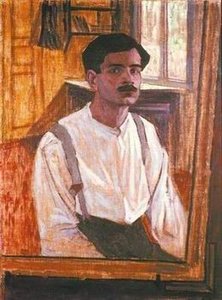
Давид Карабодзе
1889 - 1952 , Грузия
Основные сведения
- Artistic Movement Or Style: Avant-garde, Cubism
- Artists Who Influenced This Artist: ['Numerous artists']
- Date Of Birth: 1889-08-20
- Date Of Death: 1952-05-10
- Full Name: David Kakabadze
- Nationality: Georgian
- Notable Artworks:
- Sailboats
- Bretagne
- Sketch for getting…
- Place Of Birth: Kutaisi, Georgia