
- Главная

- Репродукция картины маслом
- delegación provincial del ministerio de agricultura, instituto nacional de colonización (inc)
 Предпросмотр
 Поделиться
 Поделиться
 Детали произведения

 Скачать
 Похожие работы
 Рентгенография
 Слайд-шоу
 Статистика
.


 Читать далее
Масляная репродукция ручной работы
Картина маслом на холсте в выбранном вами размере и раме, написанная на заказ нашими художниками. ( Перейти к печати Перейти к цифровым изображениям)




































Выберите один из наших стандартных размеров, соответствующих оригинальным пропорциям произведения искусства.

Вы можете указать собственные размеры, чтобы картина идеально вписалась в выбранную раму или пространство. Если выбранный вами размер не соответствует пропорциям оригинала, мы либо обрежем полотно, либо расширим его за счет дополнительных элементов, написанных вручную. Цифровой макет будет отправлен вам на утверждение перед началом производства.
Обратите внимание, что предварительный просмотр на экране не отражает фактическую обрезку или расширение. Только макет точно покажет окончательную композицию.
Хотя доступны индивидуальные размеры, мы рекомендуем выбирать вариант из предопределенного списка, чтобы сохранить исходные пропорции.
После оформления заказа команда ArtsDot.com свяжется с клиентом по электронной почте для уточнения деталей и предоставит предварительный макет
Доставка по всему миру () за 3–4 недели вместо стандартных 5 недель. (12 Сентябрь). Без компромиссов в качестве.

Бесплатная экспресс-доставка по всему миру

Высококачественный льняной холст

Полное страхование доставки

Гарантия возмещения таможенных пошлин

Гарантия точного соответствия цветов

100-дневная политика возврата (только при обнаружении дефектов)

Гарантия возврата 100% средств

Предложение оптовых скидок
 Вариант со стеклом доступен только для размеров менее 110 см

.
Техника репродукции
Размер репродукции
-


Итоговая стоимость
$ 263
Похожие произведения
Биография художника
The Legacy of Land Reform: Delegación Provincial del Ministerio de Agricultura, Instituto Nacional de Colonización (INC)
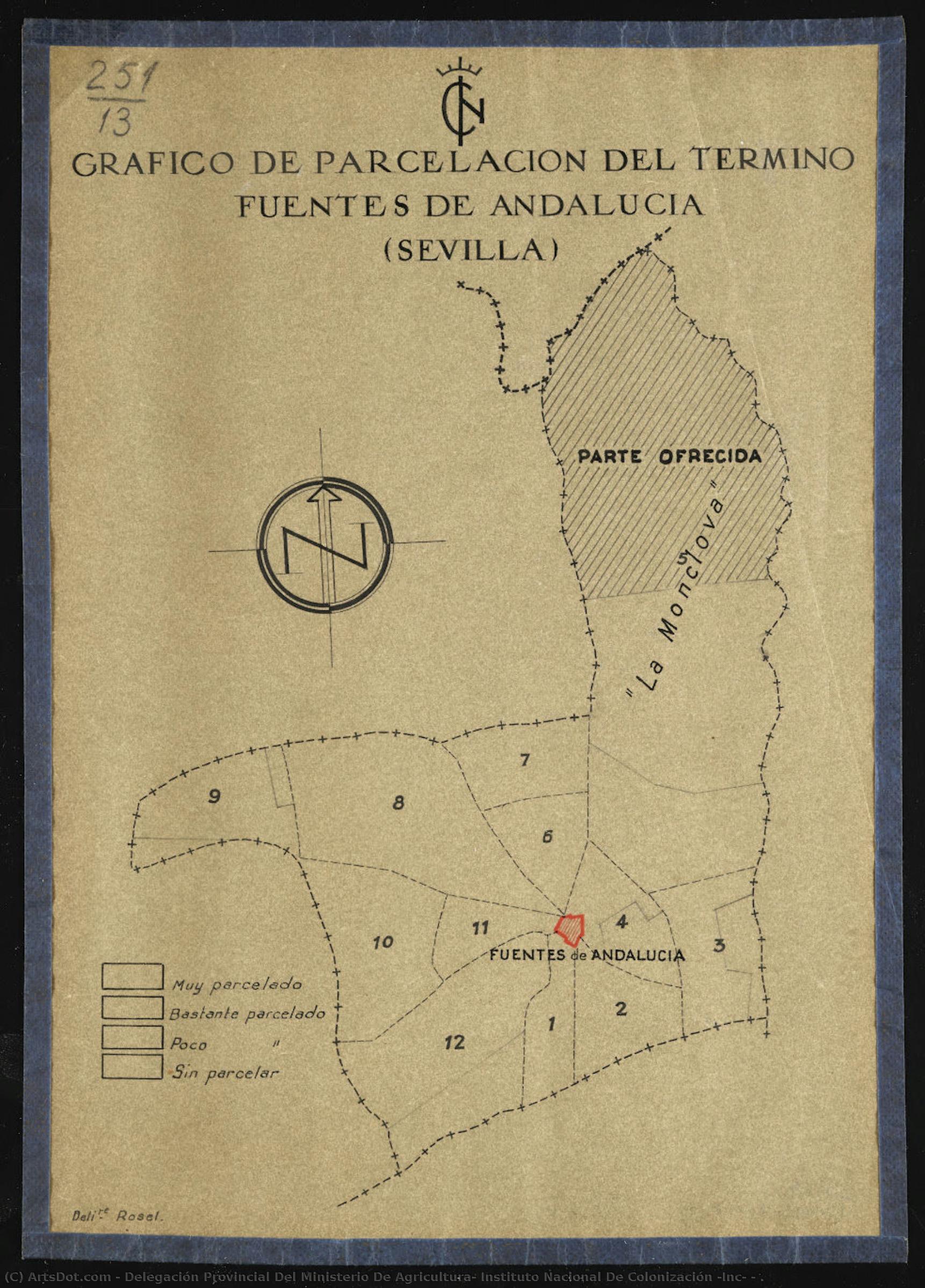
The name “Delegación Provincial del Ministerio de Agricultura, Instituto Nacional de Colonización (INC)” doesn’t readily conjure images of artistic expression. Yet, this organization, born from the ashes of the Spanish Civil War in 1939, represents a fascinating and often overlooked chapter in Spain's history—a chapter powerfully documented through its ambitious agricultural reform projects. The INC wasn’t comprised of individual artists in the traditional sense; rather, it was a state body tasked with reshaping the nation’s productive landscape, and its “work” manifests as meticulously planned settlements, irrigation systems, and architectural designs intended to revitalize rural communities and boost agricultural output. To understand their significance is to delve into the complex socio-political climate of post-war Spain and the desire for self-sufficiency under Franco's regime.A Nation Rebuilt: The Context of Creation
The Spanish Civil War (1936-1939) left deep scars on the country, not only in terms of human loss but also in the devastation of its agricultural infrastructure. Large estates lay fallow or were inefficiently managed, and rural poverty was widespread. The *autarquía* policy adopted by Franco’s government aimed for national self-sufficiency, reducing reliance on foreign imports. This ambition necessitated a radical overhaul of the agrarian sector. The INC was established as the primary instrument to achieve this goal, operating under the Ministry of Agriculture. Its mandate extended beyond mere economic reform; it sought to address social inequalities and stabilize the rural population—a population deeply fractured by years of conflict. The organization’s work wasn't simply about increasing crop yields; it was a deliberate attempt to reconstruct the very fabric of Spanish society through land redistribution, infrastructure development, and the creation of new communities designed around principles of efficiency and collective living.The Architecture of Progress: Projects and Principles
The INC’s projects were characterized by a pragmatic approach rooted in functionalism. While not adhering to a single architectural style, there was a clear emphasis on rational design, standardized building plans, and the efficient use of resources. New settlements—*pueblos de colonización*—were meticulously planned, often featuring grid-like street layouts, communal facilities (schools, healthcare centers, social clubs), and housing designed for agricultural workers and their families. Irrigation systems were a crucial component, transforming arid lands into fertile fields. The documentation of these projects – detailed maps, architectural drawings, and photographic records – constitutes the bulk of what we recognize as the INC’s artistic output. These aren't paintings or sculptures; they are blueprints for a new Spain, visual representations of a utopian vision grounded in practicality and social engineering. A prime example is the “Proyecto de ordenación del Pueblo Arroyo Salado. Nuevo Pueblo de Guadalema de los Quintero (Sevilla)”, showcasing the INC’s commitment to comprehensive planning, including housing types and infrastructure layouts.Influences and Legacy: Beyond Autarky
The INC's work wasn’t created in a vacuum. It drew inspiration from various sources, including international models of agricultural reform and rationalist architecture prevalent in Europe during the interwar period. The emphasis on functionality and standardized design reflects the influence of movements like the Bauhaus, although adapted to the specific context of rural Spain. While initially driven by the ideological goals of Franco’s regime, the INC's projects had a lasting impact on the Spanish countryside. Many *pueblos de colonización* continue to thrive today, serving as testaments to the organization’s long-term vision and its ability to create sustainable communities. However, it is important to acknowledge the complex legacy of this period. The land redistribution policies were not without their controversies, and the social engineering aspects of the INC's work often prioritized state control over individual autonomy. Nevertheless, the architectural and infrastructural achievements remain significant, offering a unique insight into a pivotal moment in Spanish history—a moment where art and politics converged to reshape the nation’s landscape and its people’s lives.Historical Significance: Documenting a Transformation
The work of the Delegación Provincial del Ministerio de Agricultura, Instituto Nacional de Colonización (INC) transcends traditional artistic boundaries. It represents a form of applied art—a deliberate intervention in the physical world with profound social and political implications. By meticulously documenting their projects, the INC created an invaluable archive that sheds light on the challenges and aspirations of post-Civil War Spain. These records offer a unique perspective on the relationship between architecture, agriculture, and state power, revealing the complex interplay of ideology, planning, and implementation. Today, these documents serve as a reminder of a transformative period in Spanish history—a period marked by both ambition and controversy, but ultimately defined by a desire to rebuild a nation from the ground up. The INC’s legacy is not simply about agricultural reform; it's about the power of design to shape society and the enduring impact of state-sponsored projects on the lives of ordinary people.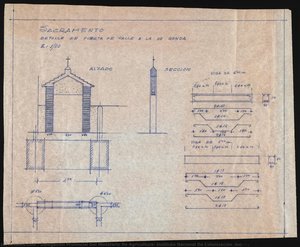
Основные сведения
- Artistic Movement Or Style: Agricultural Reform Art
- Artists Or Movements Influenced By This Artist: ['']
- Artists Who Influenced This Artist: ['']
- Full Name: Delegación Provincial del Ministerio de Agricultura, Instituto Nacional de Colonización
- Nationality: Spanish
- Notable Artworks: ['Cadastral Map Seville 1951']
- Place Of Birth: Spain
Похожие статьи
José Gutiérrez Solana: A Chronicle of Spanish Society Through Expressionist Vision
Explore the captivating world of José Gutiérrez Solana, a pivotal Spanish Expressionist painter. Discover his haunting depictions of early 20th-century Spain, influenced by Goya & El Greco. Learn about his key works and lasting legacy.
Mapping Beauty: Transform Your Space with Stunning Topographical Artworks
Elevate your interiors with breathtaking topographical art. From vintage cartography to textured 3D reliefs, discover how hand-painted maps and historical landscapes can transform any room into a sophisticated sanctuary of discovery and timeless beauty.

The Golden Age Reforged: Dramatic Realism & Religious Zeal in Spanish Baroque Art
Explore the dramatic world of Spanish Baroque art! Discover masters like Zurbarán & the powerful influence of religious zeal on painting techniques – a guide for collectors and enthusiasts.
Bartolomé Esteban Murillo: Divine Light & Social Commentary in Golden Age Seville
Explore the captivating world of Bartolomé Esteban Murillo, a master of Spanish Baroque painting. Discover his luminous religious scenes, tender genre paintings & lasting legacy in Golden Age Seville. Learn more at ArtsDot.
Rafael de Penagos: A Study in Spanish Portraiture & Artistic Identity
Explore the life & art of Rafael de Penagos, a leading Spanish Art Deco illustrator. Discover his iconic 'Penagos Woman', commercial work, and lasting legacy. Learn about this pivotal figure in 20th-century Spanish art history.