

 Предпросмотр
 Поделиться
 Поделиться
 Детали произведения

 Скачать
 Похожие работы
 Рентгенография
 Слайд-шоу
 Статистика
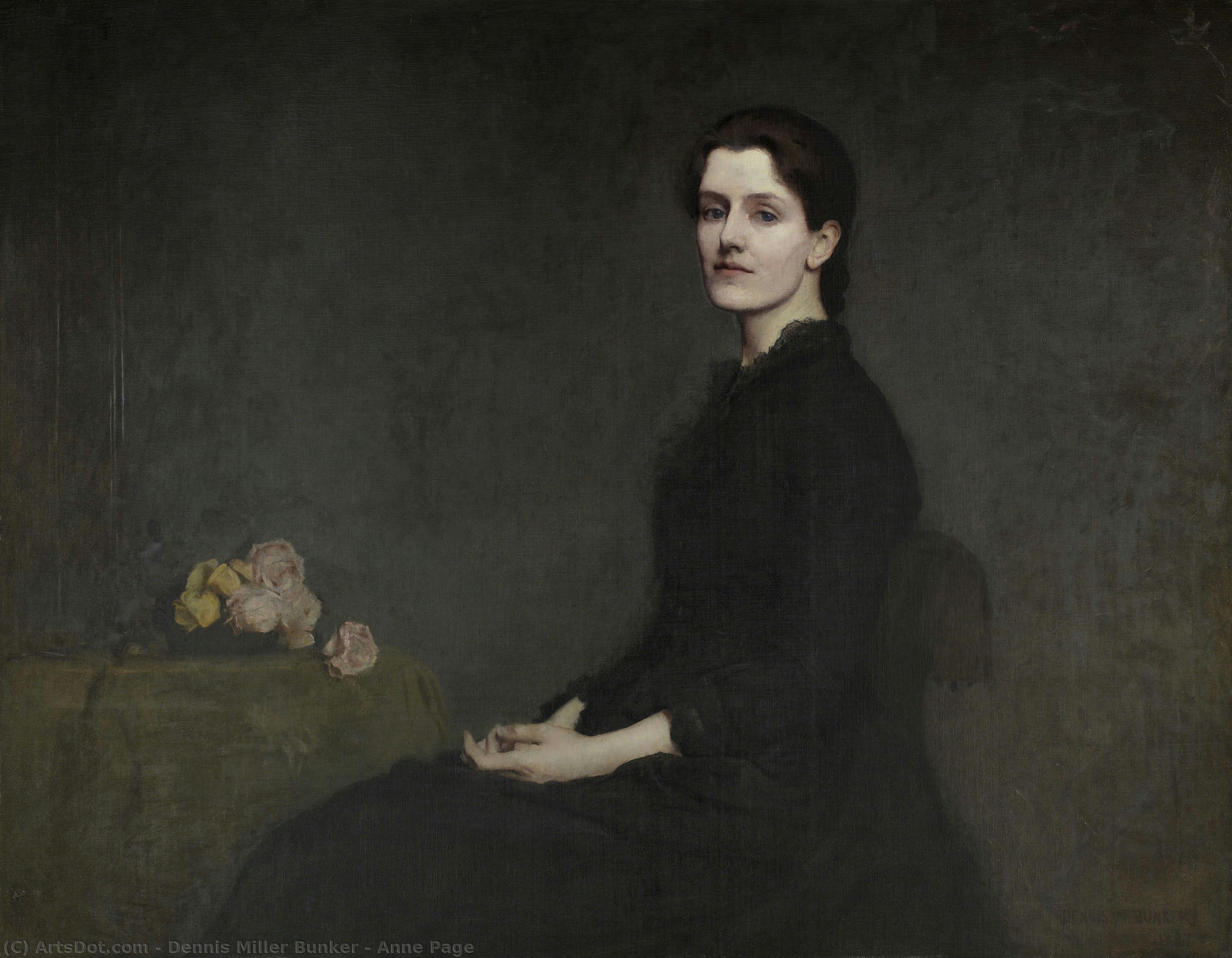
Anne Page
 Oil On Canvas
- WallArt
- American Impressionism
 1887
1887 108.0 x 137.0 cm
 Crystal Bridges Museum of American Art
 Читать далее
Приобретите цифровое изображение высокого разрешения в улучшенном качестве, которое значительно превосходит онлайн-превью.
Каждый файл тщательно подготавливается нашими специалистами с использованием передовых инструментов и экспертной ручной ретуши. Мы гарантируем исключительную четкость, точную цветопередачу и детальную проработку каждого изображения.
Финальный файл доставляется по электронной почте в течение 72 часов и оптимизирован для немедленного использования в профессиональной среде, при верстке и печати. Это тот же уровень качества, которому доверяют ведущие дизайнерские студии, издательства и галереи.
Цифровое изображение
Скачайте файл высокого разрешения для личного использования, печати и творческих проектов. ( Перейти к печати Купить картину ручной работы)
Включено в каждый заказ цифровых изображений
Гарантия экспертной цифровой доставки
Выбирая ArtsDot.com, вы получаете не просто изображение — вы приобретаете профессионально обработанное цифровое произведение искусства, созданное с безупречной точностью и под защитой гарантии качества. Вот всё, что автоматически входит в ваш заказ:

Мгновенная доставка по e-mail
Ваш цифровой файл в высоком разрешении будет отправлен вам по электронной почте в течение 72 часов после оформления заказа — и сразу станет доступен для использования.

Цифровой файл с ИИ-улучшением
Ваше произведение искусства проходит профессиональную оптимизацию с использованием передовых инструментов ИИ и ручной обработки, что гарантирует максимальную детализацию, четкость и точность цветопередачи.

Бессрочная бесплатная повторная доставка
Случайно удалили или потеряли файл? Не беспокойтесь — мы отправим его вам повторно в любое время и совершенно бесплатно.

Без импортных пошлин — навсегда
Наслаждайтесь вашим произведением искусства мгновенно без таможенных пошлин, сборов или затрат на доставку — цифровые загрузки всегда не облагаются налогом.

Гарантия точности цветопередачи
Мы гарантируем, что ваше цифровое изображение максимально точно передает оригинальные цвета благодаря использованию профессиональных инструментов и систем управления цветом.

Гарантия удовлетворенности 100 дней
Если вы не будете удовлетворены своим цифровым изображением, мы внесем правки или вернем 100% стоимости в течение 100 дней — без лишних вопросов.

100% Гарантия возврата средств
Не удовлетворены покупкой? Получите полный возврат средств в течение 100 дней после получения цифрового файла — без лишних вопросов.

Скидки на оптовые заказы
Купите 3 изображения, сэкономьте 10% — Купите 5, сэкономьте 15% — Купите 10+, сэкономьте 20%. Отличное решение для творческих проектов, галерей и агентств.
A Fleeting Glimpse of Boston Society: Dennis Miller Bunker’s “Anne Page”
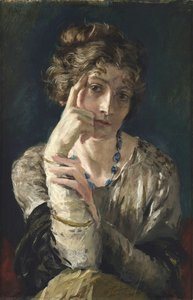
Dennis Miller Bunker's 1887 painting, "Anne Page," isn’t merely a portrait; it’s a carefully constructed tableau of late Victorian Boston society, imbued with a poignant sense of melancholy and the ephemeral beauty of youth. Bunker, a tragically short-lived artist whose career burned brightly before his untimely death in 1890, masterfully captures a moment frozen in time – a young woman, Anne Page, poised within her domestic sphere, radiating an understated elegance that belies the complexities beneath the surface.
The painting’s composition is remarkably restrained. A dark, neutral background—almost entirely devoid of pattern or ornamentation—serves to heighten the luminosity of the subject and draw the viewer's eye directly to Anne Page herself. She occupies a central position within a modestly furnished room, her posture relaxed yet dignified. Her hands rest gently in her lap, suggesting both composure and vulnerability. A cluster of pink and yellow roses sits upon a nearby dressing table – a deliberate inclusion that speaks volumes about the transient nature of beauty and the inevitable passage of time, a recurring motif in Bunker’s work.
The Impressionistic Technique: Light, Color, and Atmosphere
Bunker's technique is firmly rooted in the tenets of Impressionism, though he possesses a distinctly personal style. He employs loose brushstrokes and a delicate layering of color to create an atmospheric effect—a sense of diffused light and subtle shading that softens the edges of form. Notice how Bunker avoids sharp outlines, instead favoring a hazy, almost dreamlike quality. The use of muted tones – predominantly browns, grays, and soft blues – contributes to this overall mood of quiet contemplation. He skillfully captures the play of light on surfaces, particularly the delicate folds of Anne’s dress and the velvety texture of the roses, demonstrating an acute awareness of how light transforms our perception of reality.
- Color Palette: Dominated by earth tones with accents of pink and yellow.
- Brushwork: Loose, broken strokes create a sense of atmosphere and movement.
- Light & Shadow: Deliberate use of light to define form and evoke mood.
A Portrait of a Boston Socialite and a Hint of Unrequited Affection
Anne Page herself was a prominent figure in Boston society, known for her charm and social grace. The painting’s historical context is crucial to understanding its deeper meaning. It's widely believed that Bunker developed a romantic interest in Anne, documented through his passionate letters—a secret affair that unfolded amidst the rigid conventions of Victorian courtship. These letters reveal Bunker’s fascination with Page’s “matchless charm,” describing her as possessing an elusive quality that captivated him. The painting, therefore, can be interpreted not just as a portrait but also as a visual representation of this burgeoning affection, a silent testament to a connection that ultimately remained unfulfilled.
The inclusion of the roses—a traditional symbol of love and beauty—further reinforces this interpretation. They serve as a poignant reminder of the fleeting nature of romance and the bittersweet awareness of lost opportunities. The painting’s quiet dignity, combined with its subtle emotional undertones, elevates it beyond a simple likeness to a powerful meditation on love, loss, and the complexities of human relationships.
A Legacy of Luminosity: Bunker's Place in American Art
Dennis Miller Bunker remains a relatively obscure figure in the pantheon of 19th-century American artists. However, his work—characterized by its luminous color palettes, evocative atmosphere, and profound sensitivity to human emotion—demonstrates a remarkable artistic vision. His tragically short life cut short his career, but he left behind a small yet significant body of paintings that continue to resonate with viewers today. “Anne Page” stands as one of his most compelling achievements, offering a rare glimpse into the world of Boston society and revealing the artist’s extraordinary ability to capture both the beauty and melancholy of the human experience.
Похожие произведения


Биография художника
A Fleeting Glimpse of Brilliance: The Life and Art of Dennis Miller Bunker
Dennis Miller Bunker, a name perhaps less immediately recognized than those of his contemporaries like Sargent or Cassatt, nevertheless occupies a pivotal position in the narrative of American Impressionism. His tragically short life – he succumbed to meningitis at just twenty-nine years old – belies an artistic output brimming with innovation and sensitivity, a testament to a talent that burned intensely but briefly. Born in New York City in 1861, Bunker’s path toward becoming a significant painter was nurtured by a supportive family background; his father held a position with the Union Ferry Company, while his mother came from a lineage of artistic inclination through her brother, the celebrated illustrator Sol Eytinge Jr. This early exposure to creative pursuits undoubtedly played a role in shaping young Dennis's aspirations. He formally began his training at the Art Students League and the National Academy of Design in 1876, laying a foundation steeped in academic tradition that would later be beautifully disrupted by his embrace of more modern techniques.From Barbizon to Brilliance: Artistic Development and Influences
Bunker’s artistic journey was marked by a constant evolution, a willingness to absorb influences and synthesize them into something uniquely his own. A crucial period in this development came with his travels to Paris in 1882, where he studied at the École nationale supérieure des beaux-arts under Jean-Léon Gérôme. However, it wasn’t within the confines of the studio that Bunker truly found his artistic voice. Rather, it was during excursions through France and Brittany alongside fellow artists Charles A. Platt and Kenneth R. Cranford that he encountered the Barbizon school – a group renowned for their direct observation of nature and naturalistic approach to painting. This exposure proved transformative, instilling in Bunker a deep appreciation for *plein air* painting and a commitment to capturing the subtleties of light and atmosphere. His early works reflected this influence, often depicting marine subjects like beached boats with meticulous detail honed through preparatory sketches. Yet, even within these academic exercises, hints of his future direction were emerging. The Brittany period (1883-1884) saw a shift towards softer atmospheric effects and tonal subtleties in scenes featuring church spires, cemetery crosses, and solitary trees against expansive skies. He meticulously studied the techniques of masters like Jean-Léon Gérôme, absorbing their compositional strategies and mastering realistic rendering skills—skills that would serve as invaluable tools for his subsequent artistic explorations. Upon returning to America, Bunker’s landscapes, particularly those painted in South Woodstock, Connecticut, began to demonstrate a bolder palette and more saturated colors – clear indicators of his burgeoning Impressionistic leanings. A pivotal friendship with John Singer Sargent further accelerated this transition; Sargent's influence encouraged Bunker to embrace brighter hues and looser brushwork, pushing him towards a style that was both innovative and deeply personal. Sargent recognized Bunker’s exceptional talent and became a valuable friend and supporter, providing both financial assistance and encouragement. This patronage allowed him greater artistic freedom and contributed to his ability to explore new avenues in his work. He brought this newfound Impressionistic style back with him to Boston and was praised for his captivating new compositions.Recognition and a Patron’s Embrace
Bunker’s talent did not go unnoticed by the art community. He was elected to the Society of American Artists in 1885, a significant acknowledgment of his growing reputation. That same year marked another milestone: his first solo exhibition at Noyes and Blakeslee Gallery in Boston. Simultaneously, he secured a teaching position at the Cowles Art School in Boston, where he served as chief instructor of figure and cast drawing, artistic anatomy, and composition from 1885 to 1889. This period allowed him to refine his skills while also imparting knowledge to aspiring artists. Isabella Stewart Gardner, a prominent art collector and patroness, recognized Bunker’s exceptional talent and became a valuable friend and supporter, providing both financial assistance and encouragement. She championed his work and fostered an environment conducive to artistic experimentation.A Lasting Legacy: Bunker’s Place in Art History
Though his life was tragically cut short, Dennis Miller Bunker left an indelible mark on late 19th-century American art. He stands as a key figure in the development of American Impressionism, skillfully bridging traditional academic training with emerging modern artistic trends. His ability to seamlessly blend Barbizon influences with the vibrant energy of Impressionism resulted in works that are both technically masterful and emotionally resonant. His paintings—particularly *Eleanor Hardy Bunker*, *Marshland, Medfield*, and *The Station*—continue to captivate viewers with their luminous landscapes and refined portraits. He remains a testament to the power of artistic vision and the enduring impact of a life dedicated to beauty, even one tragically abbreviated. His contribution to Impressionism solidified its presence in American art history, demonstrating a transition from academic realism to Impressionistic techniques that paved the way for future generations to explore new modes of expression.
Деннис Миллер Банкер
1861 - 1890 , Соединенные Штаты Америки
Основные сведения
- Artistic Movement Or Style: Импрессионизм
- Artists Or Movements Influenced By This Artist: ['Импрессионизм']
- Artists Who Influenced This Artist:
- Жан-Леон Жерме
- Джон Сингер Сэрджент
- Date Of Birth: Ноябрь 6, 1861
- Date Of Death: Декабрь 28, 1890
- Full Name: Dennis Miller Bunker
- Nationality: Американский
- Notable Artworks:
- Элеонора Хеди Бинкер
- Моршленд, Медифилд
- Станция
- Place Of Birth: Нью-Йорк Сити, США