

 Предпросмотр
 Поделиться
 Поделиться
 Детали произведения

 Скачать
 Похожие работы
 Рентгенография
 Слайд-шоу
 Статистика
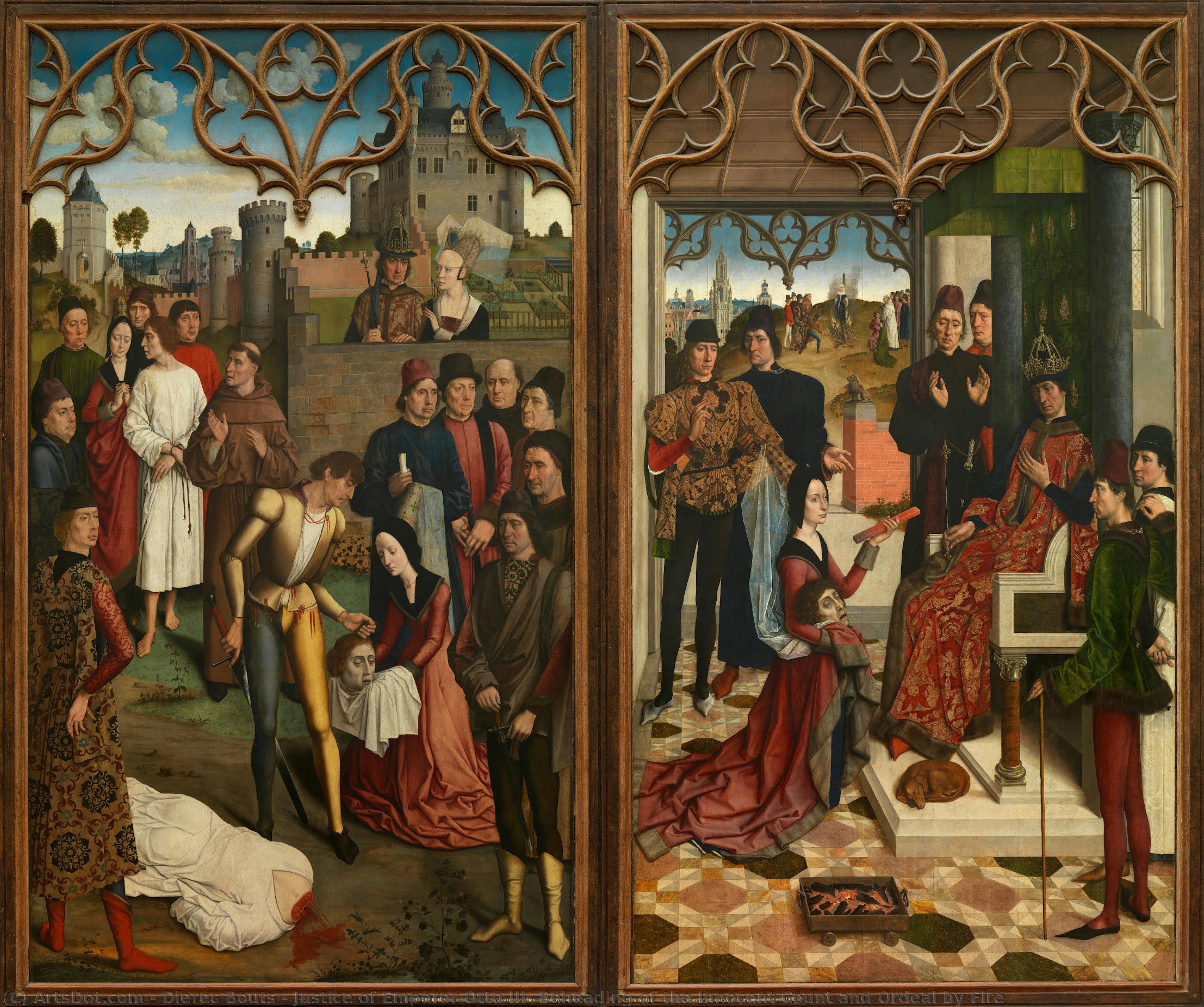
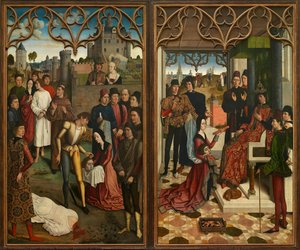
Justice of Emperor Otto III: Beheading of the Innocent Count and Ordeal by Fire
 Oil On Panel
- WallArt
- Early Netherlandish Painting
 1475
1475- Late Medieval
 Музей изящных искусств Королевских музеев Бельгии
 Читать далее
Приобретите цифровое изображение высокого разрешения в улучшенном качестве, которое значительно превосходит онлайн-превью.
Каждый файл тщательно подготавливается нашими специалистами с использованием передовых инструментов и экспертной ручной ретуши. Мы гарантируем исключительную четкость, точную цветопередачу и детальную проработку каждого изображения.
Финальный файл доставляется по электронной почте в течение 72 часов и оптимизирован для немедленного использования в профессиональной среде, при верстке и печати. Это тот же уровень качества, которому доверяют ведущие дизайнерские студии, издательства и галереи.
Цифровое изображение
Скачайте файл высокого разрешения для личного использования, печати и творческих проектов. ( Перейти к печати Купить картину ручной работы)
Включено в каждый заказ цифровых изображений
Гарантия экспертной цифровой доставки
Выбирая ArtsDot.com, вы получаете не просто изображение — вы приобретаете профессионально обработанное цифровое произведение искусства, созданное с безупречной точностью и под защитой гарантии качества. Вот всё, что автоматически входит в ваш заказ:

Мгновенная доставка по e-mail
Ваш цифровой файл в высоком разрешении будет отправлен вам по электронной почте в течение 72 часов после оформления заказа — и сразу станет доступен для использования.

Цифровой файл с ИИ-улучшением
Ваше произведение искусства проходит профессиональную оптимизацию с использованием передовых инструментов ИИ и ручной обработки, что гарантирует максимальную детализацию, четкость и точность цветопередачи.

Бессрочная бесплатная повторная доставка
Случайно удалили или потеряли файл? Не беспокойтесь — мы отправим его вам повторно в любое время и совершенно бесплатно.

Без импортных пошлин — навсегда
Наслаждайтесь вашим произведением искусства мгновенно без таможенных пошлин, сборов или затрат на доставку — цифровые загрузки всегда не облагаются налогом.

Гарантия точности цветопередачи
Мы гарантируем, что ваше цифровое изображение максимально точно передает оригинальные цвета благодаря использованию профессиональных инструментов и систем управления цветом.

Гарантия удовлетворенности 100 дней
Если вы не будете удовлетворены своим цифровым изображением, мы внесем правки или вернем 100% стоимости в течение 100 дней — без лишних вопросов.

100% Гарантия возврата средств
Не удовлетворены покупкой? Получите полный возврат средств в течение 100 дней после получения цифрового файла — без лишних вопросов.

Скидки на оптовые заказы
Купите 3 изображения, сэкономьте 10% — Купите 5, сэкономьте 15% — Купите 10+, сэкономьте 20%. Отличное решение для творческих проектов, галерей и агентств.
A Tale of Divine Justice and Human Tragedy
In the quiet, meditative realm of Early Netherlandish painting, few works capture the tension between earthly law and divine truth as poignantly as Dieric Bouts’s masterpiece, Justice of Emperor Otto III: Beheading of the Innocent Count and Ordeal by Fire. Created around 1475, this profound diptych serves as a visceral window into the medieval psyche, where the absolute power of the state meets the tragic vulnerability of the individual. The narrative unfolds through a legendary judicial drama: an emperor, driven by a false accusation of lust, orders the execution of a count, only to have the truth revealed through a miraculous trial by fire. It is a story that oscillates between the brutality of the blade and the luminous grace of innocence, making it a captivating subject for those who appreciate art that tells a deep, transformative story.
The composition is a masterclass in what art historians call the "painter of silence" style. Unlike the theatrical, sweeping emotions found in other masters of the era, Bouts employs a profound, meditative stillness. The scenes are meticulously arranged within an architectural setting that feels both monumental and intimate. As the viewer’s eye wanders through the crowded, detailed landscape, they encounter a complex web of figures—witnesses, clergy, and condemned—all frozen in a moment of staggering intensity. This deliberate lack of overt movement allows the weight of the tragedy to settle upon the viewer, inviting a slow, contemplative engagement that is rare in contemporary art.
Technical Mastery and the Luminosity of Detail
For the discerning collector or interior designer, the technical brilliance of this work offers endless inspiration. Bouts utilizes the medium of oil on wood panels to achieve an extraordinary level of precision. Through the careful layering of translucent glazes, he creates a sense of internal luminosity that makes skin appear supple, metal gleam with cold authority, and heavy fabrics possess a tangible weight. The textures range from the rough, penitent shirt of the barefoot count to the rich, Burgundian velvets worn by the onlookers, providing a sensory richness that elevates the painting from a mere historical record to a living, breathing scene.
The artist’s use of light is particularly noteworthy; it is diffused and even, casting a soft glow that illuminates the intricate details of the Leuven cityscape in the background. This technique does more than just provide clarity; it creates an atmosphere of solemnity and reverence. The color palette, dominated by deep reds, regal blues, and earthy browns, provides a sophisticated foundation that can anchor a room with historical gravity. Every brushstroke serves to deepen the viewer's contemplation, making each viewing a new discovery of hidden details and subtle shadows.
Symbolism and the Legacy of Truth
Beyond its aesthetic splendor, the artwork is steeped in profound symbolism. The very act of the "ordeal by fire"—where the count’s wife holds a glowing rod unharmed—serves as a powerful metaphor for the triumph of truth over deception. The architectural elements, such as the fortified walls and Gothic arches, represent not just physical boundaries but the protective yet rigid structures of society and law. For those seeking to decorate a space with pieces that provoke thought, this work offers a rich tapestry of meaning, touching upon themes of integrity, sacrifice, and the heavy responsibility of leadership.
To possess a high-quality reproduction of this work is to bring a piece of history into the modern home. It is an invitation to reflect on the duty to judge fairly and the enduring power of justice. Whether placed in a scholarly study, a grand hall, or a contemporary living space, Bouts’s vision remains as potent today as it was in the fifteenth century, offering a timeless connection to the spiritual and historical foundations of Western art.
Похожие произведения


![Martyrdom Of Saint Bartholomew, Calvary And Death Of Saint Mary Magdalene — Жауме Гуэ]$,, International Gothic](/media/artworks/images-thumb/8e/cb/8ecb95b13f8e4b7d13970be020fb3bc5.jpg)
Биография художника
Dieric Bouts: The Silent Master of Early Netherlandish Painting
In the vibrant, bustling landscape of the fifteenth-century Netherlands, where the works of Jan van Eyck and Rogier van der Weyden dazzled with their dramatic flair and technical virtuosity, there existed a different kind of mastery. Dieric Bouts, often referred to as the "painter of silence," carved out a legacy not through theatrical emotion, but through a profound, meditative stillness. Born in Haarlem around 1415, Bouts emerged from the Northern Netherlands to become one of the most respected figures of the Early Netherlandish period. His life and work represent a unique intersection of technical innovation and spiritual introspection, offering a window into a world where every brushstroke served to deepen the viewer's contemplation of the divine.
The early years of Bouts’s journey are shrouded in the soft mists of history, yet his artistic lineage is clearly etched in the masterpieces he left behind. It is widely believed that he received formative training under the legendary Rogier van der Weyden, an influence that manifests in his meticulous attention to detail and a sophisticated command of color. However, Bouts was far from a mere imitator. While he inherited the Northern Renaissance's obsession with realism, he departed from the overt emotionalism of his peers. Instead, he developed a signature style characterized by a deliberate restraint and an almost architectural approach to composition. He possessed a singular ability to organize space, often utilizing a single vanishing point to create a sense of deep, structured perspective that was revolutionary for his time.
A Vision of Stillness and Sacred Space
Bouts’s career found its most significant expression in the city of Leuven, where he worked from at least 1457 until his death in 1475. His ascent within the local community was marked by great prestige; in 1468, he was appointed the official painter of the town, a testament to his standing among the civic and religious elite. This period saw the creation of some of his most enduring works, which often eschewed narrative chaos in favor of a carefully orchestrated solemnity. In his monumental altarpieces, such as The Last Supper, one does not find frantic gestures or weeping figures, but rather a quiet, heavy atmosphere that emphasizes the gravity of the sacred event through precise spatial relationships and balanced forms.
His technical prowess was particularly evident in his handling of light and texture. Whether working in tempera on panel or the burgeoning medium of oil, Bouts achieved a level of clarity that allowed the viewer to inhabit the scenes he created. His works often feature:
- Architectural Precision: A masterful use of geometric structures to frame religious narratives.
- Psychological Depth: Characters who appear lost in thought, inviting the viewer into a shared moment of prayerful reflection.
- Luminous Detail: An incredible ability to render the subtle textures of medieval clothing and the soft glow of divine light.
Legacy of the Flemish Primitive
The historical significance of Dieric Bouts lies in his role as a bridge between the foundational realism of the early Flemish masters and the more complex spatial explorations of the later Renaissance. By introducing a sense of mathematical order and a singular vanishing point into his compositions, he helped pave the way for future generations of painters to master the illusion of three-dimensional space on a flat surface. His ability to marry the spiritual with the structural ensured that his art was not merely a decoration, but a profound theological tool designed to inspire awe through clarity.
Though he may lack the flamboyant reputation of Van Eyck, Bouts remains an indispensable figure in the study of Northern Renaissance art. He taught us that power does not always require volume or noise; sometimes, the most profound truths are found in the quietest corners of a painting, held within the steady, unblinking gaze of a saint or the silent, structured shadows of a sacred hall. His life, spanning from the Netherlands to the heights of Leuven's artistic circles, remains a testament to the enduring strength of the contemplative spirit.
dierec bouts
1410 - 1475
Основные сведения
- Artistic Movement Or Style: Early Netherlandish
- Artists Or Movements Influenced By This Artist:
- Hans Memling
- Gerard David
- Artists Who Influenced This Artist:
- Rogier van der Weyden
- Jan van Eyck
- Date Of Birth: c. 1415?
- Date Of Death: 6 May 1475
- Full Name: Dieric Bouts
- Nationality: Flemish
- Notable Artworks:
- The Entombment
- Head of Christ
- Last Supper
- Justice Panels
- Place Of Birth: Haarlem, Netherlands