 Предпросмотр
 Поделиться
 Поделиться
 Детали произведения

 Скачать
 Похожие работы
 Рентгенография
 Слайд-шоу
 Статистика
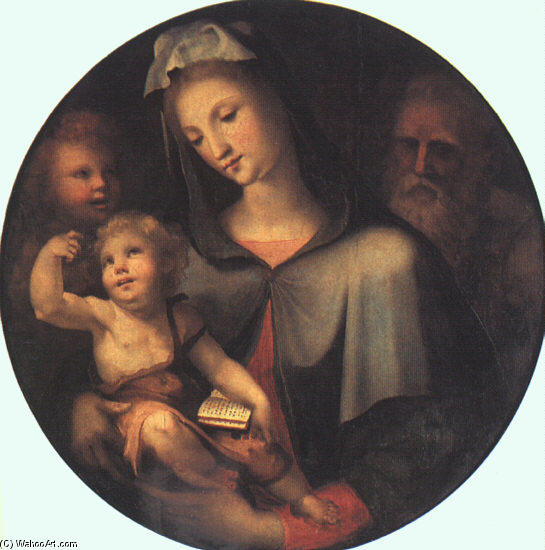
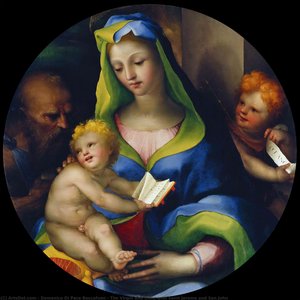
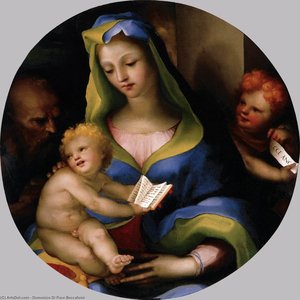
The Holy Family with Young Saint John
 Acrylic On Canvas
- WallArt
- Italian Mannerism
 1530
1530 84.0 x 84.0 cm
 Галерея Уффици
 Читать далее
Жикле / Арт-принт
Печать (жикле) или холст музейного качества с быстрыми сроками изготовления и широким выбором вариантов отделки. ( Купить картину ручной работы Перейти к цифровым изображениям)




P118B $10

P118H $10

P118W $10

P438Z $10

P508JH $12

P508YH $12

P805H $10

P805Z $10

P919BZ $10

P919G $10

P919XJ $10

P959ZH $10

P968JZ $12

W106C $8

W218G $10

W218JH $8

W218Y $10

W307PJ $10

W316G $10

W316PJ $8

W316Y $10

W398PJ $8

W4111J $10

W500HY $15

W500JH $15

W692G $12

W849H $8

W940BG $15

W953PJ $8




Выберите один из наших стандартных размеров, соответствующих оригинальным пропорциям произведения искусства.

Вы можете указать свои собственные размеры, чтобы репродукция идеально подошла под конкретную раму или пространство. Если выбранный вами размер не будет соответствовать пропорциям оригинала, мы либо обрежем произведение, либо дополним изображение зеркальным отражением краев или однотонной заливкой. Перед началом производства вам будет отправлен цифровой макет для утверждения.
Пожалуйста, обратите внимание, что предварительный просмотр на экране не отображает фактическую обрезку или расширение изображения. Только макет точно покажет финальную композицию.
Несмотря на возможность заказа индивидуальных размеров, мы рекомендуем выбирать размер из предопределенного списка, чтобы сохранить оригинальные пропорции.
Доставка по всему миру () за 2 недели вместо стандартных 4/5 недель. (13 Сентябрь)

Бесплатная экспресс-доставка по всему миру

Высококачественный льняной холст

Полное страхование доставки

Гарантия возмещения таможенных пошлин

Гарантия точного соответствия цветов

100-дневная политика возврата (только при обнаружении дефектов)

Гарантия возврата 100% средств

Предложение оптовых скидок
 Вариант со стеклом доступен только для размеров менее 110 см

The Holy Family with Young Saint John
Жикле / Арт-принт
Размер репродукции
-


Итоговая стоимость
$ 62
A Tuscan Visionary: Domenico Beccafumi’s ‘The Holy Family with Young Saint John’
Domenico di Pace Beccafumi, a figure often overshadowed by the luminaries of Florence, nevertheless stands as a crucial link in the chain connecting the High Renaissance to the stylistic innovations of Mannerism. Born around 1486 in Montaperto, near Siena, his artistic trajectory exemplifies not merely technical prowess but a profoundly individual aesthetic sensibility—one rooted in the enduring traditions of Sienese painting yet daringly propelled toward uncharted expressive territories. His early life was marked by modest beginnings; Giacomo di Pace, his father, a peasant farmer, recognized and nurtured Beccafumi’s burgeoning talent through the mentorship of Mechero, a respected local artist who instilled in him the foundational principles of Sienese artistic practice. This formative influence would permeate Beccafumi's subsequent work, shaping his distinctive approach to composition and color.- Subject Matter: The painting depicts the iconic Holy Family – Mary, Joseph, and Jesus Christ – a motif central to Christian iconography throughout centuries.
- Style: Beccafumi’s style embodies Mannerism, characterized by elongated figures, stylized poses, and an emphasis on dramatic tension rather than idealized beauty. It represents a deliberate departure from the harmonious balance favored by Raphael and Michelangelo.
Technique and Material Considerations
Beccafumi’s masterful execution reveals meticulous attention to detail and a sophisticated understanding of pigment mixing. Executed circa 1530, this artwork is predominantly oil on panel—a technique prevalent during the Renaissance that allowed for layering colors and achieving remarkable luminosity. The artist skillfully employed glazing techniques, applying thin translucent layers of paint over underlying pigments to create depth and richness. Furthermore, Beccafumi’s use of color palettes leans toward muted tones – browns, ochres, and reds – reflecting a stylistic preference for subdued hues that heighten emotional impact rather than overwhelming the viewer's senses. The circular frame surrounding the painting contributes to its visual grandeur and reinforces its symbolic significance as a representation of divine perfection.Historical Context: Siena and Renaissance Artistic Dialogue
Siena, at the time of Beccafumi’s creation, was experiencing a resurgence of artistic vitality following the decline of Florentine dominance. The city's patronage by papal families fostered an environment conducive to experimentation and innovation—though often tempered by adherence to established conventions. Beccafumi’s work reflects this dynamic interplay between tradition and novelty, demonstrating how artists drew inspiration from both classical ideals and emerging Mannerist tendencies. It stands as a testament to Siena’s role in shaping the broader trajectory of Renaissance art, showcasing its ability to produce artists who pushed boundaries while retaining an unwavering connection to religious iconography.Symbolism and Emotional Resonance
The composition itself speaks volumes about theological concepts. The positioning of Mary and Joseph—Mary cradling Jesus—is a deliberate allusion to the Virgin Mother’s role as protector and nurturer, embodying compassion and humility. The youthful Saint John the Baptist, depicted on the left side, symbolizes innocence and prophetic wisdom – foreshadowing Christ's divine mission. Beccafumi’s masterful rendering captures not merely visual accuracy but also an emotional depth that resonates with viewers today. The subdued color scheme contributes to a contemplative atmosphere, inviting reflection on themes of faith, family, and spiritual grace.Похожие произведения

Биография художника
Domenico Beccafumi (The J. Paul Getty Museum Collection)
Domenico di Pace Beccafumi, a name that resonates less immediately than those of his Florentine contemporaries, nonetheless occupies a pivotal position in the narrative of Italian Renaissance art. Born around 1486 in Montaperto, near Siena, Beccafumi’s artistic journey was one of remarkable development, culminating in a style that bridged the High Renaissance and the burgeoning complexities of Mannerism. His story isn't simply about technical skill; it is about a deeply individual vision—a sensibility steeped in the traditions of his Sienese heritage yet boldly reaching towards new expressive possibilities. His origins were humble: the son of Giacomo di Pace, a peasant who worked on the estate of Lorenzo Beccafumi. Seeing his talent for drawing, Lorenzo adopted him and commended him to learn painting from Mechero, a local Sienese artist. This early grounding in the Sienese school would prove foundational, even as he ventured beyond its established conventions. The Sienese tradition, already diverging from the classical ideals embraced elsewhere in Italy, fostered an environment where emotional intensity and decorative detail were valued, qualities that would become hallmarks of Beccafumi’s unique style.Rome and the Forging of a Unique Style
Around 1509, Beccafumi journeyed to Rome, a transformative moment exposing him to the artistic ferment of the papal city. He encountered the groundbreaking works of Raphael and Michelangelo, absorbing their innovations in composition, anatomy, and dramatic expression. However, unlike many artists who sought to directly emulate these masters, Beccafumi synthesized these influences through his own distinct lens. He didn’t simply *copy* the Roman style; he filtered it through a pre-existing Sienese aesthetic—one characterized by a certain provincialism, an emphasis on decorative detail, and a lingering medieval sensibility. Upon returning to Siena, this synthesis began to manifest in a style increasingly his own. It was a style marked by irrationality, emotional intensity, and a captivating visual experience achieved through discordant colors and hallucinatory settings. His paintings weren’t merely representations of reality; they were explorations of inner states, imbued with a sense of unease and psychological depth. This departure from the harmonious balance of High Renaissance ideals signaled his embrace of Mannerism, though he remained distinctly apart from its more widespread trends. He skillfully blended the decorative elements and emotional intensity of the Sienese school with the emerging stylistic features of Mannerism—a fusion that would define his artistic legacy.Masterworks and Artistic Innovations
Beccafumi’s output was diverse, encompassing painting, sculpture, mosaic design, and printmaking. Among his most celebrated achievements are the frescoes in the Oratory of St. Benedict in Siena, a testament to his narrative skill and expressive power. The Trinity Triptych, housed in the Pinacoteca Nazionale di Siena, showcases his mastery of oil painting and his ability to convey religious devotion with both grandeur and intimacy. The Annunciation, also at the Pinacoteca Nazionale, exemplifies his distinctive use of color and composition, creating a scene that is both serene and subtly unsettling. However, perhaps his most ambitious undertaking was his direction of the pavement for Siena Cathedral between 1517 and 1544. This monumental project involved intricate designs inlaid with marble and mosaics, depicting scenes from biblical stories—Ahab, Elijah, Melchisedec, Abraham, and Moses among them. Beccafumi not only designed these scenes but also innovated the technical processes used in their creation, demonstrating his remarkable versatility as an artist and craftsman. His skill extended to printmaking, where he excelled in both engraving and woodcut, furthering disseminating his style and ideas beyond Siena’s borders. These prints allowed for wider dissemination of his style and ideas, influencing artists across Italy.Critical Assessment and Legacy
Compared to the equilibrated compositions favored by Raphael and Michelangelo, Beccafumi's paintings stand apart—embracing instead a sense of emotional tension, instability, and expressive distortion. This willingness to challenge conventional norms foreshadowed later trends in art, influencing subsequent generations with its innovative techniques and psychological depth. He remains a compelling figure, a testament to the enduring power of individual vision within the broader currents of art history. His work is characterized by misty, non-linear quality—forms appearing to dissolve into a hazy atmosphere—jagged lines and primal coloration—bold, unconventional use of color that departed from the more balanced palettes of his contemporaries—and emotional tension—a pervasive sense of unease reflecting a departure from classical ideals. Domenico Beccafumi’s contribution to Italian Renaissance art is undeniable; he solidified Sienese artistic traditions while simultaneously pushing boundaries toward Mannerist innovation. He died in Siena in 1551, marking the symbolic end of his era and cementing his place as one of the last undiluted representatives of the Sienese school—a legacy that continues to inspire admiration and scholarly study today.- Key Characteristics of Beccafumi’s Style:
- Misty, Non-Linear Quality: His paintings often possess an ethereal quality, with forms appearing to dissolve into a hazy atmosphere.
- Jagged Lines and Primal Coloration: Beccafumi favored sharp, angular lines and a bold, unconventional use of color that departed from the more balanced palettes of his contemporaries.
- Emotional Tension and Instability: A pervasive sense of unease and psychological complexity characterizes his work, reflecting a departure from classical ideals of harmony and proportion.
- Sienese Tradition with Mannerist Influences: He skillfully blended the decorative elements and emotional intensity of the Sienese school with the emerging stylistic features of Mannerism.
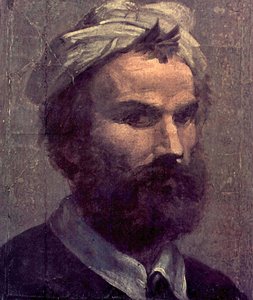
domenico di pace beccafumi
1486 - 1551 , Италия
Основные сведения
- Artistic Movement Or Style: Мannerизм, Ренессанс
- Artists Who Influenced This Artist:
- Рафаэль
- Микеланджело
- Date Of Birth: c. 1486
- Date Of Death: May 18, 1551
- Full Name: Domenico di Pace Beccafumi
- Nationality: Итальянский
- Notable Artworks:
- Триптих Троицы
- Аннунциато
- Переход Девы Марии
- Place Of Birth: Montaperto, Italy
Похожие статьи
The Enduring Legacy of Family Portraiture: A Historical & Artistic Exploration
Explore the rich history of family portraiture with ArtsDot. Discover artistic styles, symbolism & collecting insights. Commission a custom oil painting or appraise your existing artwork today!
Эхо предков: Семейные портреты в истории и их непреходящее значение
Исследуйте историю семейного портрета, его символику и значение в русской культуре. Узнайте о традициях создания фамильных портретов и современных тенденциях в искусстве.
Domenico Beccafumi: A Sienese Master Between Mannerism & Baroque Anticipation
Explore the captivating world of Domenico Beccafumi, a pivotal figure bridging Mannerism & Baroque art. Discover his unique style, religious masterpieces, and lasting legacy with ArtsDot.
От снимка к наследию: переосмысление семейных портретов в технике старых мастеров
Создайте уникальный семейный портрет маслом по фотографии! Художники с опытом превратят ваши воспоминания в произведение искусства, достойное будущих поколений. Закажите портрет своей семьи – инвестиция в наследие и прекрасный подарок!
Эволюция семейных портретов: персонализированное искусство как летопись жизни поколений
Узнайте историю семейных портретов и откройте для себя искусство сохранения памяти поколений. Закажите уникальный портрет маслом у профессиональных художников! Персонализация, высокое качество, экспертные консультации.