 Предпросмотр
 Поделиться
 Поделиться
 Детали произведения

 Скачать
 Похожие работы
 Рентгенография
 Слайд-шоу
 Статистика
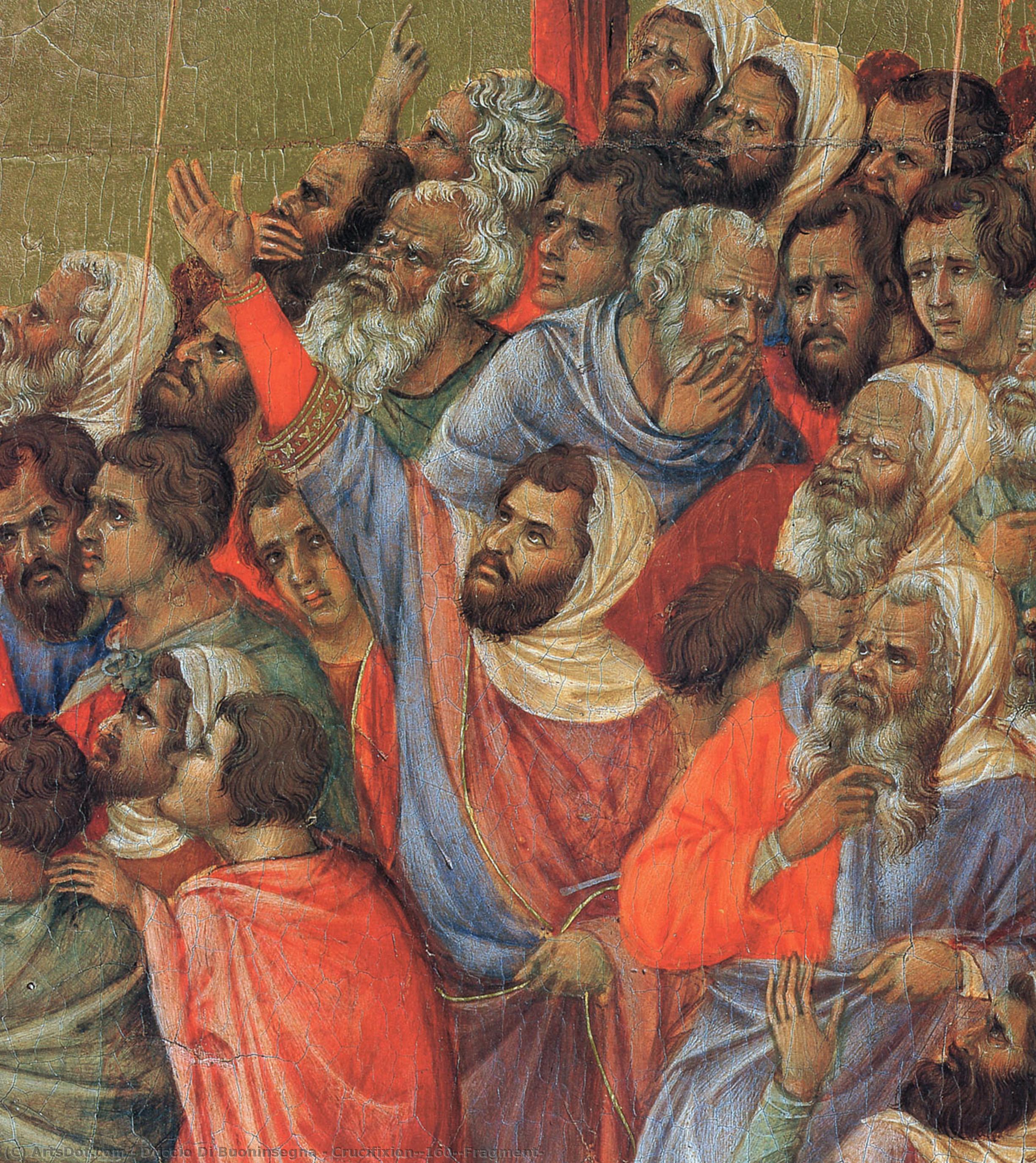
Crucifixion (Fragment)


 Читать далее
Масляная репродукция ручной работы
Картина маслом на холсте в выбранном вами размере и раме, написанная на заказ нашими художниками. ( Перейти к печати Перейти к цифровым изображениям)




P118B $10

P118H $10

P118W $10

P438Z $10

P508JH $12

P508YH $12

P805H $10

P805Z $10

P919BZ $10

P919G $10

P919XJ $10

P959ZH $10

P968JZ $12

W106C $8

W218G $10

W218JH $8

W218Y $10

W307PJ $10

W316G $10

W316PJ $8

W316Y $10

W398PJ $8

W4111J $10

W500HY $15

W500JH $15

W692G $12

W849H $8

W940BG $15

W953PJ $8




Выберите один из наших стандартных размеров, соответствующих оригинальным пропорциям произведения искусства.

Вы можете указать собственные размеры, чтобы картина идеально вписалась в выбранную раму или пространство. Если выбранный вами размер не соответствует пропорциям оригинала, мы либо обрежем полотно, либо расширим его за счет дополнительных элементов, написанных вручную. Цифровой макет будет отправлен вам на утверждение перед началом производства.
Обратите внимание, что предварительный просмотр на экране не отражает фактическую обрезку или расширение. Только макет точно покажет окончательную композицию.
Хотя доступны индивидуальные размеры, мы рекомендуем выбирать вариант из предопределенного списка, чтобы сохранить исходные пропорции.
После оформления заказа команда ArtsDot.com свяжется с клиентом по электронной почте для уточнения деталей и предоставит предварительный макет
Доставка по всему миру () за 3–4 недели вместо стандартных 5 недель. (13 Сентябрь). Без компромиссов в качестве.

Бесплатная экспресс-доставка по всему миру

Высококачественный льняной холст

Полное страхование доставки

Гарантия возмещения таможенных пошлин

Гарантия точного соответствия цветов

100-дневная политика возврата (только при обнаружении дефектов)

Гарантия возврата 100% средств

Предложение оптовых скидок
 Вариант со стеклом доступен только для размеров менее 110 см

Crucifixion (Fragment)
Техника репродукции
Размер репродукции
-


Итоговая стоимость
$ 263
A Fragment of Divine Sorrow: The Soul of Duccio’s Vision
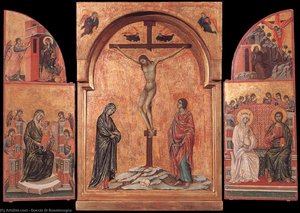
In the quiet contemplation of Duccio di Buoninsegna’s Crucifixion (Fragment), one does not merely observe a historical relic, but encounters a profound moment of human and divine intersection. Created around 1311, this evocative piece serves as a window into the early XIV century, a period where the rigid, golden hierarchies of Byzantine tradition began to soften under the warmth of emerging Italian humanism. Though it exists now as a fragment—likely once part of a much larger, sweeping altarpiece—its impact remains undiminished. The painting captures the agonizing gravity of the crucifixion, not through mere spectacle, but through a delicate balance of spiritual solemnity and a nascent, tender naturalism that invites the viewer to share in the mourning of the crowd.
The composition draws the eye into a sea of collective grief. As Jesus is nailed to the cross, he is surrounded by a gathering of souls, some pressing forward with visible anguish while others observe from the periphery with a heavy, reflective silence. This interplay between the central tragedy and the surrounding witnesses creates a rhythmic emotional depth; the viewer is not just a spectator but an invited participant in this sacred drama. For the discerning collector or designer, the piece offers a profound focal point—a work that commands presence through its narrative weight rather than sheer scale.
The Alchemy of Tempera and Tradition
Technically, the Crucifixion (Fragment) is a masterclass in the use of tempera on panel, a medium that Duccio utilized to achieve a luminous, almost ethereal surface. The artist’s hand is visible in the meticulous rendering of textures—the heavy, stylized folds of drapery that echo Byzantine iconography, yet possess a newfound weight and volume that suggest a real, physical presence. His palette, dominated by subdued, earthy tones, avoids the garishness of later eras, opting instead for a tonal harmony that mirrors the somber atmosphere of the scene. This restraint allows the subtle nuances of skin tone and fabric to emerge, showcasing Duccio’s commitment to portraying human anatomy with an accuracy that was revolutionary for his time.
The brilliance of Duccio lies in his ability to bridge two worlds. He retains the celestial splendor of the Byzantine style—often through the use of light and gold—but infuses it with a gentle, rhythmic movement. A slight tilt of a head or the sorrowful curve of a brow introduces a sense of psychological intimacy. This technique creates a painting that feels both timeless and deeply grounded in the human experience, making it an exquisite choice for spaces that require an atmosphere of intellectual depth and quiet elegance.
A Legacy of Empathy and Light
To understand this fragment is to understand the religious transformation of Siena during the early 14th century. This was an era of fervent devotion, where art began to move away from the cold, distant icons of the past toward a more emotive and accessible spirituality. Duccio was at the forefront of this movement, acting as a pioneer who dared to imbue sacred narratives with palpable human feeling. His work does not just depict a theological event; it captures the very essence of compassion and the weight of mortality.
For those seeking to adorn a curated collection or a sophisticated interior, a high-quality reproduction of this fragment offers more than mere decoration. It brings into a room a piece of history that speaks of resilience, faith, and the enduring power of beauty. Whether placed in a gallery-style setting or as a contemplative element in a private study, Duccio’s Crucifixion remains a testament to the moment when art learned to breathe, offering an eternal connection to the dawn of the Italian Renaissance.
Похожие произведения
Биография художника
The Sienese Luminary: Duccio di Buoninsegna and the Dawn of a New Italian Vision
Duccio di Buoninsegna, born in Siena around 1255, stands as a pivotal figure bridging the stylistic chasm between the Byzantine world and the burgeoning artistic sensibilities of Italy. While biographical details remain frustratingly scarce—the man himself often obscured by the brilliance of his art—his impact on the Sienese School and the trajectory of Italian painting is undeniable. He emerged during a period where religious iconography was deeply entrenched, yet a yearning for greater naturalism and emotional resonance was beginning to stir within artistic circles. Duccio wasn’t merely a painter; he was an innovator who dared to infuse sacred narratives with human feeling, subtly shifting the focus from rigid formality towards a more intimate connection between the divine and the earthly realm. His early training remains somewhat mysterious, though speculation suggests possible influences ranging from Florentine masters to direct exposure to Byzantine artistry—perhaps even travels to Constantinople itself. Whatever his formative experiences, they coalesced into a unique style that would define an era.A Synthesis of Tradition and Innovation
Duccio’s artistic development wasn't a sudden rupture with the past but rather a graceful evolution. His initial works were deeply rooted in Byzantine conventions: the lavish use of gold leaf to evoke celestial light, stylized figures possessing an ethereal quality, and a meticulous attention to religious symbolism. These elements—inherited from his predecessors—were hallmarks of Byzantine art, reflecting the profound influence of Constantinople on Italian painting during this period. However, even within these established parameters, Duccio began to subtly introduce elements that foreshadowed his later innovations. He experimented with spatial arrangements, hinting at depth where flatness had previously reigned supreme. His color palettes, while still vibrant and rich—a characteristic of Byzantine art—gained a newfound subtlety and harmony, moving beyond the stark contrasts often found in earlier works. More importantly, he started imbuing his figures with a nascent sense of humanity—a gentle curve of the mouth suggesting a smile, a slight tilt of the head conveying contemplation. This wasn’t a rejection of Byzantine ideals but a refinement, an infusion of life into what had often been static representations. He skillfully blended tradition and innovation, creating a style that was both reverent and remarkably fresh.Masterpieces of Faith and Artistry
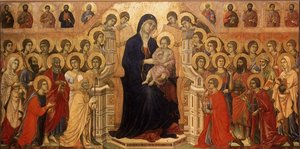
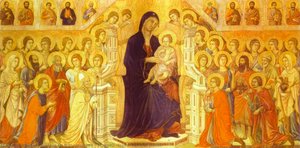
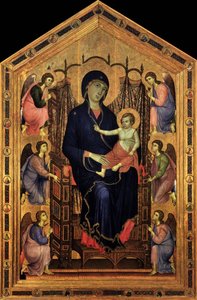
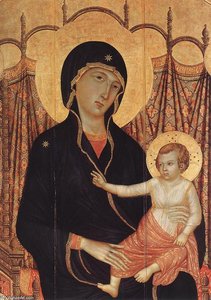
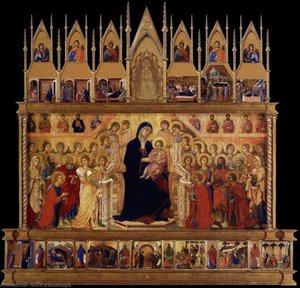
Two works stand as testaments to Duccio’s genius: the *Rucellai Madonna* (1285) and, most famously, the *Maestà* (1308-1311). The *Rucellai Madonna*, commissioned for a chapel in Florence, marked a significant departure from conventional Byzantine iconography. It was a commission that demanded a new approach to depicting religious figures, moving beyond the purely symbolic and towards a more naturalistic representation of the Virgin Mary and Child. Its composition, while still adhering to traditional forms—the pyramidal structure, the hierarchical arrangement of figures—displayed a greater sense of spatial organization and a more naturalistic depiction of the Virgin Mary and Child. The *Maestà*—a monumental altarpiece created for Siena Cathedral—cemented Duccio’s legacy. This sprawling masterpiece comprises numerous panels depicting scenes from the life of the Virgin Mary and Christ, each one a miniature work of art in itself. The Maestà is not merely a collection of paintings; it's a visual narrative, unfolding with breathtaking detail and emotional depth. Duccio’s mastery of light and shadow, his ability to convey complex emotions through subtle gestures, and his innovative use of perspective all converge in this single, awe-inspiring work. Beyond these monumental pieces, works like *Polyptych No. 28* demonstrate his continued compositional skill and meticulous attention to detail.Influences and Artistic Development
Duccio’s artistic journey was shaped by a complex interplay of influences. While firmly rooted in Byzantine tradition—particularly the iconography and techniques of Constantinople—he also absorbed elements from other sources. Florentine masters, with their emphasis on perspective and naturalism, undoubtedly played a role in his development. The influence of Simone Martini, another prominent Sienese painter, is often noted, particularly in his use of color and decorative elements. Some scholars even speculate that Duccio may have traveled to Paris or Constantinople, immersing himself in the artistic currents of those cities. These experiences broadened his horizons and allowed him to synthesize diverse influences into a uniquely Sienese style. His work represents a crucial transitional phase in Italian painting, bridging the gap between Byzantine formality and the emerging naturalism of the Renaissance.A Lasting Legacy: Shaping the Future of Italian Art
Duccio di Buoninsegna’s influence extended far beyond his lifetime. He revolutionized Italian painting, paving the way for the development of the Sienese School—a distinct artistic tradition characterized by its elegance, refinement, and emotional intensity. His emphasis on naturalism, spatial depth, and human emotion directly impacted subsequent generations of artists, influencing not only those within Siena but also painters in Florence and beyond. While Giotto is often credited with initiating the Renaissance style, Duccio’s contributions were equally crucial, laying the groundwork for the artistic innovations that would define the 14th century and beyond. Despite facing financial hardships during his life, Duccio’s artistic legacy endures. His masterpieces continue to inspire awe and admiration, serving as a powerful reminder of the transformative power of art. He helped define the Trecento art movement, leaving an indelible mark on the history of Western painting. Today, his works can be found in prominent museums worldwide, offering glimpses into a world where faith, artistry, and human emotion converged with breathtaking beauty.
Дюкко ди Буонисегга
1255 - 1319 , Италия
Основные сведения
- Artistic Movement Or Style: Готика, Сиенская школа
- Artists Or Movements Influenced By This Artist:
- Сиенская готика
- Итальянская живопись
- Artists Who Influenced This Artist: ['Византийское искусство']
- Date Of Birth: ок. 1255 г.
- Date Of Death: ок. 1319 г.
- Full Name: Дуccio ди Буонисегга
- Nationality: Итальянский
- Notable Artworks:
- Маэста
- Ручеллаи Мадонна
- Place Of Birth: Сиена, Италия
Похожие статьи
Sacred Narratives Embodied: A Comprehensive Exploration of Religious Iconography in Art History
Explore the rich history of religious iconography in art! Discover symbolism, movements & masterpieces from Byzantine to Renaissance periods. Expert insights for collectors and enthusiasts at ArtsDot.

Late Medieval Masterpieces: 10 Artworks That Defined an Era | ArtsDot
Journey through 10 defining Late Medieval masterpieces – from Giotto's frescoes to Jan van Eyck’s realism. Explore the stories, techniques & vibrant colors of Gothic art. Find museum-quality reproductions and elevate your home decor with ArtsDot.com! Discover all masterpieces on ArtsDot.com

High Medieval Art: 10 Masterpieces That Shaped an Era | ArtsDot
Journey through High Medieval Art! Explore 10 iconic masterpieces – from Giotto's frescoes to stunning Gothic cathedrals. Discover the stories behind these timeless paintings, sculptures & illuminated manuscripts. Find museum-quality art reproductions at ArtsDot.com.
Sacred Narratives on Canvas: Exploring Religious Painting Through History
Explore the rich history of religious painting with ArtsDot.com! Discover iconic artworks, symbolism & techniques from antiquity to the Renaissance. Enhance your art appreciation today.
Sacred Narratives on Canvas: Exploring Religious Scenes & Their Enduring Influence
Explore the rich history of religious art from Giotto to the Renaissance masters with ArtsDot. Discover symbolism, techniques & enduring legacies. Museum-quality reproductions available.