

 Предпросмотр
 Поделиться
 Поделиться
 Детали произведения

 Скачать
 Похожие работы
 Рентгенография
 Слайд-шоу
 Статистика
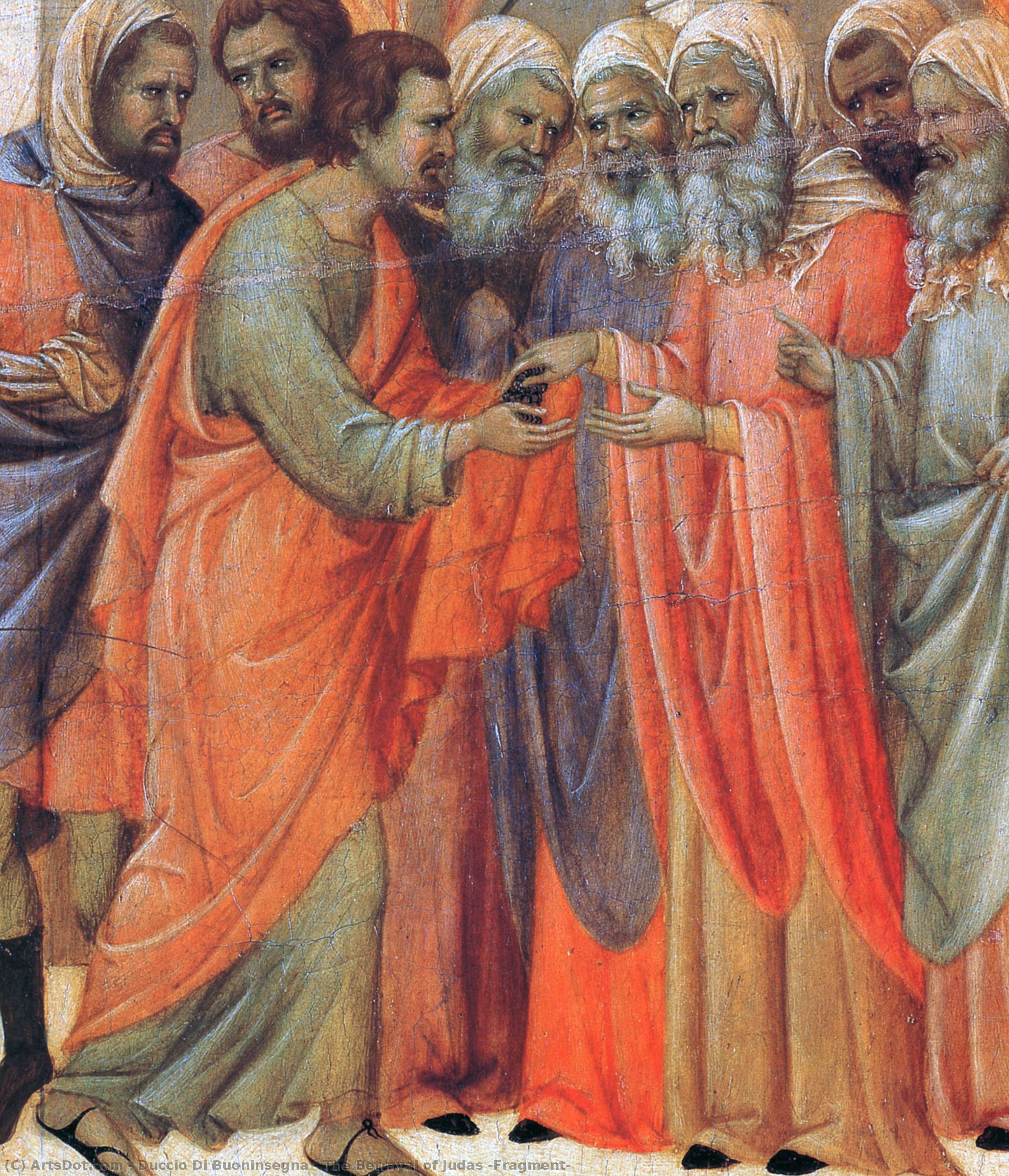
The Betrayal of Judas (Fragment)


 Читать далее
Приобретите цифровое изображение высокого разрешения в улучшенном качестве, которое значительно превосходит онлайн-превью.
Каждый файл тщательно подготавливается нашими специалистами с использованием передовых инструментов и экспертной ручной ретуши. Мы гарантируем исключительную четкость, точную цветопередачу и детальную проработку каждого изображения.
Финальный файл доставляется по электронной почте в течение 72 часов и оптимизирован для немедленного использования в профессиональной среде, при верстке и печати. Это тот же уровень качества, которому доверяют ведущие дизайнерские студии, издательства и галереи.
Цифровое изображение
Скачайте файл высокого разрешения для личного использования, печати и творческих проектов. ( Перейти к печати Купить картину ручной работы)
Включено в каждый заказ цифровых изображений
Гарантия экспертной цифровой доставки
Выбирая ArtsDot.com, вы получаете не просто изображение — вы приобретаете профессионально обработанное цифровое произведение искусства, созданное с безупречной точностью и под защитой гарантии качества. Вот всё, что автоматически входит в ваш заказ:

Мгновенная доставка по e-mail
Ваш цифровой файл в высоком разрешении будет отправлен вам по электронной почте в течение 72 часов после оформления заказа — и сразу станет доступен для использования.

Цифровой файл с ИИ-улучшением
Ваше произведение искусства проходит профессиональную оптимизацию с использованием передовых инструментов ИИ и ручной обработки, что гарантирует максимальную детализацию, четкость и точность цветопередачи.

Бессрочная бесплатная повторная доставка
Случайно удалили или потеряли файл? Не беспокойтесь — мы отправим его вам повторно в любое время и совершенно бесплатно.

Без импортных пошлин — навсегда
Наслаждайтесь вашим произведением искусства мгновенно без таможенных пошлин, сборов или затрат на доставку — цифровые загрузки всегда не облагаются налогом.

Гарантия точности цветопередачи
Мы гарантируем, что ваше цифровое изображение максимально точно передает оригинальные цвета благодаря использованию профессиональных инструментов и систем управления цветом.

Гарантия удовлетворенности 100 дней
Если вы не будете удовлетворены своим цифровым изображением, мы внесем правки или вернем 100% стоимости в течение 100 дней — без лишних вопросов.

100% Гарантия возврата средств
Не удовлетворены покупкой? Получите полный возврат средств в течение 100 дней после получения цифрового файла — без лишних вопросов.

Скидки на оптовые заказы
Купите 3 изображения, сэкономьте 10% — Купите 5, сэкономьте 15% — Купите 10+, сэкономьте 20%. Отличное решение для творческих проектов, галерей и агентств.
A Fragment of Divine Drama: Exploring Duccio’s “The Betrayal of Judas”
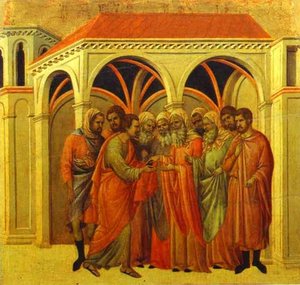
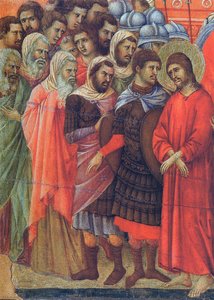
Duccio di Buoninsegna's "The Betrayal of Judas" (Fragment), painted circa 1311, represents more than just a depiction of biblical scripture; it embodies the burgeoning humanist spirit that was reshaping Italian art during its formative years. Created in Siena, this fresco fragment offers a glimpse into the artistic landscape of Tuscany at the dawn of the XIV century—a time marked by both profound religious devotion and an increasing fascination with portraying human emotion within sacred narratives. The painting’s enduring power lies not only in its meticulous execution but also in its subtle yet revolutionary stylistic choices that firmly established Duccio as one of the foremost artists of his era.- Subject Matter: The scene captures a pivotal moment from Christian tradition—the betrayal of Jesus by Judas Iscariot—a narrative central to the Gospels and symbolizing the fallibility of humanity alongside divine grace.
- Style & Technique: Duccio’s approach distinguishes itself from the prevailing Byzantine style through its embrace of naturalism. Unlike the stylized figures characteristic of Byzantine art, where proportions were often idealized and drapery rendered in geometric patterns, Duccio strives for greater realism, evident in the expressive faces of his subjects and the nuanced rendering of textures—particularly noticeable in the folds of Jesus’ robe.
The Fresco Medium: Innovation and Tradition
Frescoes—wall paintings executed directly onto wet plaster—were a dominant artistic medium throughout Europe during Duccio's lifetime. However, Duccio elevated this technique beyond mere decoration, utilizing it to convey profound spiritual meaning. The fresco process demanded careful planning and execution, necessitating precise pigment mixing and layering to achieve optimal adhesion and luminosity. This painstaking method ensured that the colors retained their vibrancy for centuries, preserving the artwork’s original impact on viewers.- Color Palette: Duccio employed a rich palette dominated by earthy tones—ochres, siennas, and umbers—reflecting the artistic conventions of Siena and emphasizing the solemnity of the subject matter. Yet, he skillfully juxtaposed these muted hues with brighter accents—particularly in the drapery—creating visual interest and enhancing the emotional resonance of the scene.
- Composition & Perspective: The fresco’s composition is carefully structured to guide the viewer's gaze toward Jesus at the center. Duccio subtly employs perspective, albeit rudimentary compared to later Renaissance developments, to create a sense of depth and spatial realism—a deliberate departure from the flattened planes favored by Byzantine iconography.
Symbolism & Emotional Impact: Humanity Embraced
Beyond its technical prowess, “The Betrayal of Judas” resonates deeply with viewers due to its profound symbolic significance. The figures surrounding Jesus—representing faith and loyalty—contrast sharply with Judas’s shadowy presence, embodying deceit and betrayal. Duccio's masterful portrayal captures the anguish and vulnerability experienced by Jesus during this agonizing moment, conveying a palpable sense of sorrow and compassion. This humanist sensibility—a hallmark of Duccio’s artistic vision—transformed religious art from an abstract contemplation of divine majesty into a deeply human experience.Ultimately, Duccio's “The Betrayal of Judas” stands as a testament to the transformative power of art—a fragment that encapsulates not only the stylistic innovations of its time but also the enduring quest for artistic expression that speaks across centuries. Its meticulous detail and emotive quality continue to inspire admiration and serve as a poignant reminder of humanity’s capacity for both profound faith and heartbreaking betrayal.
Похожие произведения
Биография художника
The Sienese Luminary: Duccio di Buoninsegna and the Dawn of a New Italian Vision
Duccio di Buoninsegna, born in Siena around 1255, stands as a pivotal figure bridging the stylistic chasm between the Byzantine world and the burgeoning artistic sensibilities of Italy. While biographical details remain frustratingly scarce—the man himself often obscured by the brilliance of his art—his impact on the Sienese School and the trajectory of Italian painting is undeniable. He emerged during a period where religious iconography was deeply entrenched, yet a yearning for greater naturalism and emotional resonance was beginning to stir within artistic circles. Duccio wasn’t merely a painter; he was an innovator who dared to infuse sacred narratives with human feeling, subtly shifting the focus from rigid formality towards a more intimate connection between the divine and the earthly realm. His early training remains somewhat mysterious, though speculation suggests possible influences ranging from Florentine masters to direct exposure to Byzantine artistry—perhaps even travels to Constantinople itself. Whatever his formative experiences, they coalesced into a unique style that would define an era.A Synthesis of Tradition and Innovation
Duccio’s artistic development wasn't a sudden rupture with the past but rather a graceful evolution. His initial works were deeply rooted in Byzantine conventions: the lavish use of gold leaf to evoke celestial light, stylized figures possessing an ethereal quality, and a meticulous attention to religious symbolism. These elements—inherited from his predecessors—were hallmarks of Byzantine art, reflecting the profound influence of Constantinople on Italian painting during this period. However, even within these established parameters, Duccio began to subtly introduce elements that foreshadowed his later innovations. He experimented with spatial arrangements, hinting at depth where flatness had previously reigned supreme. His color palettes, while still vibrant and rich—a characteristic of Byzantine art—gained a newfound subtlety and harmony, moving beyond the stark contrasts often found in earlier works. More importantly, he started imbuing his figures with a nascent sense of humanity—a gentle curve of the mouth suggesting a smile, a slight tilt of the head conveying contemplation. This wasn’t a rejection of Byzantine ideals but a refinement, an infusion of life into what had often been static representations. He skillfully blended tradition and innovation, creating a style that was both reverent and remarkably fresh.Masterpieces of Faith and Artistry
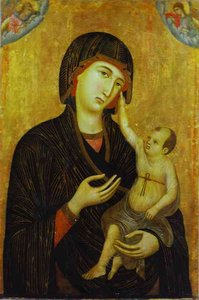
Two works stand as testaments to Duccio’s genius: the *Rucellai Madonna* (1285) and, most famously, the *Maestà* (1308-1311). The *Rucellai Madonna*, commissioned for a chapel in Florence, marked a significant departure from conventional Byzantine iconography. It was a commission that demanded a new approach to depicting religious figures, moving beyond the purely symbolic and towards a more naturalistic representation of the Virgin Mary and Child. Its composition, while still adhering to traditional forms—the pyramidal structure, the hierarchical arrangement of figures—displayed a greater sense of spatial organization and a more naturalistic depiction of the Virgin Mary and Child. The *Maestà*—a monumental altarpiece created for Siena Cathedral—cemented Duccio’s legacy. This sprawling masterpiece comprises numerous panels depicting scenes from the life of the Virgin Mary and Christ, each one a miniature work of art in itself. The Maestà is not merely a collection of paintings; it's a visual narrative, unfolding with breathtaking detail and emotional depth. Duccio’s mastery of light and shadow, his ability to convey complex emotions through subtle gestures, and his innovative use of perspective all converge in this single, awe-inspiring work. Beyond these monumental pieces, works like *Polyptych No. 28* demonstrate his continued compositional skill and meticulous attention to detail.Influences and Artistic Development
Duccio’s artistic journey was shaped by a complex interplay of influences. While firmly rooted in Byzantine tradition—particularly the iconography and techniques of Constantinople—he also absorbed elements from other sources. Florentine masters, with their emphasis on perspective and naturalism, undoubtedly played a role in his development. The influence of Simone Martini, another prominent Sienese painter, is often noted, particularly in his use of color and decorative elements. Some scholars even speculate that Duccio may have traveled to Paris or Constantinople, immersing himself in the artistic currents of those cities. These experiences broadened his horizons and allowed him to synthesize diverse influences into a uniquely Sienese style. His work represents a crucial transitional phase in Italian painting, bridging the gap between Byzantine formality and the emerging naturalism of the Renaissance.A Lasting Legacy: Shaping the Future of Italian Art
Duccio di Buoninsegna’s influence extended far beyond his lifetime. He revolutionized Italian painting, paving the way for the development of the Sienese School—a distinct artistic tradition characterized by its elegance, refinement, and emotional intensity. His emphasis on naturalism, spatial depth, and human emotion directly impacted subsequent generations of artists, influencing not only those within Siena but also painters in Florence and beyond. While Giotto is often credited with initiating the Renaissance style, Duccio’s contributions were equally crucial, laying the groundwork for the artistic innovations that would define the 14th century and beyond. Despite facing financial hardships during his life, Duccio’s artistic legacy endures. His masterpieces continue to inspire awe and admiration, serving as a powerful reminder of the transformative power of art. He helped define the Trecento art movement, leaving an indelible mark on the history of Western painting. Today, his works can be found in prominent museums worldwide, offering glimpses into a world where faith, artistry, and human emotion converged with breathtaking beauty.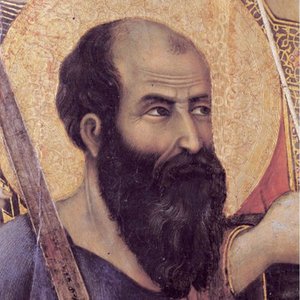
Дюкко ди Буонисегга
1255 - 1319 , Италия
Основные сведения
- Artistic Movement Or Style: Готика, Сиенская школа
- Artists Or Movements Influenced By This Artist:
- Сиенская готика
- Итальянская живопись
- Artists Who Influenced This Artist: ['Византийское искусство']
- Date Of Birth: ок. 1255 г.
- Date Of Death: ок. 1319 г.
- Full Name: Дуccio ди Буонисегга
- Nationality: Итальянский
- Notable Artworks:
- Маэста
- Ручеллаи Мадонна
- Place Of Birth: Сиена, Италия