

 Предпросмотр
 Поделиться
 Поделиться
 Детали произведения

 Скачать
 Похожие работы
 Рентгенография
 Слайд-шоу
 Статистика
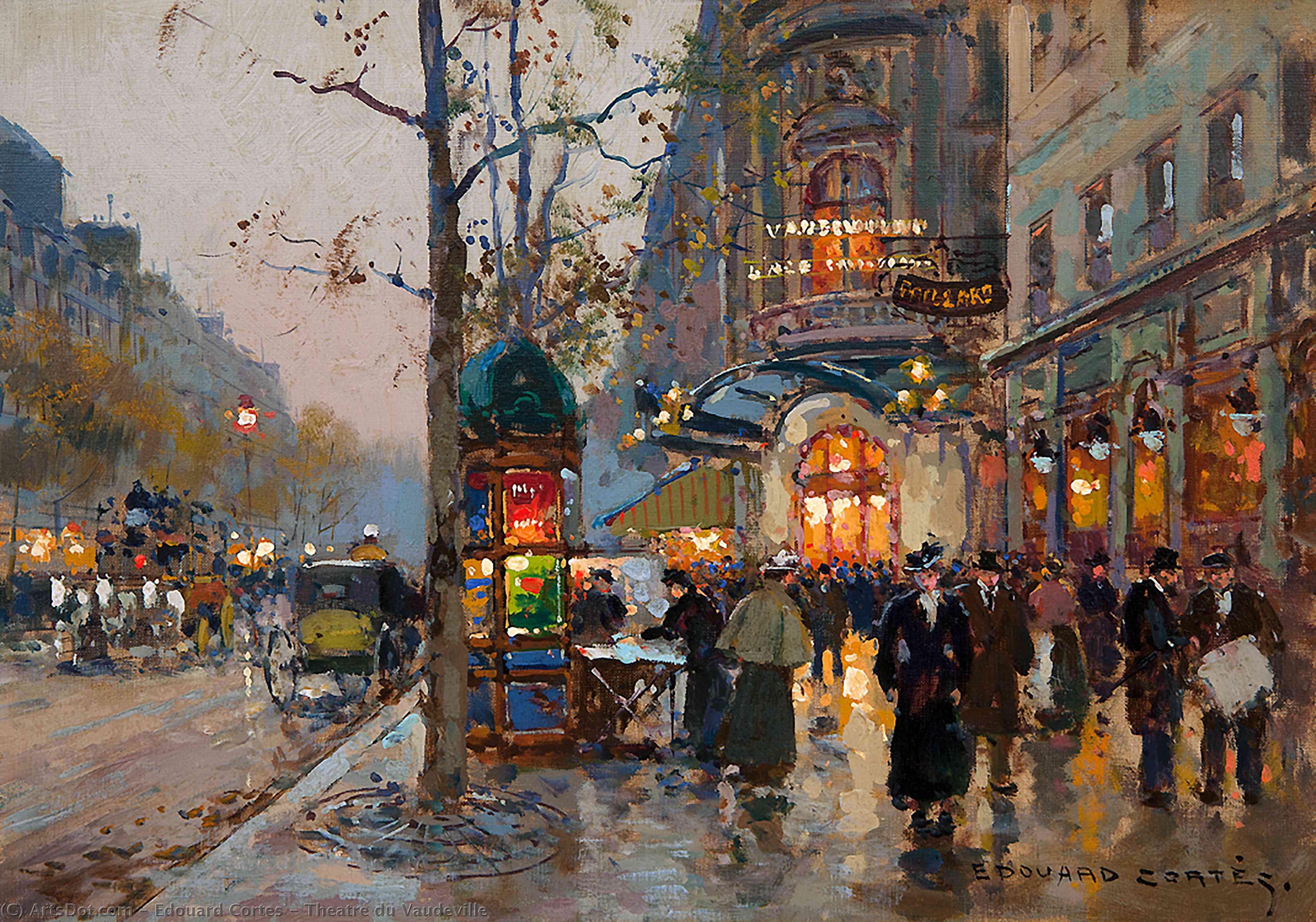
Theatre du Vaudeville


 Читать далее
Приобретите цифровое изображение высокого разрешения в улучшенном качестве, которое значительно превосходит онлайн-превью.
Каждый файл тщательно подготавливается нашими специалистами с использованием передовых инструментов и экспертной ручной ретуши. Мы гарантируем исключительную четкость, точную цветопередачу и детальную проработку каждого изображения.
Финальный файл доставляется по электронной почте в течение 72 часов и оптимизирован для немедленного использования в профессиональной среде, при верстке и печати. Это тот же уровень качества, которому доверяют ведущие дизайнерские студии, издательства и галереи.
Цифровое изображение
Скачайте файл высокого разрешения для личного использования, печати и творческих проектов. ( Перейти к печати Купить картину ручной работы)
Включено в каждый заказ цифровых изображений
Гарантия экспертной цифровой доставки
Выбирая ArtsDot.com, вы получаете не просто изображение — вы приобретаете профессионально обработанное цифровое произведение искусства, созданное с безупречной точностью и под защитой гарантии качества. Вот всё, что автоматически входит в ваш заказ:

Мгновенная доставка по e-mail
Ваш цифровой файл в высоком разрешении будет отправлен вам по электронной почте в течение 72 часов после оформления заказа — и сразу станет доступен для использования.

Цифровой файл с ИИ-улучшением
Ваше произведение искусства проходит профессиональную оптимизацию с использованием передовых инструментов ИИ и ручной обработки, что гарантирует максимальную детализацию, четкость и точность цветопередачи.

Бессрочная бесплатная повторная доставка
Случайно удалили или потеряли файл? Не беспокойтесь — мы отправим его вам повторно в любое время и совершенно бесплатно.

Без импортных пошлин — навсегда
Наслаждайтесь вашим произведением искусства мгновенно без таможенных пошлин, сборов или затрат на доставку — цифровые загрузки всегда не облагаются налогом.

Гарантия точности цветопередачи
Мы гарантируем, что ваше цифровое изображение максимально точно передает оригинальные цвета благодаря использованию профессиональных инструментов и систем управления цветом.

Гарантия удовлетворенности 100 дней
Если вы не будете удовлетворены своим цифровым изображением, мы внесем правки или вернем 100% стоимости в течение 100 дней — без лишних вопросов.

100% Гарантия возврата средств
Не удовлетворены покупкой? Получите полный возврат средств в течение 100 дней после получения цифрового файла — без лишних вопросов.

Скидки на оптовые заказы
Купите 3 изображения, сэкономьте 10% — Купите 5, сэкономьте 15% — Купите 10+, сэкономьте 20%. Отличное решение для творческих проектов, галерей и агентств.
A Parisian Reverie Captured in Oil
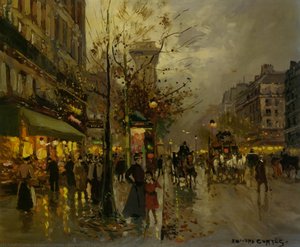
Edouard Cortès, a name often whispered with reverence among collectors of Post-Impressionist art, gifted us with a remarkable window into the heart of late 19th-century Paris. “Théâtre du Vaudeville,” a scene brimming with urban life and subtly infused with melancholy, isn’t merely a depiction of a rainy street; it's an evocation of a specific mood, a fleeting moment suspended in time. Cortès, born in Lagny-sur-Marne in 1882 – a town that nurtured his artistic spirit before he embraced the vibrant pulse of Paris – possessed a singular ability to translate the city’s energy onto canvas. His early work, like “La Labour,” already signaled a talent for capturing the essence of everyday life, and "Théâtre du Vaudeville" represents a culmination of this skill, showcasing his mastery of light, color, and composition.
- Subject Matter: The painting’s subject is deceptively simple – a bustling Parisian street during a downpour. Yet, Cortès elevates this commonplace scene through meticulous detail and an astute understanding of human behavior.
- Style & Technique: Clearly rooted in Post-Impressionism, the work demonstrates Cortès' characteristic brushwork—loose yet controlled, conveying movement and atmosphere with remarkable precision. The artist employs broken color to create a shimmering effect on the wet pavement and umbrellas, while his use of light is masterful, casting dramatic shadows that deepen the sense of depth and realism.
- Historical Context: Painted during a period of rapid industrialization and social change in Paris, “Théâtre du Vaudeville” offers a poignant glimpse into the lives of ordinary Parisians navigating their daily routines amidst the city’s growing complexities. The presence of the horse-drawn carriage speaks to a bygone era, while the figures themselves embody the spirit of a vibrant, evolving metropolis.
The Poetic Soul of a Parisian Painter
Édouard Cortès earned his moniker, “Le Poète Parisien de la Peinture,” not through grand pronouncements but through the quiet intensity and emotional resonance he brought to his work. His lineage – tracing back to a Spanish royal painter – instilled in him a deep appreciation for artistic tradition, yet he forged his own path with unwavering conviction. Cortès’s approach was deeply personal; he famously declared himself “a student of myself,” reflecting a commitment to self-discovery and an uncompromising pursuit of artistic truth. This dedication is palpably present in "Théâtre du Vaudeville," where the artist's eye for detail and his ability to capture human emotion are truly remarkable. The painting isn’t just about depicting a street scene; it’s about conveying a feeling – a sense of quiet contemplation amidst the chaos of urban life.
Symbolism and Emotional Impact
The rain itself is a crucial element, acting as more than just a meteorological backdrop. It symbolizes both cleansing and melancholy, reflecting the transient nature of life and the inevitable passage of time. The figures huddled beneath their umbrellas represent humanity’s shared vulnerability in the face of adversity – a universal theme that resonates across cultures and generations. The composition, with its diagonal lines and dynamic arrangement of figures, creates a sense of movement and energy, drawing the viewer into the heart of the scene. Cortès' masterful use of color—the muted tones of gray and brown punctuated by flashes of brighter hues—further enhances the painting’s emotional impact, creating a mood that is both beautiful and poignant.
Own a Piece of Parisian History
A handmade oil painting reproduction of “Théâtre du Vaudeville” offers an unparalleled opportunity to bring a masterpiece of Post-Impressionism into your home or office. Available through ArtsDot.com, this meticulously crafted reproduction captures the essence of Cortès’s original work with exceptional fidelity. It's more than just a print; it’s a tangible connection to a pivotal moment in art history and a testament to the enduring beauty of Parisian life.
Похожие произведения


Биография художника
Edouard Leon Cortes: The Parisian Poet of Painting
Édouard Léon Cortès, affectionately known as “Le Poète Parisien de la Peinture” – the Parisian Poet of Painting – wasn’t born into the glittering world he would so vividly capture on canvas. His origins lay in Lagny-sur-Marne, a quiet town east of Paris, where he arrived on August 6th, 1882. Though France was his birthplace, artistic lineage flowed through his veins from his Spanish father, Antonio Cortés, a painter who had once served the Spanish Royal Court. This heritage instilled within young Édouard an early appreciation for artistry and a dedication to honing his skills. He began formal studies at the École des Beaux-Arts in Paris at just seventeen, immersing himself in the techniques of the masters while simultaneously forging his own distinct path. Even then, Cortès possessed a fiercely independent spirit, playfully rebuffing suggestions that he was merely a student of any particular master, declaring himself “a student of myself only.” This self-reliance would become a hallmark of his career and artistic vision.Capturing the Soul of Paris
Cortès’s name became synonymous with Parisian cityscapes. He didn't simply paint buildings; he painted atmospheres – the soft glow of gas lamps on rain-slicked cobblestones, the bustling energy of boulevards teeming with life, the quiet intimacy of a café scene unfolding under a hazy sky. His work wasn’t about grand monuments or historical events, but rather the everyday poetry of Parisian existence. He possessed an uncanny ability to capture fleeting moments – a shaft of sunlight illuminating Notre Dame, the vibrant colors reflected in puddles after a shower, the hushed anticipation before a performance at the Opera. These weren't idealized visions; they were honest portrayals of a city brimming with life, beauty, and a touch of melancholy. His palette favored muted tones, skillfully blended to evoke mood and atmosphere, often employing shades of gray, blue, and ochre that perfectly mirrored the Parisian climate. He wasn’t interested in radical experimentation or abstract forms; his focus remained steadfastly on representing the world as he saw it – beautiful, transient, and deeply evocative. His paintings are not mere depictions of places but rather windows into a specific feeling, a particular moment in time.A Soldier's Brush: War and Resilience
The idyllic world Cortès painted was shattered by the outbreak of World War I. Despite being a committed pacifist, duty called, and at the age of thirty-two, he enlisted in the French Infantry Regiment. The horrors of war profoundly impacted him, yet even amidst the chaos and destruction, his artistic spirit endured. Wounded early in the conflict, he was reassigned to utilize his talent for sketching, tasked with mapping enemy positions. This experience, though harrowing, likely sharpened his observational skills and deepened his appreciation for the fragility of life – themes that would subtly permeate his later work. He refused the Légion d’Honneur offered by the French government, a testament to his unwavering pacifist beliefs. Personal tragedy also struck during this period; his first wife, Fernande Joyeuse, passed away in 1918, leaving him with their daughter, Jacqueline Simone. He later married Fernande’s sister, Lucienne Joyeuse, finding solace and companionship amidst the lingering shadows of war.Influences and Artistic Kinship
While Cortès developed a uniquely personal style, echoes of other masters can be discerned within his work. The atmospheric effects and subtle play of light recall the Impressionists, particularly Camille Pissarro and Alfred Sisley. However, he lacked their focus on pure optical sensation, instead prioritizing narrative and emotional resonance. Post-Impressionist artists like Eugène Boudin also influenced his approach to capturing fleeting moments and atmospheric conditions. *His dedication to depicting everyday life aligns him with Realist painters*, yet his romanticized vision of Paris elevates his work beyond mere documentation. He wasn’t attempting to replicate reality precisely; he was striving to capture its essence, its mood, its poetry. Artists like Frederick Soulacroix and Paul Gauguin, though distinct in their styles, shared Cortès's fascination with capturing the spirit of a place and its people, imbuing their canvases with a sense of atmosphere and emotion. His legacy lies not in revolutionizing painting but in perfecting a particular vision – a deeply personal and profoundly moving portrayal of Paris that continues to resonate with audiences today.Major Achievements and Recognition
Cortès’s career spanned several decades, during which he produced an impressive body of work. He gained recognition early on, making his Salon debut at the age of sixteen in 1899 with the painting *Le Labour,* showing a farmer plowing his field. The critics praised his talent and declared him “a little chap, only so high, who by rights should still be wearing out the seat of his trousers on his school bench, but who, nonetheless, with his light touch, has already entered canvasses for the Salon: a colleague of Jean-Paul Laurens, and rival to Henner.” In 1969, in his final year of life, he received the prestigious Prix Antoine-Quinson from the Salon de Vincennes – a fitting tribute to a lifetime dedicated to artistic expression. His paintings are now held in numerous private collections and museums worldwide, testament to their enduring appeal.A Lasting Legacy
Edouard Léon Cortès died on November 26th, 1969, in Lagny-sur-Marne, leaving behind a vast body of work that continues to captivate art lovers worldwide. A street in his hometown bears his name, a lasting testament to the “Parisian Poet” who immortalized the city’s soul on canvas. His paintings remain highly sought after, not merely as decorative pieces but as windows into a bygone era – glimpses of a Paris that exists now primarily through his evocative and enduring art. His unique ability to capture the atmosphere and emotion of Parisian life ensures that his work will continue to be appreciated for generations to come.
Эдуард Кортес
1882 - 1969 , Франция
Основные сведения
- Artistic Movement Or Style: Пост-импрессионизм
- Artists Or Movements Influenced By This Artist:
- Реализм
- Импрессионизм
- Artists Who Influenced This Artist:
- Моне
- Сислеи
- Date Of Birth: 6 августа 1882
- Date Of Death: 26 ноября 1969
- Full Name: Edouard Leon Cortes
- Nationality: Француз
- Notable Artworks:
- Пейзаж, Лабор
- Букет роз
- Place Of Birth: Лани-сюр-Марн, Франция