

 Предпросмотр
 Поделиться
 Поделиться
 Детали произведения

 Скачать
 Похожие работы
 Рентгенография
 Слайд-шоу
 Статистика
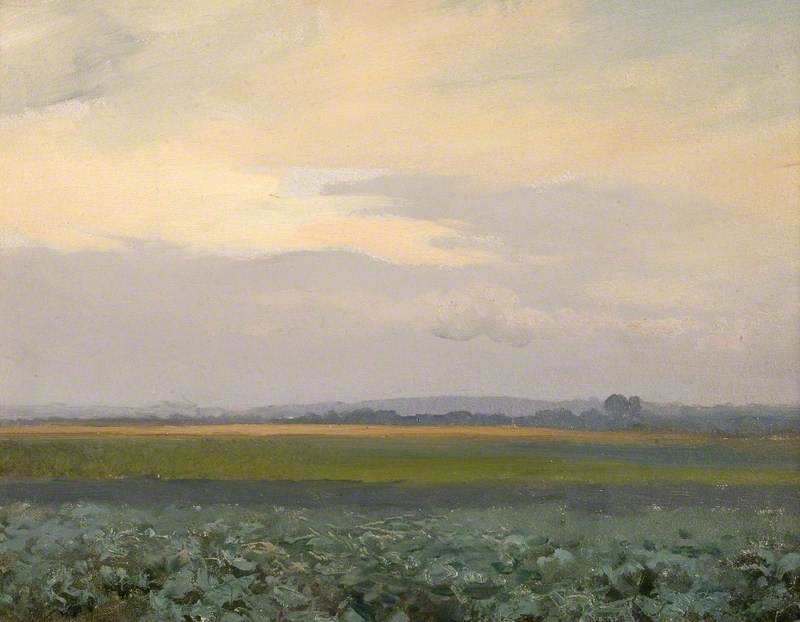
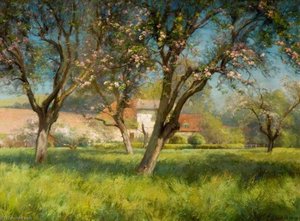
The Fields, Bengeo, Hertfordshire
 Acrylic
- WallArt
- Pre-Raphaelite
 24.0 x 30.0 cm
 Читать далее
Масляная репродукция ручной работы
Картина маслом на холсте в выбранном вами размере и раме, написанная на заказ нашими художниками. ( Перейти к печати Перейти к цифровым изображениям)




P118B $10

P118H $10

P118W $10

P438Z $10

P508JH $12

P508YH $12

P805H $10

P805Z $10

P919BZ $10

P919G $10

P919XJ $10

P959ZH $10

P968JZ $12

W106C $8

W218G $10

W218JH $8

W218Y $10

W307PJ $10

W316G $10

W316PJ $8

W316Y $10

W398PJ $8

W4111J $10

W500HY $15

W500JH $15

W692G $12

W849H $8

W940BG $15

W953PJ $8




Выберите один из наших стандартных размеров, соответствующих оригинальным пропорциям произведения искусства.

Вы можете указать собственные размеры, чтобы картина идеально вписалась в выбранную раму или пространство. Если выбранный вами размер не соответствует пропорциям оригинала, мы либо обрежем полотно, либо расширим его за счет дополнительных элементов, написанных вручную. Цифровой макет будет отправлен вам на утверждение перед началом производства.
Обратите внимание, что предварительный просмотр на экране не отражает фактическую обрезку или расширение. Только макет точно покажет окончательную композицию.
Хотя доступны индивидуальные размеры, мы рекомендуем выбирать вариант из предопределенного списка, чтобы сохранить исходные пропорции.
После оформления заказа команда ArtsDot.com свяжется с клиентом по электронной почте для уточнения деталей и предоставит предварительный макет
Доставка по всему миру () за 3–4 недели вместо стандартных 5 недель. (11 Сентябрь). Без компромиссов в качестве.

Бесплатная экспресс-доставка по всему миру

Высококачественный льняной холст

Полное страхование доставки

Гарантия возмещения таможенных пошлин

Гарантия точного соответствия цветов

100-дневная политика возврата (только при обнаружении дефектов)

Гарантия возврата 100% средств

Предложение оптовых скидок
 Вариант со стеклом доступен только для размеров менее 110 см

The Fields, Bengeo, Hertfordshire
Техника репродукции
Размер репродукции
-


Итоговая стоимость
$ 263
The Fields, Bengeo, Hertfordshire – An Ode to Rural Tranquility
Edward Archibald Brown’s “The Fields,” painted circa 1920 and currently residing in Hertfordshire, England, stands as a testament to the enduring fascination with the English countryside within the Pre-Raphaelite movement. More than just a depiction of landscape, it embodies a profound philosophical contemplation on beauty, light, and the restorative power of nature – sentiments deeply resonant with Victorian sensibilities.
Brown’s artistic journey began under the tutelage of Francis Hadow, a pioneering photographer who instilled in him an acute awareness of tonal gradation and textural nuance. This formative influence profoundly shaped his approach to painting, prioritizing observation and capturing subtle atmospheric shifts rather than striving for idealized representations. Unlike many of his contemporaries preoccupied with mythological narratives or fantastical visions, Brown focused on portraying the tangible world with remarkable accuracy and sensitivity.
- Style: Pre-Raphaelite Landscape
- Technique: Oil Painting – Employing a layering technique known as ‘glazing,’ Brown meticulously applied thin washes of color over subsequent layers to achieve luminous effects and subtle gradations of tone. This method allowed him to capture the diffused light characteristic of overcast days, creating an ethereal quality that distinguishes “The Fields” from more overtly dramatic compositions.
- Historical Context: Painted during the interwar years, “The Fields” reflects a reaction against the anxieties and uncertainties of the period. The serene beauty of the landscape served as a counterpoint to the turbulent political climate, offering solace and inspiration to viewers grappling with social upheaval.
The painting’s composition is deliberately understated yet remarkably effective. A gently undulating field dominates the canvas, punctuated by scattered trees that frame the horizon line. The muted palette—primarily greens, blues, and browns—harmoniously blends together, mirroring the natural harmonies of the rural landscape. Notably, Brown skillfully utilizes chiaroscuro – the interplay between light and shadow – to sculpt the forms of the trees and create depth within the scene.
Symbolism: The field itself represents fertility, renewal, and spiritual contemplation. The dappled sunlight filtering through the branches symbolizes divine grace and illuminates the hidden beauty of the natural world. Brown’s masterful rendering of light contributes to an emotional impact that transcends mere visual representation; it evokes a feeling of profound peace and invites viewers to reconnect with the rhythms of rural life.
“The Fields” continues to captivate audiences today, serving as an exemplar of Pre-Raphaelite landscape painting. Its enduring appeal lies in its ability to communicate timeless truths about beauty, tranquility, and the transformative power of observation—qualities that resonate deeply with collectors and interior designers seeking pieces that inspire contemplation and elevate their living spaces.
Похожие произведения
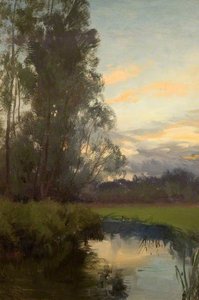
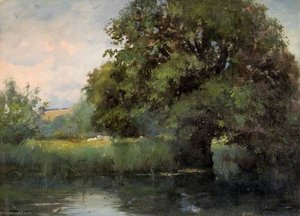
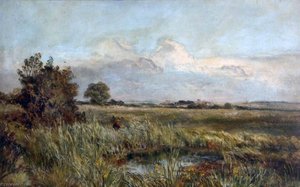
Биография художника
Edward Archibald Brown: Weaver of Light and Shadow
Edward Archibald Brown, a name perhaps less instantly recognizable than some of his Pre-Raphaelite contemporaries, nevertheless possessed a singular vision – one deeply rooted in the evocative landscapes of England and imbued with a profound understanding of light and color. Born in 1866 in London, Brown’s artistic journey was shaped by a meticulous apprenticeship under the renowned photographer Francis Hadow, an experience that fundamentally altered his approach to seeing and representing the world. This early exposure to photographic techniques – particularly the careful manipulation of tones and textures – instilled in him a remarkable sensitivity to detail and a desire to capture fleeting moments of atmospheric effect.
Brown’s artistic development unfolded gradually, initially exploring watercolor landscapes before gravitating towards oil painting. His formative years were spent absorbing the influence of the Pre-Raphaelite Brotherhood, though he never fully embraced their overtly romantic or mythological themes. Instead, he found his strength in depicting the quiet beauty of the English countryside – the rolling hills of Cornwall, the misty moors of Yorkshire, and the serene shores of Dorset. He was particularly drawn to scenes of rural life, capturing the rhythms of daily existence with a remarkable degree of realism and emotional resonance.
The Language of Light
What distinguishes Brown’s work is his masterful manipulation of light. He wasn't simply aiming for accurate representation; he sought to convey the *feeling* of light – its warmth, its coolness, its ability to transform a scene with subtle shifts in hue and tone. This is most evident in paintings like “Stormy Evening” (1903) and “Lock Keeper Cottage” (1907), both iconic works that exemplify his unique style. He employed a broken color technique, layering thin washes of paint to build up complex gradations of light and shadow. His brushstrokes were often loose and expressive, creating a sense of movement and atmosphere. He studied the effects of weather with an almost scientific precision, meticulously observing how sunlight filtered through clouds or reflected off water surfaces.
Brown’s technical skill was further enhanced by his understanding of color theory. He wasn't afraid to use unexpected combinations – vibrant blues against muted greens, fiery oranges against somber browns – to create a sense of visual drama and emotional intensity. His palette was often restrained, favoring subtle harmonies rather than bold contrasts, yet within this restraint lay a remarkable power to evoke mood and atmosphere.
Influences and Artistic Connections
While Brown’s work is firmly rooted in the Pre-Raphaelite tradition, he also drew inspiration from other sources. The landscapes of J.M.W. Turner, with their atmospheric effects and emphasis on light, were undoubtedly a significant influence. He was also fascinated by the works of Constable, particularly his depictions of rural England. Furthermore, Brown’s time spent working as a photographer informed his approach to painting, encouraging him to see the world in terms of shapes, tones, and textures.
He maintained close friendships with several prominent artists of his era, including William Denselow and Frank Bramley. These artistic connections provided opportunities for mutual inspiration and critique, contributing to the vibrant cultural landscape of late Victorian England. His work was exhibited regularly at the Royal Academy and other prestigious galleries, gaining him a modest but loyal following.
Major Achievements and Legacy
Brown’s most celebrated works include “Stormy Evening,” “Lock Keeper Cottage,” and his series of paintings depicting the Cornish coast. These landscapes are characterized by their atmospheric depth, their subtle color harmonies, and their evocative portrayal of rural life. While he never achieved widespread fame during his lifetime, Brown's work is now recognized as a significant contribution to British landscape painting. His meticulous observation, his masterful manipulation of light, and his quiet sensitivity have secured him a place among the most accomplished artists of the Pre-Raphaelite era.
His legacy lies not in grand pronouncements or revolutionary innovations, but rather in the enduring beauty and emotional resonance of his paintings – works that invite viewers to pause, reflect, and connect with the quiet wonders of the English countryside. Edward Archibald Brown’s art is a testament to the power of observation, the importance of light, and the timeless appeal of simple beauty.
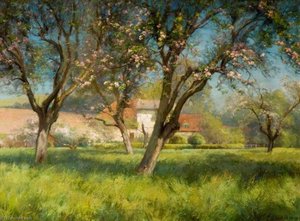
edward archibald brown
1866 - 1935
Основные сведения
- Artistic Movement Or Style: Pre-Raphaelite
- Artists Or Movements Influenced By This Artist: ['Pre-Raphaelites']
- Artists Who Influenced This Artist: ['Burne-Jones']
- Date Of Birth: 1866
- Date Of Death: 1935
- Full Name: Edward Archibald Brown
- Nationality: British
- Notable Artworks:
- Stormy Evening
- Lock Keeper Cottage
- Place Of Birth: London, England
Похожие статьи
Ford Madox Brown: Pre-Raphaelite Visionary & Victorian Social Commentary
Explore the life & art of Ford Madox Brown, a pivotal Pre-Raphaelite painter renowned for his powerful social commentary and masterpiece 'Work'. Discover his lasting influence on British art history.
25 Шедевров Данте Габриэля Россетти: Искусство, Символизм и Декор для Вашего Дома
Погрузитесь в мир Данте Габриэля Россетти! 25 шедевров прерафаэлитов, полных символизма и страсти. Узнайте истории создания культовых картин и найдите идеальный декор для вашего дома на ArtsDot.com – музейное качество, вдохновение и искусство онлайн.
Эдвард Хоппер: 25 шедевров американского реализма для вашего интерьера
Погрузитесь в мир Эдварда Хоппера! 25 культовых картин американского реализма, полных света и тени. История искусства, техника живописи и вдохновение для вашего интерьера. Репродукции музейного качества на ArtsDot.com.
Edward Wilkins Waite: A Victorian Vision of Surrey's Serene Landscapes & Artistic Legacy
Explore the serene landscapes of Edward Wilkins Waite (1854-1924), a prolific Victorian painter celebrated for his depictions of Surrey's countryside. Discover his artistic influences, career highlights & collecting guide.

Джон Констебль: 25 шедевров английского пейзажа для вашего интерьера
Погрузитесь в мир английского пейзажа с Джоном Констеблом! 25 шедевров романтизма, история создания картин и вдохновение для вашего интерьера. Репродукции высокого качества на ArtsDot.com – искусство для ценителей.