

 Предпросмотр
 Поделиться
 Поделиться
 Детали произведения

 Скачать
 Похожие работы
 Рентгенография
 Слайд-шоу
 Статистика
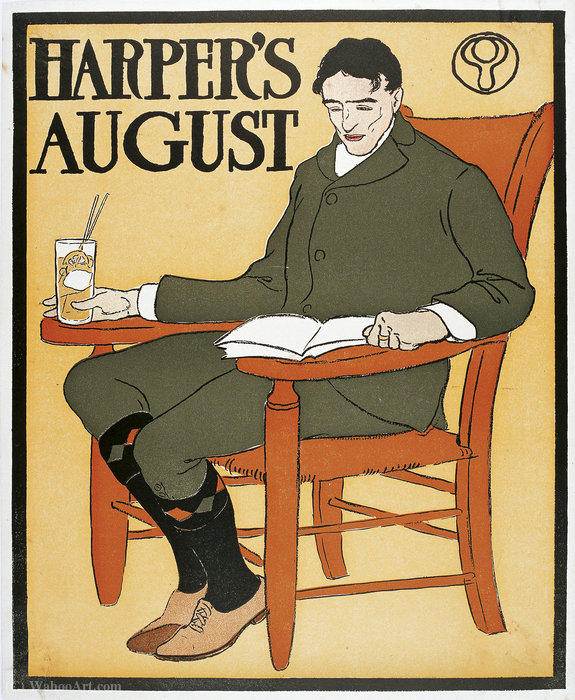
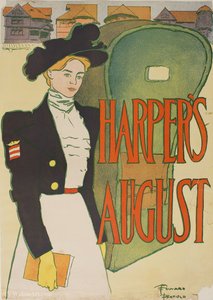
'Harper's. August', (32 x 26 CM) (1898)

 Читать далее
Приобретите цифровое изображение высокого разрешения в улучшенном качестве, которое значительно превосходит онлайн-превью.
Каждый файл тщательно подготавливается нашими специалистами с использованием передовых инструментов и экспертной ручной ретуши. Мы гарантируем исключительную четкость, точную цветопередачу и детальную проработку каждого изображения.
Финальный файл доставляется по электронной почте в течение 72 часов и оптимизирован для немедленного использования в профессиональной среде, при верстке и печати. Это тот же уровень качества, которому доверяют ведущие дизайнерские студии, издательства и галереи.
Цифровое изображение
Скачайте файл высокого разрешения для личного использования, печати и творческих проектов. ( Перейти к печати Купить картину ручной работы)
Включено в каждый заказ цифровых изображений
Гарантия экспертной цифровой доставки
Выбирая ArtsDot.com, вы получаете не просто изображение — вы приобретаете профессионально обработанное цифровое произведение искусства, созданное с безупречной точностью и под защитой гарантии качества. Вот всё, что автоматически входит в ваш заказ:

Мгновенная доставка по e-mail
Ваш цифровой файл в высоком разрешении будет отправлен вам по электронной почте в течение 72 часов после оформления заказа — и сразу станет доступен для использования.

Цифровой файл с ИИ-улучшением
Ваше произведение искусства проходит профессиональную оптимизацию с использованием передовых инструментов ИИ и ручной обработки, что гарантирует максимальную детализацию, четкость и точность цветопередачи.

Бессрочная бесплатная повторная доставка
Случайно удалили или потеряли файл? Не беспокойтесь — мы отправим его вам повторно в любое время и совершенно бесплатно.

Без импортных пошлин — навсегда
Наслаждайтесь вашим произведением искусства мгновенно без таможенных пошлин, сборов или затрат на доставку — цифровые загрузки всегда не облагаются налогом.

Гарантия точности цветопередачи
Мы гарантируем, что ваше цифровое изображение максимально точно передает оригинальные цвета благодаря использованию профессиональных инструментов и систем управления цветом.

Гарантия удовлетворенности 100 дней
Если вы не будете удовлетворены своим цифровым изображением, мы внесем правки или вернем 100% стоимости в течение 100 дней — без лишних вопросов.

100% Гарантия возврата средств
Не удовлетворены покупкой? Получите полный возврат средств в течение 100 дней после получения цифрового файла — без лишних вопросов.

Скидки на оптовые заказы
Купите 3 изображения, сэкономьте 10% — Купите 5, сэкономьте 15% — Купите 10+, сэкономьте 20%. Отличное решение для творческих проектов, галерей и агентств.
A Glimpse of Leisure: Edward Penfield's "Harper's August"
Step into a moment of tranquil contemplation with Edward Penfield’s captivating poster advertisement for “Harper’s August” (1898). This vintage print, measuring 32 x 26 cm, offers a beautifully stylized depiction of leisure and intellectual pursuit, embodying the elegance and decorative flair of the Art Nouveau movement. The scene centers on a gentleman absorbed in reading, a glass with a straw nearby – a quintessential image of refined relaxation at the turn of the century. The warm, golden background creates a comforting ambiance, contrasting subtly with the darker tones of the figure’s attire and furniture, drawing the viewer's eye to the central subject.Art Nouveau Aesthetics & Graphic Innovation
Penfield masterfully employs Art Nouveau principles throughout the composition. Notice the elongated figures, the flowing lines in the man’s clothing, and the decorative elements that subtly adorn the scene. The poster isn't striving for photographic realism; instead, it prioritizes a flattened perspective and bold graphic quality achieved through thick outlines defining shapes and objects. Geometric forms—particularly evident in the chair and table—are softened by these flowing lines, creating a harmonious balance between structure and fluidity. Penfield’s innovative use of simplified figures and bold outlines established him as a pioneer, earning him the title "father of the American poster" and significantly influencing the evolution of graphic design. The typography itself – “HARPER'S AUGUST” – is rendered in a striking, stylized font that perfectly complements the overall aesthetic.Technique & Materials: A Blend of Skill and Simplicity
The artwork’s charm lies not only in its composition but also in Penfield’s skillful technique. It appears to be a combination of pen and ink drawing, skillfully layered with delicate watercolor washes that add depth and subtle shading. The materials—likely paper and ink—were chosen for their ability to capture the poster's graphic quality while allowing for nuanced tonal variations. This blend of precision and fluidity creates a visually appealing texture, suggesting smooth surfaces despite the illustrative style. The lighting, subtly cast from above and left, enhances the sense of depth through gentle shadows.Historical Context & Symbolism
Created in 1898, "Harper's August" reflects a period of significant cultural change in America. The “Golden Age of American Illustration” saw artists like Penfield elevating illustration to an art form, and this poster exemplifies that trend. The scene itself speaks to the aspirational lifestyle promoted by publications like Harper’s – one of intellectual engagement, refined leisure, and comfortable domesticity. Symbolically, the act of reading represents knowledge, relaxation, and a connection to culture. The overall impression is one of quiet sophistication and an invitation to escape into the world of literature, perfectly aligning with the magazine's promise of engaging content.Похожие произведения

Биография художника
The Architect of the American Poster
In the vibrant, burgeoning landscape of late 19th-century America, a new visual language was being written upon the streets and in the pages of the nation's most prestigious periodicals. At the heart of this revolution stood Edward Penfield, an artist whose name has become synonymous with the birth of modern graphic design. Often revered as “the father of the American poster,” Penfield possessed a singular ability to distill complex emotions and social narratives into striking, simplified forms. His work did not merely decorate; it communicated, bridging the gap between fine art and mass media with an elegance that captured the very spirit of the Golden Age of Illustration.
Born on June 2nd, 1866, in Brooklyn, New York, Penfield was destined for a life shaped by aesthetic precision. He was the son of Josiah B. Penfield, a respected architect, and this familial connection to structural design likely instilled in him an early mastery of spatial relationships and balance. His formal training at the prestigious Art Students League in New York City brought him into contact with the era's most influential mentors, including George de Forest Brush. It was during these formative years that Penfield began to move away from the dense, academic realism of his predecessors, instead looking toward a more streamlined future where bold outlines and uncluttered backgrounds could command the viewer's attention amidst the urban chaos.
A Master of the Printed Page
The true zenith of Penfield’s career arrived through his transformative relationship with Harper’s Magazine. Serving as the publication's Art Director, he utilized the advancements in color printing technology to create a series of monthly posters that became cultural landmarks. Unlike the swirling, overly ornate flourishes of the European Art Nouveau movement seen in the works of contemporaries like Will Bradley, Penfield developed a more restrained and uniquely American aesthetic. He drew profound inspiration from the flat planes and strong silhouettes of Japanese woodblock prints, as well as the masterful compositions of French masters such as Henri de Toulouse-Lautrec and Jules Chéret.
His signature style—characterized by a deliberate reduction of detail and an assertive use of linework—allowed his subjects to resonate with immediate clarity. Whether depicting a gentleman lost in quiet contemplation in "Harper's August" or capturing the rhythmic energy of a horse-drawn carriage in "Heller ^ Bachrach," Penfield’s work embodied a sense of refined leisure and modern vitality. His ability to synthesize diverse stylistic influences into a cohesive, accessible brand for Harper’s helped establish the magazine as a visual authority, making his posters not just advertisements, but collectible pieces of art that graced the walls of homes across the country.
Legacy and Lasting Influence
Though his tenure at Harper's concluded in 1901, Penfield’s creative momentum never waned. He continued to shape the visual landscape through prolific work for other major publications like Scribner's and Collier's, as well as designing covers for numerous books and commercial advertisements. His influence extended far beyond the printed page, leaving an indelible mark on the evolution of graphic design. By proving that simplicity could be more powerful than complexity, he paved the way for the minimalist movements of the 20th century.
Today, the significance of Edward Penfield lies in his role as a pioneer who democratized art. Through his posters, high art was no longer confined to the hushed galleries of museums but was brought directly to the public eye, integrated into the very fabric of daily life. His legacy remains visible in every modern design that prioritizes clarity, impact, and the beauty of the essential line.
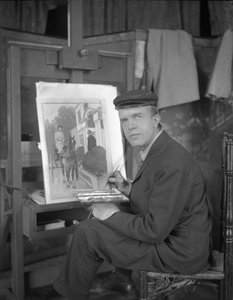
Edward Penfield
1866 - 1925 , United States of America
Основные сведения
- Artistic Movement Or Style: Golden Age Illustration; Simplified illustration
- Date Of Birth: June 2, 1866
- Date Of Death: 1925
- Full Name: Edward Penfield
- Nationality: American
- Notable Artworks:
- Harper's August
- 'March, April (Golf Calendar)', "Heller ^ Bachrach"], "Artists who influenced this artist": ["George de Forest Brush"], "Artists or movements influenced by this artist": ["Alphonse Mucha", "Théophile Steinlen"] }
- Place Of Birth: Brooklyn, United States