 Предпросмотр
 Поделиться
 Поделиться
 Детали произведения

 Скачать
 Похожие работы
 Рентгенография
 Слайд-шоу
 Статистика
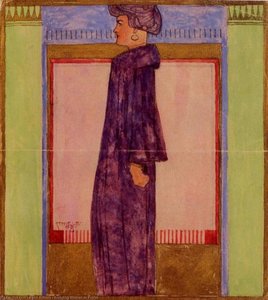
untitled (6291)


 Читать далее
Жикле / Арт-принт
Печать (жикле) или холст музейного качества с быстрыми сроками изготовления и широким выбором вариантов отделки. ( Купить картину ручной работы Перейти к цифровым изображениям)




P118B $10

P118H $10

P118W $10

P438Z $10

P508JH $12

P508YH $12

P805H $10

P805Z $10

P919BZ $10

P919G $10

P919XJ $10

P959ZH $10

P968JZ $12

W106C $8

W218G $10

W218JH $8

W218Y $10

W307PJ $10

W316G $10

W316PJ $8

W316Y $10

W398PJ $8

W4111J $10

W500HY $15

W500JH $15

W692G $12

W849H $8

W940BG $15

W953PJ $8




Выберите один из наших стандартных размеров, соответствующих оригинальным пропорциям произведения искусства.

Вы можете указать свои собственные размеры, чтобы репродукция идеально подошла под конкретную раму или пространство. Если выбранный вами размер не будет соответствовать пропорциям оригинала, мы либо обрежем произведение, либо дополним изображение зеркальным отражением краев или однотонной заливкой. Перед началом производства вам будет отправлен цифровой макет для утверждения.
Пожалуйста, обратите внимание, что предварительный просмотр на экране не отображает фактическую обрезку или расширение изображения. Только макет точно покажет финальную композицию.
Несмотря на возможность заказа индивидуальных размеров, мы рекомендуем выбирать размер из предопределенного списка, чтобы сохранить оригинальные пропорции.
Доставка по всему миру () за 2 недели вместо стандартных 4/5 недель. (11 Сентябрь)

Бесплатная экспресс-доставка по всему миру

Высококачественный льняной холст

Полное страхование доставки

Гарантия возмещения таможенных пошлин

Гарантия точного соответствия цветов

100-дневная политика возврата (только при обнаружении дефектов)

Гарантия возврата 100% средств

Предложение оптовых скидок
 Вариант со стеклом доступен только для размеров менее 110 см

untitled (6291)
Жикле / Арт-принт
Размер репродукции
-


Итоговая стоимость
$ 62
An Exploration of Existential Tension: Unveiling "Untitled (6291)"
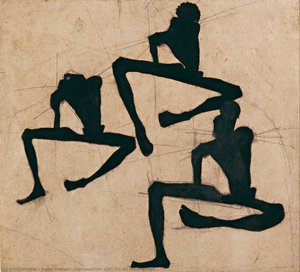
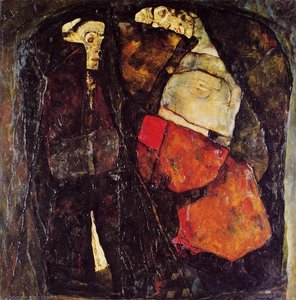
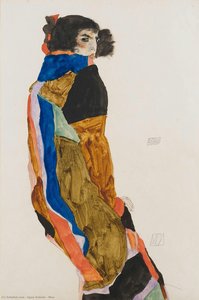
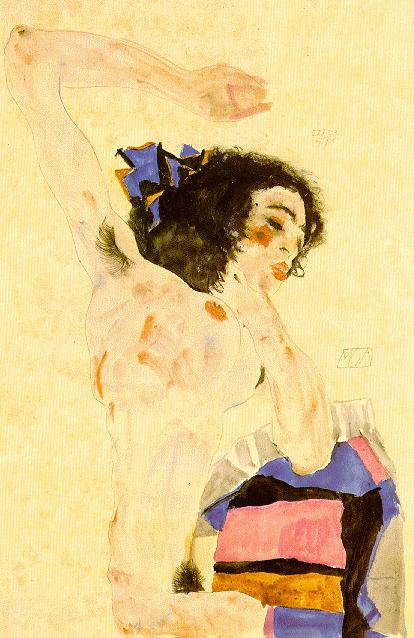
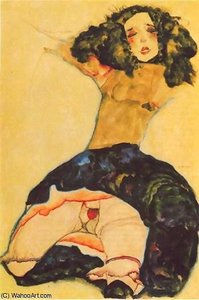
This arresting image, tentatively attributed to the tormented genius of Egon Schiele, immediately commands attention with its raw depiction of movement and a palpable sense of unease. The painting portrays a woman in a dynamic pose, seemingly caught mid-dance – an act simultaneously joyous and fraught with vulnerability. Her elongated limbs, exaggerated in their reach, suggest a desperate yearning or perhaps a futile attempt to grasp at something just beyond her control. This isn't simply a representation of dance; it’s a visceral exploration of the human condition, echoing Schiele’s profound preoccupation with mortality, sexuality, and the precariousness of existence.
- Style & Technique: The work is firmly rooted in Schiele’s signature style – characterized by angular lines, distorted forms, and a deliberate rejection of academic realism. His technique relies heavily on rapid brushstrokes and a layering of thinly applied paint, creating a sense of immediacy and nervous energy. The use of color—primarily cool blues and delicate pinks punctuated by strategic yellows—further amplifies the emotional intensity, evoking a feeling of both beauty and melancholy.
- Color Palette: The dominant blue and pink hues are not merely decorative; they carry significant symbolic weight. Blue often represents sorrow, introspection, and spiritual longing, while pink can symbolize passion, vulnerability, and even death – themes recurrent in Schiele’s oeuvre.
The Shadow of Vienna: Historical Context & Schiele's Vision
Created during a turbulent period in Viennese art history—a time marked by the rise of Expressionism and a growing disillusionment with traditional values—this painting reflects Schiele’s own personal struggles. Born in 1890 in Tulln an der Donau, Austria, he was profoundly influenced by the artistic currents of his day, yet remained fiercely independent, forging his own path through a relentless pursuit of emotional truth. The echoes of his father's early death – a devastating event that shaped his entire life and artistic vision – are undeniably present here, manifesting in the figure’s strained posture and the overall sense of impending doom. Schiele’s work was often met with criticism and censorship due to its explicit depictions of the human form, particularly female nudes, but he remained steadfast in his commitment to portraying the raw realities of existence.
Symbolism & Emotional Resonance
The woman's obscured face is a crucial element, inviting viewers to project their own anxieties and interpretations onto the image. She becomes an archetype – a representation of universal human vulnerability and the struggle against fate. The act of reaching, so exaggerated and desperate, speaks volumes about the inherent human desire for connection, meaning, and transcendence. The subtle inclusion of the train motif, a recurring element in Schiele’s work, hints at themes of movement, escape, and perhaps even a yearning for something beyond the confines of his immediate reality. The painting's emotional impact is profoundly unsettling, yet undeniably captivating – a testament to Schiele’s ability to tap into the darkest corners of the human psyche.
A Timeless Masterpiece: Reproduction & Acquisition
This hand-painted reproduction captures not only the visual essence of “Untitled (6291)” but also the very spirit and emotional power of Egon Schiele’s artistic legacy. Each reproduction is meticulously crafted by skilled artisans, ensuring exceptional detail and color accuracy. Whether adorning a private collection or enhancing an interior space, this artwork offers a unique opportunity to engage with one of the most significant figures in 20th-century art. Contact ArtsDot.com today to secure your own exquisite reproduction of this hauntingly beautiful masterpiece.
Похожие произведения
Биография художника
A Life Forged in Expression
Egon Schiele, born in Tulln an der Donau in 1890 – a town nestled amidst the rolling hills and vineyards of Austria – embarked on a life that was both intensely creative and profoundly marked by personal tragedy. His early years were shadowed by illness and loss; his father, Adolf Eugen Schiele, succumbed to syphilis when Egon was just fourteen, a devastating event that would indelibly shape the artist’s perspective and fuel an enduring preoccupation with mortality and the fragility of human existence. Raised initially by his mother and later under the somewhat controlling guardianship of his uncle Leopold Czihaczek, Schiele's childhood lacked the stability often associated with conventional upbringing, yet it fostered within him a remarkable independence of spirit – a characteristic that would become central to his artistic approach. Even as a young boy, he displayed an undeniable fascination with trains—a motif that subtly and repeatedly reappeared in his paintings, symbolizing both movement and perhaps, the relentless passage of time. Alongside this burgeoning interest in trains, Schiele cultivated a talent for drawing, though it was initially met with reservations from his father who viewed artistic pursuits as a distraction from more practical endeavors. The untimely death of his sister Elvira further deepened the emotional landscape of his youth, contributing to a sense of vulnerability and loss that would permeate much of his work. These formative experiences—a confluence of illness, grief, and familial constraints—instilled within Schiele a profound sensitivity and an emotional rawness that became defining features of his artistic expression, driving him to grapple with the fundamental questions of life, death, and the human condition.The Crucible of Vienna: Artistic Development
Schiele’s formal artistic training commenced at the Kunstgewerbeschule (School of Arts and Crafts) in Vienna, but he quickly found himself stifled by its conservative curriculum and adherence to traditional methods. Seeking a more liberating environment, he transferred to the Akademie der bildenden Künste (Academy of Fine Arts), only to discover that even this institution failed to satisfy his artistic aspirations. The rigid academic traditions and restrictive approach left him feeling disillusioned, leading him to abandon formal training altogether in favor of forging his own path—a bold decision that underscored his unwavering conviction in his artistic vision. Crucially, Schiele’s early years were profoundly influenced by the work of Gustav Klimt, a celebrated figure of Viennese Secessionism. He admired Klimt's distinctive decorative style and his exploration of symbolism, even receiving mentorship from the established artist. However, Schiele soon diverged significantly from Klimt’s aesthetic, developing a uniquely personal style characterized by its stark honesty, psychological intensity, and unflinching portrayal of human vulnerability. This divergence was further solidified through his involvement in the *Neues Wiener Kunstgruppe* (New Viennese Art Group), an avant-garde collective that challenged prevailing artistic norms and embraced innovative approaches to artmaking. The group, comprised of artists like Anton Faistauer and Hans Ehrlich, provided a space for Schiele to experiment with new techniques and explore unconventional themes, solidifying his position as a leading figure in the burgeoning modern art scene of Vienna.Raw Emotion and Unflinching Truth
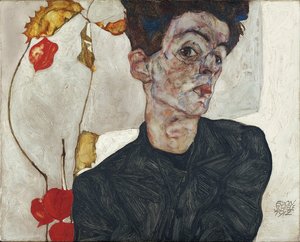
Egon Schiele’s art is immediately recognizable for its raw honesty and psychological depth. He fearlessly confronted subjects often considered taboo – sexuality, death, anxiety, isolation – with an unflinching gaze. His distinctive style features elongated figures, contorted poses, and expressive lines that convey a sense of unease and emotional intensity. The human form, particularly the nude, became his primary subject, not as an object of idealized beauty but as a vehicle for exploring the complexities of human experience. Self-portraits constitute a significant portion of his oeuvre, offering intimate glimpses into his inner world—a world often marked by loneliness and self-doubt. He didn’t shy away from depicting himself in unflattering or vulnerable poses, revealing a profound level of self-awareness and introspection. Beyond self-portraiture, Schiele created numerous portraits of others, capturing their likenesses with an unsettling realism that seemed to penetrate beneath the surface. His landscapes, while less central to his work than his figurative paintings, demonstrate his mastery of form and color, often reflecting the same emotional intensity as his portraits. Recurring motifs like the *Physalis* plant – symbolizing death and transience with its delicate, papery husk – further underscore this preoccupation with mortality. The use of line is particularly striking in Schiele’s work; it's not merely a tool for defining shape but an expressive force that conveys emotion and psychological tension.A Legacy Cut Short: Achievements & Significance
Despite facing censorship and legal challenges—including a brief imprisonment for allegedly corrupting minors with his art—Schiele gained recognition within Vienna’s avant-garde circles. His work challenged the conventions of the time, provoking both admiration and outrage. By the time of his untimely death during the Spanish flu pandemic in 1918 at the age of twenty-eight, he had established himself as a leading figure in Austrian Expressionism. Significant works such as *Self-Portrait with Physalis*, *Couple Embracing*, and *Field Landscape (Kreuzberg near Krumau)* stand as testaments to his artistic genius. His influence on subsequent generations of artists is undeniable, particularly those interested in exploring psychological themes and challenging conventional artistic norms. Schiele’s bold approach to form and subject matter continues to resonate with audiences today, making him one of the most important and influential figures in early 20th-century art. His paintings are now held in major museum collections worldwide, including the Leopold Museum in Vienna and the Egon Schiele Art Centrum in Český Krumlov, ensuring his artistic legacy endures. He left behind a body of work that is not merely aesthetically compelling but profoundly human—a testament to the power of art to confront the complexities of existence with honesty, courage, and unwavering vision.- Key Themes: Mortality, sexuality, isolation, psychological turmoil.
- Influences: Gustav Klimt, Viennese Secession, personal trauma.
- Style Characteristics: Elongated figures, contorted poses, expressive lines, raw emotion.
Шиле
1890 - 1918 , Австрия
Основные сведения
- Artistic Movement Or Style: Экспрессионизм
- Artists Or Movements Influenced By This Artist: ['Экспрессионизм']
- Artists Who Influenced This Artist: ['Густав Климт']
- Date Of Birth: 1890
- Date Of Death: 1918
- Full Name: Egon Leo Adolf Ludwig Schiele
- Nationality: Австриец
- Notable Artworks:
- Автопортрет с физиалисом
- Пара обнимаются
- Полевая панорама (Крُمáу)
- Place Of Birth: Тюльн, Австрия
Похожие статьи
Топ-10 знаменитых картин в оттенках серо-голубого: искусство и декор от ArtsDot
Погрузитесь в мир серо-голубых оттенков! От Моне до Ренуара – 10 знаменитых картин, вдохновляющих на создание уникального интерьера. Репродукции высокого качества от ArtsDot.com. Explore the full collection online!

Serene Blue Backgrounds: Discover Soulful Art to Transform Your Space with Timeless Elegance
Transform your home with soulful blue art. From serene Monet impressions to modern textured sculptures, discover curated masterpieces designed to inspire calm. Explore expert art consultations and bespoke hand-painted reproductions to create your personal sanctuary.
Топ-10 знаменитых картин в нежных розовых тонах: искусство и декор от ArtsDot
Погрузитесь в мир нежности и красоты! Топ-10 знаменитых картин Моне, Ренуара и других мастеров в розовых тонах. Узнайте историю создания шедевров импрессионизма и найдите идеальную репродукцию для вашего интерьера на ArtsDot.com
Топ-10 шедевров экспрессионизма: картины, изменившие искусство | ArtsDot
Погрузитесь в мир экспрессионизма! Откройте 10 шедевров Мунка, Кирхнера и других гениев. Узнайте истории создания культовых картин и вдохновитесь для декора вашего дома. Репродукции музейного качества на ArtsDot.com
Эгон Шиле: 25 шедевров экспрессионизма для ценителей искусства и декора интерьера
Погрузитесь в мир Эгона Шиле! 25 шедевров экспрессионизма, раскрывающих психологическую глубину и новаторский стиль австрийского художника. Купите репродукции картин Шиле премиум-качества для вашего интерьера на ArtsDot.com.