

 Предпросмотр
 Поделиться
 Поделиться
 Детали произведения

 Скачать
 Похожие работы
 Рентгенография
 Слайд-шоу
 Статистика
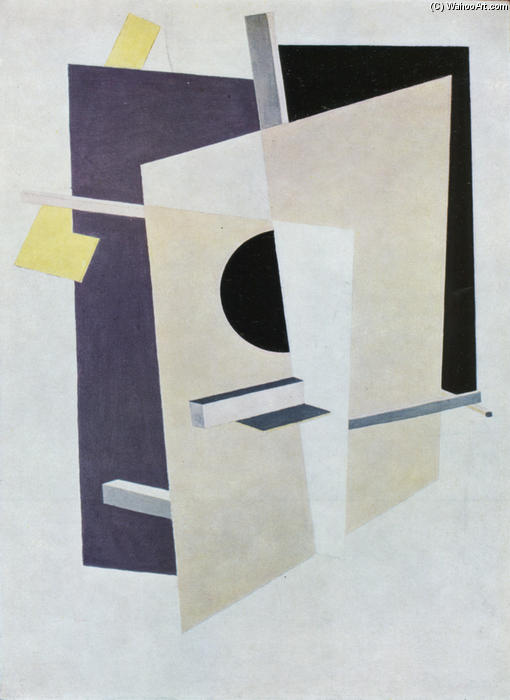
Proun Interpenetrating Planes


 Читать далее
Приобретите цифровое изображение высокого разрешения в улучшенном качестве, которое значительно превосходит онлайн-превью.
Каждый файл тщательно подготавливается нашими специалистами с использованием передовых инструментов и экспертной ручной ретуши. Мы гарантируем исключительную четкость, точную цветопередачу и детальную проработку каждого изображения.
Финальный файл доставляется по электронной почте в течение 72 часов и оптимизирован для немедленного использования в профессиональной среде, при верстке и печати. Это тот же уровень качества, которому доверяют ведущие дизайнерские студии, издательства и галереи.
Цифровое изображение
Скачайте файл высокого разрешения для личного использования, печати и творческих проектов. ( Перейти к печати Купить картину ручной работы)
Включено в каждый заказ цифровых изображений
Гарантия экспертной цифровой доставки
Выбирая ArtsDot.com, вы получаете не просто изображение — вы приобретаете профессионально обработанное цифровое произведение искусства, созданное с безупречной точностью и под защитой гарантии качества. Вот всё, что автоматически входит в ваш заказ:

Мгновенная доставка по e-mail
Ваш цифровой файл в высоком разрешении будет отправлен вам по электронной почте в течение 72 часов после оформления заказа — и сразу станет доступен для использования.

Цифровой файл с ИИ-улучшением
Ваше произведение искусства проходит профессиональную оптимизацию с использованием передовых инструментов ИИ и ручной обработки, что гарантирует максимальную детализацию, четкость и точность цветопередачи.

Бессрочная бесплатная повторная доставка
Случайно удалили или потеряли файл? Не беспокойтесь — мы отправим его вам повторно в любое время и совершенно бесплатно.

Без импортных пошлин — навсегда
Наслаждайтесь вашим произведением искусства мгновенно без таможенных пошлин, сборов или затрат на доставку — цифровые загрузки всегда не облагаются налогом.

Гарантия точности цветопередачи
Мы гарантируем, что ваше цифровое изображение максимально точно передает оригинальные цвета благодаря использованию профессиональных инструментов и систем управления цветом.

Гарантия удовлетворенности 100 дней
Если вы не будете удовлетворены своим цифровым изображением, мы внесем правки или вернем 100% стоимости в течение 100 дней — без лишних вопросов.

100% Гарантия возврата средств
Не удовлетворены покупкой? Получите полный возврат средств в течение 100 дней после получения цифрового файла — без лишних вопросов.

Скидки на оптовые заказы
Купите 3 изображения, сэкономьте 10% — Купите 5, сэкономьте 15% — Купите 10+, сэкономьте 20%. Отличное решение для творческих проектов, галерей и агентств.
A Revolutionary Geometry: Exploring El Lissitzky’s *Proun Interpenetrating Planes*
El Lissitzky's *Proun Interpenetrating Planes*, a seminal work from 1927, isn’t merely a painting; it’s an architectural manifesto rendered in color and form. Born Lazar Markovich Lissitzky in the Russian village of Pochinki in 1890, his artistic journey was one of relentless experimentation, fueled by a profound belief that art could actively shape the world around us. Initially trained as an architect and engineer – experiences tragically curtailed due to anti-Semitic restrictions – Lissitzky’s creative spirit quickly outgrew these constraints, leading him towards illustration and ultimately, a radical reimagining of visual space. This particular piece embodies his core concept of “Proun,” a term he coined to describe abstract planes that existed independently of any physical object, existing instead as pure geometric forms imbued with spiritual significance. It’s a testament to the artist's desire to dismantle traditional notions of representation and embrace a new language of form.
Deconstructing Space: Style and Technique
The painting immediately commands attention through its bold, reductive style. Lissitzky employs a strikingly simple palette – primarily shades of red, black, and white – to emphasize the interplay between positive and negative space. The dominant element is a large, circular form, seemingly suspended within a complex arrangement of overlapping planes and angles. This isn’t a realistic depiction of a building; rather, it's an abstracted representation, suggesting a structure viewed from multiple perspectives simultaneously. Lissitzky’s technique relies heavily on the principles of Constructivism, a Russian avant-garde movement that sought to integrate art with industry and social progress. He utilized a layering technique, applying paint in thin washes to create a sense of depth and transparency, allowing the underlying forms to subtly influence the appearance of those above. The precision of his lines and the deliberate flatness of the composition contribute to an almost mechanical quality, reflecting Lissitzky’s interest in rational design and functional aesthetics.
Symbolism and the Interpenetration of Planes
The title, *Proun Interpenetrating Planes*, is key to understanding the work's conceptual core. Lissitzky believed that these “Prouns” were not static entities but rather dynamic forces constantly interacting with each other. The overlapping circles and planes represent this interpenetration – a merging of forms, ideas, and perspectives. The central circle can be interpreted as a sun or a source of energy, radiating outwards and influencing the surrounding shapes. The smaller circles in the upper left corner might symbolize satellites orbiting this primary form, suggesting a hierarchical structure yet emphasizing interconnectedness. Lissitzky’s work was deeply influenced by Russian spiritualism and his own personal philosophy, seeking to create visual representations of universal principles and forces. He envisioned Prouns as tools for “spiritualization,” offering a pathway to transcend the limitations of everyday experience.
Historical Context: Suprematism and Soviet Propaganda
*Proun Interpenetrating Planes* emerged during a period of immense social and political upheaval in Russia. Lissitzky’s work was closely aligned with Suprematism, a movement pioneered by Kazimir Malevich that prioritized pure geometric abstraction. However, Lissitzky moved beyond the purely formal concerns of Suprematism, incorporating elements of architecture and design into his art. Following the Bolshevik Revolution, Lissitzky became involved in designing propaganda posters and exhibition displays for the Soviet government, utilizing his innovative visual language to promote socialist ideals. This piece reflects that period – a synthesis of artistic experimentation with practical application, demonstrating how abstract forms could be harnessed to communicate powerful messages. The stark geometry and bold colors resonate with the spirit of the era, capturing both its revolutionary fervor and its commitment to rational design.
A Timeless Vision: Reproduction and Interior Design
Today, *Proun Interpenetrating Planes* remains a powerfully evocative work. ArtsDot offers meticulously crafted hand-painted reproductions that faithfully capture the original’s vibrancy and depth. Whether adorning a modern gallery wall or integrated into a contemporary interior design scheme, this artwork brings a sense of dynamism and intellectual stimulation to any space. Its geometric forms provide a striking contrast to softer textures and organic shapes, injecting a dose of architectural precision and spiritual contemplation. Consider how the interplay of red, black, and white can be used to create focal points or establish a sophisticated color palette within your home – a testament to Lissitzky’s enduring legacy as a visionary artist.
Похожие произведения
Биография художника
A Revolutionary Vision: The Life and Art of El Lissitzky
El Lissitzky, born Lazar Markovich Lissitzky in 1890 in the small Russian town of Pochinok, emerged as a pivotal figure in the tumultuous landscape of early 20th-century art. His journey was one of constant reinvention, driven by a fervent belief in the power of art to shape society and reflect the dynamism of the modern world. From his initial training as an architect and engineer – pursuits hampered by restrictions placed upon Jewish students – Lissitzky’s path diverged towards artistic expression, initially through illustrations steeped in Jewish folklore. These early works, like his cover for ‘Chad Gadya’, reveal a nascent talent already grappling with narrative and visual storytelling, hinting at the profound cultural roots that would continue to inform his aesthetic. A move to Berlin and Darmstadt broadened his horizons, but it was upon returning to Russia that Lissitzky truly found his artistic voice, becoming inextricably linked with the revolutionary fervor sweeping through the nation.The Embrace of Abstraction: Suprematism and Proun
A defining moment arrived with his encounter with Kazimir Malevich and the embrace of Suprematism. This radical movement, dedicated to pure geometric abstraction, resonated deeply with Lissitzky’s desire to transcend representational art and tap into a universal visual language. He became a key member of UNovis, the Suprematist group established in Vitebsk, actively disseminating its principles through teaching and artistic production. However, Lissitzky didn't simply replicate Malevich’s style; he forged his own distinct path with the development of *Proun*. This unique series, born from a fusion of Suprematism and Constructivism, explored spatial relationships and geometric forms in dynamic compositions that often resembled architectural blueprints or exploded diagrams. Proun wasn't merely painting; it was an investigation into the very structure of space itself, a premonition of future architectural possibilities. These works, with their floating planes and intersecting lines, embodied Lissitzky’s belief in art as a force capable of constructing new realities. The influence of his engineering background is palpable here, lending a structural logic to the abstract forms. He sought to depict not just objects but their spatial relationships, creating a visual language that could be used to organize and understand the world around him.Art as Propaganda and Social Commentary
Lissitzky's artistic vision extended far beyond the canvas. He passionately believed that art should serve a social purpose, actively engaging with political ideologies and seeking ways to integrate design into everyday life. This conviction led him to become deeply involved in Soviet propaganda efforts, creating powerful posters and graphic designs intended to mobilize public support for the Bolshevik regime. His 1941 poster calling for tank construction stands as a testament to this commitment – a stark, impactful image reflecting the urgency of wartime. Beyond propaganda, Lissitzky revolutionized typography, exhibition design, and photomontage. He understood that effective communication required innovative visual strategies, and he fearlessly experimented with new techniques to convey his message. His photomontages, such as ‘The Constructor’ (1924), are particularly striking – self-portraits that blend photography with geometric abstraction, offering a complex commentary on identity and the role of the artist in society. These works demonstrated his ability to synthesize disparate elements into a cohesive and powerful visual statement.A Cultural Ambassador: Spreading Constructivist Ideals
Lissitzky's influence transcended national borders. He served as a crucial cultural ambassador for Soviet art, disseminating Constructivist ideas throughout Western Europe, particularly in Germany. His innovative exhibition designs challenged traditional gallery spaces, creating immersive environments that actively engaged viewers. These exhibitions weren’t simply displays of artwork; they were carefully constructed experiences designed to provoke thought and inspire action. His work had a profound impact on the Bauhaus and De Stijl movements, influencing generations of artists and designers with its emphasis on geometric abstraction, functionalism, and social responsibility. He collaborated with figures like Kurt Schwitters and Theo van Doesburg, fostering a cross-cultural exchange that enriched the artistic landscape of the era. Lissitzky’s ability to articulate and translate complex ideas into visually accessible forms made him a sought-after consultant for numerous Soviet cultural institutions.Legacy and Enduring Influence
El Lissitzky’s life was tragically cut short in 1941 in Moscow, but his legacy continues to resonate today. He bridged the gap between art and architecture, abstraction and social purpose, leaving behind a body of work that is both intellectually stimulating and visually captivating. The establishment of the Lissitzky Foundation in 2014 underscores the ongoing commitment to preserving his artistic heritage and preparing a comprehensive catalogue raisonné of his creations. His innovations in typography, exhibition design, and photomontage continue to inspire contemporary artists and designers, while his unwavering belief in the power of art as a force for social change remains profoundly relevant.- His work is held in numerous international collections
- Museums featuring his works include the Taganrog Art Museum and Novokuznetsk Art Museum.
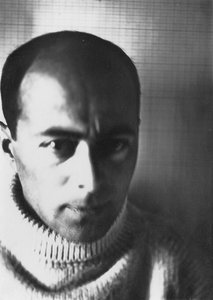
Эль Лисицкий
1890 - 1941 , Россия
Основные сведения
- Artistic Movement Or Style:
- Супрематизм
- Конструктивизм
- Прун
- Artists Or Movements Influenced By This Artist:
- Баухаус
- Де Стиль
- Artists Who Influenced This Artist: ['Казимир Малевич']
- Date Of Birth: 23 нояб 1890
- Date Of Death: 30 дек 1941
- Full Name: Ля́зар Маркови́ч Лиси́цкий
- Nationality: Русский
- Notable Artworks:
- «Конструктор»
- Обложка «Чад Гадя»
- Серия «Прун»
- Place Of Birth: Починок, Россия