

 Предпросмотр
 Поделиться
 Поделиться
 Детали произведения

 Скачать
 Похожие работы
 Рентгенография
 Слайд-шоу
 Статистика
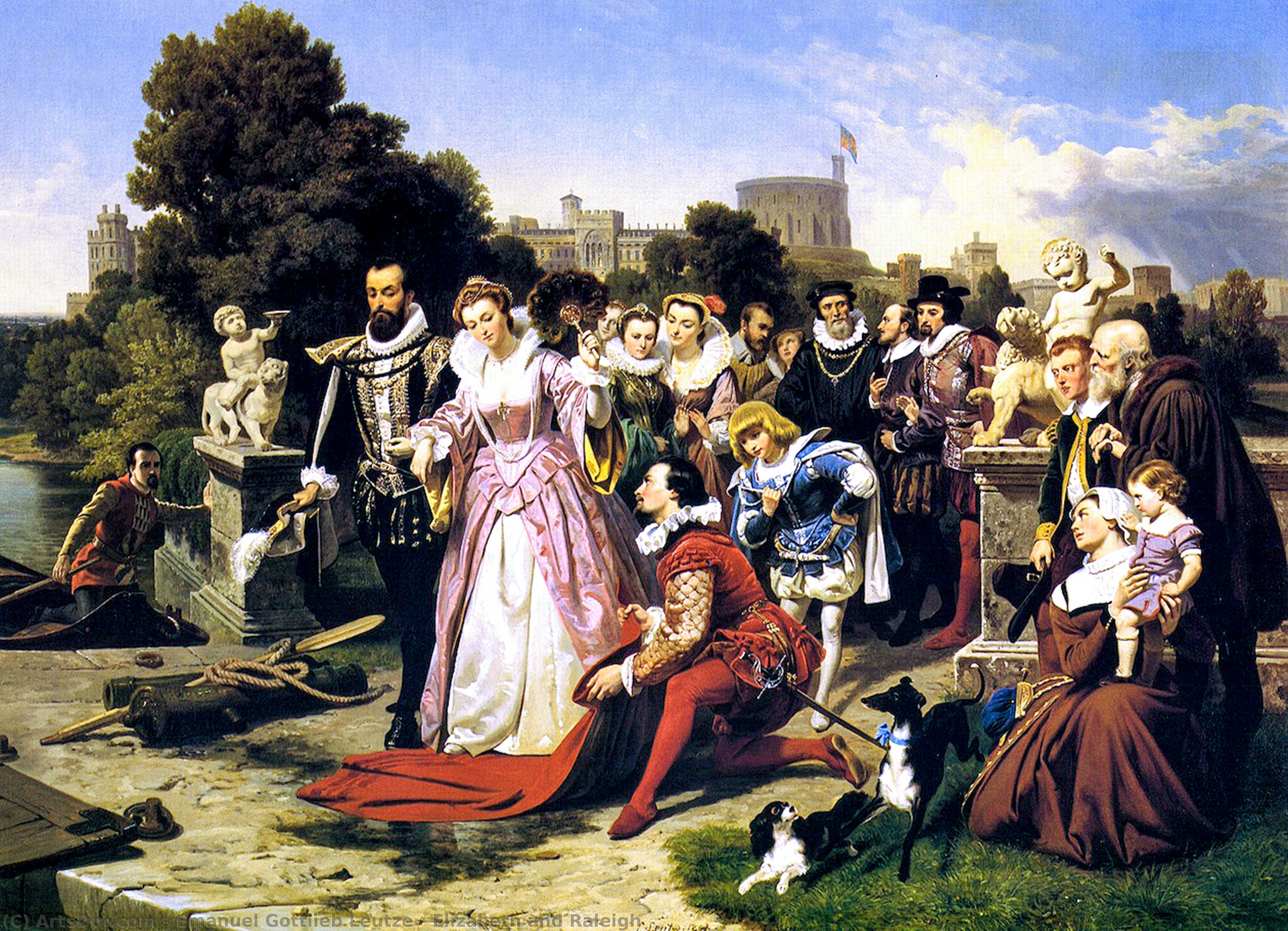
Elizabeth and Raleigh


 Читать далее
Масляная репродукция ручной работы
Картина маслом на холсте в выбранном вами размере и раме, написанная на заказ нашими художниками. ( Перейти к печати Перейти к цифровым изображениям)




P118B $10

P118H $10

P118W $10

P438Z $10

P508JH $12

P508YH $12

P805H $10

P805Z $10

P919BZ $10

P919G $10

P919XJ $10

P959ZH $10

P968JZ $12

W106C $8

W218G $10

W218JH $8

W218Y $10

W307PJ $10

W316G $10

W316PJ $8

W316Y $10

W398PJ $8

W4111J $10

W500HY $15

W500JH $15

W692G $12

W849H $8

W940BG $15

W953PJ $8




Выберите один из наших стандартных размеров, соответствующих оригинальным пропорциям произведения искусства.

Вы можете указать собственные размеры, чтобы картина идеально вписалась в выбранную раму или пространство. Если выбранный вами размер не соответствует пропорциям оригинала, мы либо обрежем полотно, либо расширим его за счет дополнительных элементов, написанных вручную. Цифровой макет будет отправлен вам на утверждение перед началом производства.
Обратите внимание, что предварительный просмотр на экране не отражает фактическую обрезку или расширение. Только макет точно покажет окончательную композицию.
Хотя доступны индивидуальные размеры, мы рекомендуем выбирать вариант из предопределенного списка, чтобы сохранить исходные пропорции.
После оформления заказа команда ArtsDot.com свяжется с клиентом по электронной почте для уточнения деталей и предоставит предварительный макет
Доставка по всему миру () за 3–4 недели вместо стандартных 5 недель. (10 Сентябрь). Без компромиссов в качестве.

Бесплатная экспресс-доставка по всему миру

Высококачественный льняной холст

Полное страхование доставки

Гарантия возмещения таможенных пошлин

Гарантия точного соответствия цветов

100-дневная политика возврата (только при обнаружении дефектов)

Гарантия возврата 100% средств

Предложение оптовых скидок
 Вариант со стеклом доступен только для размеров менее 110 см

Elizabeth and Raleigh
Техника репродукции
Размер репродукции
-


Итоговая стоимость
$ 263
A Glimpse into the Past
The painting Elizabeth and Raleigh by Emanuel Gottlieb Leutze is a captivating historical scene that transports viewers to the 16th century. Created in 1848, this oil on canvas masterpiece depicts Queen Elizabeth I of England and Sir Walter Raleigh engaged in conversation, surrounded by other figures from their era.The Main Figures
At the center of the painting, Elizabeth I stands on the left side, while Sir Walter Raleigh is positioned on the right. Their proximity and engagement suggest a moment of significant discussion, possibly regarding their plans for exploration or political strategies.Supporting Characters
Several other historical figures are present in the scene, adding depth to the narrative. These individuals can be seen standing around the main couple, with some closer to Elizabeth and others nearer to Raleigh. Their presence enriches the painting, providing a sense of community and context.A Touch of Nature
On the right side of the painting, a dog is visible, which may belong to one of the characters or serve as an element of decoration. This inclusion adds a touch of naturalism and warmth to the scene.Historical Significance
The overall atmosphere of Elizabeth and Raleigh suggests a moment of historical significance and intrigue. The painting captures the essence of a pivotal era in English history, where exploration and political maneuvering were paramount.Artistic Legacy
Emanuel Gottlieb Leutze was known for his meticulous attention to detail and ability to bring historical scenes to life. His work is celebrated for its accuracy and emotional depth. Elizabeth and Raleigh is a testament to his skill as an artist and historian.Reproductions Available
For those interested in owning a piece of history, ArtsDot.com offers handmade oil painting reproductions of Elizabeth and Raleigh. These high-quality reproductions capture the essence of Leutze's original work, allowing art enthusiasts to appreciate this masterpiece in their own homes.Related Works
Other notable works by Emanuel Gottlieb Leutze include:Museums and Collections
The Musée Réattu in Arles, France, is home to a diverse collection of artworks. Established in 1868, it is named after Jacques Réattu, a French painter who won the prestigious Prix de Rome in 1790.For more information on Emanuel Gottlieb Leutze and his works, visit The Museum Musée Réattu (Arles, France).
Похожие произведения


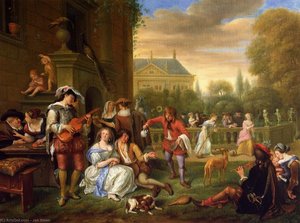
Биография художника
Emanuel Gottlieb Leutze: Bridging Worlds, Painting the American Soul
Emanuel Gottlieb Leutze’s life unfolded as a remarkable confluence of cultures and artistic influences, a journey that ultimately shaped his distinctive contribution to both German Romanticism and the nascent American art scene. Born in 1816 in Schwäbisch Gmünd, a town nestled in the heart of Baden-Württemberg, Germany, Leutze’s early years were steeped in hardship – the untimely death of his father forced him into premature adulthood, demanding he contribute to the family's livelihood through manual labor. Yet, even amidst these challenges, a spark ignited within him: an innate artistic talent that found its initial expression not as a profession, but as a means of solace and occupation during his father’s illness. This early experimentation with drawing and painting, initially undertaken simply to fill time, gradually evolved into a genuine passion, foreshadowing the profound impact he would later have on the visual landscape of both Europe and America.The Düsseldorf School: Romanticism Takes Root
Leutze's artistic development truly blossomed during his years in Düsseldorf, beginning in 1840. This pivotal move marked not merely a change of location but a fundamental shift in his artistic philosophy. Düsseldorf was at the heart of the influential Düsseldorf School of Painting, an environment characterized by its rigorous academic training and its embrace of Romanticism – a movement that prioritized emotion, drama, and the sublime over strict adherence to classical conventions. He found himself profoundly influenced by Karl Friedrich Lessing, a leading figure within this school, whose teachings emphasized dramatic composition, emotional intensity, and a deep engagement with historical narratives. Leutze’s time in Düsseldorf wasn't simply about mastering technique; it was an immersion into a specific artistic worldview – one that celebrated the power of imagination and sought to evoke profound emotional responses through visual imagery. He diligently studied the works of masters like Titian and Michelangelo, absorbing their techniques and understanding of light, color, and form, but he didn’t merely imitate them. Instead, he synthesized these influences with his own sensibilities, forging a unique style characterized by its grand scale, dynamic movement, and evocative use of color. His early works, such as “Bird Nesting” (1837), demonstrate this burgeoning talent – a meticulous depiction imbued with a sense of quiet drama and symbolic depth.A Journey Through Europe: Seeking Inspiration
Following his success in Düsseldorf, Leutze embarked on a two-year sojourn through Germany, Italy, and Switzerland, a period crucial to the further refinement of his artistic vision. This journey was not merely a vacation; it was an active pursuit of inspiration, exposing him to diverse artistic traditions and broadening his understanding of European art history. He spent time in Venice, captivated by the light and color of the Venetian masters, and in Rome, studying the monumental works of Michelangelo – experiences that profoundly shaped his approach to composition, perspective, and the depiction of human form. He meticulously documented these influences, not through direct copying, but through a process of careful observation and critical analysis. This period solidified his commitment to historical painting as a vehicle for exploring complex themes and conveying powerful emotions.Returning to America: Painting Patriotism and National Identity
In 1859, Leutze made a momentous decision: he returned to the United States, a country that had become increasingly significant in his artistic consciousness. This return wasn’t simply a geographical relocation; it represented a deliberate commitment to dedicate his art to the burgeoning American narrative – a nation grappling with its own identity and striving to define itself on the world stage. He established studios in both New York City and Washington D.C., becoming a central figure in the American art scene. His most celebrated work, “Washington Crossing the Delaware,” completed in 1851, perfectly encapsulates this commitment. This iconic image – depicting General George Washington leading his troops across the icy waters of the Delaware River on Christmas night – became an instant symbol of American courage, leadership, and the unwavering pursuit of freedom. The painting’s dramatic composition, evocative lighting, and carefully chosen details all contribute to its enduring power as a visual representation of American ideals. Beyond “Washington Crossing the Delaware,” Leutze continued to explore themes of American heroism and sacrifice, producing works such as "Angel on the Battlefield," a poignant depiction of the devastation caused by the Civil War – a work born from the grim realities reported in newspapers and intended to evoke empathy for those who had suffered.Legacy and Enduring Influence
Emanuel Gottlieb Leutze’s legacy extends far beyond individual paintings; he played a pivotal role in establishing a distinct visual language for American history painting, creating powerful images that helped shape national identity during a period of profound social and political transformation. “Washington Crossing the Delaware” remains arguably the most recognizable image in American art – its reproduction ubiquitous across countless platforms, serving as a potent symbol of American values. His ability to seamlessly blend Romantic ideals with historical accuracy resulted in works that were both emotionally resonant and intellectually stimulating. Leutze’s paintings are now housed in prestigious institutions such as the Metropolitan Museum of Art, the Kunsthalle Bremen, and Harvard Law School, ensuring his artistic contributions will continue to be appreciated for generations to come. He wasn't simply a painter of history; he was a creator of myth, forging enduring symbols that continue to inspire dialogue about the American experience. His work stands as a testament to the transformative power of art – its ability to shape perceptions, ignite patriotism, and preserve collective memory.- Born: May 24, 1816, Schwäbisch Gmünd, Germany
- Died: July 18, 1868
- Movement: Romanticism, Düsseldorf School of Painting
- Notable Works: Washington Crossing the Delaware, Columbus Before the Council of Salamanca, Angel on the Battlefield
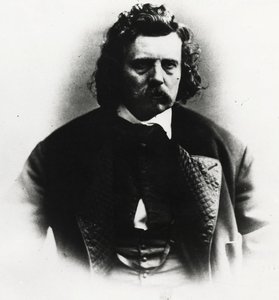
Эмануэль Готтлиб Леутце
1816 - 1868 , Германия
Основные сведения
- Artistic Movement Or Style: Романтизм, Дюссельдорфская школа
- Artists Or Movements Influenced By This Artist: ['Американская историческая живопись']
- Artists Who Influenced This Artist: ['Карл Фридрих Лисенг']
- Date Of Birth: 1816
- Date Of Death: 1868
- Full Name: Emanuel Gottlieb Leutze
- Nationality: Немецко-Американский
- Notable Artworks:
- Кросс Делавэр
- Колумб перед советом
- Ангел на поле битвы
- Place Of Birth: Schwäbisch Gmünd, Германия
Похожие статьи
The Sublime and the Sensual: Exploring Emotion & Individuality in Romanticism's Artistic Revolution
Explore the passionate world of Romanticism! Discover masterpieces by Friedrich & Goya, delve into the sublime, and understand the movement's lasting impact on art history. Expert analysis & insights.
Hans von Aachen: Mannerism's Courtly Visionary & Imperial Portraiture
Explore the captivating world of Hans von Aachen, a leading Mannerist painter renowned for his exquisite imperial portraits & mythological scenes. Discover his legacy and influence on 16th-century European art.
The Evocative Brushstroke: Exploring Emotion, Individuality & the Sublime in Romanticism's Artistic Landscape
Explore the passionate world of Romanticism! Discover masterpieces by Friedrich & Goya, delve into the sublime, and understand the movement's lasting impact on art history. Expert analysis & insights at ArtsDot.
Топ-10 шедевров Романтизма: искусство, вдохновение и декор с ArtsDot
Погрузитесь в мир Романтизма! Откройте 10 шедевров Делакруа, Жерико и других великих художников. История искусства, вдохновение для интерьера и репродукции музейного качества на ArtsDot.com. Исследуйте коллекцию онлайн!
Emanuel Leutze: Transatlantic Identity & the Iconography of American Progress
Explore the life & art of Emanuel Leutze, famed for 'Washington Crossing the Delaware.' Discover his Romantic historical paintings, transatlantic influences, and powerful depictions of American identity & progress. Expert analysis at ArtsDot.