 Предпросмотр
 Поделиться
 Поделиться
 Детали произведения

 Скачать
 Похожие работы
 Рентгенография
 Слайд-шоу
 Статистика
Self portrait


 Читать далее
Масляная репродукция ручной работы
Картина маслом на холсте в выбранном вами размере и раме, написанная на заказ нашими художниками. ( Перейти к печати Перейти к цифровым изображениям)




































Выберите один из наших стандартных размеров, соответствующих оригинальным пропорциям произведения искусства.

Вы можете указать собственные размеры, чтобы картина идеально вписалась в выбранную раму или пространство. Если выбранный вами размер не соответствует пропорциям оригинала, мы либо обрежем полотно, либо расширим его за счет дополнительных элементов, написанных вручную. Цифровой макет будет отправлен вам на утверждение перед началом производства.
Обратите внимание, что предварительный просмотр на экране не отражает фактическую обрезку или расширение. Только макет точно покажет окончательную композицию.
Хотя доступны индивидуальные размеры, мы рекомендуем выбирать вариант из предопределенного списка, чтобы сохранить исходные пропорции.
После оформления заказа команда ArtsDot.com свяжется с клиентом по электронной почте для уточнения деталей и предоставит предварительный макет
Доставка по всему миру () за 3–4 недели вместо стандартных 5 недель. (11 Сентябрь). Без компромиссов в качестве.

Бесплатная экспресс-доставка по всему миру

Высококачественный льняной холст

Полное страхование доставки

Гарантия возмещения таможенных пошлин

Гарантия точного соответствия цветов

100-дневная политика возврата (только при обнаружении дефектов)

Гарантия возврата 100% средств

Предложение оптовых скидок
 Вариант со стеклом доступен только для размеров менее 110 см

Self portrait
Техника репродукции
Размер репродукции
-


Итоговая стоимость
$ 263
A Glimpse Through the Looking Glass: The Soul of Émile Friant
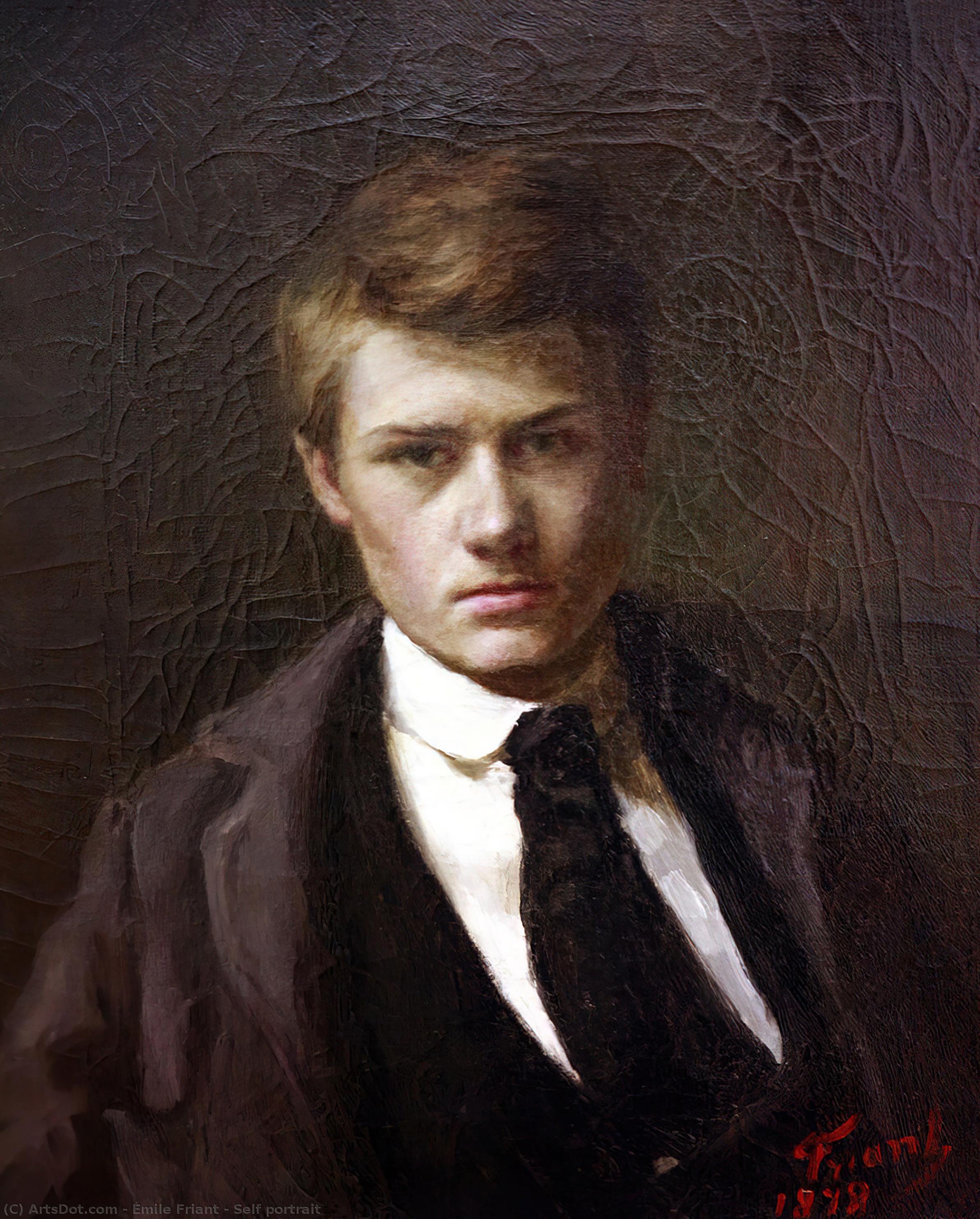
In the quiet intimacy of 1878, a young Émile Friant turned his gaze inward, capturing not just a likeness, but a moment of profound self-reflection. His Self Portrait serves as a captivating window into the late 19th century, presenting a man poised between the rigid formalities of his era and the burgeoning psychological depth that would define his later career. Dressed in the dignified attire of the period—a meticulously rendered suit, tie, and dark vest—the subject stares back at the viewer with an intensity that transcends the canvas. The presence of his well-groomed mustache and the sharp focus of his gaze suggest a man deeply aware of his own identity and his place within the evolving French social fabric.
The technique employed in this masterpiece is a testament to Friant’s early mastery of realism. Every thread of his formal clothing, every subtle shadow cast by his features, and the precise texture of his hair are rendered with an almost scientific precision. This dedication to detail does not merely serve a decorative purpose; it anchors the subject in a tangible reality, making the encounter feel immediate and personal. The artist’s ability to manipulate light and shadow creates a sense of volume and presence, inviting collectors and art enthusiasts to step into the room and share in this silent, contemplative dialogue.
Historical Resonance and Aesthetic Elegance
Beyond its technical brilliance, the painting acts as a vital historical document. To look upon this work is to witness the sartorial elegance of 19th-century France, where clothing was a language of status, discipline, and grace. For interior designers and curators, this piece offers an unparalleled sense of timelessness. It possesses that rare quality of "period charm" that can anchor a room, providing a sophisticated focal point that complements both classical and contemporary settings. The somber tones and structured composition lend themselves beautifully to grand libraries, formal dining rooms, or quiet study alcoves where one might seek inspiration from the past.
The emotional impact of Friant’s work lies in its ability to evoke nostalgia and introspection. There is a certain gravity in his expression, a weight of thought that resonates with anyone who has ever paused to consider their own journey. As a reproduction, this painting offers more than just visual beauty; it offers an atmosphere of intellectual depth and cultural heritage. Owning a piece of such profound craftsmanship allows the modern collector to preserve a fragment of history, bringing the quiet, powerful spirit of Émile Friant into the sanctuary of the home.
Похожие произведения
Биография художника
Émile Friant - A Life Rooted in Realism: The World of Émile Friant
Émile Friant, born April 16th, 1863 in Dieuze, France, emerged as a pivotal figure bridging the gap between 19th-century realism and the burgeoning artistic movements of the early 20th century. His life story is one deeply intertwined with the political and social upheavals of his time—the Franco-Prussian War profoundly shaping his formative years and instilling in him a sense of displacement that arguably fueled his unwavering dedication to portraying the essence of French life and identity within his art. Though initially drawn towards scientific pursuits, Friant’s innate artistic talent swiftly asserted itself, nurtured first by private tutors and subsequently under the guidance of Louis-Théodore Devilly in Nancy—a partnership that instilled in him a meticulous approach to observation and detail, laying the cornerstone for Friant’s signature style: realism imbued with palpable emotional depth and psychological insight. Even his youthful self-portrait, “Le Petit Friant,” at just fifteen years old, garnered considerable acclaim and secured him permission to pursue formal studies in Paris—marking the commencement of his ascent within the art world.Early Years and Artistic Formation
Friant’s childhood was indelibly marked by the Franco-Prussian War (1870), during which his family fled to Nancy—a city that would become a crucible for artistic innovation during the Art Nouveau period. His father, Virgile, worked as a locksmith, while his mother, Catherine Torlotin, descended from a peasant lineage and had previously served as a maid for Madame Parisot—circumstances reflecting the modest origins of an artist destined to achieve unparalleled renown. From a young age, Friant demonstrated exceptional aptitude for drawing, receiving instruction initially at the Nancy school of drawing under Devilly’s tutelage—a formative experience that emphasized direct engagement with nature and championed meticulous technique. Recognizing Friant’s prodigious talent, Devilly secured him a scholarship from the city of Nancy to facilitate his admission to Alexandre Cabanel’s atelier at the École des Beaux-Arts in Paris—a pivotal step toward honing his artistic skills within the influential academic tradition. During his initial Parisian year, Friant befriended fellow artists Aimé Morot, Victor Prouvé, and Jules Bastien-Lepage—all hailing from Lorraine—establishing connections that would prove invaluable throughout his career. These friendships fostered a shared intellectual curiosity and encouraged Friant to explore diverse artistic approaches, culminating in the adoption of Cabanel’s academic style alongside Devilly’s naturalistic principles.Salon Successes and Artistic Influences
Friant swiftly established himself as a respected artist at the Salon—Nancy's premier art exhibition—debuting at the age of fifteen with *L’enfant prodigue*, which immediately captivated audiences and garnered critical acclaim. The Salon’s acceptance of his work underscored Devilly’s astute judgment and validated Friant’s burgeoning talent—a triumph that propelled him into the spotlight and cemented his reputation as one of Nancy’s most promising young painters. Following Morot's advice, he pursued a path diverging from Cabanel’s rigid atelier system—embracing instead Bastien-Lepage’s commitment to capturing the beauty of the natural world. His second Salon submission, *Œdipe maudissant son fils Polynice*, secured him a Second Rome Prize—a prestigious honor awarded annually by the Académie des Beaux-Arts—despite fierce competition from established artists. This achievement solidified Friant's position within the artistic landscape and demonstrated his mastery of academic technique while simultaneously acknowledging Devilly’s influence on his stylistic sensibilities. Notably, Friant’s artistic vision was profoundly shaped by encounters with Dutch Masters during his travels to Belgium and Holland—an experience that instilled in him a fascination for chiaroscuro lighting and an appreciation for compositional balance—elements he would subsequently incorporate into his paintings.Mature Works: Portraits, Genre Scenes, and North African Inspirations
Friant’s mature oeuvre is characterized by evocative portraits capturing the inner character of his subjects alongside meticulously rendered genre scenes depicting everyday life in Nancy and beyond—a stylistic hallmark that distinguishes him from Impressionist contemporaries who favored fleeting impressions over detailed observation. His unparalleled ability to convey emotion through visual representation reached its zenith with *La Toussaint*, a poignant depiction of a grieving family at a graveside—a masterpiece lauded by critics and awarded the Gold Medal at the 1889 Universal Exposition—testament to Friant’s unwavering commitment to realism and his profound understanding of human psychology. Beyond portraiture, Friant found inspiration in North Africa—undertaking multiple expeditions to Algeria and Tunisia—where he documented landscapes imbued with vibrant color palettes and captured portraits reflecting the cultural diversity of the region—demonstrating a willingness to explore new artistic horizons while upholding his core principles. His work was recognized by fellow artists and intellectuals alike—including Émile Gallé, Louis Guingot, and René Wiener—who admired Friant’s stylistic innovation and unwavering dedication to portraying the human experience with both precision and compassion.Legacy and Recognition
Émile Friant’s artistic legacy rests firmly on his steadfast adherence to realism—a style he championed throughout his prolific career while simultaneously transcending its limitations—resulting in a body of work that continues to captivate audiences today. He stands as one of the last great naturalists, preserving a tradition of meticulous observation and emotional honesty in an era increasingly dominated by abstraction—a distinction underscored by Richard Thomson’s insightful analysis of French painting between 1880-1900. His tragic death in Paris in 1932—falling from a height during his daily walk—brought an abrupt end to a remarkable artistic journey, yet Friant's paintings endure as enduring symbols of beauty, sensitivity, and unwavering human compassion—a testament to his indelible contribution to the history of French art.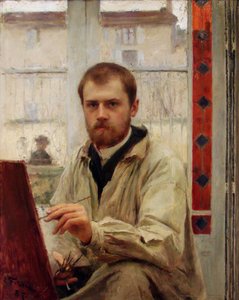
Эмиль Фриант
1863 - 1932 , Франция
Основные сведения
- Artistic Movement Or Style: Realism
- Artists Who Influenced This Artist:
- Louis-Théodore Devilly
- Alexandre Cabanel
- Date Of Birth: April 16, 1863
- Date Of Death: June 9, 1932
- Full Name: Émile Friant
- Nationality: French
- Notable Artworks:
- La Toussaint
- Self-portrait
- Place Of Birth: Dijon, France
Похожие статьи
10 Шедевров Академического Реализма: История Искусства в Вашем Интерьере
Погрузитесь в мир академического реализма! 10 шедевров Бугро, Кабанеля и других великих художников. История искусства, техники живописи и вдохновение для вашего интерьера. Репродукции картин высокого качества на ArtsDot.com.
Echoes of Society: Exploring Social Realism's Enduring Legacy in Art
Explore the powerful world of Social Realism art! Discover key artists, masterpieces & its profound social commentary. Expert insights into this influential movement's history and enduring legacy.
The Evocative Embrace of Reality: Exploring Romantic Realism in 19th-Century Painting
Explore the captivating world of Romantic Realism! Discover key artists like Courbet & Millet, masterpieces, and the social context behind this influential art movement. Expert insights for collectors at ArtsDot.

Romantic Realism's Finest: 10 Masterpieces for Your Home | ArtsDot
Explore 10 defining masterpieces of Romantic Realism! Discover Courbet, Millet & Daumier's powerful paintings—capturing emotion and social realities. Find museum-quality reproductions for your home at ArtsDot.com.
The Poetic Truth of Observation: Exploring 19th-Century Realism in Painting
Explore the captivating world of 19th-century Realism! Discover key artists like Courbet & Millet, masterpieces, and the powerful social commentary behind this influential art movement. Expert insights at ArtsDot.