


 Предпросмотр
 Поделиться
 Поделиться
 Детали произведения

 Скачать
 Похожие работы
 Рентгенография
 Слайд-шоу
 Статистика
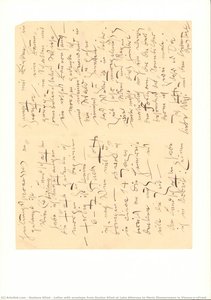
Telex cancellato (Telegramma cancellato)
 1973
1973 159.0 x 21.0 cm
 Читать далее
Жикле / Арт-принт
Печать (жикле) или холст музейного качества с быстрыми сроками изготовления и широким выбором вариантов отделки. ( Купить картину ручной работы Перейти к цифровым изображениям)




































Выберите один из наших стандартных размеров, соответствующих оригинальным пропорциям произведения искусства.

Вы можете указать свои собственные размеры, чтобы репродукция идеально подошла под конкретную раму или пространство. Если выбранный вами размер не будет соответствовать пропорциям оригинала, мы либо обрежем произведение, либо дополним изображение зеркальным отражением краев или однотонной заливкой. Перед началом производства вам будет отправлен цифровой макет для утверждения.
Пожалуйста, обратите внимание, что предварительный просмотр на экране не отображает фактическую обрезку или расширение изображения. Только макет точно покажет финальную композицию.
Несмотря на возможность заказа индивидуальных размеров, мы рекомендуем выбирать размер из предопределенного списка, чтобы сохранить оригинальные пропорции.
Доставка по всему миру () за 2 недели вместо стандартных 4/5 недель. (14 Сентябрь)

Бесплатная экспресс-доставка по всему миру

Высококачественный льняной холст

Полное страхование доставки

Гарантия возмещения таможенных пошлин

Гарантия точного соответствия цветов

100-дневная политика возврата (только при обнаружении дефектов)

Гарантия возврата 100% средств

Предложение оптовых скидок
 Вариант со стеклом доступен только для размеров менее 110 см

Telex cancellato (Telegramma cancellato)
Жикле / Арт-принт
Размер репродукции
-


Итоговая стоимость
$ 62
Похожие произведения









Биография художника
Emilio Isgrò: The Architect of Erasure
Born in Barcellona Pozzo di Gotto, Sicily, in 1937, Emilio Isgrò’s artistic journey is a profound exploration of language, memory, and the very act of deletion. His work isn't merely about removing images or words; it’s a deliberate dismantling of established narratives, revealing the underlying structures of communication and challenging our perception of meaning. From his early poetry to his monumental erasure projects, Isgrò has consistently pushed the boundaries of artistic expression, establishing himself as a pivotal figure in conceptual art and visual poetry.
Isgrò’s initial foray into art began with a deep engagement with literature. Moving to Milan in 1956, he quickly established himself as a poet, publishing his first collection, *Fiere del Sud*, showcasing an early inclination towards subversion and experimentation. This nascent desire for disruption would soon manifest in his groundbreaking technique of erasure – a process he famously described as “the zero in mathematics,” a fundamental element capable of generating all other numbers and values. This wasn’t simply destruction; it was a carefully considered act of revealing, stripping away layers to expose the core essence beneath.
The Birth of Visual Poetry and Erasure
The pivotal moment in Isgrò's artistic development arrived in 1964 with his initial experiments on encyclopedias. He began systematically erasing words and phrases from these vast repositories of knowledge, a radical act that directly challenged the authority of established texts. This practice wasn’t born out of nihilism but rather a desire to reclaim language from its passive role as a mere conduit for information. As he himself stated, “We have been fed by such a rich array of words that in the end we no longer read them.” By removing these words, Isgrò forced viewers to confront the inherent emptiness and potential meaninglessness within communication itself.
This early work quickly established him as a pioneer of visual poetry – a genre where image and text are inextricably linked. His 1966 exhibition at the Galleria Traghetto in Venice marked a significant turning point, introducing his “Declaration 1,” which articulated his philosophy: "the general art of the sign." He wasn’t simply creating images; he was constructing systems of meaning through the deliberate act of erasure and re-presentation. The scale of these early projects – erasing entire encyclopedias – underscored the ambition and conceptual rigor behind his approach.
Monumental Erasures and Critical Commentary
The 1970s witnessed the culmination of Isgrò’s most ambitious endeavors: the systematic erasure of three monumental encyclopedias – *Enciclopedia Treccani*, *Encyclopædia Britannica*, and *Encyclopédie Larousse*. These projects, undertaken between 1968 and 1972, were not merely artistic exercises; they served as powerful critiques of mass media, information overload, and the erosion of individual thought. Each erasure was a deliberate act of resistance against the homogenizing forces of globalization and the relentless flow of superficial knowledge.
Beyond these monumental works, Isgrò continued to explore themes of memory, censorship, and power through a diverse range of projects. He created installations like *Chopin*, utilizing 15 pianos to evoke a sense of melancholy and loss, and presented his *Gibella del Martirio* and *San Rocco legge la lista dei miracoli e degli orrori*, exploring the complexities of Sicilian history and collective trauma. These works demonstrate Isgrò’s ability to translate complex social and political issues into visually arresting and emotionally resonant experiences.
Legacy and Continuing Influence
Emilio Isgrò's impact on contemporary art is undeniable. His erasure technique has been widely imitated, but few artists have managed to capture the same level of conceptual depth and emotional resonance. His work continues to challenge viewers to question the nature of language, the role of memory, and the power of images in shaping our understanding of the world. From his early poetry to his monumental installations, Isgrò’s artistic legacy is one of innovation, critical engagement, and a profound respect for the transformative potential of erasure.
Throughout his career, Isgrò has received numerous accolades, including retrospective exhibitions at institutions such as the Centre Pompidou in Paris and the Galleria d'Arte Moderna in Rome. His work remains an integral part of major museum collections worldwide, solidifying his position as a significant figure in the history of art.
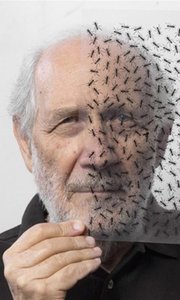
emilio isgrò
1937 - , Italy
Основные сведения
- Artistic Movement Or Style: Erasure technique
- Date Of Birth: October 1937
- Full Name: Emilio Isgrò
- Nationality: Italian
- Notable Artworks:
- Carta geografica cancellata
- Telex cancellato
- Chopin
- Place Of Birth: Barcellona Pozzo di Gotto, Sicily