

 Предпросмотр
 Поделиться
 Поделиться
 Детали произведения

 Скачать
 Похожие работы
 Рентгенография
 Слайд-шоу
 Статистика
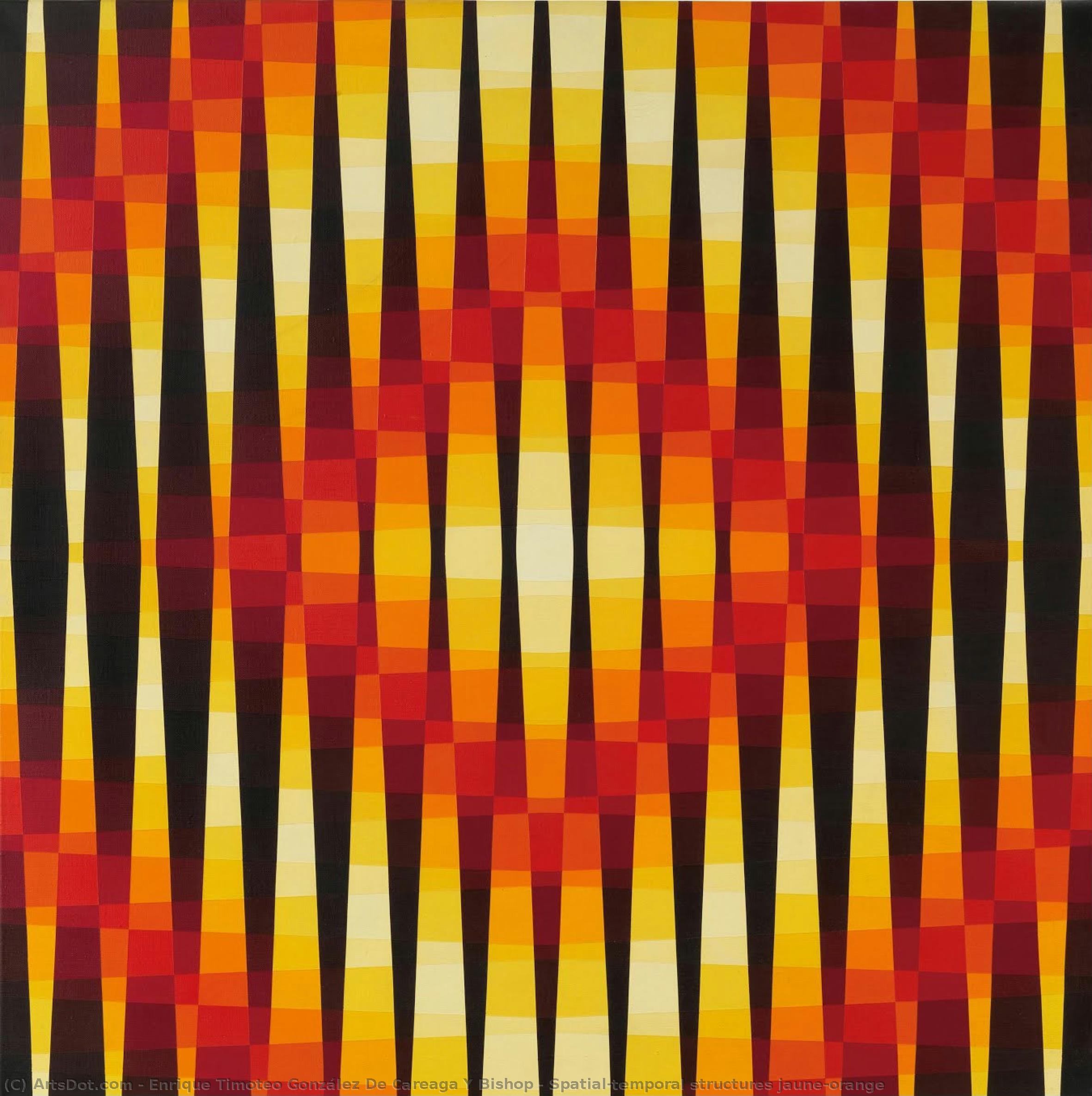
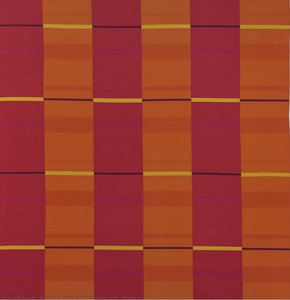
Spatial-temporal structures jaune-orange
 Oil On Canvas
- WallArt
- Geometric Abstraction
 1974
1974- Modern
 MACBA - Музей современного искусства в Буэнос-Айресе
 Читать далее
Приобретите цифровое изображение высокого разрешения в улучшенном качестве, которое значительно превосходит онлайн-превью.
Каждый файл тщательно подготавливается нашими специалистами с использованием передовых инструментов и экспертной ручной ретуши. Мы гарантируем исключительную четкость, точную цветопередачу и детальную проработку каждого изображения.
Финальный файл доставляется по электронной почте в течение 72 часов и оптимизирован для немедленного использования в профессиональной среде, при верстке и печати. Это тот же уровень качества, которому доверяют ведущие дизайнерские студии, издательства и галереи.
Цифровое изображение
Скачайте файл высокого разрешения для личного использования, печати и творческих проектов. ( Перейти к печати Купить картину ручной работы)
Включено в каждый заказ цифровых изображений
Гарантия экспертной цифровой доставки
Выбирая ArtsDot.com, вы получаете не просто изображение — вы приобретаете профессионально обработанное цифровое произведение искусства, созданное с безупречной точностью и под защитой гарантии качества. Вот всё, что автоматически входит в ваш заказ:

Мгновенная доставка по e-mail
Ваш цифровой файл в высоком разрешении будет отправлен вам по электронной почте в течение 72 часов после оформления заказа — и сразу станет доступен для использования.

Цифровой файл с ИИ-улучшением
Ваше произведение искусства проходит профессиональную оптимизацию с использованием передовых инструментов ИИ и ручной обработки, что гарантирует максимальную детализацию, четкость и точность цветопередачи.

Бессрочная бесплатная повторная доставка
Случайно удалили или потеряли файл? Не беспокойтесь — мы отправим его вам повторно в любое время и совершенно бесплатно.

Без импортных пошлин — навсегда
Наслаждайтесь вашим произведением искусства мгновенно без таможенных пошлин, сборов или затрат на доставку — цифровые загрузки всегда не облагаются налогом.

Гарантия точности цветопередачи
Мы гарантируем, что ваше цифровое изображение максимально точно передает оригинальные цвета благодаря использованию профессиональных инструментов и систем управления цветом.

Гарантия удовлетворенности 100 дней
Если вы не будете удовлетворены своим цифровым изображением, мы внесем правки или вернем 100% стоимости в течение 100 дней — без лишних вопросов.

100% Гарантия возврата средств
Не удовлетворены покупкой? Получите полный возврат средств в течение 100 дней после получения цифрового файла — без лишних вопросов.

Скидки на оптовые заказы
Купите 3 изображения, сэкономьте 10% — Купите 5, сэкономьте 15% — Купите 10+, сэкономьте 20%. Отличное решение для творческих проектов, галерей и агентств.
A Symphony of Warmth and Geometry
In the mesmerizing realm of geometric abstraction, Spatial-temporal structures jaune-orange stands as a breathtaking testament to the power of rhythm and color. Created in 1974, this masterpiece invites the viewer into a vibrant, pulsating world where time and space seem to converge through the medium of light and line. The artwork is a dense, intricate tapestry of verticality, dominated by an energetic interplay of reds, oranges, and yellows. Rather than presenting a traditional subject, the piece focuses on the pure essence of visual movement, utilizing varying widths of stripes to create a grid-like pattern that feels both meticulously structured and wildly alive. It is a composition that does not merely sit upon the canvas but seems to vibrate with an internal heat, drawing the eye into a rhythmic dance of intersecting planes.
The technique employed in this work suggests a profound mastery over the application of pigment, likely utilizing oil or acrylic to achieve a layered depth. While the surface maintains a sophisticated smoothness, there is a subtle, tactile quality—a hint of impasto—that lends weight to each stripe, giving the colors a physical presence. This careful layering creates an illusion of depth within a flattened perspective, where overlapping bands of color suggest a complex, multi-dimensional architecture. The precision of the vertical lines provides a sense of architectural stability, yet the warmth of the palette prevents the work from feeling rigid, instead infusing it with a sense of controlled chaos and organic energy.
A Legacy of Structure and Emotion
Drawing inspiration from the mid-century modern movement and the optical illusions of Op Art, this piece bridges the gap between mathematical precision and emotional resonance. The choice of a warm, sun-drenched palette evokes feelings of vitality, optimism, and the relentless passage of time—a literal interpretation of its "spatial-temporal" title. For the discerning collector or interior designer, this artwork offers more than just visual interest; it provides a focal point of profound character. Its structured nature makes it an ideal anchor for contemporary spaces, where its bold stripes can interact with modern architecture to create a sense of height and dynamism.
To possess a reproduction of such a work is to bring a piece of rhythmic history into one's personal sanctuary. Whether placed in a minimalist gallery setting or integrated into a richly textured living space, Spatial-temporal structures jaune-orange acts as a window into a world of pure sensation. It challenges the viewer to find beauty in the repetition and meaning in the abstract, offering a continuous loop of discovery through its shifting hues and intersecting paths. It is an investment in atmosphere, a celebration of color, and a timeless tribute to the enduring allure of geometric harmony.
Похожие произведения
Биография художника
The Architect of Space and Time: The Life of Enrique Timoteo González de Careaga y Bishop
Enrique Timoteo González de Careaga y Bishop stands as a fascinating testament to the multifaceted talents of early 20th-century Spain. Born in Madrid in 1872, he was a man who seamlessly blended seemingly disparate disciplines—a rare convergence that profoundly shaped his artistic output and cemented his legacy within the annals of Spanish art history. His life began amidst the burgeoning industrial landscape of Europe, an environment that equipped him with technical engineering skills that would later inform his precise approach to visual representation. Yet, beyond the blueprints and calculations, he was a man driven by a profound passion for movement and competition, most notably through his influential role in the world of football.
His involvement with Athletic Bilbao extended far beyond mere participation; he spearheaded the club's transformation into a legendary powerhouse. Serving as the third president between 1903 and 1906, he oversaw a pivotal moment in Basque football history—the merger of Athletic Bilbao and Bilbao FC. This strategic unification created one of Spain’s most enduring athletic institutions. Under his visionary leadership, the club secured its first two Copa del Rey titles, establishing itself as a dominant force on the national stage. This dedication to fostering excellence on the pitch mirrored his later commitment to exploring the boundaries of visual perception through the canvas.
A Visionary Approach to Abstract Geometry
As his artistic journey unfolded, González de Careaga y Bishop moved away from conventional representation toward a highly distinctive and innovative conceptual framework. He sought to capture what he termed “spatial-temporal structures,” a daring ambition that anticipated the developments of abstract art decades before they became mainstream. Rejecting the static nature of traditional portraiture or landscape, he focused on the elusive interplay between space and time, attempting to freeze the very essence of movement within a geometric plane.
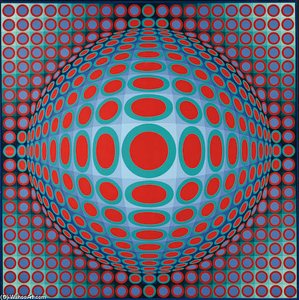
His work often functions as a bridge between the physical and the metaphysical. In pieces such as Sphère Spatio/Temporelle, the viewer is invited into a mesmerizing realm of Op Art, where geometric forms and vibrant blues create a sense of profound depth. His technique utilized rhythmic patterns and optical illusions to challenge the eye, making the canvas feel less like a flat surface and more like a window into a multidimensional reality. This mastery over visual perception allowed him to explore how color and form could evoke a sense of weightlessness or intense vibration.
Legacy and Artistic Significance
The historical significance of González de Careaga y Bishop lies in his ability to synthesize the technical precision of an engineer with the rhythmic soul of an athlete. His later explorations, characterized by energetic interplays of warm hues like reds, oranges, and yellows, demonstrate a profound mastery over pigment and light. Works such as Spatial-temporal structures jaune-orange showcase a dense, intricate tapestry of verticality, where varying widths of stripes create a grid-like pattern that feels both meticulously structured and wildly alive.
Though his life was cut short in 1936, the echoes of his "spatial-temporal" theories continue to resonate within the study of modern abstraction. His ability to anticipate the complexities of mid-century modernism through a much earlier lens marks him as a true pioneer. Today, his captivating works are recognized in prestigious collections such as MACBA and Borusan Contemporary, serving as enduring reminders of a man who saw the world not just as a collection of objects, but as a dynamic dance of intersecting planes, time, and light.

enrique timoteo gonzález de careaga y bishop
1872 - 1936 , Spain
Основные сведения
- Artistic Movement Or Style: Spatial art
- Artists Or Movements Influenced By This Artist: ['Op Art']
- Date Of Birth: March 19, 1872
- Date Of Death: May 5, 1936
- Full Name: Enrique Timoteo González de Careaga y Bishop
- Nationality: Spanish
- Notable Artworks:
- Sphère Spatio/Temporelle
- Untitled N.504
- Place Of Birth: Madrid, Spain