

 Предпросмотр
 Поделиться
 Поделиться
 Детали произведения

 Скачать
 Похожие работы
 Рентгенография
 Слайд-шоу
 Статистика
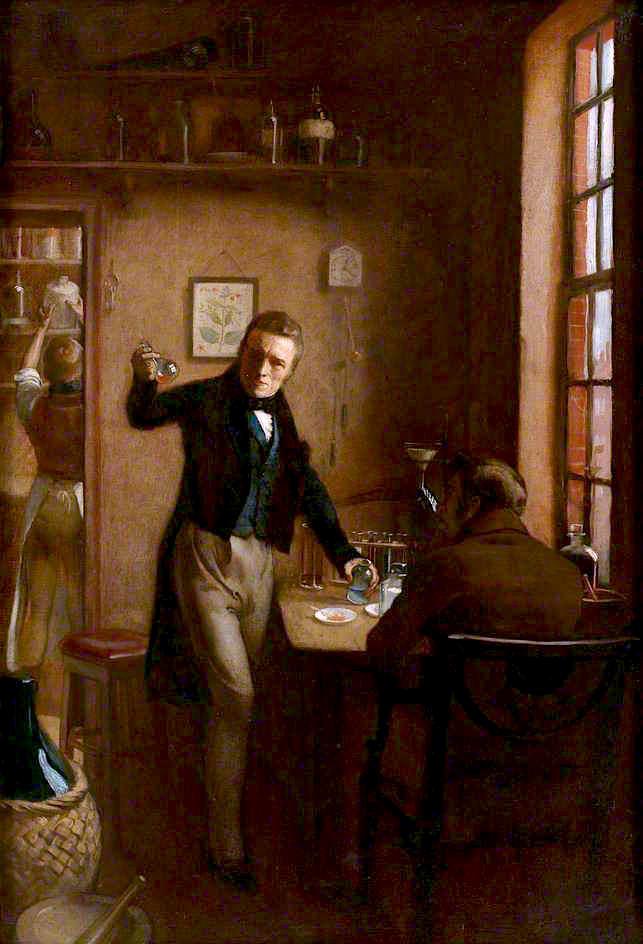
The Discovery of Quinine, 1820

 Читать далее
Масляная репродукция ручной работы
Картина маслом на холсте в выбранном вами размере и раме, написанная на заказ нашими художниками. ( Перейти к печати Перейти к цифровым изображениям)




































Выберите один из наших стандартных размеров, соответствующих оригинальным пропорциям произведения искусства.

Вы можете указать собственные размеры, чтобы картина идеально вписалась в выбранную раму или пространство. Если выбранный вами размер не соответствует пропорциям оригинала, мы либо обрежем полотно, либо расширим его за счет дополнительных элементов, написанных вручную. Цифровой макет будет отправлен вам на утверждение перед началом производства.
Обратите внимание, что предварительный просмотр на экране не отражает фактическую обрезку или расширение. Только макет точно покажет окончательную композицию.
Хотя доступны индивидуальные размеры, мы рекомендуем выбирать вариант из предопределенного списка, чтобы сохранить исходные пропорции.
После оформления заказа команда ArtsDot.com свяжется с клиентом по электронной почте для уточнения деталей и предоставит предварительный макет
Доставка по всему миру () за 3–4 недели вместо стандартных 5 недель. (12 Сентябрь). Без компромиссов в качестве.

Бесплатная экспресс-доставка по всему миру

Высококачественный льняной холст

Полное страхование доставки

Гарантия возмещения таможенных пошлин

Гарантия точного соответствия цветов

100-дневная политика возврата (только при обнаружении дефектов)

Гарантия возврата 100% средств

Предложение оптовых скидок
 Вариант со стеклом доступен только для размеров менее 110 см

The Discovery of Quinine, 1820
Техника репродукции
Размер репродукции
-


Итоговая стоимость
$ 263
The Artist and His Work
Ernest Board was a British painter known for his seascapes and historical subjects. He was also a skilled draughtsman for glass painting. The Discovery of Quinine is one of his notable works, showcasing his ability to capture the essence of a moment in time. To learn more about Ernest Board and his artwork, visit /art/list/?Filter=AQTE9N-Ernest-Board-The-Discovery-of-Quinine-1820.The Painting's Significance
The Discovery of Quinine is a significant painting because it highlights the importance of quinine in the history of medicine. Quinine was a crucial discovery that helped combat malaria, and this painting captures the moment when Dr. John Gordon discovered its potential. The painting features a group of people gathered around a table, with Dr. Gordon holding a glass of wine while another man looks on with interest.Key Features of the Painting
Some key features of the painting include:- The use of oil on canvas to create a rich and vibrant color palette
- The attention to detail in the depiction of the characters and their surroundings
- The historical significance of the scene, which showcases an important moment in medical history
The Discovery of Quinine is a masterpiece that showcases the artist's skill and attention to detail, while also highlighting an important moment in medical history. As a handmade oil painting reproduction, it would make a stunning addition to any art collection.
Похожие произведения









Биография художника
The Precision of Vision: The Life and Legacy of Ernest Board
In the grand tapestry of late Victorian and Edwardian art, where many masters sought the ethereal light of landscapes or the romanticized grandeur of portraits, Ernest Board (1877–1934) carved a unique and vital niche. He was an artist who found profound beauty in the empirical, a man whose brush served as both a creative instrument and a scientific tool. As a pioneer of scientific illustration, Board possessed the rare ability to marry the meticulous accuracy required by the burgeoning medical sciences with the aesthetic grace of the fine arts. His work does not merely observe; it illuminates, bringing clarity to the complex structures of life and the monumental moments of human discovery.
Board’s artistic foundation was laid in the vibrant intellectual atmosphere of London, where he studied at the prestigious Slade School of Fine Art. It was here that he walked alongside luminaries such as William Holman Hunt and John Ruskin, figures whose devotion to the Pre-Raphaelite ideal of "truth to nature" would deeply inform his professional ethos. From these mentors, Board inherited a reverence for minute detail and an uncompromising commitment to observational accuracy. This influence is evident in his refusal to rely on mere stylistic embellishment, choosing instead to let the inherent complexity of his subjects—be they anatomical or historical—speak through precise tonal subtlety and structural integrity.
Bridging the Gap Between Art and Science
The true brilliance of Board’s career lay in his ability to navigate the intersection of the laboratory and the studio. During the Edwardian era, as scientific understanding expanded at a breathtaking pace, there arose a desperate need for visual communication that could transcend the limitations of early photographic technology. Board rose to this challenge with unparalleled skill, securing prestigious commissions from seminal scientific journals such as Nature and The Lancet. His illustrations were far more than decorative accompaniments; they were essential pedagogical instruments that allowed surgeons and researchers to visualize the unseen.
His mastery of the medium allowed him to transform daunting anatomical diagrams into captivating visual narratives. Whether rendering the intricate layers of human musculature or the precise mechanics of surgical instruments, Board imbued his subjects with a sense of vitality. This period of his work represents a significant achievement in the history of medical illustration, as he helped foster public and professional comprehension of groundbreaking medical advancements through images that were as educationally rigorous as they were visually arresting.
Historical Narratives and Scientific Milestones
Beyond the microscopic and the anatomical, Board’s repertoire extended into the realm of historical and scientific commemoration. He possessed a remarkable talent for capturing the "eureka" moments of history, painting scenes that celebrated the giants of science with a Neoclassical dignity. His work often focused on pivotal discoveries that altered the course of human knowledge, such as:
- Joseph Priestley, the Discoverer of Oxygen: A profound 1912 oil painting that captures the essence of scientific breakthrough through a lens of historical significance and classical beauty.
- The Discovery of Quinine, 1820: An exploration of medical history that highlights his ability to dramatize the moment scientific progress meets human necessity.
- Regional Tributes: His ability to connect science with local heritage, as seen in works documenting those who shaped the identity of cities like Bristol.
Through these works, Board ensured that the triumphs of the intellect were preserved within the canon of fine art. His legacy remains a testament to the idea that science and art are not opposing forces, but rather two different languages describing the same magnificent reality. In an age of rapid industrial and scientific change, Ernest Board provided a visual anchor, documenting the evolution of human understanding with a steady, masterful hand.
ernest board
1877 - 1934
Основные сведения
- Artistic Movement Or Style: Victorian Illustration
- Artists Who Influenced This Artist:
- Gustave Dore
- John Ruskin
- Date Of Birth: 1877
- Date Of Death: 1934
- Full Name: Ernest Board
- Nationality: British
- Notable Artworks:
- The Anatomy Lesson
- Portrait of Sir William Osler
- Place Of Birth: London, England