

 Предпросмотр
 Поделиться
 Поделиться
 Детали произведения

 Скачать
 Похожие работы
 Рентгенография
 Слайд-шоу
 Статистика
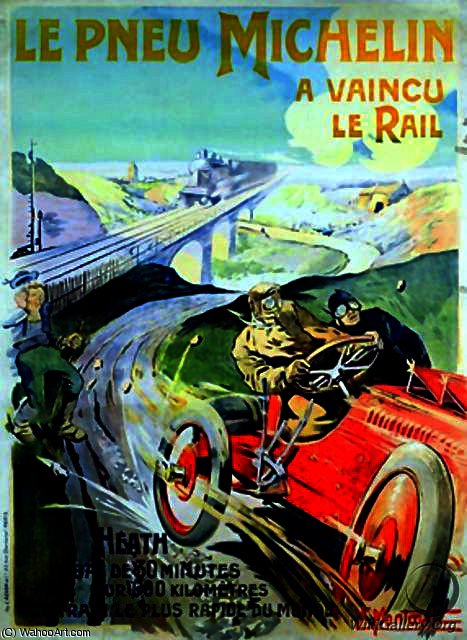
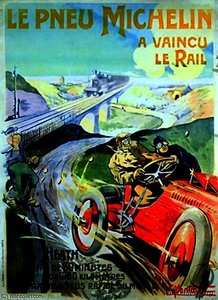
Le Pneu Michelin a vaincu le Rail
 Читать далее
Жикле / Арт-принт
Печать (жикле) или холст музейного качества с быстрыми сроками изготовления и широким выбором вариантов отделки. ( Купить картину ручной работы Перейти к цифровым изображениям)




































Выберите один из наших стандартных размеров, соответствующих оригинальным пропорциям произведения искусства.

Вы можете указать свои собственные размеры, чтобы репродукция идеально подошла под конкретную раму или пространство. Если выбранный вами размер не будет соответствовать пропорциям оригинала, мы либо обрежем произведение, либо дополним изображение зеркальным отражением краев или однотонной заливкой. Перед началом производства вам будет отправлен цифровой макет для утверждения.
Пожалуйста, обратите внимание, что предварительный просмотр на экране не отображает фактическую обрезку или расширение изображения. Только макет точно покажет финальную композицию.
Несмотря на возможность заказа индивидуальных размеров, мы рекомендуем выбирать размер из предопределенного списка, чтобы сохранить оригинальные пропорции.
Доставка по всему миру () за 2 недели вместо стандартных 4/5 недель. (11 Сентябрь)

Бесплатная экспресс-доставка по всему миру

Высококачественный льняной холст

Полное страхование доставки

Гарантия возмещения таможенных пошлин

Гарантия точного соответствия цветов

100-дневная политика возврата (только при обнаружении дефектов)

Гарантия возврата 100% средств

Предложение оптовых скидок
 Вариант со стеклом доступен только для размеров менее 110 см

Le Pneu Michelin a vaincu le Rail
Жикле / Арт-принт
Размер репродукции
-


Итоговая стоимость
$ 62
Похожие произведения


Биография художника
The Architect of Velocity: The Life and Legacy of Ernest Montaut
In the twilight of the nineteenth century, as the rhythmic clatter of horse-drawn carriages began to yield to the mechanical roar of the internal combustion engine, a new visual language was required to capture the pulse of a changing world. Ernest Montaut (1878–1909) emerged as the definitive chronicler of this transition. A French poster artist whose career was tragically brief, Montaut did not merely document the dawn of the automobile age; he invented the very visual vocabulary used to express its exhilarating momentum. His work serves as a vibrant, kinetic window into an era defined by industrial optimism and the thrill of unprecedented speed.
While much of Montaut’s early life remains shrouded in the mists of history, his artistic evolution is etched clearly into the lithographic stones he mastered. Emerging onto the Parisian scene in the mid-1890s, he quickly moved beyond simple illustration to become a pioneer of graphic innovation. He possessed an uncanny ability to translate the raw energy of motion onto a static medium. This was achieved through his most celebrated contribution to the art of advertising: the invention of speed lines. By utilizing curved, radiating strokes that seemed to bleed from the edges of a racing car or a biplane, Montaut created a sense of centrifugal force, pulling the viewer into the very heart of the action.
Mastery of the Pochoir and the Art of Motion
The technical brilliance of Montaut’s oeuvre lies in his sophisticated use of the pochoir process. This labor-intensive method involved creating precise outlines via lithographic stone, which were then meticulously hand-painted with watercolors through stencils. Each print was a testament to patience and precision, often bearing the hallmarks of the prestigious printer Mabilemu et Cie., Paris. This technique allowed for a luminous depth of color and a tactile richness that mass-produced printing could not replicate. The result was a series of posters that were as much works of fine art as they were commercial advertisements for tires, carburettors, and motor racing events.
Montaut’s compositions were characterized by a daring use of perspective. He frequently employed foreshortening to distort the viewer's sense of space, making a motorcycle or a zeppelin appear as though it were lunging directly out of the frame. His subject matter was a celebration of modern engineering:
- Motorized Racing: Capturing the dust and drama of early car and motorcycle competitions across tortuous mountain passes.
- Aviation: Documenting the historic era of biplanes and the legendary flight of Bleriot across the English Channel.
- Aquatic Speed: Illustrating the sleek, powerful movements of motorboat racing.
- Aerial Wonders: Depicting the majestic, slow-moving presence of zeppelins against the Parisian sky.
A Lasting Impression on Graphic Design
Though Montaut’s life was cut short in 1909, his influence refused to fade. The techniques he pioneered—the use of abstract lines to denote velocity and the manipulation of perspective to create drama—became foundational elements of modern graphic design. Even after his passing, the momentum of his style continued through the work of others; notably, it is believed that his wife, Marguerite (often signing as Gamy), continued to produce works in his signature style, ensuring the lineage of this aesthetic remained intact. Today, Montaut’s prints are cherished not only as historical documents of the early motoring age but as masterclasses in how an artist can capture the intangible essence of time and movement.
Ernest Montaut
1878 - 1909 , France
Основные сведения
- Artistic Movement Or Style: Graphic Design
- Artists Or Movements Influenced By This Artist: ['']
- Date Of Birth: France
- Date Of Death: 1909
- Full Name: Ernest Montaut
- Nationality: French
- Notable Artworks:
- Bleriot traversant la Manche
- Advertising poster for Michelin tyres
- Place Of Birth: Paris