

 Предпросмотр
 Поделиться
 Поделиться
 Детали произведения

 Скачать
 Похожие работы
 Рентгенография
 Слайд-шоу
 Статистика
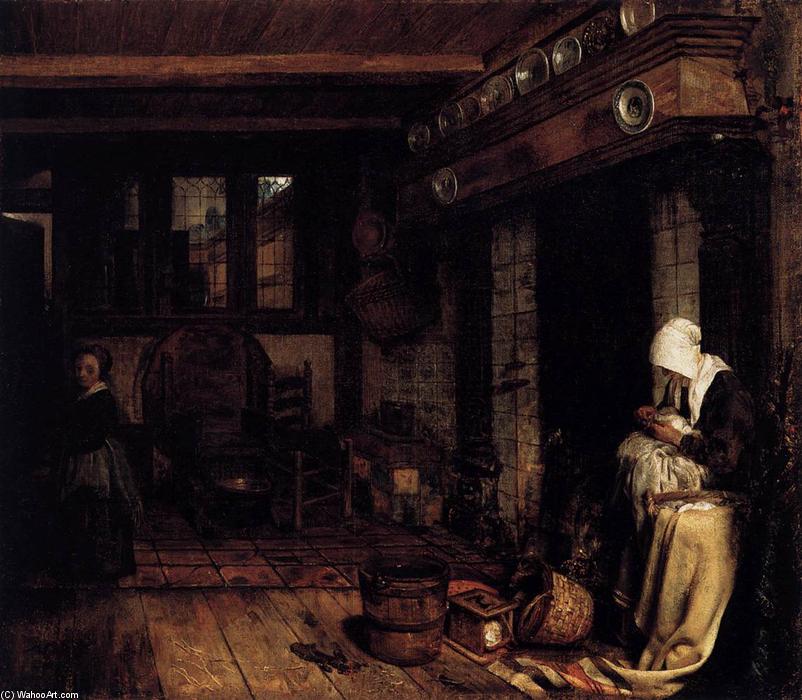
Dutch Interior with Woman Sewing
 Oil On Canvas
- WallArt
- Dutch Golden Age
 1660
1660 52.0 x 59.0 cm
 Стейтлешские музеи Берлина
 Читать далее
Масляная репродукция ручной работы
Картина маслом на холсте в выбранном вами размере и раме, написанная на заказ нашими художниками. ( Перейти к печати Перейти к цифровым изображениям)




P118B $10

P118H $10

P118W $10

P438Z $10

P508JH $12

P508YH $12

P805H $10

P805Z $10

P919BZ $10

P919G $10

P919XJ $10

P959ZH $10

P968JZ $12

W106C $8

W218G $10

W218JH $8

W218Y $10

W307PJ $10

W316G $10

W316PJ $8

W316Y $10

W398PJ $8

W4111J $10

W500HY $15

W500JH $15

W692G $12

W849H $8

W940BG $15

W953PJ $8




Выберите один из наших стандартных размеров, соответствующих оригинальным пропорциям произведения искусства.

Вы можете указать собственные размеры, чтобы картина идеально вписалась в выбранную раму или пространство. Если выбранный вами размер не соответствует пропорциям оригинала, мы либо обрежем полотно, либо расширим его за счет дополнительных элементов, написанных вручную. Цифровой макет будет отправлен вам на утверждение перед началом производства.
Обратите внимание, что предварительный просмотр на экране не отражает фактическую обрезку или расширение. Только макет точно покажет окончательную композицию.
Хотя доступны индивидуальные размеры, мы рекомендуем выбирать вариант из предопределенного списка, чтобы сохранить исходные пропорции.
После оформления заказа команда ArtsDot.com свяжется с клиентом по электронной почте для уточнения деталей и предоставит предварительный макет
Доставка по всему миру () за 3–4 недели вместо стандартных 5 недель. (10 Сентябрь). Без компромиссов в качестве.

Бесплатная экспресс-доставка по всему миру

Высококачественный льняной холст

Полное страхование доставки

Гарантия возмещения таможенных пошлин

Гарантия точного соответствия цветов

100-дневная политика возврата (только при обнаружении дефектов)

Гарантия возврата 100% средств

Предложение оптовых скидок
 Вариант со стеклом доступен только для размеров менее 110 см

Dutch Interior with Woman Sewing
Техника репродукции
Размер репродукции
-


Итоговая стоимость
$ 288
A Quiet Moment in Dutch Domesticity: Esaias Boursse’s “Dutch Interior with Woman Sewing”
Esaias Boursse's "Dutch Interior with Woman Sewing," painted around 1660, isn’t a grand statement of artistic ambition; it’s a carefully observed and profoundly intimate glimpse into the heart of 17th-century Dutch life. Often overshadowed by the towering figures of Vermeer and Rembrandt, Boursse carved out a unique niche for himself – documenting the quiet rhythms of family existence with an almost unnerving level of detail and emotional resonance. This painting, now residing in the Gemäldegalerie in Berlin, offers a rare window into a world of domestic routine, imbued with a subtle melancholy that speaks volumes about the era’s social fabric.
The scene unfolds within a dimly lit room, dominated by the earthy tones of dark browns and ochres – a palette characteristic of Dutch Golden Age painting. The composition is deliberately restrained, divided into distinct zones: a foreground scattered with everyday objects—a basket overflowing with linen, a simple wooden stool—a midground featuring two figures engaged in separate activities, and a background subtly suggesting an open doorway, hinting at the world beyond. The perspective isn’t aggressively realistic; instead, it creates a sense of depth through careful use of lines and shadows, drawing the viewer into this contained space.
A Masterclass in Realist Detail
Boursse's skill lies not in dramatic flourishes but in his meticulous rendering of texture and light. The wooden floorboards are rendered with an almost tactile quality, each groove and knot painstakingly depicted. The fabrics—the woman’s satin dress, the linen basket—are richly textured, their folds and creases conveying a sense of weight and volume. The lighting is particularly masterful; it's minimal, emanating primarily from a window to the left, casting long, dramatic shadows that emphasize form and create an atmosphere of subdued intimacy. The artist employs oil paint with a deliberate layering technique, building up color gradually to achieve remarkable luminosity despite the overall darkness.
The painting’s technical brilliance is further underscored by Boursse's attention to detail—the way the light catches on the woman’s hands as she works, the subtle wrinkles around her eyes, the slight slump of her shoulders. These small details contribute to a powerful sense of realism, making the scene feel utterly authentic and immediate. It’s a testament to Boursse’s ability to capture not just appearances but also the quiet dignity and inherent weariness of everyday life.
Symbolism and Social Context
“Dutch Interior with Woman Sewing” is more than simply a depiction of domestic activity; it's imbued with symbolic meaning. The woman, absorbed in her needlework, represents the countless hours spent within the confines of the home, contributing to the family’s well-being. Her posture suggests both diligence and a certain solitude—a quiet acceptance of her role within the household. The man, standing slightly apart, is engaged in reading a letter, perhaps receiving news from afar or contemplating his place in the world. The interaction between them is understated but subtly charged with unspoken emotions.
Painted during the Dutch Golden Age, this work reflects the era’s fascination with domesticity and the importance of family life. The rise of literacy and correspondence created a cultural shift, elevating the role of women within the home while simultaneously highlighting the complexities of personal relationships. Boursse's choice to focus on such a commonplace scene—a woman sewing—is itself significant, suggesting a deliberate effort to elevate the ordinary into something worthy of artistic contemplation.
A Legacy of Quiet Observation
Esaias Boursse’s “Dutch Interior with Woman Sewing” is a poignant reminder that beauty can be found in the most unassuming moments. It's a testament to his remarkable ability to capture the essence of human experience—the quiet joys, the subtle sorrows, and the enduring rhythms of daily life. While he may not have achieved the same level of fame as some of his contemporaries, Boursse’s work continues to resonate with viewers today, offering a timeless glimpse into the heart of Dutch domesticity.
Похожие произведения

Биография художника
Esaias Boursse: A Quiet Master of Dutch Domesticity
Esaias Boursse, a name perhaps less familiar than those of Vermeer or Rembrandt, nevertheless stands as a significant figure in the rich tapestry of 17th-century Dutch painting. Born in Amsterdam in 1631 and tragically lost at sea in 1672, Boursse’s life was marked by both artistic talent and financial pragmatism. Unlike many of his contemporaries who sought fame and fortune through grand commissions, Boursse remained largely unmarried and childless, dedicating himself primarily to the meticulous depiction of everyday family life – a path that ultimately proved remarkably lucrative for him. His legacy rests on approximately 28 surviving paintings, predominantly housed in private collections across Europe, offering intimate glimpses into the domestic interiors and quiet moments of his era.A Life Shaped by Travel and Trade
Boursse’s early life remains somewhat shrouded in mystery. Records indicate he was the youngest son of Walloon immigrants who settled in Amsterdam, marrying Anna des Forest in 1618. Crucially, Boursse embarked on a journey to Italy around 1650, a common practice for young Dutch artists seeking to immerse themselves in the artistic traditions of the Renaissance. However, unlike many of his peers who returned brimming with new ideas and techniques, Boursse’s Italian sojourn appears to have yielded little discernible influence on his subsequent work. Instead, he joined the Verenigde Oostindische Compagnie (VOC), the Dutch East India Company, a decision that profoundly shaped both his life and his art. His voyages to Ceylon (modern-day Sri Lanka) provided him with unparalleled opportunities to observe and document the lives of its inhabitants – scenes which would later form the core of his artistic output. This experience, coupled with his financial struggles, led him to return to Amsterdam in 1663, only to be compelled to rejoin the VOC a year later, ultimately meeting his demise aboard the ship *Rhenen* on November 16, 1672.Stylistic Influences and Distinctive Vision
Boursse’s artistic style is often described as being reminiscent of Pieter de Hooch, Quiringh van Brekelenkam, and Cornelis de Man – masters known for their subtle use of light, atmospheric perspective, and depictions of urban interiors. However, Boursse possesses a unique sensibility that distinguishes his work from these contemporaries. His paintings are characterized by an almost unsettling stillness—a sense of suspended time within the confines of a domestic space. He eschewed dramatic narratives or overtly emotional scenes, instead focusing on capturing the quiet rhythms of daily life: women diligently spinning wool, children playing quietly in the background, families gathered around a warm hearth. The lighting is typically soft and diffused, creating an atmosphere of intimacy and tranquility. His compositions are carefully constructed, often employing a shallow depth of field to draw the viewer into the scene, as if they too were silently observing the unfolding drama within the room.The Intimate World of Domestic Scenes
Boursse’s oeuvre is overwhelmingly devoted to scenes of domestic life. These aren't grand celebrations or momentous events; rather, they are snapshots of ordinary moments – a woman meticulously sewing, children engaged in playful pursuits, a family sharing a simple meal. These seemingly mundane subjects are rendered with remarkable detail and sensitivity, revealing Boursse’s keen eye for capturing the nuances of human interaction and the subtle beauty of everyday objects. The figures within his paintings are often anonymous, contributing to the universality of his themes. He avoids explicit portraits, instead focusing on portraying the collective experience of family life. Works like “Dutch Interior with Woman Sewing” (Wallace Collection, London) and "Interior with a Woman Cooking" (Ryksmuseum Amsterdam) exemplify this approach, offering viewers a poignant glimpse into the lives of ordinary people during the Dutch Golden Age. The meticulous rendering of fabrics, furniture, and domestic utensils further enhances the realism and authenticity of these scenes.A Financial Success Despite Personal Modesty
Interestingly, despite his modest personal life – lacking a family to support and seemingly eschewing grand artistic ambitions – Boursse enjoyed considerable financial success during his lifetime. His commissions from the VOC, documenting the lives and landscapes of Ceylon, provided him with a steady income. Art historians have noted that he was one of the highest-paid artists of his time, a testament to the value placed on his detailed depictions of everyday life. This remarkable achievement underscores the evolving role of the artist in 17th-century Dutch society – where artistic skill and observation could translate into substantial wealth, even without seeking fame or recognition. His paintings continue to be admired for their quiet beauty, offering a valuable window into the domestic realities of a bygone era.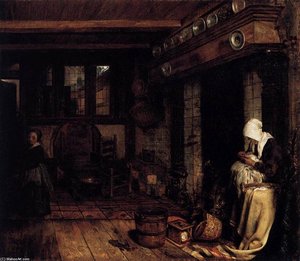
Esaias Boursse
1631 - 1672 , Netherlands
Основные сведения
- Artistic Movement Or Style: Genre painting
- Artists Or Movements Influenced By This Artist: ['Cornelis de Man']
- Artists Who Influenced This Artist:
- Pieter de Hooch
- Johannes Vermeer
- Date Of Birth: March 3, 1631
- Date Of Death: November 16, 1672
- Full Name: Esaias Boursse
- Nationality: Dutch
- Notable Artworks:
- Interior with Woman Sewing
- Boys blowing bubbles
- Place Of Birth: Amsterdam, Netherlands
Похожие статьи

Illuminating Innovation: Exploring the Dutch Golden Age of Painting
Explore the Dutch Golden Age of painting with ArtsDot. Discover Rembrandt, Vermeer & other Masters. Learn about key characteristics, iconic artworks, and lasting influence. Expert insights for collectors & enthusiasts.
Pieter de Hooch: Illuminating Dutch Domestic Life & Golden Age Charm
Explore the captivating world of Pieter de Hooch, a master of Dutch Golden Age painting. Discover his innovative use of light, intimate domestic scenes, and lasting influence on art history. Learn more at ArtsDot.

Золотой век Голландии: 10 шедевров, изменивших искусство | ArtsDot.com
Погрузитесь в эпоху Золотого века Нидерландов! 10 шедевров Рембрандта, Вермеера и других мастеров. Узнайте истории создания культовых картин и вдохновитесь для интерьера. Репродукции музейного качества на ArtsDot.com.

Golden Age Reflections: Dutch Baroque Painting & Cultural Innovation
Explore the Dutch Golden Age of painting! Discover key artists like Vermeer & ter Borch, their innovative techniques, and the rich cultural context behind these Baroque masterpieces. Learn about collecting & appreciating this iconic art period.
Illuminating Realism: Exploring the Dutch Golden Age of Painting (1600-1700)
Explore the Dutch Golden Age of painting (1600-1700) with ArtsDot. Discover Rembrandt, Vermeer & other masters. Learn about techniques, history & find museum-quality reproductions.